
The data gathered as part of the IQOE, during New Zealand’s shipping ban of 2020, indicated even small changes in vessel activity can greatly affect underwater sound – showing how noise from small boats, as well as large ships, can limit how marine animals hear and communicate.
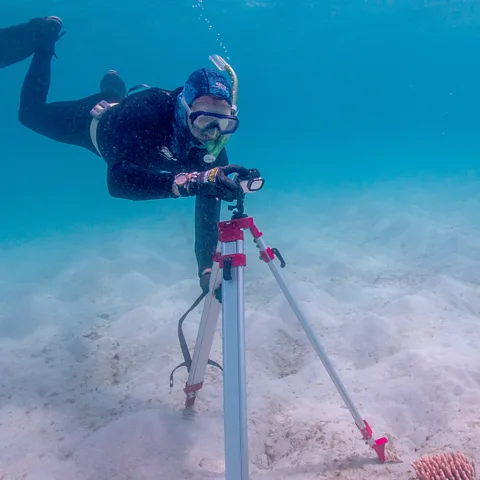 AIMS/ Jo HurfordScientist Miles Parsons surveys fish at an experimental “patch reef” at the Great Barrier Reef, Australia (Credit: AIMS/ Jo Hurford)

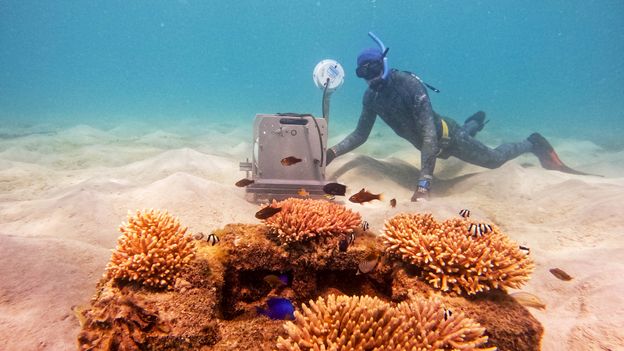
Understanding the ways marine life uses sound, though, has also meant we can use underwater sound as a tool for ocean restoration. By playing recordings of healthy reef soundscapes through underwater speakers, scientists can attract fish and other marine life back to damaged reefs, helping them recover faster and become vibrant ecosystems once again. “We false advertise that they are thriving neighbourhoods,” says Simpson.
One outcome of the IQOE was the establishment of the annual World Ocean Passive Acoustics Monitoring (WOPAM) Day. Started by Parsons and Simpson, on 8 June 2023, the initiative captures underwater soundscapes – from the canals in London to the ponds in France.
“Like many good ideas, WOPAM started over a beer with Miles at a conference in Germany,” said Simpson. “We put a call out, hoping that we might get a reply from somebody, and we ended up with over 200 replies. In 2023, it became the first year where we had hundreds of people around the world, sharing their recordings, sharing what they were finding, sharing why they do their research, and sharing the joy of listening to the ocean.