
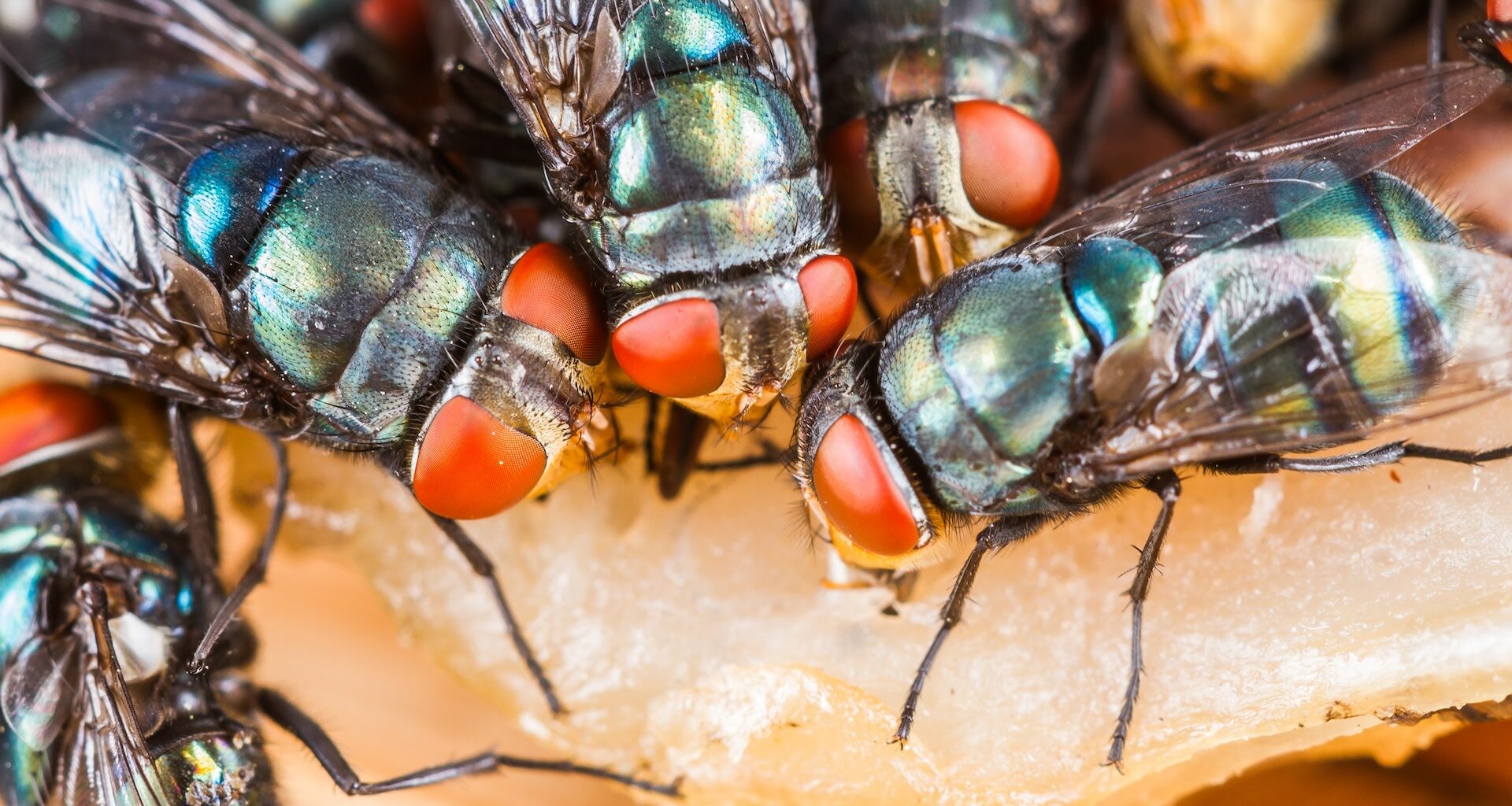
Air pollution isn’t just bad for human health; it also poses an existential threat to certain fly species.
What’s happening?
New research from the Max Planck Institute for Chemical Ecology found that elevated ozone levels inhibit mating among flies.
Ozone in the stratosphere helps protect the Earth from dangerous UV radiation. But down here, the gas is a threat to our health, food supply, and biodiversity. The latter is apparent in this recent study, which found that ozone exposure significantly degrades fly pheromones.
When this happens, male and female flies have a hard time recognizing each other, rendering mating difficult. In fact, the breakdown of male pheromones makes them unattractive to females and more interesting to fellow male flies. This has created an uptick in same-sex courtship in a number of Drosophila species.
“We were shocked that even slightly elevated ozone concentrations had such strong effects on fly behavior,” researchers Nanji Jiang and Markus Knaden said in the news release. “Actually, we initially wanted to focus on the interactions between males and females. We could explain that males started courting each other after a short ozone exposure, because they obviously could not distinguish ozonated males from females. However, we had not thought about this before.”
Why is air pollution important?
Ground-level ozone isn’t emitted directly from any source. Instead, it’s created when certain pollutants from gas-powered cars, factories, and other sources interact with sunlight, according to the Environmental Protection Agency.
This study underscores how human activity impacts the livelihoods of other species. Flies are essential pollinators, meaning they play a critical role in helping plants and crops grow. Pollinators are crucial to our food supply, so we risk major crop and financial losses without them. With grocery costs continuing to rise, many consumers cannot afford any more produce shortages or price hikes.
What’s being done about air pollution?
There are ways to curb air pollution, such as switching to an electric vehicle or installing solar panels. Even smaller changes like reducing plastic use and waste, help mitigate dangerous pollution.
Meanwhile, organizations like Moms Clean Air Force help educate and advocate against air pollution in local communities.
Get TCD’s free newsletters for easy tips to save more, waste less, and make smarter choices — and earn up to $5,000 toward clean upgrades in TCD’s exclusive Rewards Club.
