
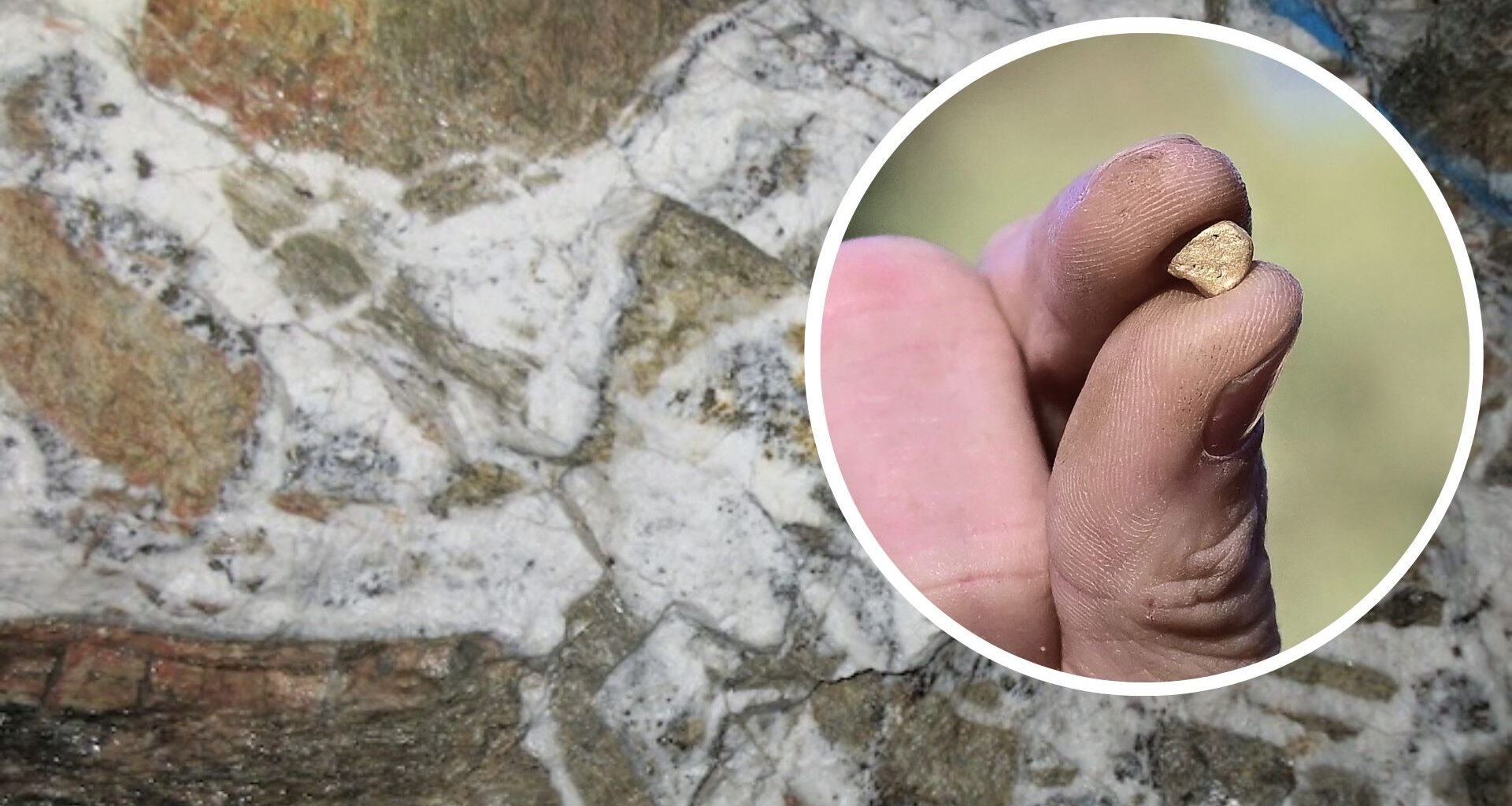
Scientists have found that with the help of a new chemical analysis, they could pinpoint the location of buried gold deposits beneath Scotland and Ireland. Sophisticated new chemical analysis of gases trapped in rocks for millions of years has cast new light on the origin of the gold deposits beneath Scotland and Ireland.
“The presence of deep helium in all the deposits in the Caledonian orogenic belt is a clear sign that mantle melting is essential for the formation of this globally important type of gold deposit,” said Professor Fin Stuart from the University of Glasgow and SUERC led the project.
“Whether it explains the origin of other technology-critical metals is now an open question.”
Mass spectrometric analysis
The research team revealed that they used mass spectrometric analysis of samples of gold-bearing sulfide minerals from ore deposits in the Caledonian mountain belt to reach the surprising conclusion that gold originates in the deep Earth. Their finding may help resolve a long-standing debate about the origin of some the world’s major gold deposits.
The team used helium isotopes to determine the contribution of mantle heat in driving the ore fluids responsible for major gold deposits in the Laurentian Caledonides of Britain and Ireland, including all active mines (Cononish, Curraghinalt, and Cavanacaw), many of which are tentatively classed as orogenic.
The 3He/4He of fluids in Au-bearing sulfides (0.09−3.3 Ra) require a significant contribution from exsolved magmatic volatiles, implying that mantle heat is intrinsic to ore formation, according to a paper published in the journal Geology.
Major gold deposits in the Caledonian belt
The research team highlighted that the major gold deposits in the Caledonian belt are intimately related to the melting of mantle beneath the colliding crustal plates that produced the huge granite bodies in Scottish highlands. Their findings are based on high precision mass spectrometric analysis of the gases trapped in gold-rich sulfide minerals.
The Caledonian mountain belt extends for 1,800 kilometres from the Appalachians in North America to northern Norway. It formed 490-390 million years ago when the ancient continental plates of Laurentia, Baltica, and Avalonia collided, driven by forces deep in the Earth’s interior.
Scientists have argued for decades whether the mineral deposits in the world’s largest major mountain belts are a result of melting of hot rock below the Earth’s crust or whether the metals were mobilised by hot fluids released during the heating and deformation of crustal rocks during tectonic upheaval.
“These novel helium isotope signatures may serve as a key indicator for the identification of major mineral systems worldwide,” said Dr Calum Lyell, Exploration Geologist at Western Gold Exploration and lead author of the study.
The team underlined that the trace amounts of helium dissolved in the ancient ore fluids is mainly from the Earth’s mantle. The analysis using sophisticated mass spectrometers at the Scottish Universities Environmental Research Centre (SUERC) shows for the first time that all deposits, irrespective of their size or age, contain helium with an isotopic composition indicating an origin in the melting of the Earth’s mantle. This, in turn, implies that the heat for driving the circulation of the hot gold-rich fluids also originated in the deep Earth.
The team note that the proportion of deep-sourced helium and the temperature of the mineralising fluids appear to correspond to the size of the gold deposit. The study has two important conclusions. Firstly it implies that the gold ultimately originates in the mantle, not the crust. Secondly, it suggests that helium isotopes provide a simple geochemical method for determining the size of prospective gold deposits, according to a press release.