
What it includes
The database will offer users access to several pieces of information, including:
Incident reports on all fatal Canadian avalanches dating back to 1792
Detailed expert incident analyses on most avalanches dating back to 1955
Interactive mapping and search tools by date, location, and activity type
Comparative statistics showing long-term trends and patterns
Case studies, first person accounts, and research
The aim of making those documents publicly available is to support avalanche education and research, and enhance media and public awareness of avalanche risks by offering “valuable context” for current and future backcountry users, Avalanche Canada said.
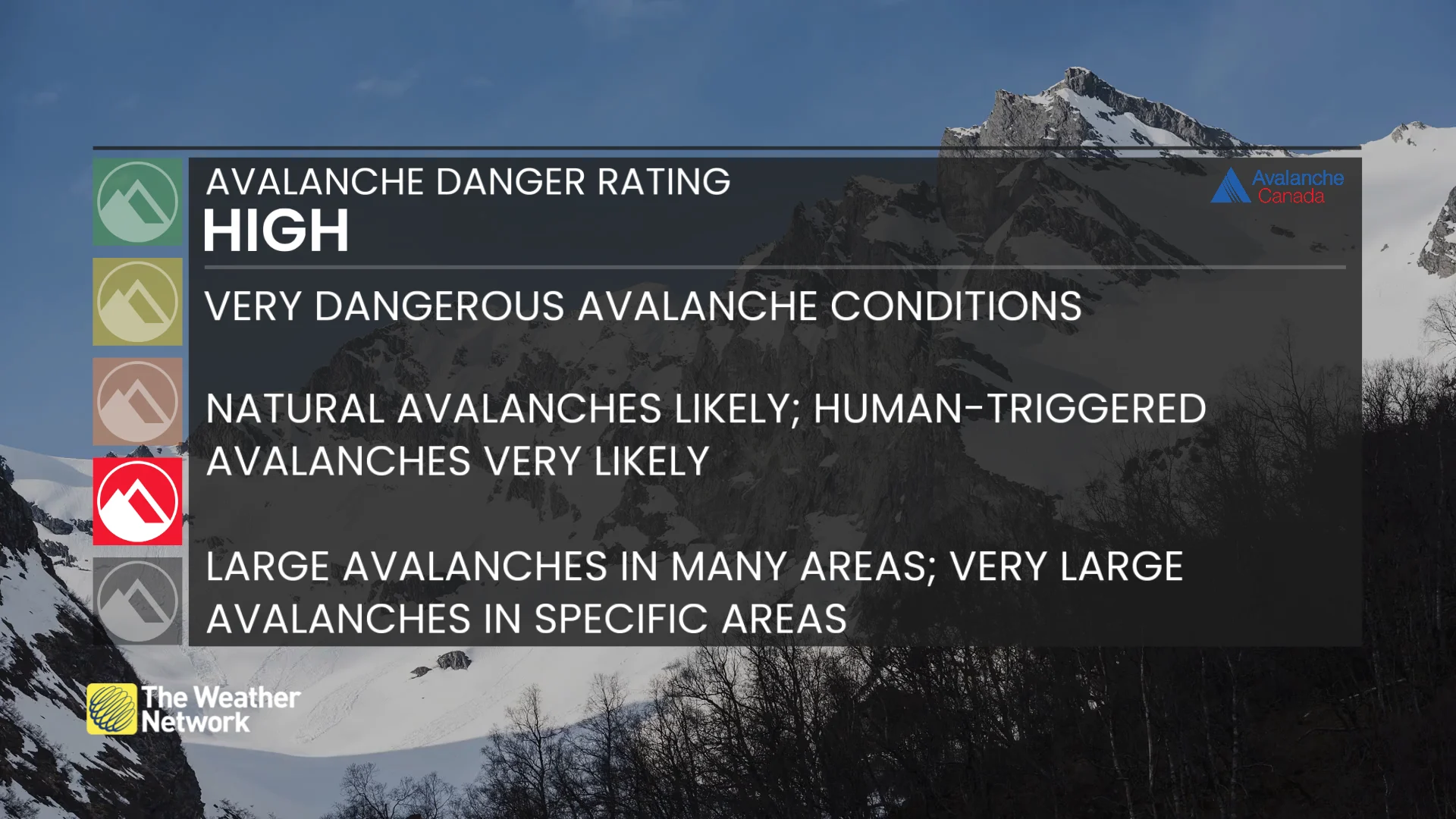
Explainer for a high avalanche danger rating. (Avalanche Canada/The Weather Network)
“Behind every data point is a story of people, communities, and how our understanding of avalanches has evolved,” said Valade. “This project helps us collectively remember avalanche victims, ensuring their stories continue to inform how we live, play, and make decisions in the mountains.”
The initiative came to fruition with support from a three-year grant from Public Safety Canada’s Search and Rescue New Initiatives Fund.
The allocated funds allowed Avalanche Canada to digitize, standardize and centralize decades of archival records into a searchable, map-based resource, making information that was distributed across multiple agencies more accessible to the public.
WATCH: How this Canadian resort is pioneering avalanche safety techniques