
If you’re reading this on the web or someone forwarded this e-mail newsletter to you, you can sign up for Globe Climate and all Globe newsletters here.
Good afternoon, and welcome to Globe Climate, a newsletter about climate change, environment and resources in Canada.
Devastating floods in British Columbia are bringing back bad memories of 2021, when flooding killed tens of thousands of animals and required federal disaster assistance exceeding $1-billion. Residents are questioning how much has improved since then.
Now, let’s catch you up on other news.
Noteworthy reporting this week:Oil and gas: New report backs Canada’s ambition to be energy superpower Justice: B.C. to amend Indigenous rights act after court ruling on mineral claimsOcean life: Teaming up on salmon hunts, orcas and dolphins in B.C. have developed a strategy that really clicksEcology: Why it’s important to mitigate the spread of invasive speciesPipelines: Liberals vote against Tory pipeline motion, calling it cheap stuntNuclear energy: American-owned consortium assumes control of Canada’s premier nuclear research facilityA deeper diveOpen this photo in gallery:
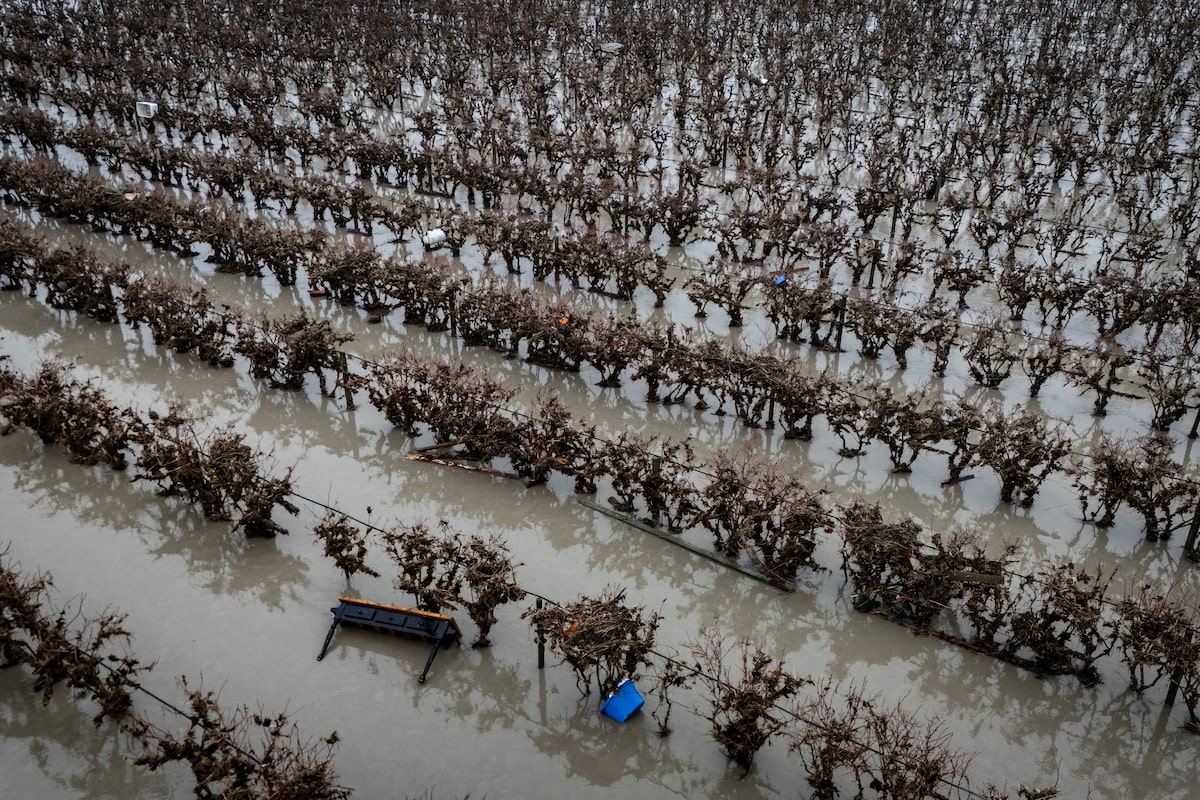
A table and a bin are caught in a field after flooding in Abbotsford, B.C., last week.ETHAN CAIRNS/The Canadian Press
‘I can’t farm this way’
For this week’s deeper dive, a closer look at the damage and broken trust after flooding in Western Canada.
Flooding forced hundreds of people and countless livestock in British Columbia’s agricultural heartland to be displaced last week, and more rain is still expected.
For those in the Fraser Valley, the recent events stirred uncomfortable memories of the catastrophic flood of 2021, the province’s most costly natural disaster. Residents and farmers are demanding answers as to why more hasn’t been done to heed lessons from four years ago.
For example, similar to the 2021 disaster, water from the Nooksack River in Washington state poured into Abbotsford. This year, floodwaters from down south once again drove British Columbians from homes and farms.
Talk about the need for a two-country solution to cross-border flooding – which has repeatedly devastated Canadians – has been going on for decades. One Canadian engineering study showed that a $29-million Nooksack levee in Washington could prevent more than $500-million in Abbotsford area flood damage.
The city needs “to have our friends in Washington state wake up,” Abbotsford Mayor Ross Siemens said. “We cannot continue to take this water.”
It was a grim weekend for Matt Dykshoorn’s brother and father, whose chicken barns were submerged in floodwaters. The birds died, despite frantic sandbagging efforts.
Poultry farmer Corry Spitters lost 200,000 chickens to the 2021 deluge. In the aftermath, federal and provincial ministers visited one of his farms and promised to improve the situation.
“And nothing has been done,” he said.
Siemens shared similar frustrations. He said Abbotsford and neighbouring municipalities have identified an array of new infrastructure necessary to prevent a repeat of 2021. But funding requests for those projects have been largely ignored by higher levels of government.
In good news, flood waters began to recede on Friday, more major roads opened in the past two days and evacuation alerts were lifted for more than 1,000 properties over the weekend.
However, a second stormy weather system is expected to bring significant rainfall through the region today and has the potential to exacerbate flooding issues in already hard-hit areas.
Buildings on Jem Farms stand submerged after flooding near the Sumas border crossing in Abbotsford, B.C., last Thursday.ETHAN CAIRNS/The Canadian Press
What else you missedOpinion and analysis
Africa has become the world’s dumping grounds
The practice of human dumping likely takes its inspiration from a phenomenon known as ‘waste (or plastic) colonialism.’
— Richard Poplak, Canadian journalist and filmmaker based in Johannesburg and Toronto
B.C. and Ottawa need to shift gears on EVs
B.C. and Ottawa can help risk-averse consumers make the switch by doing more to make EV ownership attractive. Distorting the market through limiting choice is the wrong strategy.
— The Editorial BoardGreen Investing
Albertans at risk of paying oil sands reclamation costs, Auditor-General says
Albertans risk being on the hook for billions of dollars‘ worth of cleanup of the oil sands under current rules that govern security payments for the massive mining operations, according to a new report from the province’s Auditor-General.
The funds held through the Mine Financial Security Program amounted to just $1.8-billion as of September. Meanwhile there is an estimated reclamation liability of $51.9-billion, the Office of the Auditor-General found in a report released Thursday. That amount represents the potential cost to clean up mines at the ends of their lives.
The Climate ExchangeWe’ve launched the The Climate Exchange, an interactive, digital hub where The Globe answers your most pressing questions about climate change. We have been collecting hundreds of questions and posing them to experts. The answers can be found with the help of a search tool developed by The Globe that makes use of artificial intelligence to match readers’ questions with the closest answer drafted. You can ask a question using this form.Photo of the weekOpen this photo in gallery:
Ayen Deng Duot, right, and her family reinforce their Nile River island in Akuak, South Sudan, with vegetation and mud last month to prevent their home from being flooded.Florence Miettaux/The Associated Press
Guides and ExplainersCatch up on Globe Climate
We want to hear from you. E-mail us: GlobeClimate@globeandmail.com. Do you know someone who needs this newsletter? Send them to our Newsletters page.