
Tennis is a sport that rarely, if ever, stops evolving. At first glance it might seem like a simple game frozen in time, but the tennis played today bears little resemblance to the tennis played decades ago.
Players are stronger, faster, and more athletic than ever before. There has never been as much raw power in the sport as there is today. That power is one of the reasons why one shot in particular is becoming critically important, and without it, you can’t really hope to build a championship career. It’s not the serve, and it’s not the forehand, but rather the return.
We’re entering an era of tennis where essentially every player has a massive serve. Rafael Nadal made an astute observation many years ago, noting that players are starting to play more similarly because that style dramatically increases the chances of winning. The homogenization of playing styles isn’t random. It’s a strategic evolution.
The serve, being the only shot over which you have full control, is arguably the most important shot in the entire sport. So with the rise of dominant serves in the modern era, the return has become equally crucial. It’s the ultimate counterbalance.
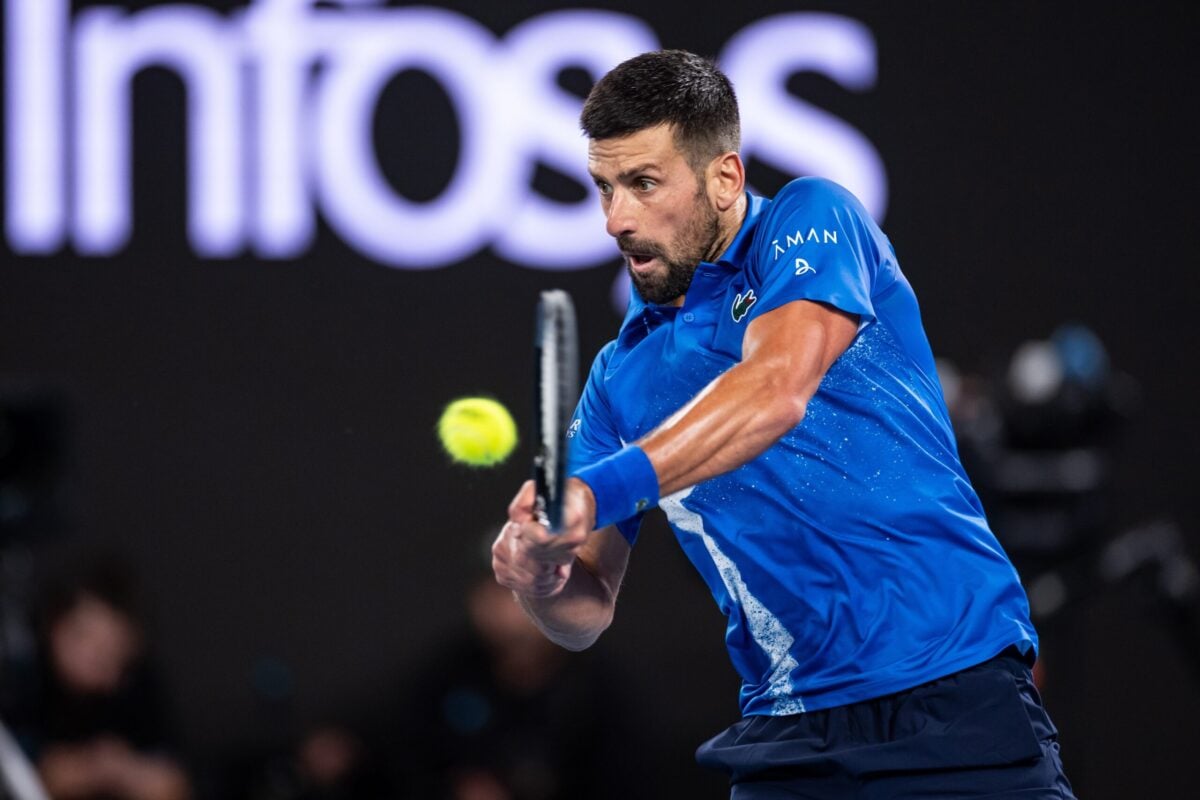
Consider this: Novak Djokovic is widely regarded as one of the best returners of all time. He also happens to be considered one of the best players of all time, if not the best. That’s not a coincidence. That return is one of the key pillars that made his dominance possible.
He’s far from just a great returner, of course, but having that weapon neutralizes the only clear advantage many players might have over him. If you’re forced to win in a baseline rally against Djokovic, your chances plummet. That said, even the best returner in the world can’t neutralize every serve, but that’s exactly the point.
When you’re in a matchup where your opponent’s serving ability gives them a significant edge, the few opportunities you do get become absolutely critical. A great return capitalizes on those moments, and there has never been an era where having a good return matters more than it does right now.
Just look at Jannik Sinner. He didn’t become this nearly invincible force until he fixed his second serve. When he transformed it into a legitimate weapon alongside his already dangerous first serve, he became incredibly difficult to beat. That’s the kind of advantage elite serving generates, and if you can’t return well in 2025, you’re facing an uphill battle.
Take Taylor Fritz as a case study. He’s a good player, a very fine player actually. He battled his way to a Grand Slam final, and in this era of increased parity, that’s no small achievement. He was competitive in that final too, even though he lost in straight sets. There’s no shame in that, but there is a reason he’s struggled to break through to the very top.
Yes, consistency has been an issue when he needs it most, but a major contributing factor is his return game, which simply isn’t where it needs to be. The numbers tell a stark story. In 2025, Fritz finished with an 18.1% break rate, placing him in the bottom 10 among all top 50 players. For someone in the top 10 with grand slam ambitions, that’s a glaring weakness. The less you break your opponent’s serve, the more you’re forced into tiebreaks, which can be coin flips. You’re reducing your chances of winning while increasing your chances of losing.
For Fritz, it’s part of a troubling trend. His break rate has been steadily declining since 2022: 24.7% in 2022, 22.5% in 2023, 20% in 2024, and now 18.1% in 2025. Some of this decline reflects the fact that more players are developing bigger serves because it’s become a focal point of modern development. You’ll rarely see young players coming through these days without a powerful serve.
That’s why having a strong return has never been more essential. Without it, you’re relegating yourself to being good rather than elite, and that’s not where you can afford to be if you want to achieve what most players dream of: winning a Grand Slam title.
Main photo credit: Mike Frey-Imagn Images