
Ritu Baral, managing director covering healthcare and biotechnology at TD Cowen, joins BNN Bloomberg to share her Hot Picks in biotech.
Biotechnology investors are watching companies developing treatments for serious medical conditions where few approved therapies exist, with attention on drugs nearing commercialization and key clinical milestones.
BNN Bloomberg spoke with Ritu Baral, managing director of health care and biotechnology at TD Cowen, about three biotech stocks she sees as well positioned based on recent approvals, late-stage trials and upcoming data catalysts.
Key TakeawaysBiotech opportunities are increasingly centred on drugs targeting severe and underserved conditions with limited existing treatment options.Recently approved therapies entering early launch phases can become major valuation drivers as adoption accelerates.Neurological disorders such as essential tremor represent large markets with significant unmet medical need and quality-of-life impact.Late-stage clinical programs approaching regulatory filings can create rapid growth inflection points for biotech stocks.Small-cap biotech names with upcoming binary trial data carry higher risk but can offer substantial upside if results are positive.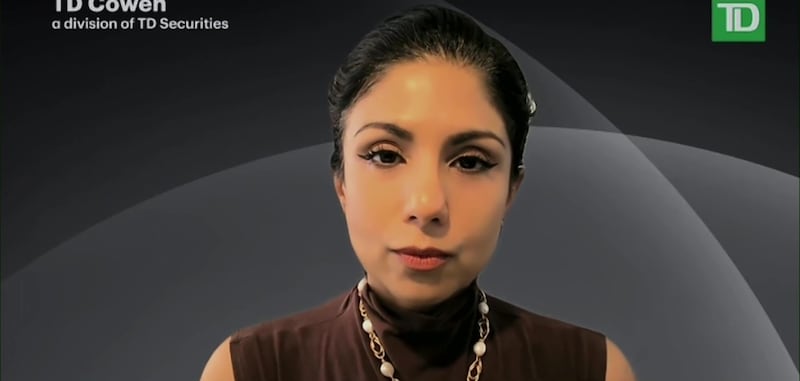 Ritu Baral, managing director covering healthcare and biotechnology at TD Cowen Ritu Baral, managing director covering healthcare and biotechnology at TD Cowen
Read the full transcript below:
ROGER: Time now for Hot Picks, and our next guest covers the health-care and biotechnology sector. Here to give us her hot picks is Ritu Baral, managing director covering health care and biotechnology at TD Cowen. Ritu, thank you very much for joining us.
RITU: Good to see you.
ROGER: All right. First up, we’re talking about Insmed.
RITU: One of the things we look for when picking major stocks for the coming year are three portions of the investment thesis: a base business, a product cycle and a pipeline. We see Insmed, one of the newest large caps in the biotech sector, as having all three — a base business with a rare pulmonology inhaled product doing more than $500 million in sales; a product cycle with a new approval addressing a billion-dollar market with no other approved therapies; and a deep, de-risked pipeline.
This new drug is called Brinsupri for bronchiectasis, which affects a meaningful population of roughly 500,000 people in North America. The pipeline includes similar drugs that we think will expand the total addressable market for both Brinsupri and follow-on indications, extending valuation and investment drivers into 2026 and 2027. These compounds also have strong intellectual property, providing long asset duration and additional value creation.
ROGER: And how close are they to bringing this to market? Is it already available?
RITU: It has just been approved and is on the market, but it is still early in the launch. Brinsupri was approved late this year, and the first full, meaningful quarter of sales will be fourth-quarter results, likely pre-announced in early January. We expect that growth driver to accelerate through 2026.
ROGER: You mentioned they have two products working together. Is that unusual?
RITU: Usually it is one at a time. In this case, Brinsupri is the current product cycle, and they also have a base business called Arikayce, which is a few years old and still growing. The two products share the same sales force, which creates synergistic growth across the portfolio through shared sales and marketing efforts.
ROGER: Let’s move on to Praxis Precision Medicines. That sounds like it has a lot of potential. Is this personalized medicine?
RITU: It is a neuroscience-focused company with elements of personalization in its pipeline. They are pursuing a broader indication called essential tremor — you can see where the phase-three trial worked on the stock chart — as well as a rare epilepsy pipeline.
This is an unusual situation because they are entering two product cycles around the same time. Both the essential tremor and rare epilepsy programs are expected to converge on similar approval and sales timelines. We anticipate approvals over the course of 2026, driving launches in late 2026 or early 2027. This creates a rapid growth story through the end of 2026, with a rich, de-risked pipeline supporting the investment thesis.
ROGER: And just to clarify, what are the illnesses again?
RITU: Essential tremor and rare epilepsy. The main investor focus is a drug for essential tremor, a condition that is not rare and can severely affect quality of life. It causes tremors in the hands, making it difficult for people to work, type or, in more severe cases, take care of themselves.
In phase-three trials, the drug has shown significant improvement in tremor severity, both objectively and through patient and clinician assessments. We think this represents a market of more than $5 billion, based on both sell-side consensus and buy-side expectations. We expect a filing in the first half of 2026, a likely late-2026 approval and sales beginning in 2027.
ROGER: We’re almost out of time. Palvella Therapeutics — what do you like about it?
RITU: There were strong data released this morning from a pipeline program, but the lead program will have binary data in the first quarter. This is a classic small-cap biotech binary story. However, we see the upcoming data for a condition called MLM, using a rapamycin-based therapy, as significantly de-risked.
We understand how rapamycin works, and the drug has shown strong phase-two data. The phase-three trial has meaningful similarities to positive precedent data, which creates significant upside potential on the readout. It’s not for everyone, but it is a classic biotech setup.
ROGER: Ritu, thank you very much for joining us.
RITU: Thanks for having me.
ROGER: That was Ritu Baral, managing director covering health care and biotechnology at TD Cowen.
DISCLOSUREPERSONALFAMILYPORTFOLIO/FUNDINSM NASDAQNNYPRAX NASDAQNNYPVLA NASDAQNNY
—
This BNN Bloomberg summary and transcript of the Dec. 15, 2025 interview with Ritu Baral are published with the assistance of AI. Original research, interview questions and added context was created by BNN Bloomberg journalists. An editor also reviewed this material before it was published to ensure its accuracy and adherence with BNN Bloomberg editorial policies and standards.