
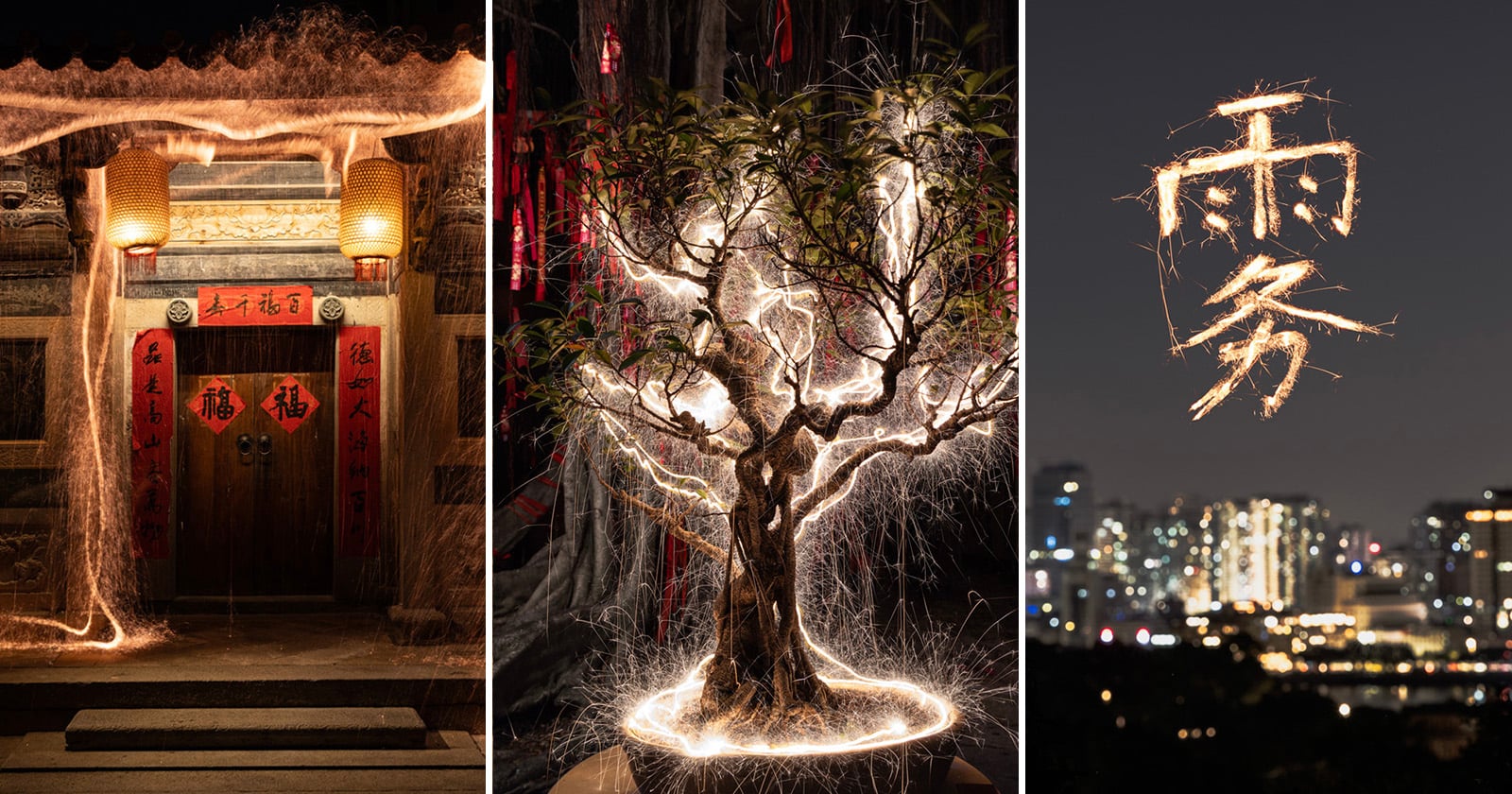
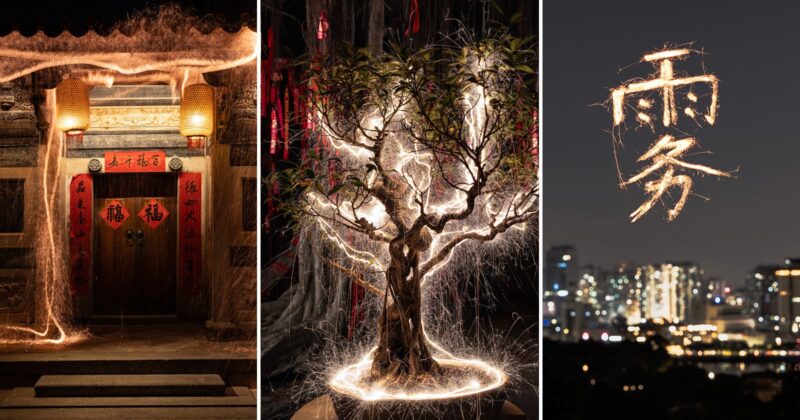
Photographer Vitor Schietti’s images feel less like frozen instants and more like memories caught mid-drift. Hovering between observation and imagination, his images stretch time, bend light, and invite viewers into moments that feel both familiar and otherworldly.
Before photography, Schietti’s creative foundation was built through drawing and painting, particularly watercolor, during his teenage years. That early urge to express visually never left him, even as his tools evolved.
“I always had an urge to express through art. I transitioned to photography, having started from drawing and painting in my teenage years, especially watercolor,” Schietti says.
He began photographing on film in the early 2000s, but it was the shift to digital that truly accelerated his growth. The immediacy of digital photography offered a faster, more flexible way to translate ideas into images, allowing his passion for the medium to take hold. A defining moment came in 2006, while living in Montreal, when street photography, long exposures, and light painting helped him fully embrace his identity as a photographer.
Dream Logic and the Language of Light
Schietti’s work is driven by imagination rather than documentation. His photographs often feel dreamlike, shaped by memory, motion, and subtle emotional cues rather than literal narratives. This approach is intentional, rooted in his belief that memory and imagination are central to how people connect with the world.
“I’m happy when I create images that play with the imagination, that seem to come from a dream, or that evoke memories,” Schietti says.
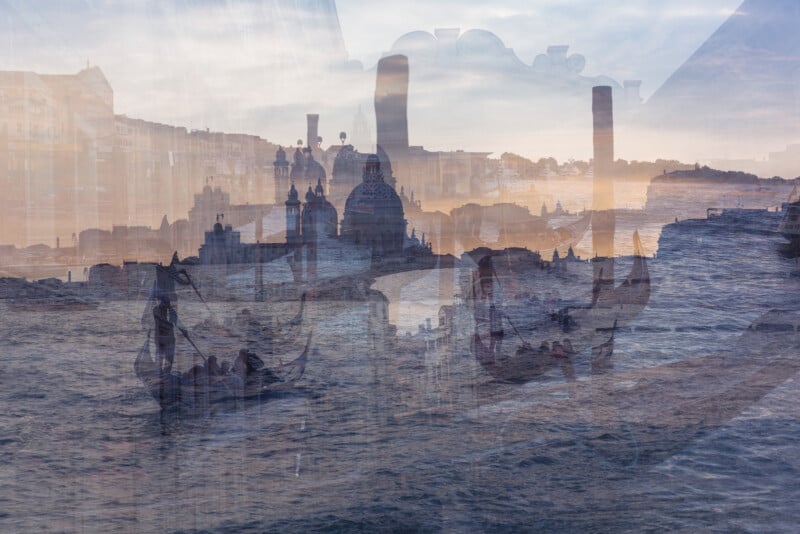
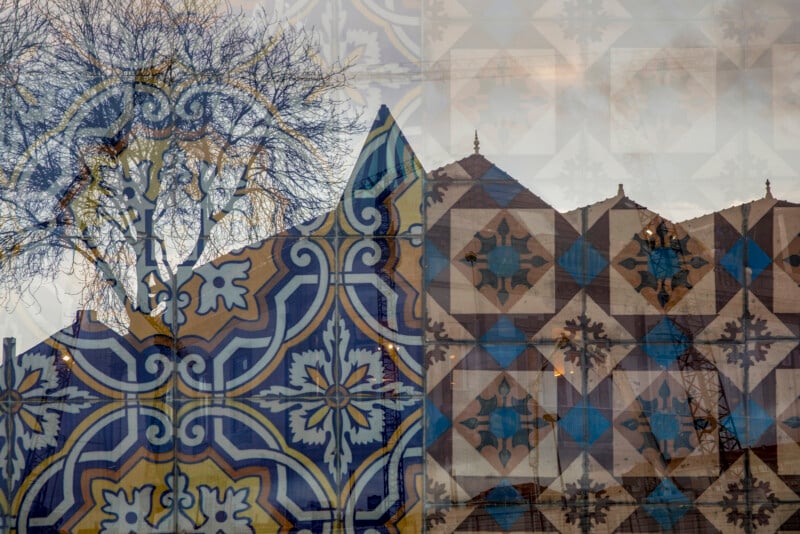
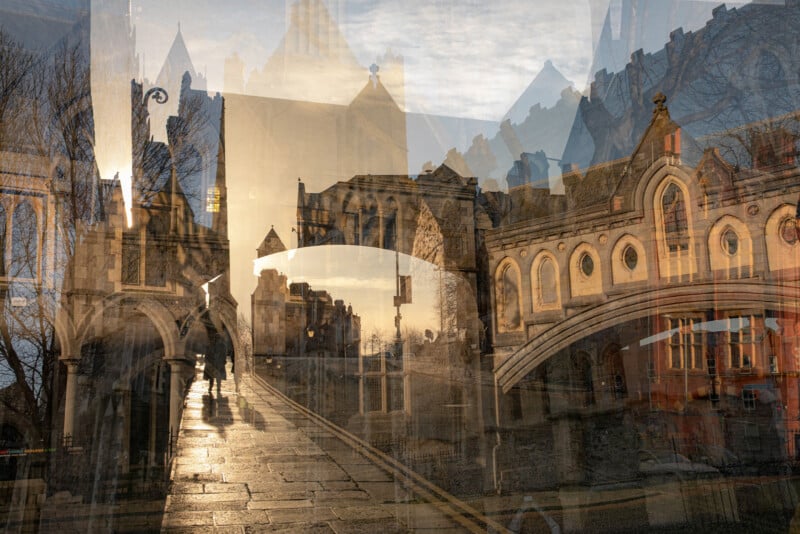
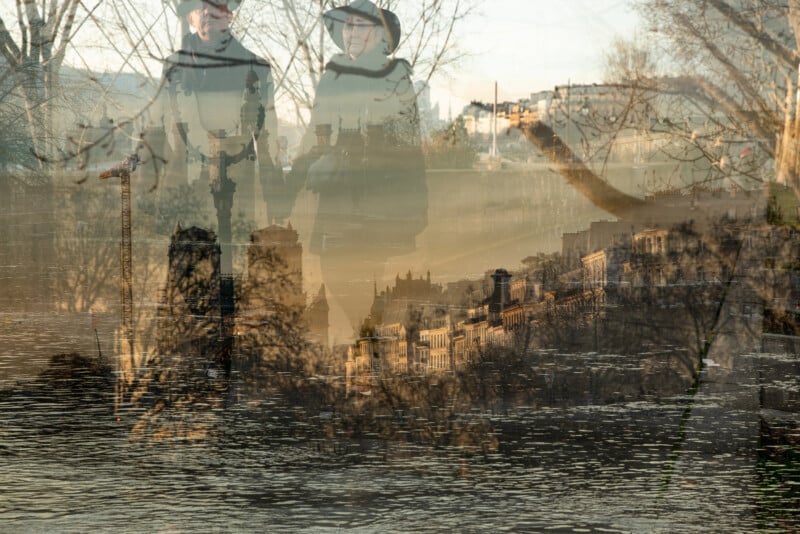
To achieve this, he frequently relies on long exposure, light painting, and multiple exposures, techniques that allow him to move beyond straightforward representation. His creative influences extend well beyond photography, drawing inspiration from filmmakers such as Akira Kurosawa, Alejandro Jodorowsky, and Richard Linklater, as well as photographers like Gjon Mili, Gregory Crewdson, and Reuben Wu, and contemporary artists including Anish Kapoor and Eric Staller. Together, these influences contribute to a visual language that feels cinematic, surreal, and emotionally layered.
For Schietti, the most rewarding moments come when an image carries both aesthetic impact and emotional depth. He sees photography as a way to contribute something positive, creating images that invite reflection and connection.
“The feeling of creating something beautiful, with layers of meanings, with colors and shapes that capture the eye and invite it to a journey… when I capture an image that transmits those feelings, I feel I’m contributing to make this world a bit better,” Schietti explains.
Some of his most meaningful photographs are deeply personal, tied to relationships, travel, or challenges he is experiencing at the time. Translating those lived experiences into visual form adds another layer of significance, both for him and for the viewer.
Flow Versus Planning: Two Ways of Working
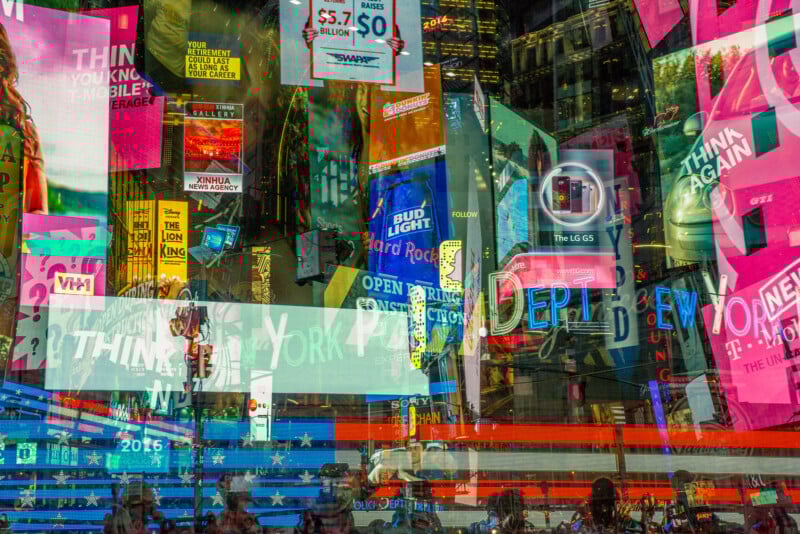
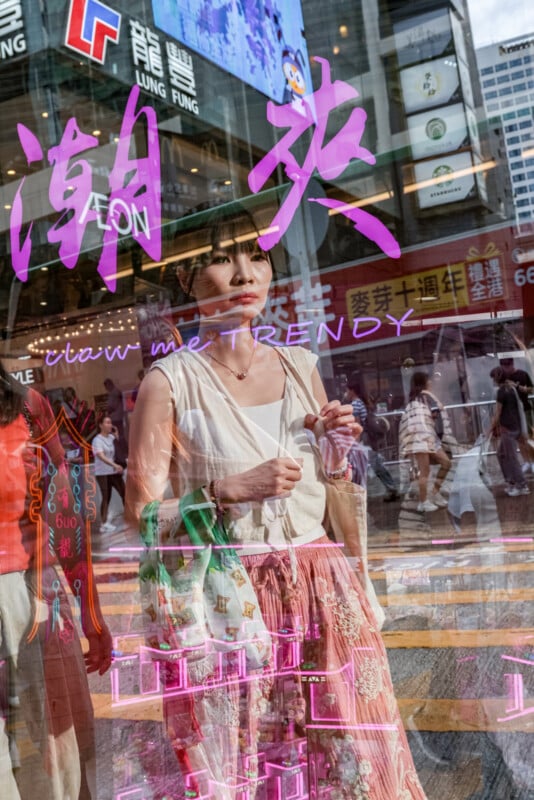
Schietti’s workflow moves between spontaneity and careful preparation. In his more intuitive approach, he explores cities and landscapes in a state of flow, walking slowly and remaining attentive to light, gesture, color, and chance interactions. Many images may be merely good, but persistence often leads to something unexpected and compelling.
This mindset is central to his ongoing Extended Moments series, which has grown to encompass nineteen cities, with Hong Kong as the most recent addition.
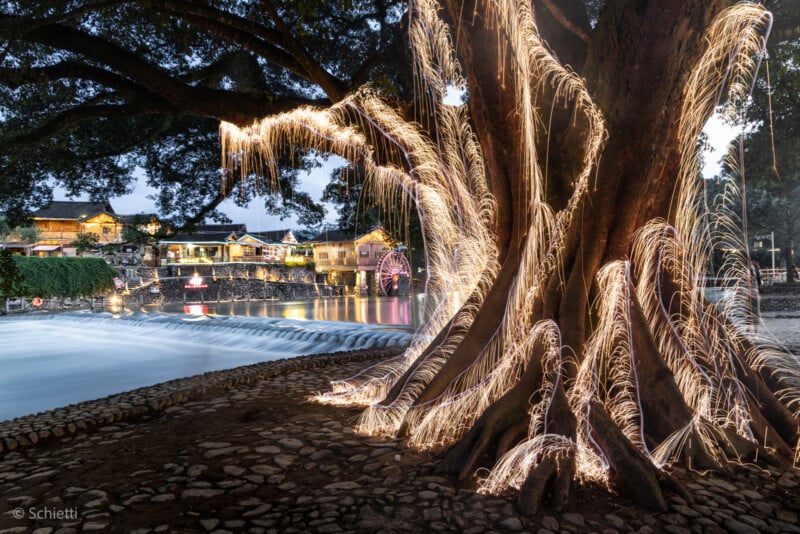
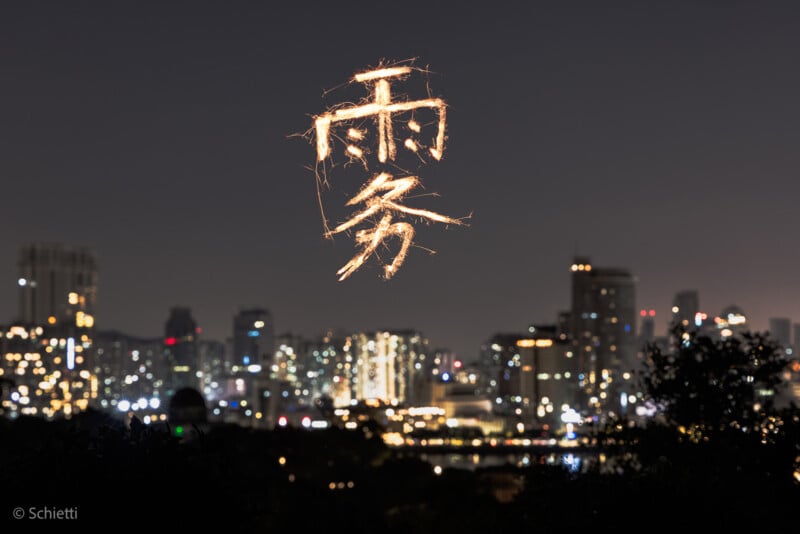
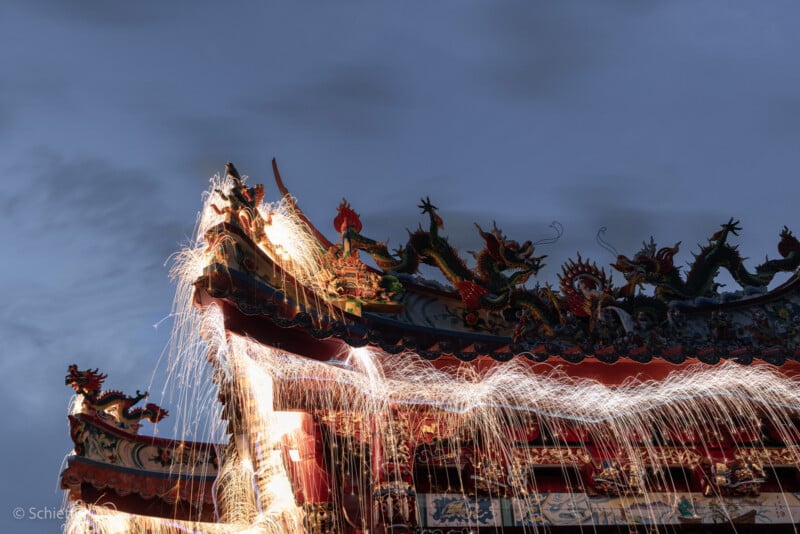
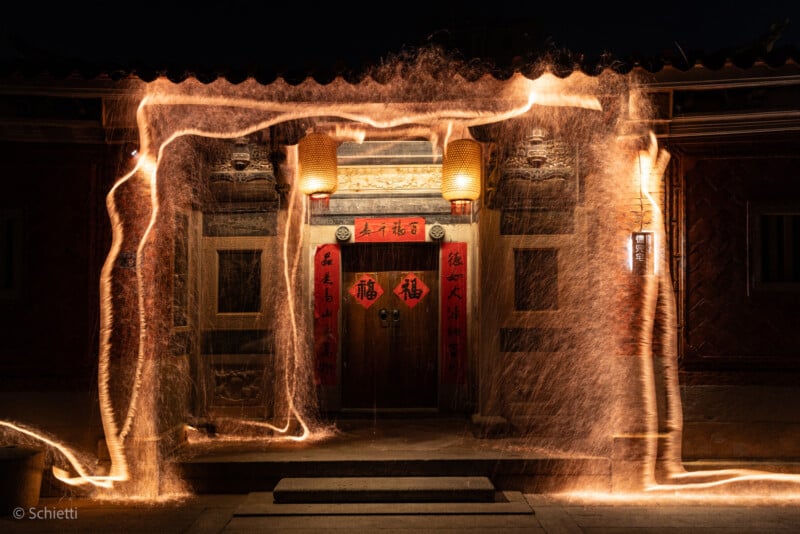
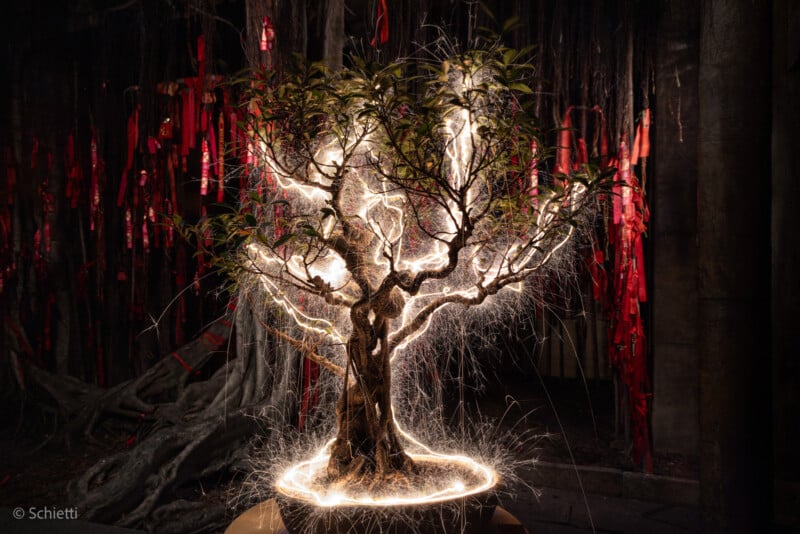
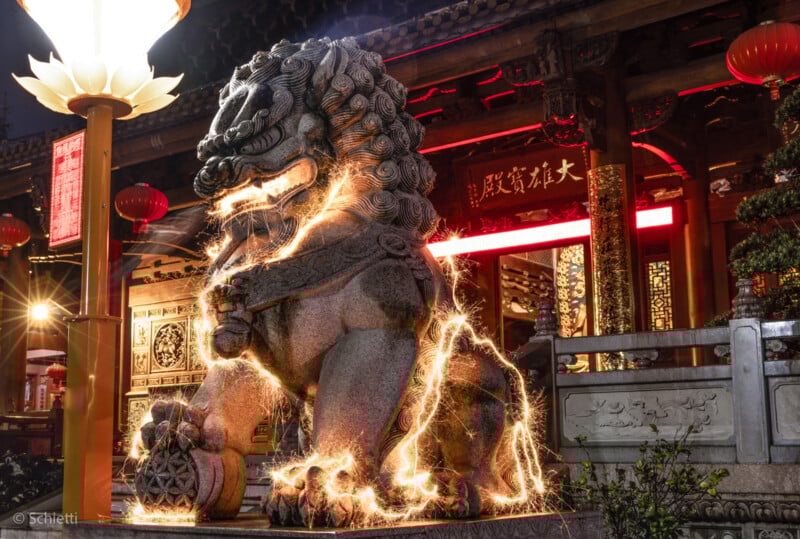
In contrast, projects like Impermanent Sculptures demand a highly planned process. These images, created by drawing with sparks of light during long exposures, require scouting, specific permissions, and detailed equipment preparation. Post-production then becomes a moment of discovery, when the image reveals its final form.
“The thrill here arrives during the editing, when I unveil an image that invites the viewer to wonder about what’s real and what’s imagined,” Schietti says.
Recurring Themes: Nature, Streets, and Surreal Gestures
A deep respect for the natural world runs through much of Schietti’s work. While not a wildlife photographer by definition, he is drawn to animals whenever the opportunity arises, particularly in sanctuaries or protected environments.
Street photography is another constant thread. The mix of luck, attention, and readiness required to capture fleeting moments continues to challenge and energize him. Based in Barcelona, he teaches street photography through the Pentaprisma school, often photographing alongside his students. Observing human behavior in urban spaces, even through indirect or architectural traces, has become both a way to understand humanity and a form of creative therapy.
“To see a person through different shapes of eyes is magical,” Schietti says.
Light painting remains a particularly important outlet, reconnecting him with his roots in painting. Whether using fire, water, or camera movement, Schietti treats light as a brush, pushing photography toward abstraction and painterly expression.
While intuition plays a major role in Schietti’s decision-making, technical awareness remains essential. Exposure, depth of field, focus, and composition are always considered in service of the image’s intention. Years of experimentation, including failure, have helped him refine how technical choices can support emotional impact.
“There’s certainly a lot of intuition that arrives from years and years of practice,” Schietti says. “But technical aspects… are important to keep in mind and be attentive at all times.”
Defining Images and Personal Milestones
Among the many photographs he has created, a few hold special significance. A recent image of a tree in China’s Huangshan province, captured using long exposure and camera movement, echoed a similar photograph he made in Greece years earlier, creating a personal dialogue across time and place.
Another key work, Submerged (Brazil, 2012), was created with the camera partially underwater while a close friend dove nearby. The photograph carries the emotional weight of that shared experience and is currently exhibited at the Nordic Contemporary Center in Xiamen, China. Tree of Life (Brazil, 2015), one of the earliest images from Impermanent Sculptures, has become the most emblematic photograph of that series and marked a pivotal moment in his artistic direction.
Looking Ahead: Photography and Cinema
Schietti’s ambitions extend beyond still photography. His long-term goal is to sustain himself entirely through his artistic work while continuing to expand into cinema as a director of photography.
“My biggest aspiration is to live entirely through my artistic photography and direction of photography in cinema. I’ve spent many years working in advertising photography in Brazil before emigrating to Barcelona, Spain, where I have continued to work in photography with new clients and do more video than photo,” Schietti says.
Currently studying Direction of Photography at the Barcelona School of Cinema and Animation, he continues to balance commissioned work with personal projects. A recent artistic residency in China reinforced his desire to travel and create, and new developments within Impermanent Sculptures are already in motion, with more to be revealed in 2026.
Across all formats and techniques, Vitor Schietti’s work remains anchored in connection. Through extended moments, painted light, and carefully observed fragments of the world, he invites viewers to slow down, imagine more deeply, and reconnect with the beauty and complexity that surround them.
Image credits: Vitor Schietti