
 Photo: Kevin Sousa/CFL.ca
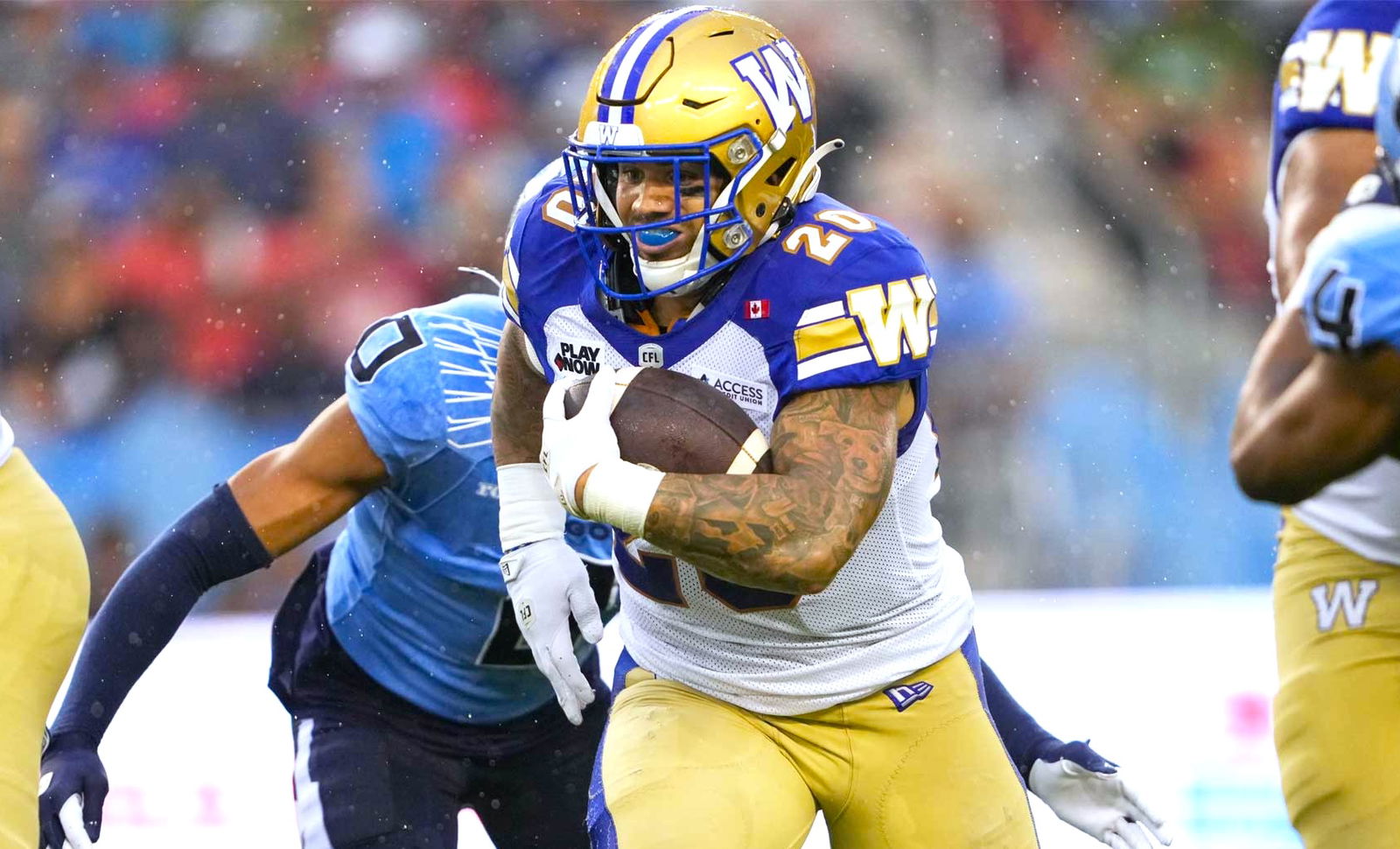
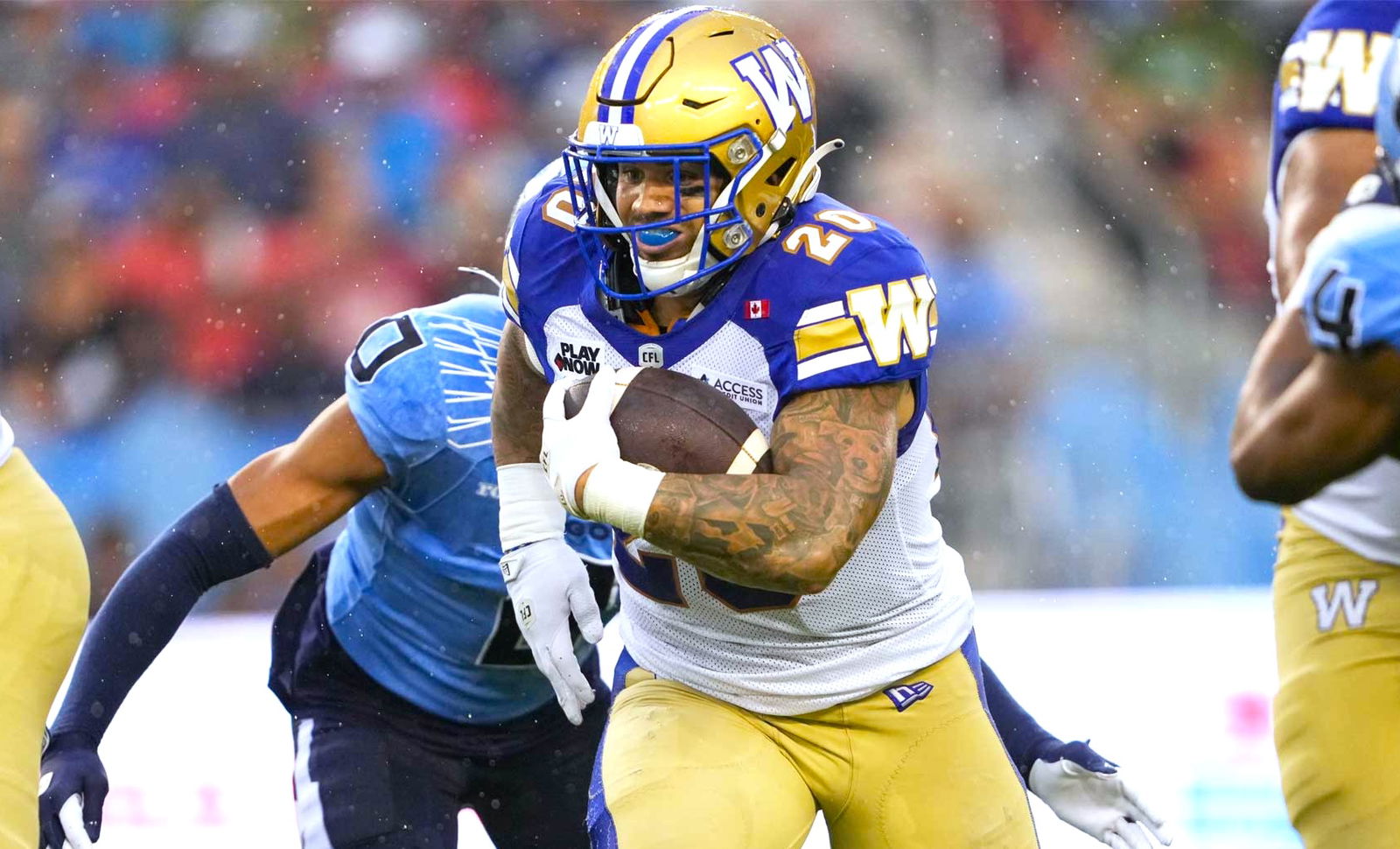
Brady Oliveira’s three-year contract extension with the Winnipeg Blue Bombers includes guaranteed money in 2028, he told the media on Tuesday. According to the star running back, he wouldn’t have signed a new deal without it.
“(Guaranteed money) was one of the non-negotiables for myself. If I wanted to sign a three-year deal and show my loyalty and commitment to this organization, I want them to show it back to me. From the top down, this organization through the negotiation process showed me nothing but love and respect. For them to do that, it just made me feel really good,” said Oliveira at Princess Auto Stadium.
“Your shelf life is short as a professional athlete and I think all players should ensure that they have protection. I think adding guaranteed money into your contract does that for you, especially signing a long-term deal. You don’t know the direction that the club wants to go in. If another coaching staff comes in, God forbid, and they want to make some decisions and move pieces around, that protects you.”
The lack of long-term contracts in the CFL is arguably still a problem, though it used to be much worse. With teams having the ability to release players partway through multiyear contracts without penalty, players and agents often sought to protect themselves by signing only one-year deals. This was exacerbated by the COVID-19 pandemic, which put the league on uncertain financial footing that resulted in most of the league’s veterans being forced to restructure their contracts for 2021.
“The way the (collective bargaining agreement) is set up right now, it makes it difficult for people to sign long-term deals,” said Zach Collaros shortly after the 2021 season, when he was the league’s two-time reigning Most Outstanding Player. “I think that players would like to, but I don’t think it’s in our best interest to do so, to be quite honest.”
Powered by RedCircle
A few months later, the CFL and CFL Players’ Association (CFLPA) ratified a new CBA that allowed players to negotiate partially guaranteed contracts. There were a few caveats — guarantees had to be in the final year of a multiyear deal, couldn’t exceed half the value of the salary, and could only be provided by the player’s incumbent team — but it was still a groundbreaking development for the league.
We’ve since seen more players sign long-term extensions, resulting in less transiency across the CFL. After previously speaking out about why players weren’t signing long-term contracts, Collaros signed a three-year deal with the Blue Bombers near the end of the 2022 season, which included guaranteed money.
Other CFL teams were arguably too freewheeling with guaranteed money, at least in the first year it was available.
3DownNation reported that Taylor Cornelius and Jake Maier were the first two CFL players to sign contract extensions that included guarantees and neither player ended up being a long-term fit at quarterback. Edmonton cut Cornelius in 2024 despite his guarantee, costing them $100,000 against the salary cap, while the Stampeders kept Maier for the 2024 season when they may otherwise have chosen to move on.
According to multiple sources around the league, guarantees are still relatively rare but they’ve certainly led to some marquee players signing long-term extensions. Players with active guarantees include Montreal receiver Tyson Philpot, Saskatchewan offensive lineman Logan Ferland, and Montreal offensive lineman Pier-Olivier Lestage.
For Oliveira, he wasn’t willing to sign an extension that didn’t include guaranteed money. With a resume that includes four 1,000-yard seasons, two All-CFL selections, two CFL rushing titles, two Most Outstanding Canadian awards, and one Most Outstanding Player award, it probably wasn’t tough for him and his camp to secure a guarantee from his hometown team. As first reported by 3DownNation, the contract is worth $290,000 in 2026 before increasing to $300,000 for 2027 and 2028.
“(The CFLPA) fought hard for that. Now that it’s in our union, why not try to get that guaranteed money?” he said. “They fought for that and now it’s there. Obviously, not every guy’s gonna be able to get it, but if you’re able to, why not try and get that done?”