

Listen to this article
Estimated 4 minutes
The audio version of this article is generated by AI-based technology. Mispronunciations can occur. We are working with our partners to continually review and improve the results.
Students and teachers in Fort St. John, B.C., are getting new rules on the use of artificial intelligence as the local school board prepares to roll out the technology in classrooms across the district.
School District 60 trustees approved guidelines on Monday that will allow students to use approved AI tools, but only under a teacher’s direction. AI use must be within school codes of conduct and personal information cannot be shared.
“We know that students are using it, but we don’t really know to what degree outside of the classroom,” said Stephen Petrucci, the district’s superintendent of schools.
“AI is here and we just want to be proactive about it.”
The district had been developing the guidelines over the past year with the help of the province and school districts in the Lower Mainland, including West Vancouver and Surrey, Petrucci said.
The province released guidelines and resources in 2024 to help schools develop their own policies for the “ethical, responsible, and safe use” of AI.
While School District 60 isn’t yet at a point where teachers are explicitly teaching and using AI in the classroom, Petrucci says there are questions being raised about student work and assessment.
He likened the guidelines to “guardrails” to give students and teachers clarity on what the boundaries are. The goal, he said, is to “embrace [AI] in a constructive way as opposed to just sort of that cheating paradigm.”
“It’s really safety first, that’s where we’re starting with this, to make sure our students are protected, and then looking at the educational uses of it.”
WATCH | How some schools are integrating AI in classrooms: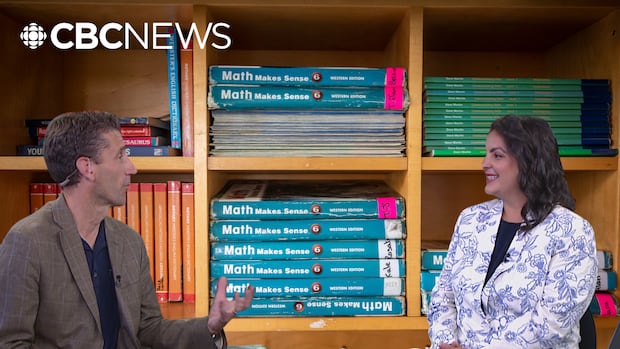
How some schools are integrating AI in classrooms and reshaping learning
In the 1980s, classroom learning changed forever when computers were introduced and revolutionized schools. Something similar is happening right now in the age of AI. While many remain cautious about using it, some schools are leveraging its benefits to reshape the way they teach and the way students learn. West Vancouver School District’s superintendent of schools and CEO tells us how their classrooms are using AI.
One key guideline is keeping personal information out of AI prompts.
Others include checking for mistakes and biases, acknowledging the use of AI in any class work, respecting Indigenous knowledge as it may not show oral traditions correctly, and using AI to support inclusion in the classroom.
“We want it to be used constructively,” Petrucci said.
Students will be allowed to use district-approved AI tools like Google Gemini and Microsoft Copilot, which have already been opened up to school administrators and teacher leaders.
Petrucci expects those programs will be rolled out district-wide, first to staff and then to students, within the next year once training and supports are in place.
“When they use it, it’s under the umbrella of the district’s security screens,” he said.
Board chair Helen Gilbert says work is ongoing to develop best practices for training and learning.
“We have early adopters and we have some that are going to end up pulled along.”
She also says parents have been asking for clear rules, particularly when it comes to safety.
“They want kids to be safe,” Gilbert said. “So there’s a lot of things in there about safety and using responsibly, not providing things that would allow you to be personally tracked back.”
Thomas Whitton, an outgoing trustee and the father of four, says AI has already become ubiquitous in their daily lives without them realizing it.
“When they say, ‘Hey, Google,’ or, ‘Hey, Alexa,’ they’re talking to artificial intelligence,” he said.
Whitton’s family doesn’t use AI to do homework, but he does see its value if students are taught how to use it properly inside and outside the classroom.
“They’re going to have to make their own decisions on how they use it,” he said.
“Hopefully we can give them the guidance, not just at the household but also at the school district level, to use it properly — to not put personal information out, to not increase your own digital tattoo.
“To just make sure you’re putting information out there that is healthy and grows your knowledge base.”
Subscribe to CBC’s Fort St. John Weekly for a roundup of the best news and stories from B.C.’s Peace and Northern Rockies.