
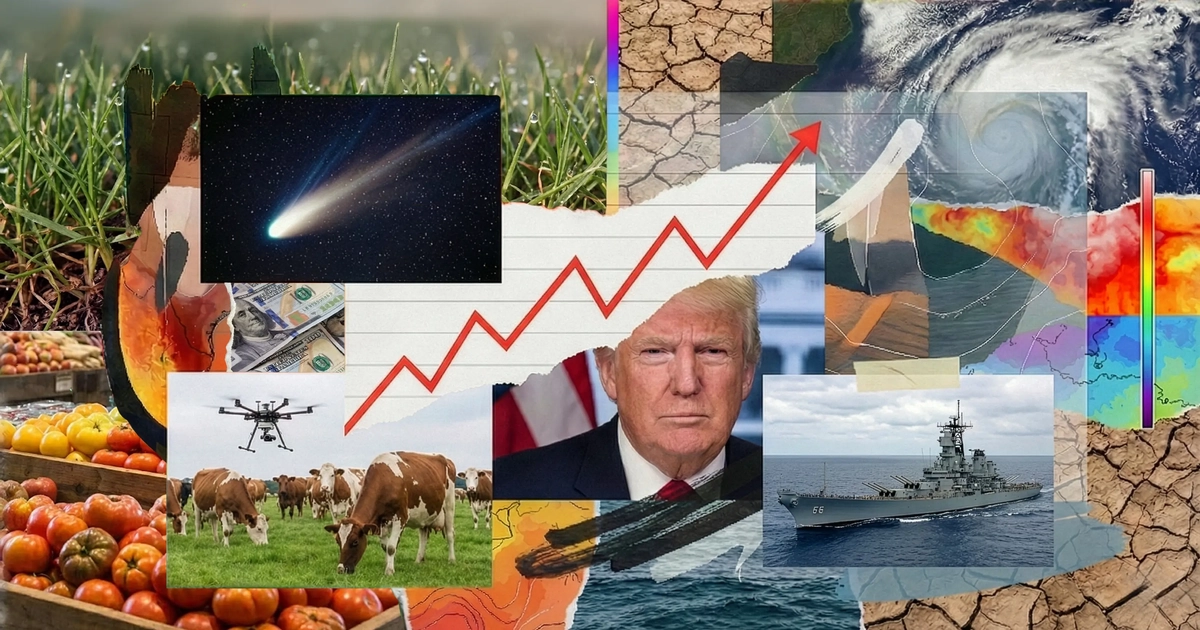
From a new presidential administration and consequential tariffs to devastating wildfires and a new comet, to pop culture news and continued international conflict, faculty experts at Michigan State University offered thoughtful, research-based commentary to provide insight and context on these events.
MSU researchers continued to make breakthroughs and discoveries this year despite unprecedented federal research terminations, which present major implications to both Americans and people across the world.
As Michigan State University ranked as a top 50 global research university this year, the institution is often featured in the media for its research prowess, major discoveries and scientific breakthroughs. MSU faculty prioritize engaging media with the goal of advancing public knowledge and fact-sharing to support more informed decision-making and policy funding, as well as to combat misinformation and disinformation, both of which are on the rise.
Take a look at some of our top research and story placements as well as expert commentary in national, statewide and local media throughout 2025.
2025: When politics overpowered science
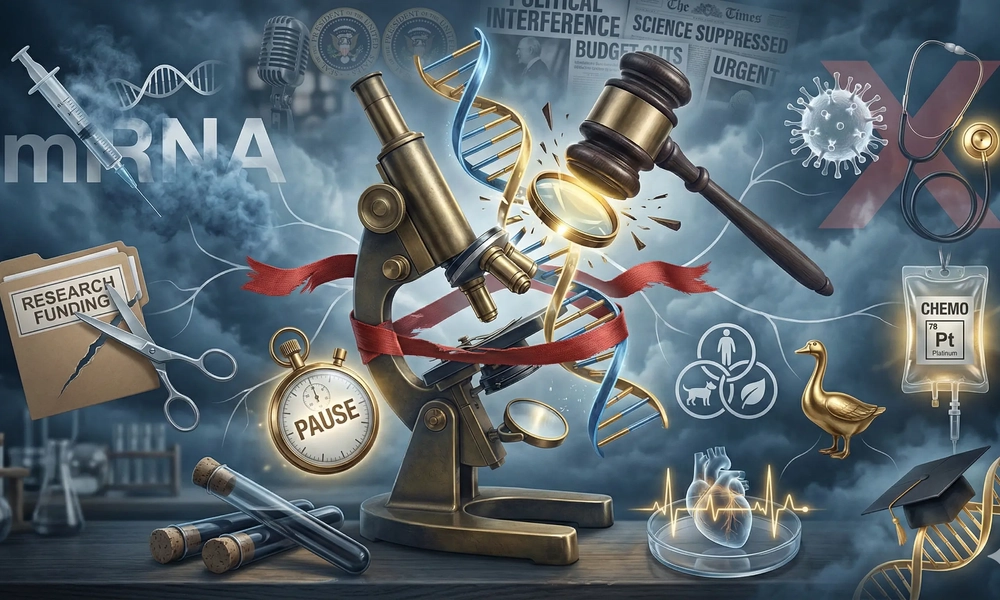
In 2025, the Make America Healthy Again, or MAHA, initiative became one of the year’s most contentious public health stories as federal leaders reshaped the Centers for Disease Control and Prevention and rolled back established vaccine guidance while researchers warned that these changes frequently relied on flawed or nonexistent science. Even highly visible actions like phasing out synthetic food dyes drew criticism for lacking scientific rigor and relying on voluntary compliance.
When the U.S. Department of Health and Human Services announced a $500 million budget cut for the research and production of vaccines based on mRNA technologies and changed its vaccine guidelines, MSU’s Rebecca Schein, a pediatric infectious disease physician in the College of Human Medicine, shared her knowledge about what people should know and how to prepare for these changes. Schein spoke with several media outlets, including writing an article about measles in The Conversation.
But the biggest shock to the scientific community came when the National Institutes of Health announced sweeping cuts to major grant programs — reductions that significantly impacted universities, hospitals and research institutes nationwide. Long-standing projects in cancer, neuroscience, infectious disease, maternal health and environmental health all saw sudden freezes or eliminations, leaving scientists scrambling to maintain labs, staff and clinical studies.
At MSU, faculty raised alarms about the immediate fallout: paused trials, disrupted student training pipelines and delays in life-saving research. Experts emphasized that these cuts don’t just affect universities — they slow medical progress, weaken the national research workforce and ultimately impact patients who rely on new diagnostics, treatments and public health breakthroughs.
Dawn Misra, chair of the Department of Epidemiology and Biostatistics at the College of Human Medicine, was halfway through a study on infant mortality among Detroit mothers when it was canceled and shared her experience with The New Yorker and The Detroit News.
Cara Poland, associate professor at the College of Human Medicine, who runs a drug treatment clinic, testified about the drastic cuts to opioid prevention. Other scholars, such as Red Cedar Distinguished Professor Natoshia Cunningham, authored op-eds about how the impact of program cuts, even abroad, will negatively affect Americans.
Jeffrey MacKeigan, a professor at the College of Human Medicine, submitted an article to The Conversation about how there is literally no replacement for government-funded cancer research.
But while national health policy drifted toward ideology, MSU’s faculty members have remained committed to providing public health guidance grounded in data and science-based breakthroughs like the research that led to the discovery of cisplatin, which continues to save lives after nearly 50 years.
One of MSU’s most celebrated moments in 2025 was the national recognition of cisplatin — the groundbreaking cancer drug discovered through MSU-led research. In 1965, a group of Michigan State University researchers discovered it while working on an unrelated chemistry project. Since then, cisplatin has become the industry standard for cancer-fighting chemotherapy treatments. In September 2025, MSU received a Golden Goose Award for the scientific success and global impact of cisplatin. The Golden Goose Award is meant to highlight the practical value of curiosity-driven research. The idea is that fundamental research can lead to unexpected, but profound, societal benefits.
Cancer is everywhere, unfortunately. From understanding the origins of cancer to engineering precision therapies, MSU scientists continue to push the boundaries of what’s possible in the fight against this disease. In September 2025, researchers at Michigan State University unveiled an innovative hydrogel with the consistency of shampoo that may help protect hair from falling out during chemotherapy. Designed to be applied before and kept on during treatment, the gel offers a potentially accessible, lower-impact approach to preserving patients’ appearance and dignity in what is often a difficult time.
In January, MSU Research Foundation Professor Teresa Woodruff joined one of the most exclusive circles in American science when former President Joe Biden awarded her the National Medal of Science — the nation’s highest honor for scientific achievement. Woodruff, the first Spartan ever to receive the medal, was recognized for groundbreaking contributions to reproductive biology, cancer research and the creation of an entirely new scientific field: oncofertility, which bridges oncology and reproductive health. As MSU President Kevin Guskiewicz said, “Her oncofertility research has given thousands of patients and their families hope for a better future.”
At MSU, we know that funding and research leads to ongoing discoveries. In 2020, Aitor Aguirre, associate professor and chief of the Division of Developmental and Stem Cell Biology in MSU’s Institute for Quantitative Health Science and Engineering and his team started creating and perfecting tiny working models of the human heart known as organoids. His lab is now a pioneer and world leader in human heart organoid technologies. These organoids are truly mini hearts, complete with chamber-like structures and vascular networks including arteries, veins and capillaries. The team’s most recent development was to modify the organoids to replicate atrial fibrillation, or A-fib. This development will benefit an estimated 60 million people who have arrhythmias, or irregular heartbeats. No new drugs have been introduced for this condition for more than 30 years because accurate models have not been available.
To solve real health problems like A-fib and strengthen Michigan’s leadership in science, health care and education, MSU will continue to look forward and prepare for what’s next. In 2025, MSU began to evaluate “One Team, One Health,” a major institutional shift that would integrate human, animal and environmental health in a way that would position MSU as a national leader. This new vision would benefit our students and the people of Michigan and beyond.
And in 2025, the College of Osteopathic Medicine celebrated an important milestone: becoming the first osteopathic medical school to be included in the prestigious National Institutes of Health Medical Scientist Training Program, or MSTP. This award officially recognizes MSU’s D.O.-Ph.D. Physician-Scientist Training Program as one of the top dual-degree programs in the U.S., elevating its influence in the biomedical research community. The MSTP is one of the most competitive medical education programs and provides funding and support for students pursuing dual medical and research degrees.
Tariffs hit ports and purses

From global markets to the grocery store, tariffs reshaped economic policy and conversation. The Trump administration announced “Liberation Day” on April 2, 2025, after imposing record-high global tariffs — importing controversy and exporting heated debate.
Jason Miller, Eli Broad Professor in Supply Chain Management at the Broad College of Business, not only published research on tariffs, but spoke with dozens of media, including ABC News, Bloomberg and Marketplace. These engagements helped land Miller to the state’s Commission for Logistics and Supply Chain Collaboration. As tariffs tested reactions, it tested legal questions. So Matthew Leffler, an adjunct professor at the MSU College of Law, commented about the legal debate amid the Supreme Court case, V.O.S. Selections, Inc. v. Trump.
Ports were not just affected but our pantries too. David Ortega, professor and Noel W. Stuckman Chair in Food Economics and Policy at the College of Agricultural and Natural Resources, discussed the impact on food prices and agriculture. Ortega was a key resource to localize the issue while being a go-to expert for numerous national outlets, including PBS, CBS and Reuters, to name a few. All this public engagement led Ortega to receive an award for his research communication in food economics and the opportunity to testify to lawmakers.
Beyond prices, the issue of tariffs created uncertainty about the overall impact to the economy. Reacting were Associate Professor Antonio Doblas-Madrid and Professor Emeritus Charles Ballard, economists at the College of Social Science, who discussed the impact to investments and how tariffs affected interest rates, respectively.
Stellar interstellar research and activity

Is it a bird? A plane? No, it’s the interstellar object 3I/ATLAS! And MSU’s own Darryl Seligman was on the team that discovered it and authored the first scientific paper on the icy traveler. It’s named 3I because it’s only the third interstellar object to enter our solar system. And ATLAS stands for NASA’s Asteroid Terrestrial-impact Last Alert System, which consists of four telescopes — two in Hawaii, one in Chile and one in South Africa — that automatically scan the entire sky several times every night looking for moving objects. Seligman, assistant professor in the College of Natural Science, talked to media outlets around the globe, including NPR, CNN and the BBC, reaching over 1,000 articles since 3I/ATLAS was first discovered.
And a rare “planet parade” occurred Feb. 28, 2025, when seven planets — Mercury, Venus, Mars, Jupiter, Saturn, Uranus and Neptune — lined up in the night sky, offering a spectacular opportunity for sky watchers. MSU’s Shannon Schmoll, manager of MSU’s Abrams Planetarium, served as one of MSU’s most visible national experts, appearing in outlets like Newsweek and the Associated Press, discussing everything from planetary alignments to supermoons. She reached audiences across the country and reinforced MSU’s leadership in astronomy education and public science outreach.
When a black hole winks at you, should you wink back? Stephen DiKerby, a physics and astronomy research associate in the College of Natural Science, detected a rare X-ray “wink” from the supermassive black hole at the center of the Andromeda galaxy using NASA’s Chandra X-ray Observatory. By analyzing 15 years of telescope data, DiKerby and his collaborators uncovered previously unseen flares that shed new light on how galaxies and their black holes evolve. The discovery, published in The Astrophysical Journal and linked to ongoing neutrino research through the IceCube Neutrino Observatory, highlights the importance of sustaining high-resolution space telescopes like Chandra, which are critical tools for understanding the physics that shape our universe. Wink, wink!
Climate change: Turning up the heat and haze

It was another scorcher of a year, with expectations of 2025 coming in as the second or third hottest year on record. As temperatures climbed, so did conversations about all things weather. Discussing climate change was Wolfgang Bauer, University Distinguished Professor at the College of Natural Science, speaking with MSUToday and Yahoo. Tackling the big question of what can be done, Jeremy Orr, an adjunct professor at the College of Law, offered his insights in Crain’s Detroit Business.
The year was not just hot, it caught fire. The Palisades Fire blazed for weeks, becoming the most destructive wildfire in the history of Los Angeles. And the smoke in the west didn’t stay there. Michigan experienced fire-related haze from Canada, raising concerns about air quality for households, pets and wildlife alike. So, Robert Wahl, assistant professor at the College of Human Medicine, spoke to The New York Times and stations here in Michigan about how to mitigate health risk. To extinguish confusion, Chad Papa, director of the Forest Carbon and Climate Program, shed light on why fires occur to Bridge Michigan and the Detroit Free Press.
Another kind of fire started simmering, but underground: Mount Spur, a giant volcano in Alaska. The monitoring alerts went out on the heels of funding cuts. Professor Jeffrey Freymueller, professor and chair of the Department of Earth and Environmental Sciences at the College of Natural Science, spoke about the importance of geographic monitoring with CNN and The New York Times.
To cool things off, Michigan with its many miles of Great Lakes shoreline, saw water levels peak in 2020. As a result, Assistant Professor Ethan Theuerkauf at the College of Social Science has been studying the increase of shoreline protection efforts and environmental impacts and shared his findings with various outlets.
The year of the animals
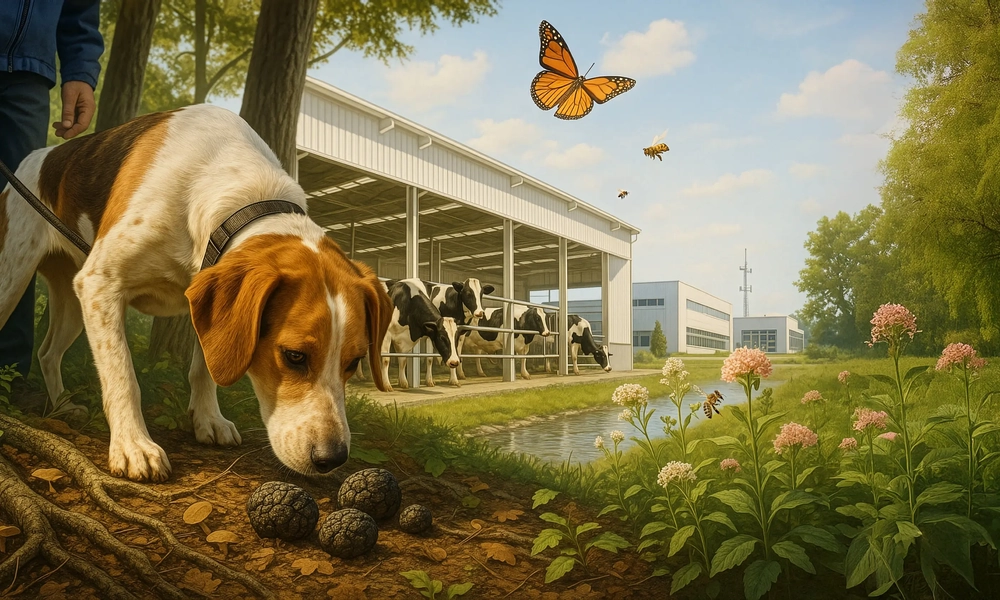
This year was so full of creatures great and small that MSU practically needed its own ark. From fungi-loving dogs to butterflies on the brink, from cows moo-ving into their new digs, bees making headlines and veterinarians containing an avian flu outbreak — animals were at the center of some of MSU’s most meaningful stories.
In January, Gregory Bonito discovered two new species of truffles with some paw-fessional help by “truffle dogs.” Tuber canirevelatum, meaning the ‘dog-found’ truffle, was named in honor of all truffle dogs and Monza, the dog who discovered it with her trainer Lois Martin. The other, Tuber cumberlandense, was named for the Cumberland Plateau where it was found by Margaret Townsend and her truffle dog, Luca. Even fungi experts said the find provided mush-room for excitement. Food & Wine, Popular Science along with other outlets covered the story.
In July, MSU officially opened its massive new Dairy Cattle Teaching and Research Center, welcoming the first wave of cows into a facility designed to support cutting-edge animal science and student learning. At 165,000 square feet, the center gives dairy research space to grow — no more feeling udder-ly cramped. The transition from the 1960s barns to a modern operation signaled a major investment in animal welfare, agriculture and Michigan’s dairy future. The Associated Press was on hand to capture the story, which led to several other media hits as well.
In 2025, Maple, a retired police K-9, became one of MSU’s most unexpected research partners. At the Pollinator Performance Center, Maple helped demonstrate how trained dogs can quickly sniff out American foulbrood, a highly contagious disease that can devastate honeybee colonies if it goes undetected. The project highlights MSU’s creative, cross-disciplinary approach to protecting pollinators, strengthening agriculture and supporting beekeepers — all while reminding campus that sometimes big science breakthroughs come with wagging tails and a bee suit. The Associated Press, The Washington Post and several other outlets reported on Maple and MSU’s research partnership.
On a more serious note, a March study by MSU scientists raised the alarm that some countries could face the unthinkable: losing all native butterfly species if habitat loss and climate stress continue unchecked. The research, led by Elise Zipkin, director of MSU’s Ecology, Evolution and Behavior Program, and her MSU colleague and co-author Nick Haddad, professor of integrative biology in EEB, have been major figures in assessing the state of U.S. butterflies and highlighting the urgent need for conservation and better land-use protections before ecosystems reach a breaking point. In 2025, this study was catapulted into national conversation as a stark example of what is at stake as outlined in this article by The New York Times. Many other national outlets covered this startling news, including The Washington Post, Associated Press and Science Friday.
One of the year’s most significant stories was Michigan State University’s leadership in the national response to highly pathogenic avian influenza after the virus made an unprecedented jump into U.S. dairy cattle. With years of preparation already underway, MSU’s Veterinary Diagnostic Laboratory — led at the time by Kimberly Dodd, who is now dean of the College of Veterinary Medicine — became one of the first labs in the country to detect the virus in milk and develop new diagnostic methods. In partnership with state and federal agencies, MSU helped launch the National Milk Testing Strategy, giving farmers and regulators an early-warning system that shaped the country’s response. MSU researchers and veterinarians were on farms within days collecting samples, guiding biosecurity and providing critical, science-based information to producers.
Their findings, including how long cattle shed the virus, how it affects milk production and why milk is the best sample for detection, informed national policy and helped Michigan become a model for rapid, coordinated response. As Dodd put it, the goal is to “detect the next COVID before it becomes a pandemic.” With the virus still circulating in wild birds, MSU scientists continue to track risks and support farmers, proving that when a threat won’t quit, neither will the teams working to stay ahead of it. The ABC News Medical Unit came to campus to help tell this important story.
Agriculture is in our DNA

MSU was founded as a pioneer agricultural college and has evolved over the last 170 years into a major land-grant research university devoted to agriculture, natural resources and beyond. Here’s some of our top agriculture research in 2025.
MSU researcher John A. Hannah Distinguished Professor Bruno Basso and his team made a big leap forward this year by improving how carbon markets work — systems that pay farmers and companies for practices that genuinely reduce greenhouse gases. The challenge is that these markets only work if the climate benefits are measured accurately, and most current methods rely on outdated assumptions. Basso’s group developed a new, science-backed way to show what would happen on farmland without any changes, making it much easier to tell whether practices like no-till or cover crops are truly helping the climate. Tested across 12 Midwestern states, the approach is simple enough to scale and gives farmers and businesses a clearer, more trustworthy foundation for investing in regenerative agriculture. Why does this matter? It helps ensure climate solutions are real and that farmers get credit for the work that actually makes a difference. This important story was covered in The New York Times.
Agriculture in space? Narendra Das, an associate professor in MSU’s College of Engineering, helped build a new tool for space, and farms here on Earth will benefit too. When the NASA-ISRO Synthetic Aperture Radar mission launched July 30, 2025, it carried MSU-developed technology that can map soil moisture from space at a fine scale (about 100–200 meters). That means farmers in Michigan, across the U.S. and around the world will be able to get up-to-date information on fields — even under clouds or at night — to help them decide when to plant, irrigate or harvest. The data could improve crop yields, boost food security and even help monitor drought or wildfire risk. MSU’s contribution puts farmer-friendly Earth science on the global radar. Media found this story out of this world.
And while MSU technology was soaring into space, MSU researchers Ben Belton, professor in the College of Agriculture and Natural Resources, and Leo Baldiga, a doctoral student in the College of Social Science, were helping transform what happens just a few feet above the ground. Modern agricultural drones that are now powerful enough to carry heavy loads like two sacks of fertilizer can also spray crops, plant seeds, map fields, monitor crop health and even help tend livestock. For farms large and small, that means more efficiency, less manual labor and far smarter, more precise farming. Together, MSU’s space-based sensors and down-to-earth drones show how the university is helping agriculture take off in every direction and the media liked the story.
And as drones were transforming how farmers work from the sky, MSU’s Anthony Kendall, an assistant professor in the College of Natural Science, was testing how solar panels on farmland could improve soil health, save water and support pollinators — all while giving farmers a new, steady income stream. Kendall’s team is using a $3.6 million National Science Foundation grant to build a first-of-its-kind outdoor lab to study how solar arrays interact with crops, groundwater and local ecosystems. The goal is to give farmers and communities clear, science-based guidance on when solar makes sense. Just yet another reason why funding research matters. Several media outlets picked up this bright story including Michigan Public radio.
Not all farm innovation comes from space or solar panels — some of it starts right in the barn. In October 2025, MSU research helped a Michigan dairy farm improve milk quality and cut feed costs by switching cows to a high-oleic soybean diet developed at MSU. The change boosted milk fat and protein while reducing the farm’s purchased feed expenses by about 20% each month. Why this matters: It shows how MSU science can strengthen farm profitability and sustainability at the same time, a subject of interest to various media outlets including Michigan Farm News.
Now here’s something to raise a glass to. From apples to grapes, MSU research covered the full beverage aisle this year. In vineyards across Michigan, Associate Professor Timothy Miles helped growers protect the state’s $6 billion grape industry by identifying the viruses that quietly drain yields — a big win for anyone who enjoys Michigan juice or wine, and the media agreed.
Meanwhile, deep in the woods, Professor Steve van Nocker and doctoral student Kaz Christian tracked down the last wild apple trees in Michigan, preserving rare genetics that could make future orchards more frost-tolerant. Together, MSU scientists kept the state’s fruit — and its cider, juice and wine — flowing smoothly. The Associated Press followed us in the woods for this story and other media reported on it as well.
AI, engineering and innovation

When the nation’s infrastructure made headlines, MSU experts made solutions. The Francis Scott Key Bridge collapsed after being struck from a ship that lost signal. In response to safety concerns, Nizar Lajnef, professor at the College of Engineering, combined sensors and artificial intelligence to assess the health of infrastructure from bridges to dams to roads. He shared how this technology is going to benefit infrastructure in Michigan, including the Mackinac Bridge.
When discussing infrastructure innovation, it would be remiss not to bring up concrete. And speaking of concrete, did you know that it can bend and heal now? At least, it does at MSU. Assistant Professor Qingxu “Bill” Jin at the College of Engineering worked with his team to develop slabs of self-heating and self-healing concrete to improve road safety. Jin shared the success with almost every outlet in the state from Detroit to Grand Rapids to northern Michigan.
As physical innovations occurred, MSU researchers also examined digital innovation and AI running alongside it. Mohammad Ghassemi, assistant professor at the College of Education, discussed the reliability of AI, while David Markowitz, associate professor at the College of Communication Arts and Sciences, was not lying when it came to a study examining whether or not AI can detect lying. As conversations turned to regulation, Anjana Susarla, Omura-Saxena Professor in Responsible AI at the Broad College of Business, authored many commentaries in Forbes about policy and AI oversight.
The year in pop culture and sports

From the field to the screen, pop culture and sports took center stage. The Kansas City Chiefs came short of a historic three-peat Super Bowl. As the football slipped through hands, eyes shifted to the ads. Robert Kolt, professor of practice emeritus at the College of Communication Arts and Sciences, shared which ads scored and which ones missed, speaking with The State News and The Detroit News. Kendrick Lamar’s halftime performance, which set a record for most halftime viewers, stole the show. Analyzing how he struck a chord, Christina L. Myers, assistant professor at the College of Communication Arts and Sciences, shared her expertise in an article for The Conversation and in an interview about Lamar’s social and cultural impact.
Though Travis Kelce didn’t get another Super Bowl ring, he still managed to get another type of ring — an engagement ring for Taylor Swift, sending fans into a frenzy. The buzz did not remain online. Emily Muhich, assistant professor at the College of Social Science, took Taylor Swift to the classroom to teach concepts about pop culture, history and politics, which garnered media interest across mid-Michigan.
While Taylor Swift started in country music, Beyonce’s acclaimed country album and tour got fans talking in 2025, including the emergence of her daughter, Blue Ivy, as a burgeoning performer. Kinitra Brooks, professor and Leslie Endowed Chair in Literary Studies at the College of Arts and Letters, spoke to the Associated Press about her significance.
Fan bases also cheered on their sports teams. As the NFL saw many injuries this year, MSU President and John A. Hannah Distinguished Professor Kevin Guskiewicz discussed his concussion research and Matthew Harkey, assistant professor at the College of Education, shared research about how wireless ultrasounds can support on-field injuries.
Looking ahead to 2026, a different game of football got the world talking: the World Cup. MSU researchers are growing the grass for the competition’s 16 sites — and even launched a website ahead of the tournament. The team is led by Professor Trey Rogers at the College of Agriculture and Natural Resources, who has shared the success of the grassroots program with Michigan Farm News and outlets across the nation.
Diplomacy is not always diplomatic

Across borders and regions, tensions ensued throughout the year. October 7 marked two years since the Israel-Hamas conflict entered a new phase war. The release of the living hostages brought some resolution; however, stability in the region remains fragile. Russell Lucas, professor at James Madison College, not only discussed U.S. involvement but commented on the future of the Middle East to both U.S. think tanks and international media.
To the north, across the Black Sea, Russia’s war on Ukraine dragged on as the United States tried to be the peace broker. In reaction, Matthew Pauly, associate professor at the College of Social Science, spoke to Newsweek. At MSU’s campus, Pauly brought Ukrainian Fulbright Scholar-in-Residence Kseniia Borodin to teach students about Ukrainian language and history.
Geopolitical tensions also arose in unexpected places, such as Greenland, home to under 60,000 residents. However, the country occupied the headlines after President Trump floated the idea of annexation to the U.S., sparking strong reactions. Matt Zierler, associate professor at James Madison College, spoke with TheHill on the impact to global relations, while also commenting on the renaming of the Gulf of Mexico with Business Insider.
Immigration policy in the U.S. affected neighboring country relations and became a contentious issue as border security and deportations ramped up. Amid changing policies, Veronica Thronson, clinical professor of law and director of the Immigration Law Clinic at the MSU College of Law, commented on the executive orders and how the deportations could affect the workforce.
Touring Michigan the Spartan way
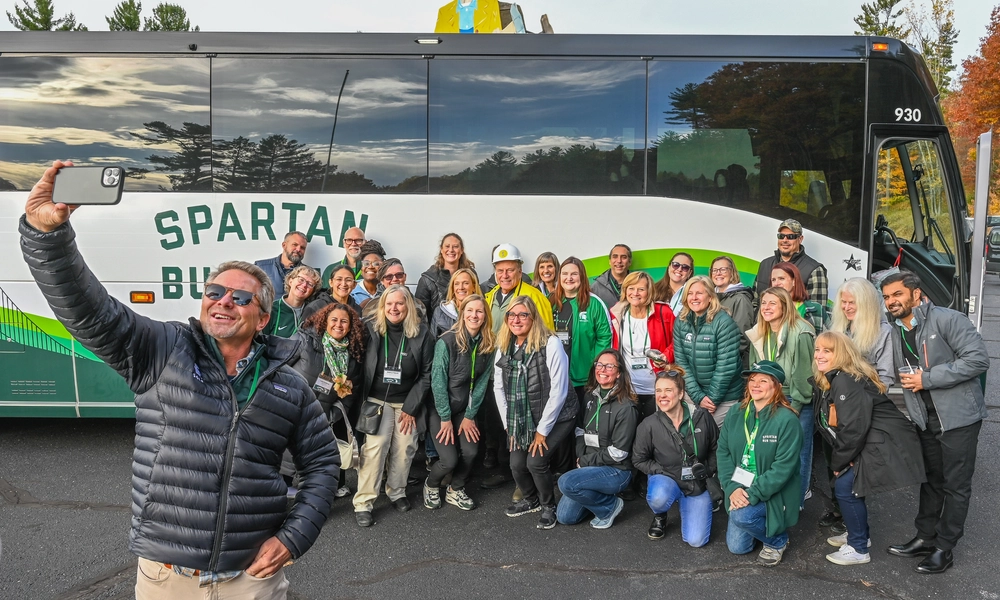
In May, MSU’s Spartan Bus Tour rolled through Detroit offering faculty and administrators a powerful two-day look at the city’s resilience, creativity and partnerships with the university. President Kevin Guskiewicz joined 60 Spartans at 14 stops across the region, including the Zekelman Holocaust Center, MSU Extension’s urban agriculture hub in northwest Detroit, neighborhood arts spaces, the Apple Developer Academy and the iconic Motown Museum. The stops highlighted how MSU’s work in education, health, mobility, the arts and economic development is deeply woven into Detroit’s story. Participants described the experience as inspiring and eye-opening, underscoring both the challenges Detroit faces and the innovation and strength that define the city today, as well as MSU’s responsibility to be a true partner in its continued growth. And the media, including WDET and the Michigan Chronicle, enjoyed the tour as well.
Then in October, a new group of MSU faculty and administrators traveled more than 1,100 miles across northern Michigan and the Upper Peninsula on the fall Spartan Bus Tour — a rolling classroom designed to strengthen partnerships and spotlight MSU’s statewide impact. Over three days and 15 community stops, participants met with local leaders, health providers, artists, educators, tribal partners, researchers and alumni to learn firsthand how MSU’s work in rural health care, sustainable forestry, agriculture, education and economic development supports the region. From visiting community hospitals and wild rice restoration sites to touring maple syrup operations, mines, sports flooring manufacturers and local colleges, the tour emphasized MSU’s land-grant commitment to service, collaboration and listening. And UP media tagged along, as well, including to catch a surprise appearance by MSU basketball Head Coach Tom Izzo. As President Guskiewicz put it, after miles of meeting Michiganders where they are: “We have a responsibility as Michigan’s state university to serve its people through the work that we do at MSU. Times are tough, but we are Spartans — and we are built for this.”
Did you think we forgot about the Trump administration this year?

Since taking office this past January, the Trump administration has dominated the news — so we thought we would save it for last. You’re welcome. Within minutes after inauguration, President Trump signed over two dozen executive orders — and the actions did not stop. Matt Grossmann, professor at the College of Social Science, who was named a Carnegie Fellow in 2025, immediately began reacting to the orders and Trump’s first 100 days in office.
Trump’s actions prompted debate about executive power. Erica Frantz, associate professor at the College of Social Science, wrote an article for The Conversation and Jordan Cash, assistant professor at James Madison College was a frequent commentor. As the political climate intensified, the nation was stunned by political assassinations of elected officials and Charlie Kirk. Frantz spoke about the rise in political violence with Politico and the Wall Street Journal.
Despite it not being a general election year, there was still campaign buzz. Meghan Wilson, assistant professor at the College of Social Science, commented about the Detroit mayoral race with Michigan Public radio and authored articles on issues the city faces.
Other states held key gubernatorial and special elections, providing a first glimpse of 2026. Corwin Smidt, associate professor and interim director of the Institute for Public Policy and Social Research, spoke about key issues such as health care to NPR and he previewed the major 2026 races in Michigan. Voters were also surveyed, including by Dante Chinni, director of the American Communities Project housed at the School of Journalism, who shared findings with The Associated Press.
What the Trump administration labeled as its government efficiency effort led to the loss of millions in research funding — including at MSU — and the university launched a Research for You campaign to show the value of funding research. In response, many faculty underscored the consequences to lost or revoked funding.
The federal government cut millions in USAID funding, resulting in losses for agricultural research. Dave Douches, professor at the College of Agriculture and Natural Resources, lost millions amid his research to engineer better potatoes to support food security, sharing the impact with MLive and CBS Detroit. Also from the college commenting about farm research loss was Professor David Tschirley, who spoke with Reuters and Fast Company, among other national outlets.
USAID cuts also affected public health. Robin Lin Miller, professor at the College of Social Science, authored pieces in The Detroit News and The Conversation on the U.S. retreat from trying to mitigate AIDS and HIV in Africa. These cuts also defunded education and engineering programs.
Researchers also discussed the impact of other federal programs and grant cancelations. Josh Cowen, professor at the College of Education, wrote many articles for The Conversation about Department of Education layoffs. Arts and humanities were affected too. Devon Akmon, director of the MSU Museum, wrote an article about the funding cuts to libraries and museums, and many researchers at MSU’s College of Arts and Letters shared the impact of their projects’ terminations.
To our surprise, some of these big issues found their way to the court room. One issue that could not scroll past the courts was the future of TikTok. Nancy Costello, clinical professor of law and director of the First Amendment Clinic, spoke with News Desk and Detroit media and continued to react to political speech issues.
Commenting on other Supreme Court cases were College of Law experts such as Frank Ravitch, professor of law and Walter H. Stowers Chair of Law and Religion, discussing cases on religion and schools with USA Today and Michigan Advance. There also were major cases on LGBTQ freedoms, so Heather Johnson, an adjunct professor of law, spoke with Bloomberg Law and localized the issues talking with Michigan stations.
But there were more legal woes. President Trump floated a potential third term, immediately raising constitutional questions. Brian Kalt, professor of law and Harold Norris Faculty Scholar, was everywhere commenting, not just on national television but in The Atlantic and The Hill. Pardon another topic, but presidential pardons also became a big issue. Not only was Kalt commenting, but also Quinn Yeargain, associate and 1855 Professor of the Law on Democracy, sitting down with PBS Detroit. Ahead of the midterms, redistricting battles began out of Texas, and Yeargain spoke with CNN. So, was this enough about politics?
The Trump administration may have dominated the news — but MSU experts dominated the reactions — providing research and fact-based explanation and insights. Cheers to 2025!
Our design team used AI to assist in developing illustrations for this story.