
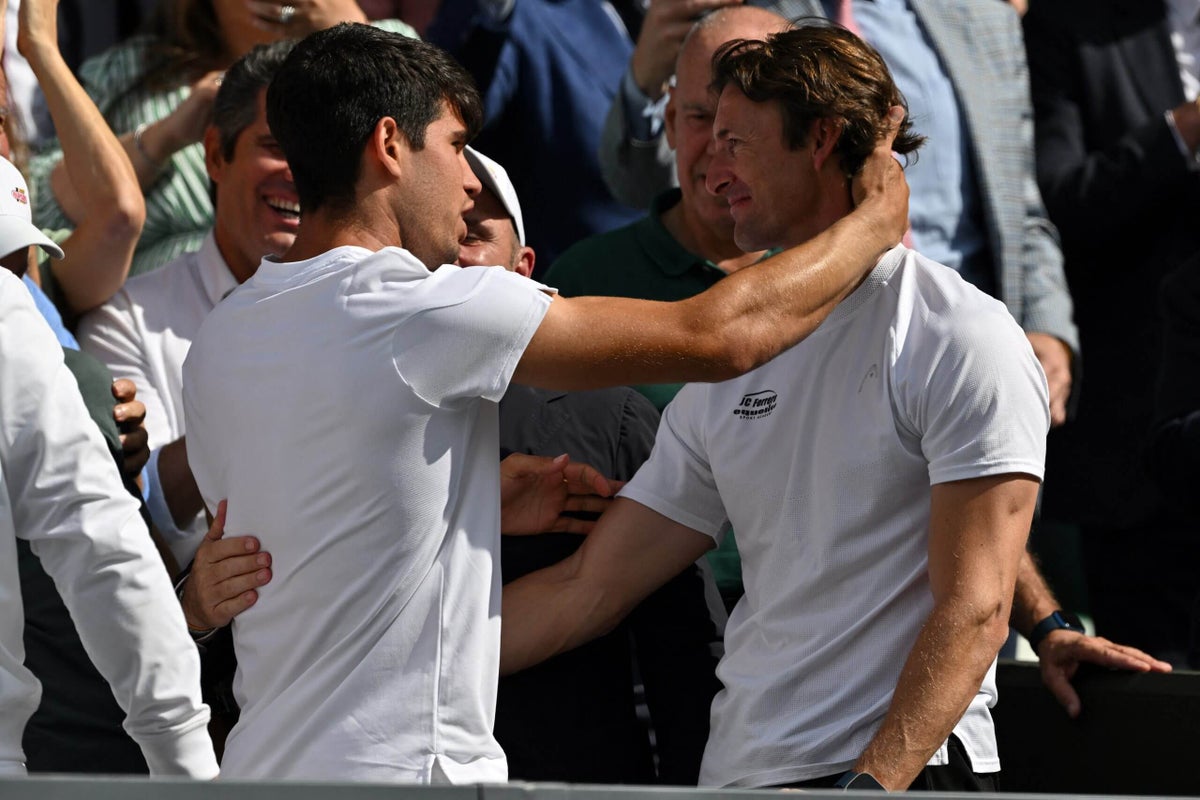
How does the best male tennis player in the world choose a new coach?
Carlos Alcaraz’s decision to split with Juan Carlos Ferrero after six Grand Slam titles and seven years has renewed interest in one of the most interesting psychological relationships in sport: The tennis player and their coach.
Ferrero was Alcaraz’s first full-time coach, and Samuel Lopez, who worked as Ferrero’s No. 2 and led the team in tournaments at which Ferrero was absent, will stay on. Alcaraz and Ferrero’s relationship started at the Spaniard’s academy, but different players at different stages of their careers take various approaches to who they hire, and why.
Novak Djokovic has tended to seek out coaches who have scaled the mountain he chose, hiring Boris Becker, Andre Agassi, Goran Ivanišević and Andy Murray through his career. All of them are former Wimbledon champions and multiple major winners, Ivanisevic apart. The 24-time Grand Slam champion needs the voice of someone who he respects and who is happy to have it out with him mid-match… until they aren’t.
A few months after Djokovic and Ivanišević parted ways in March last year, six seasons and 12 major titles in the bank, Ivanišević explained that they simply ran out of patience with each other. Djokovic and Murray split ahead of the 2025 French Open, which a representative for Murray described as a mutual decision.
When Djokovic hired Murray 12 months ago, his decision came on the back of a reshuffle at the top of the WTA Tour, with world No. 2 Iga Świątek, world No. 3 Coco Gauff and four-time Grand Slam champion Naomi Osaka all firing and then hiring in the wake of that year’s U.S. Open in a bid to renew their games, work on technique, strengthen relationships, gain an edge — or rather, a mix of all these things that is unique to each player’s priorities and each coach’s way of working.
That mix can win titles and inspire careers, but it had better work, with players and their teams on the road together and working at close quarters for practically the entire year. “I imagine that if I had a family and kids, I would not be here at all,” world No. 18 Marta Kostyuk’s coach Sandra Zaniewska said during an interview last year.
A technical master or a sideline hype master? A proven champion or a developing prospect? Players and coaches alike have myriad decisions to make in choosing each other.
There are all sorts of factors that go into choosing a coach. Sometimes players want to work on something technical, whether a shot or a surface. Three-time Grand Slam champion Stan Wawrinka brought in former Wimbledon champion Richard Kraijcek in 2016 to improve his grass-court tennis; Roger Federer and Murray did the same thing for clay with Jose Higueras and Alex Corretja respectively.
Djokovic hired Ivanišević in part to improve his serve, increasing its fluency and turning Djokovic into one of the most feared and precise servers in the sport in the early 2020s. In search of a better net game, Djokovic employed Australian player Mark Woodforde, who won 11 Grand Slam doubles titles with fellow ‘Woody’ Mark Woodbridge; he hired former U.S. Open finalist Todd Martin to work on his serve earlier in his career with less successful results.
Technical changes were the main motivation behind Gauff’s decision to split with Brad Gilbert, with whom she won the U.S. Open in 2023. Gilbert coached Gauff to deflect the vulnerabilities in her serve and forehand by turning matches into battles of defense and attrition; he would tell her to hit her forehand with a slow, looping arc to neutralize attacks. When opponents figured this out — and her serve kept letting her down — it was time for a change, not just in her game but in the type of coaching that would help her progress.
“I wanted someone to help me with what I wanted to see progress in, especially on the serve,” Gauff said in a news conference at last year’s WTA Tour Finals in Saudi Arabia, which she won in an early boost to her relationship with Matt Daly, a specialist on both footwork and grip technique, and Jean-Christophe Faurel. Gauff has since split with Daly to work with Gavin MacMillan, a biomechanics expert who specializes in serve development.
“JC” has worked with Gauff previously and players often return to coaches they know and trust. Djokovic went back to long-time coach Marian Vajda in 2018 before they split for a second time four years later. Murray did likewise, bringing Ivan Lendl back in 2016 after the latter had stepped down two years earlier, and then again for a third spell in 2022.
As when football clubs sack and hire managers, availability is the intangible that remains out of players’ control and choosing a familiar face can be easier than going into the unknown, especially in the case of Djokovic, 38, who does not have much time left in his career to take a punt on something new.
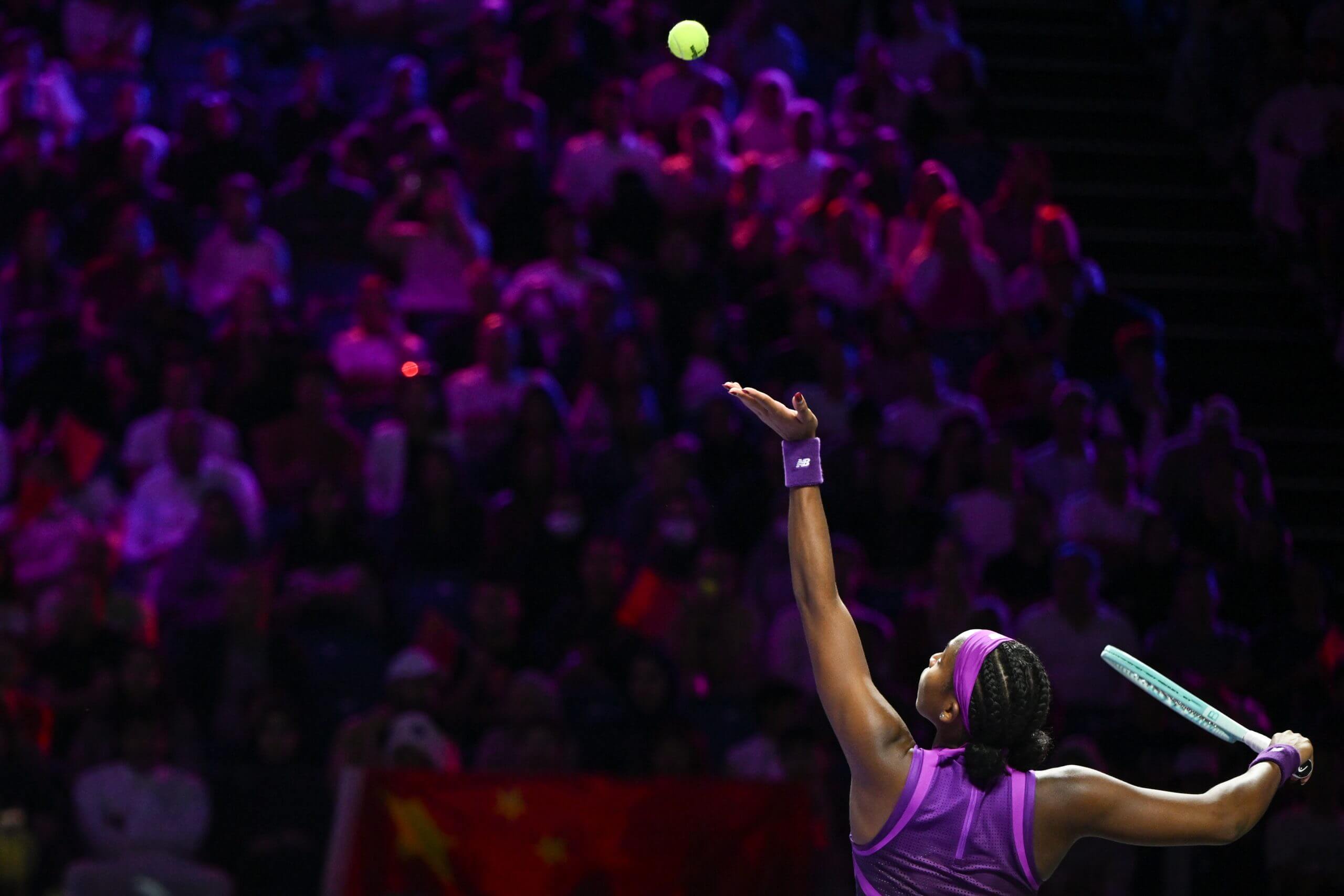
Coco Gauff switched from a tactical to a technical focus in her coaching team. (Artur Widak / NurPhoto via Getty Images)
Emma Raducanu is another player focused on improving a specific shot — often the serve or forehand. If she doesn’t feel it’s working, she is quick to move on. Torben Beltz, who was brought in to improve Raducanu’s forehand in November 2021, was sacked five months later when it was felt that insufficient progress was being made. Raducanu doesn’t want a hype man or woman, but technical expertise. She has enjoyed a fruitful relationship with Francisco Roig, a longtime coach of Rafael Nadal, since they started working together earlier this year.
One of the most successful examples of technical focus in recent times comes from women’s world No. 1 Aryna Sabalenka, who transformed her serve with the support of MacMillan after it completely broke down in 2022.
It’s something Świątek, who Sabalenka dethroned as world No. 1 in October 2024, sought from her then-new relationship with Wim Fissette. Fissette, who had Grand Slam-winning success with Kim Clijsters, Angelique Kerber and Osaka, is one of the most prominent coaches on the WTA Tour. Their uniting offered a window into the mutual considerations that players and coaches undertake when beginning a relationship, which representatives from both have explained over the last few weeks.
Świątek, by her own admission an overthinker, spoke to Fissette by phone before meeting in person in Warsaw to discuss “the specifics of the technicalities and what he wanted to change in my game”. At a news conference at the WTA Tour Finals last November, Świątek said that Fissette “added some extra stuff that I haven’t thought of” as well as aligning with her own ideas for improvement.
On a personal level, Świątek appreciated Fissette’s listening skills, which players and friends said is one of his defining characteristics as a coach in interviews with The Athletic last year.
“The communication was kind of smooth. He also let me talk a lot and he was able to listen to me and this was pretty fun,” Świątek said. Fissette told Eurosport when their partnership began that he wanted to work with Świątek after splitting with former world No. 1 Osaka, who switched to working with Serena Williams’ former coach Patrick Mouratoglou in September 2024 before this year hiring Tomasz Wiktorowski — who Świątek split with, after four Grand Slam titles together, before hiring Fissette.
“Not only because she is No. 1 in the world but also because of her personality, which is a role model for other tennis players,” Fissette said.
The new partnership duly brought a first Wimbledon title for Świątek this summer.
Personality is the other deciding factor in player-coach relationships: Not just whether they work or not, but how long they might last. While players are typically the more ruthless party in ending partnerships despite the now de rigueur mutually gushy Instagram announcements, coaches can sometimes take the decision.
Fissette was working with world No. 5 Zheng Qinwen when he decided to rejoin Osaka’s team in 2023, a decision which left Zheng blindsided and heartbroken. Zheng then reunited with Pere Riba, who helped her to an Olympic gold medal and a first Grand Slam final in 2024. They have a quirky dynamic whereby during practice sessions at a tournament, Zheng dictates the sessions, but Riba calls the shots in training; they figured out the compromise after learning each other’s personalities, a necessary process in every relationship.
Jessica Pegula, who reached the U.S. Open final in September 2024 after splitting with David Witt and bringing on Mark Knowles and Mark Merklein, discussed the importance of retaining identity in a news conference at the WTA Tour Finals. “I think you can see a coaching situation doesn’t work out because they try to change the player too much,” she said.
“You obviously have to get along with the person. You have to be able to respond well to them.”
American world No. 18 Frances Tiafoe was next to hire Witt and he reached the U.S. Open semifinals with the American in his box. “Someone needs to push me and hold me accountable, but also make it fun for me,” Tiafoe said in a news conference at the tournament.
“If you come at me with a drill-sergeant-type mentality, I’m going to go the other way.”
Tiafoe and Witt split in October, after a season that Tiafoe said did not go as he had hoped.
Mouratoglou, who coached Simona Halep and Holger Rune between Williams and Osaka, described the need to be a “chameleon” in a Zoom interview ahead of his arrival in London for Ultimate Tennis Showdown, his main pursuit outside of coaching.
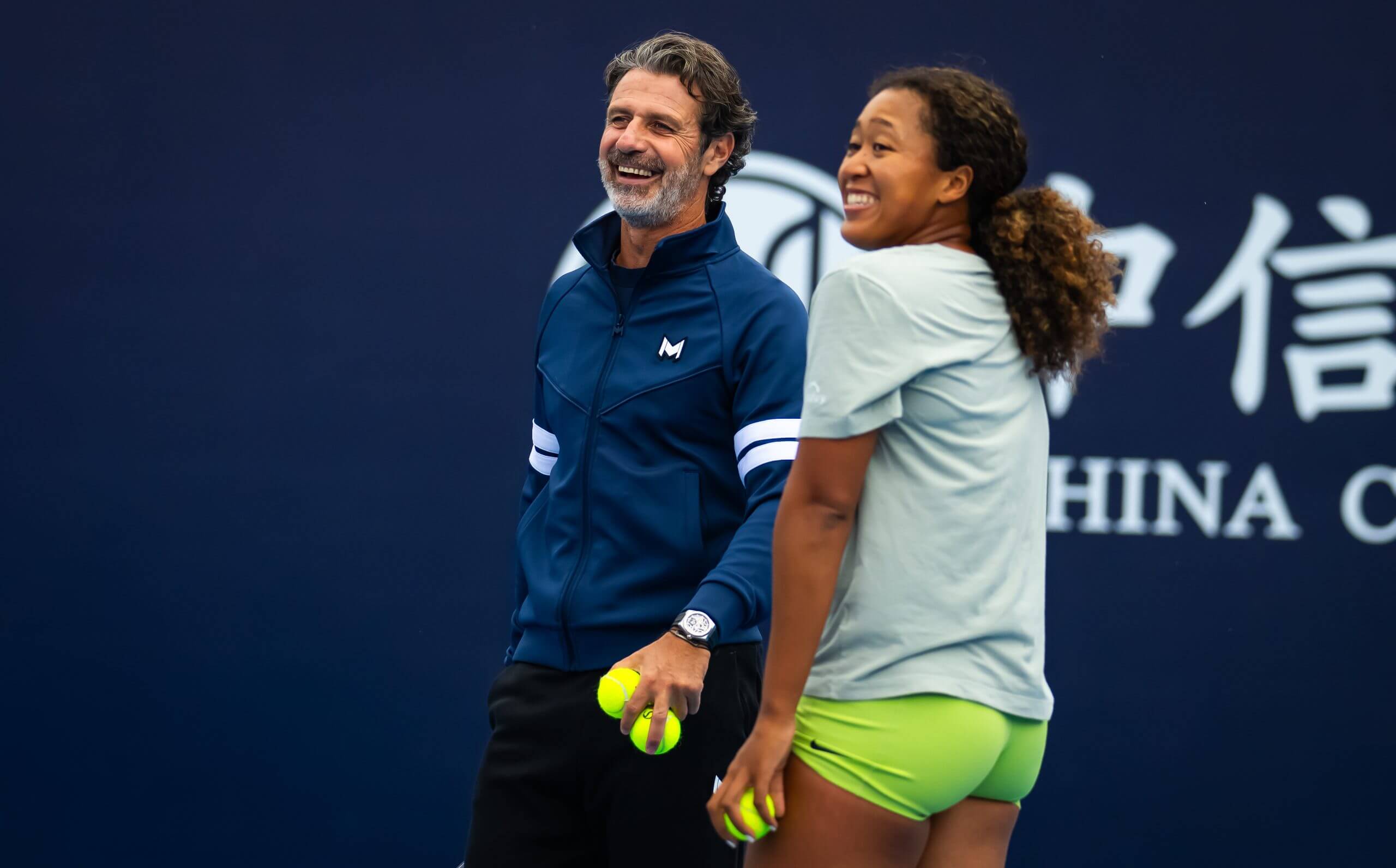
Patrick Mouratoglou with Naomi Osaka in Beijing earlier this year. (Robert Prange / Getty Images)
“My job is to understand I cannot be the same every time,” he said.
“Serena needed to feel that she was in control of everything. If you don’t win the title, it’s nothing. It’s No. 1 or nothing.
“Simona was the opposite, she wanted me to be in control of everything.” After Halep had a panic attack at the 2022 French Open, Mouratoglou realized he had to back off the intensity that had worked with Williams.
“She felt the pressure of having to deliver was hurting her. I completely changed the way I was interacting with her.” Halep then reached the Wimbledon semifinals before being provisionally suspended in October 2022 after testing positive for roxadustat. Tennis integrity authorities suspended her for four years in 2023 before the Court of Arbitration for Sport (CAS) reduced the ban to nine months on appeal in March this year after accepting that the positive test came from a contaminated supplement.
Mouratoglou said he felt “responsible” for Halep’s case in an Instagram video in 2023.
In that sea of changes, world No. 1 Sabalenka was an oasis of calm. She prioritizes coaches who can understand her unique personality and has built a relationship with her long-time coaches Jason Stacy and Anton Dubrov over time after some “really bad experiences” that left her “betrayed”.
“I was (never) looking for big names because sometimes big names are just big names,” she added during a news conference at the WTA Tour Finals last year. “I was looking for someone smart and someone who is always looking for something.
“I was looking for someone who can understand that even if I go crazy on court, it’s nothing personal.”
“Anton, I knew him, since I don’t know 15, because he was in the academy when I was practising.
“With Jason, it took us two years to open up and trust him fully and to understand him as a person and I’m really glad I didn’t kick him out.”
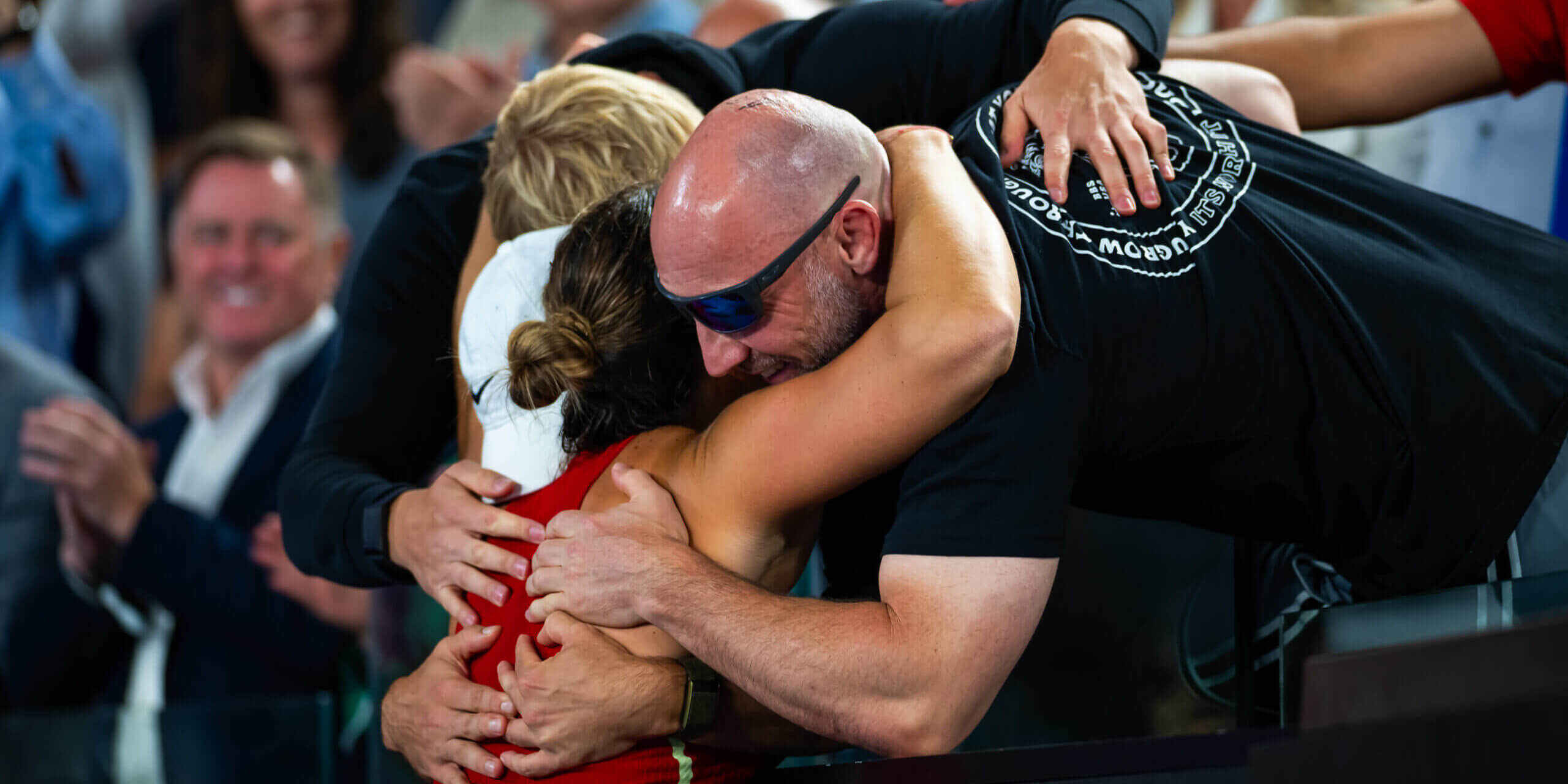
Aryna Sabalenka has found success in stability after remodelling her serve with a specialist. (Robert Prange / Getty Images)
That stability was a hallmark of Alcaraz and Ferrero’s union, which lasted through the Spaniard’s development from riveting talent to dominant force in men’s tennis. Now, they are apart — and Alcaraz’s next relationship will form. It cannot be the same every time.