
On the 75th anniversary of the Holocaust, Alex Kleytman took to social media to remember his mother, who was a prisoner of the Pechora camp in Ukraine when she was just 16 years old.
“The purpose of this camp was not to kill, but to make people die of hunger and hard labor,” he wrote in January 2020. “She managed to survive. Her memories can be heard in Yad Vashem [the Holocaust memorial in Israel].”
Kleytman, too, survived the Holocaust, going on to have two children and 11 grandchildren, settling in Sydney and always tightly preserving his Jewish heritage.
“Each year,” he wrote, “there is fewer of those who were released from the camps [who remain alive].
“Against the backdrop of love and memory, more and more photos and messages about desecrated cemeteries, painted swastikas on the walls of synagogues and attacks on synagogues appear.
“We must be strong and be able to stand for ourselves … not to forget about those Jews who fought back the enemy in the distant years of the WWII.”
Eight decades after the war, at the age of 87, Kleytman was fatally shot at Bondi beach while celebrating Hanukah and his Jewish faith.
Speaking to reporters after the terror attack on Sunday, his wife, Larisa Kleytman, said Hanukah had always been a “very, very good celebration” for the couple, having celebrated the tradition every year since immigrating to Australia.
“Today in the middle of the celebrations [there were] shots and unfortunately my husband was killed,” she said.
“We were standing and suddenly came the ‘boom boom’, and everybody fell down. At this moment he was behind me and at one moment he decided to go close to me. He pushed his body up because he wanted to stay near me.”
Larisa Kleytman leaves St Vincent’s hospital after the Bondi attack. Photograph: Dean Lewins/EPA
Kleytman’s daughter, Sabina, told the Washington Post that her father had died “doing what he loved most”.
“Protecting my mother – he probably saved her life – and standing up and being a proud Jew,” she said. “Lighting the light, bringing the light to this world.”
Kleytman was born in 1938 in the Ukrainian city of Odesa. Two years after the war broke out, his family fled and endured an arduous journey to Siberia with other evacuees, finally reaching the Russian city of Prokopyevsk. They later moved to Lviv after the war, as their home in Odesa was bombed.
Two decades later, his family applied for emigration to Israel but were rejected, and the family fell into the ranks of “refuseniks”, an unofficial term for Soviet Jews who were unable to leave the bloc, and were badly mistreated.
Their second attempt was successful, and the family landed in Sydney in 1992. Soon after, Kleytman began working in the commercial departments of large construction companies, where he remained for more than 20 years.
In his retirement, Kleytman turned to writing. In 2020, his first book, Memory Relay: Known and Unknown Jewish Heroes, was published with the assistance of a crowdfunding campaign.
Translated into Russian and English, the book was the result of years of research about the role of Jewish soldiers and stories of Jewish resistance in the Soviet Union during the second world war.
Last year, he finished his second book on the life of Jews in the Soviet Union from 1948 until the death of Joseph Stalin in 1953.
Friends and community pay tribute
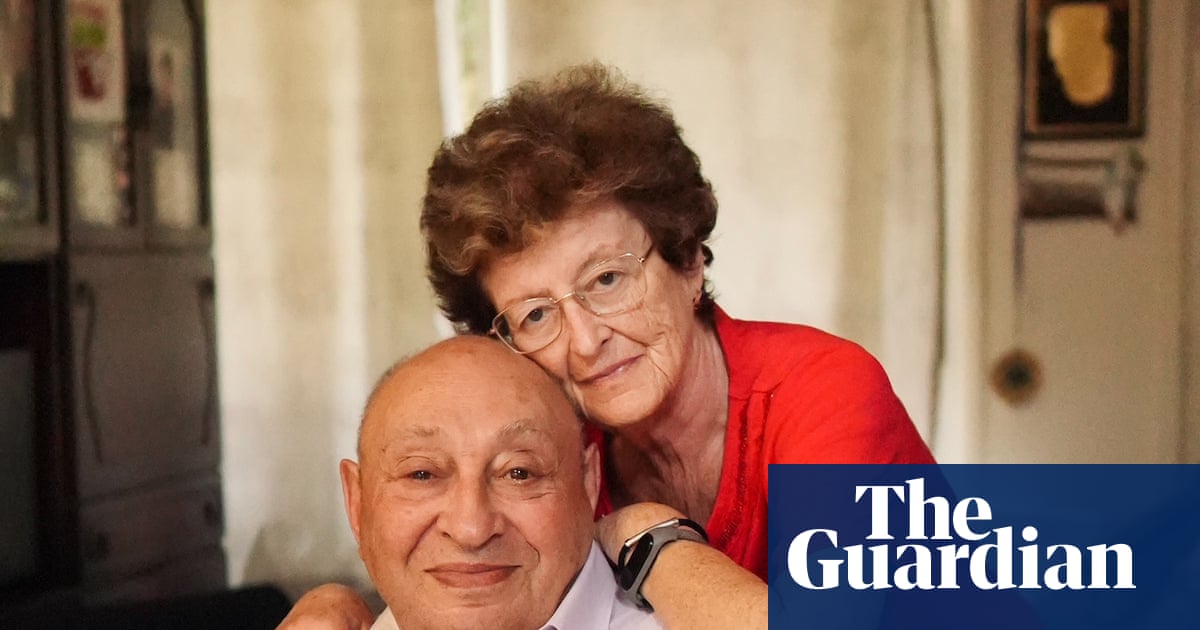
A friend of the family Veda Kucko, who photographed a touching portrait of Kleytman and his wife, said he was an “incredibly loving, caring and selfless person”.
“It was a true privilege to know him, to hear his life stories, and to learn from his wisdom,” she said.
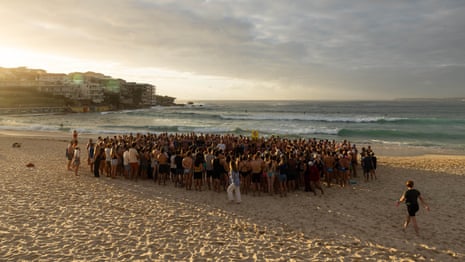 ‘This is our place’: hundreds form human circle on the beach and ocean at Bondi beach vigil – video
Rabbi Yossi Friedman, from Sydney’s eastern suburbs, paid tribute to Kleytman at Bondi Pavilion on Tuesday.
“Alex was just here at a family event with his wife, his family, and he was murdered,” he said.
“He survived the horrors of the Holocaust just to be murdered here, at Bondi beach, what is supposed to be a safe space.”
The aged care provider JewishCare, which cared for the Kleytman couple for many years, said in its 2023 annual report that they were “remarkable individuals”, whose “resilience, strength, and adaptability serve as a testament to the enduring nature of the human spirit”.
“Alex’s memories are particularly harrowing; recalling the dreadful conditions in Siberia where he, along with his mother and younger brother, struggled for survival,” JewishCare said.
A distant relative of Kleytman in Osnabrück, in north-east Germany, had only just made contact with him as a result of his book when he was killed.
Alina Abendlich said her son had been writing to Kleytman and hoped to soon meet in person.
“It won’t come to that any more,” she said on social media. “What remains are his words. His thoughts, his story, his voice on paper.”
Kleytman dedicated his first book to all the Jewish war heroes who defended their Soviet homeland from the Nazis, and to his children and grandchildren.
His dedication came with one hope, humble in its simplicity: “That they will pass the knowledge to their future children.”