
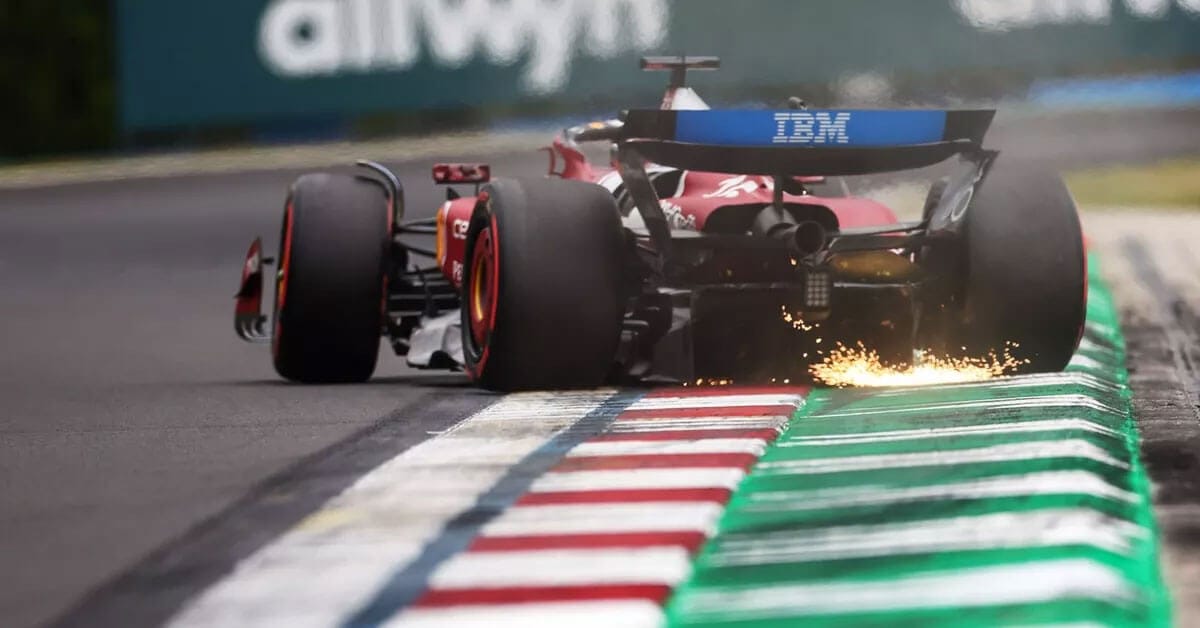
Ferrari 2026 has been tested by Charles Leclerc and Lewis Hamilton in the simulator with positive feedback: Ferrari can now estimate the aerodynamic load of the car.
The Prancing Horse is working tirelessly on the 2026 car, and the two drivers can already gain the first real sensations in the simulator. Ferrari is able to estimate aerodynamic load loss using the simulator model, and here’s what emerges.
The two drivers have tested the new red car in the simulator multiple times. In the past week, Charles and Lewis were at the factory for further testing, with the car updated using data from the 2026 Pirelli tests. Ferrari has managed to implement a system on the car, with actuators, to open the front wing and simulate active aerodynamics. Naturally, there is intense focus on multiple areas. In the Ferrari Racing Division, the first engines are starting to appear. The 678 is now entering the delicate assembly phase. Everything must be ready for the launch, which is expected during the week of January 20, with Barcelona testing scheduled from the 26th to 30th. Meanwhile, further details on the Italian team’s work are emerging.
Here’s the expected aero load loss of the new Ferrari compared to the SF-25
Technical Director Loic Serra is conducting crucial work on the suspension, and as a vehicle dynamics specialist, he prioritizes tire understanding. At Maranello, tire usage is central. According to the Italian website FUnoAnalisiTecnica, “Ferrari has collected extensive data on how much heat the compound absorbs and dissipates under specific conditions. This is crucial information for refining the mathematical tire model.” Such data are essential. While the drivers’ style will need adjustments, it won’t change completely.
There is greater control and the overall vehicle balance is very different. Ferrari wants to understand which settings to use to assess stiffness levels. The same source notes that for Charles Leclerc and Lewis Hamilton, during load transfers, the mass is more perceptible, especially in slow directional changes. This is connected to the reduced vertical force keeping the car glued to the reference plane (the asphalt). Compared to the SF-25, Maranello estimates a 20% reduction in aerodynamic load on the 2026 car.
F1’s 2026 revolution promises closer racing and sustainability advances, and Ferrari appears determined to lead the charge. Early simulator positivity, despite the downforce challenge, hints at a competitive package. Fans eagerly await the official reveal and first laps—could this be the reset the Scuderia needs?
Stay tuned for more updates as the off-season intensifies and the new era dawns.

Dec 18, 2025Sofia Bianchi
Let other Scuderia Fans know about us


