
Read: 3 min
Give the gift of Canadian Affairs this season.

Take 30% off by entering MERRY25! as the coupon code. If it’s a gift, select ‘This purchase is a gift’ at checkout.
Offer good until Dec. 26.
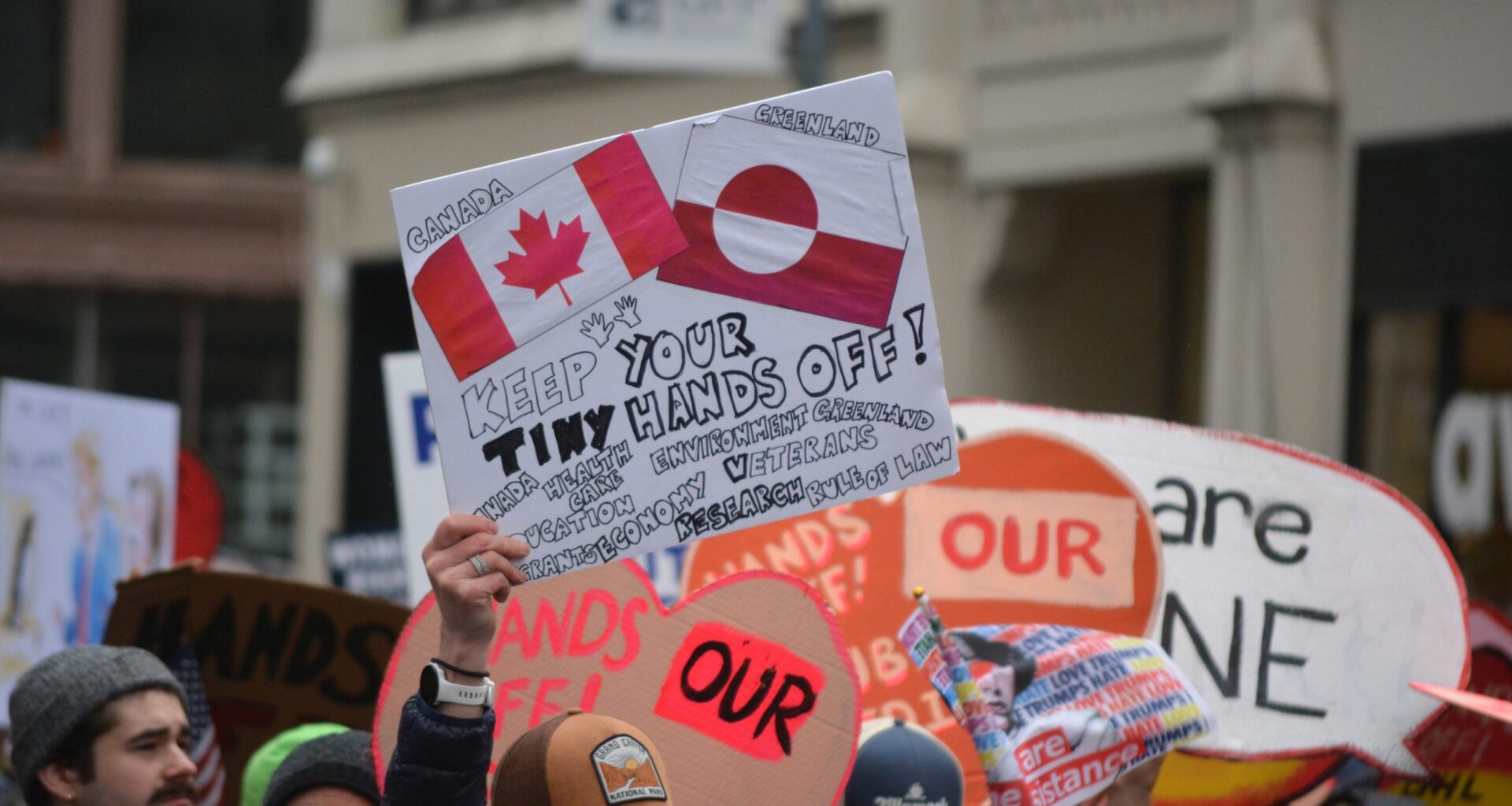
At first blush, 2025 has been a tough year for Canadians, thanks largely to our neighbours to the south.
We came into the year with Donald Trump threatening our sovereignty. Then, in one of the president’s first acts in office, Trump slapped tariffs on Canada, its closest trading partner. The tariff rollercoaster continued throughout the year, creating enormous uncertainty for Canadians.
Adding salt to the wounds, the Edmonton Oilers lost to the Florida Panthers in the Stanley Cup Final; the Toronto Blue Jays lost to the L.A. Dodgers in Game 7 of the World Series by a soul-crushingly narrow margin.
But all things considered, Canada is still ending 2025 on a strong note.
In response to Trump’s provocations, Canadians have been patriotic. Some have upped their domestic travel; others have bought local; we have even met some who have enlisted in the military to help defend our country.
Likewise, premiers from Doug Ford to Wab Kinew have shown an endearing willingness to stand up to the bully in Trump. Politically, this may not be shrewd for Canada-U.S. relations. But in an environment where many political and corporate leaders have resorted to sycophancy, it is a comforting display of spine.
More importantly, though, Canada has rapidly begun to address many of the weaknesses in our own policies that Trump was unfortunately right to criticize.
Thank you for being a paid subscriber. Our work would not be possible without your support.
Our journalism isn’t possible without paid subscribers.
If you value a free and fair press, become a paid subscriber today.
Subscribe to Editor’s Picks. Receive our free Saturday newsletter featuring our best stories from the week.
Most notably, this includes defence spending. In recent years, Canada had unacceptably lagged most other NATO countries in defence spending. It was to Canada’s national shame that we were comfortable free-riding on the U.S. and others long after Russia posed a clear threat. And it is to Prime Minister Mark Carney’s credit that he quickly moved to rectify this deficiency.
Canada has also tightened up its border security and law enforcement, enabling us to crack down on drug trafficking, car thefts and other crimes.
While it is true that Canada never contributed to the U.S.’s drug problem as much as Mexico, it is also true we were part of the problem. Opioids have been a scourge on Canada’s population too, and yet for too long, law enforcement has been minimized as an essential tool for addressing the drug crisis.
Two recent, nationwide drug enforcement operations — that resulted in an astonishing 8,000 arrests and 400 kg of fentanyl seizures — show Canada now making impressive strides on this front. Similarly, Ottawa’s 2024 anti-car theft plan has reduced car thefts nationwide by nearly 20 per cent. These are meaningful successes.
The threats from the U.S. have also forced us to reframe our approach to energy and natural resources. For years, many Canadian governments have shown a stunning disregard for some of Canada’s most important industries, notwithstanding their huge contribution to our standard of living. Carney, to his credit, also quickly flipped the switch on this issue. By doing so, he has signalled to Westerners, investors and industry that oil, gas and minerals have a critical role to play in our economy — especially as we seek to lessen our dependence on the U.S.
On housing, the government has addressed one of the key drivers of soaring unaffordability: demand. By reducing immigration, the government has taken some of the steam out of an overheated housing market, which is likely one reason housing and rental prices have softened in many parts of the country this year.
And the federal and provincial governments have taken some important steps to reduce interprovincial trade barriers. Some governments have done more than others in this area, and the jury is still out on how meaningful the impact will be. But these reforms were long overdue, and we can give credit where it’s due, even if earlier would have been better.
That’s a lengthy list! If we’d drawn up a Christmas wish list last December, we would not have expected all of these wishes to have been answered in one year.
Of course, just like children receiving presents, we always want more. So in next Saturday’s editorial, we’ll share our wish list for 2026.
Canadians have been good this year. Perhaps if we keep it up, we’ll get what we ask for this time next year.
We aim to keep readers engaged to the last word. If you value our compelling journalism, become a paid subscriber today.
Related Posts