
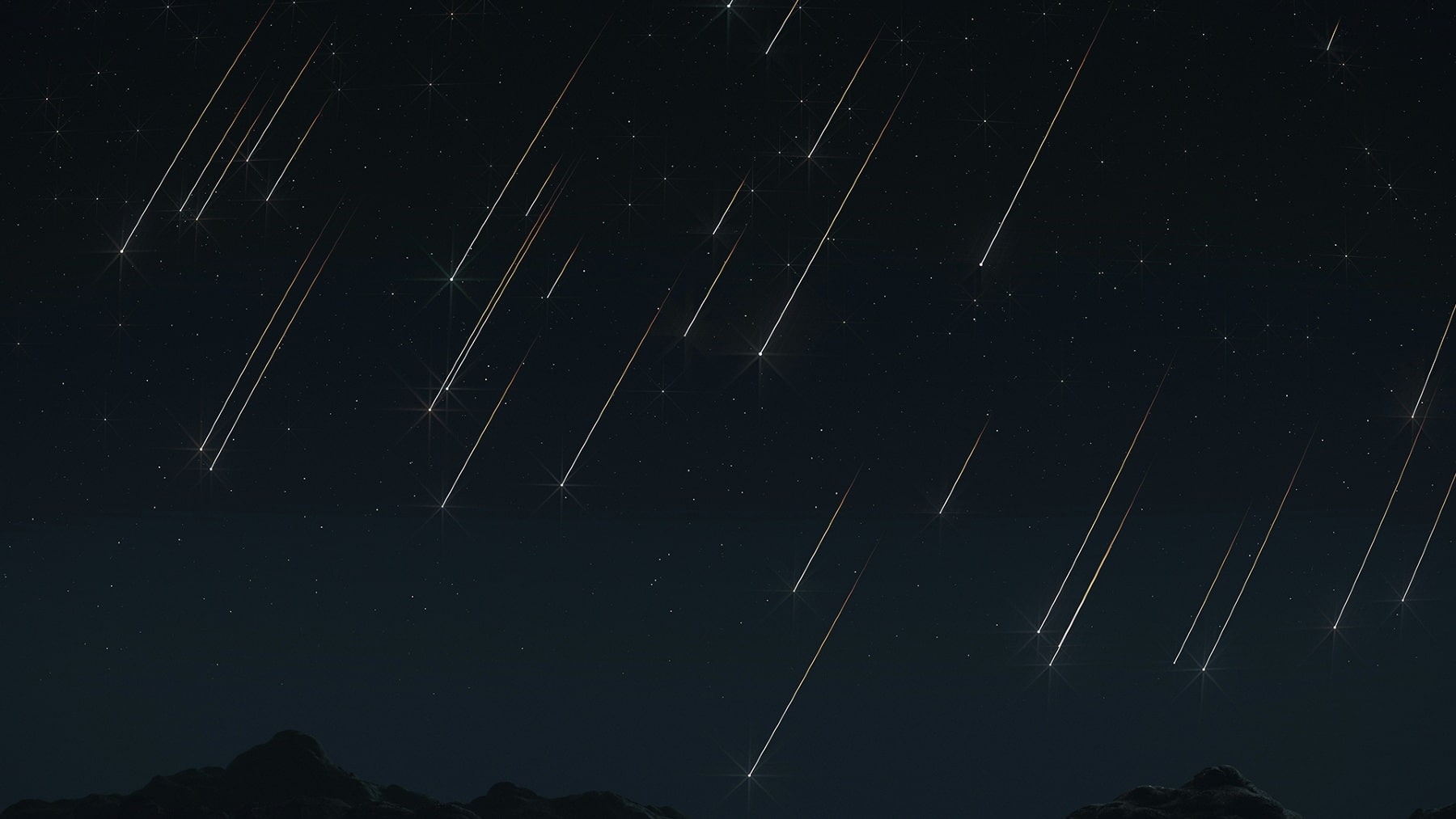
Meteor showers are one of the most peculiar events observed by astronomers. Although they’re normally seen during warm or summer nights, scientists have recently reported sightings. This December, one of the most anticipated meteor showers will pass. According to astronomers, it’s an event not to miss.
Scientists discover winter skies are active this December
Winter in December is often associated with a quiet and solemn atmosphere. Sort of a seasonal compliment to round up the year. Unlike the rest of the year, we begin to observe longer nights, shorter days, and low humidity. Due to these factors, winter skies are often assumed to be inactive, especially in terms of celestial events.
Although December is often regarded for its silent nights, astronomers have observed a recurring loop. Earth has been observed to orbit through regions in space where debris is left over by ancient celestial objects. Because of how inactive December is, scientists are often oblivious to interactions with this ancient debris.
In today’s article, scientists have reported an incoming meteor shower heading towards us. However, this is an unusual visit from a logical standpoint. That is because meteors are never seen until summer nights. This assumption has made many meteor showers go unnoticed. As for this upcoming meteor, scientists report that it may be rather brief and sharp.
Scientists say the Ursids meteor shower reaches its peak
The Ursids meteor shower, known as Frozen Perseids, is an annual event that occurs around the December winter solstice. It is generally referred to as a low-key display where 5-10 meteors are observed per hour. On rare occasions, astronomers have caught a shower of 100 Ursids per hour. Despite their recurring peak in winter, astronomers like to track their activities.
Ursids originate from a parent comet known as 8P/Tuttle. This meteor was discovered on January 9, 1790, by French astronomer Pierre Méchain. At the time, Mechain was unable to determine the orbit pathway of the comet. Then in 1875, Horace Tuttle, an astronomer from Harvard University College, discovered it to orbit around the sun for 13.7 years.
Comet 8P/Tuttle approaches the sun like any other comet and then stretches its orbital path as far as towards Saturn, like this Thanksgiving cosmic event lighting up the sky. The last time the comet visited the sun was in 2021. The Ursids meteor radiates from the section in the Ursa Minor constellation near the Northern Star. This position makes the radiation visible to observers in the northern hemisphere.
Why this winter’s Frozen Perseids meteor shower is different
Unlike the typical meteor showers observed in summer, the Ursids meteor shower does not surge with dramatic outbursts. They arrive almost evenly, are short-spanned, and are often sharp. Their cautious display makes it easy for stargazers to marvel and capture the magic of a meteor shower. Although slow, astronomers are fortunate to watch extensively.
How to watch the Ursid meteor shower in December winter
If you want to watch the Ursids meteor shower, it is best to come warmly dressed and with a sleeping bag. This is because the shower can only be observed in the night sky. However, the best place to capture it will be in the countryside, far away from the city lights.
According to astronomers, stargazers don’t need any directions to face to capture this magic. With just their back lying back, stargazers would see the shower originating from the Ursa constellation during the December solstice. Astronomers say the shower will peak from December 21 to the morning of December 22.
Anyone would be able to see the Ursids meteor shower with their naked eyes. Yes! Without any technical aid like binoculars or telescopes, stargazers would enjoy this event. As the year begins to round up, it is important to pay attention to the sky, similar to the cosmic darts showering across the North American sky.