
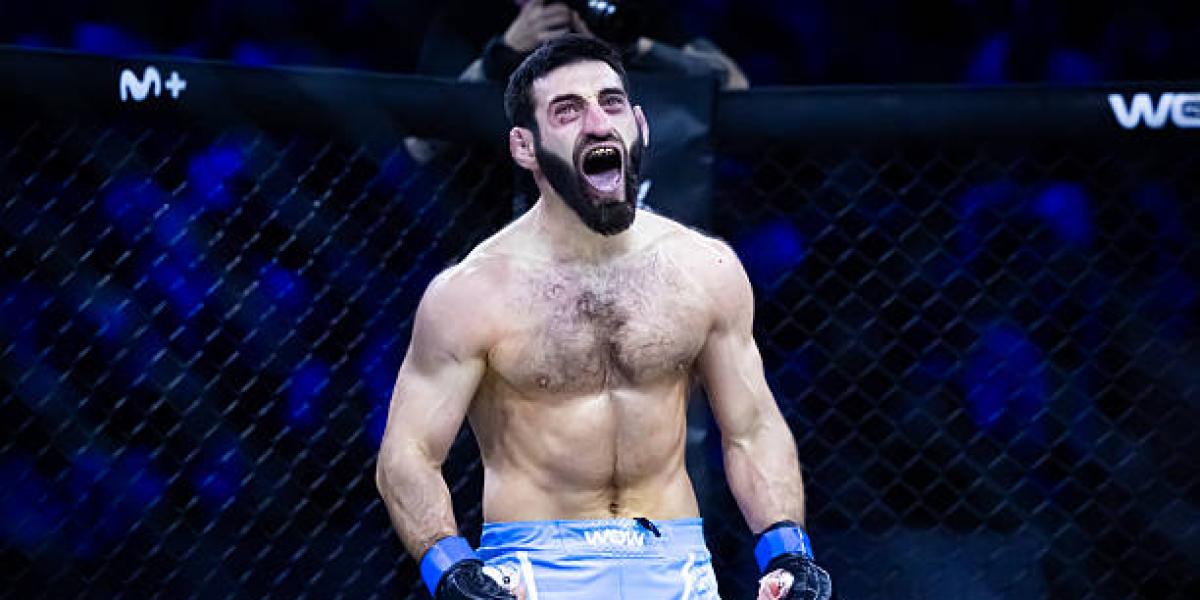
WOW FC’s year-end finale was defined by the lightweight title bout between Umakhan Ibragimov and Brian Hooi. Earlier in the year, the Dagestani fighter had emerged as the standout face of the revitalized Spanish promotion, with Ilia Topuria actively involved in its operations.
However, it was the Dutchman who prevailed in the company’s final event of the year—a result that sparked widespread controversy across Spain’s mixed martial arts scene.
HooiBooi was crowned champion after The Scorpion collapsed during the interval at the end of the third round of their title fight.
Ibragimov lost consciousness while walking back to his corner to recover ahead of the fourth round.
Medical staff were forced to intervene, and as the Dagestani was unable to continue, he immediately lost his belt via technical knockout (referee stoppage).
Both fighters absorbed heavy punishment throughout the three rounds the bout lasted, and Ibragimov ultimately collapsed after the grueling exchange that unfolded over just more than 15 minutes in front of the Madrid Arena crowd.
Largely due to a lack of understanding of the officiating process, criticism quickly spread across social media targeting WOW FC following the apparent lack of referee intervention in the main event.
The bout was overseen by Antonio García Morales, one of the most experienced officials in Spanish mixed martial arts.
Both spectators and media professionals in attendance agreed that the fight should have been stopped before Ibragimov’s collapse, as he had taken excessive damage and was already showing clear signs of extreme fatigue.
However, the promotion bears no responsibility for the referee’s in-cage decisions, as it does not appoint the officials assigned to the bouts.
The designation of judges and referees falls under the authority of the Spanish Federation of Olympic Wrestling and Associated Disciplines, which has not responded to Mundo Deportivo’s inquiries on the matter.
The federation is responsible for selecting the officials who handle the scorecards, when required, and for assigning a referee to each fight on the card. Once the event is officially sanctioned, it is the federation—not the promotion—that deploys its professionals to oversee the competition.
This same protocol applies to organizations such as the UFC and PFL. In the case of Dana White’s promotion, the athletic commission of the state hosting the event appoints the referees—a process in which the organizations themselves do not intervene.
That said, the referee was not the sole party responsible for the controversial collapse suffered by the fighter last Saturday.
Responsibility also extends to Umakhan Ibragimov’s corner, which played a role in the bitter ending to his appearance at WOW 25.
The Dagestani was already showing visible signs of severe fatigue and accumulated damage, and he absorbed dangerous strikes in the third round that compromised his ability to compete safely.
Hooi, fresher and with superior cardio, was able to withstand the battle thanks to his clearly better physical condition.
It is essential for coaches to accurately read their fighters’ body language in order to prevent medical incidents such as the one suffered by Ibragimov at the Madrid Arena.
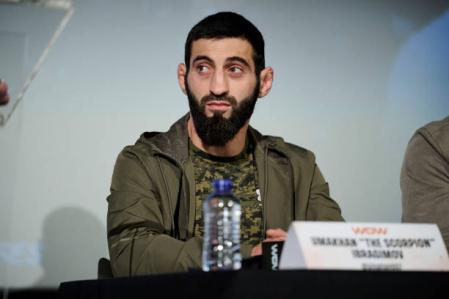
Umakhan Ibragimov
Getty Images
What can happen when a fighter collapses during a bout?
The positive news came with Ibragimov receiving medical clearance hours after the conclusion of his fight against Brian Hooi at WOW 25.
The following morning, the Dagestani shared a cordial moment with his opponent, congratulating the Dutchman, with mutual respect evident between the two fighters—both fully recovered after the battle.
Nevertheless, a collapse during competition can have serious consequences for MMA athletes.
“Metabolic exhaustion and the accumulation of blows are closely linked to a collapse during a fight. A combination of exhaustion and hypovolemia is plausible, reducing cerebral perfusion and precipitating syncope, alongside repeated impacts that can cause acute neurological dysfunction. If the collapse occurs at the end of a round following sustained punishment, the timing reinforces that interpretation,” explains José Antonio Trujillo, vice president of the Málaga Medical Association, who spoke to this outlet to provide medical insight into the situation.
Trujillo also stresses the particular concern surrounding fainting episodes that occur at the end of a round: “In some cases, it is more dangerous when it happens at the end of a round, as it may point to a systemic issue such as dehydration-induced hypotension, arrhythmia or heat stroke, or even a delayed neurological effect from accumulated damage. If it occurs alongside unsteady movement, it is consistent with neurological compromise or exhaustion-related syncope.”
Weight cutting remains one of the most controversial practices in mixed martial arts worldwide. After numerous cases in the UFC and PFL where fighters have suffered serious health issues linked to this method, Trujillo outlines the risks of improper execution: “Severe dehydration can be decisive—it reduces plasma volume, promotes hypotension, cramps and impaired thermoregulation, increases the risk of arrhythmias, and raises the likelihood of kidney injury and rhabdomyolysis.”
The health issues suffered by Umakhan Ibragimov at WOW 25 highlight risks that are largely preventable within the sport of mixed martial arts. Swifter intervention and improved judgment from the officiating team, along with greater caution from the Dagestani’s corner, could have spared the former lightweight champion of the Spanish promotion the bitter ending that marked the night’s main event at the Madrid Arena.