

Thanks for reading the Her Hoop Stats newsletter. We’re excited to announce a new partnership with Hudl. Hudl’s industry-leading tools – Sportscode, Instat, and Fastmodel – elevate the preparation, performance, and player development of WNBA and NCAA teams. We appreciate their support and look forward to working with them to help bring more insight about the women’s game to you.
You can find me on Bluesky and you can find HHS on Bluesky, Twitter, YouTube, Facebook, and Instagram.
Haven’t subscribed to the Her Hoop Stats Newsletter yet?
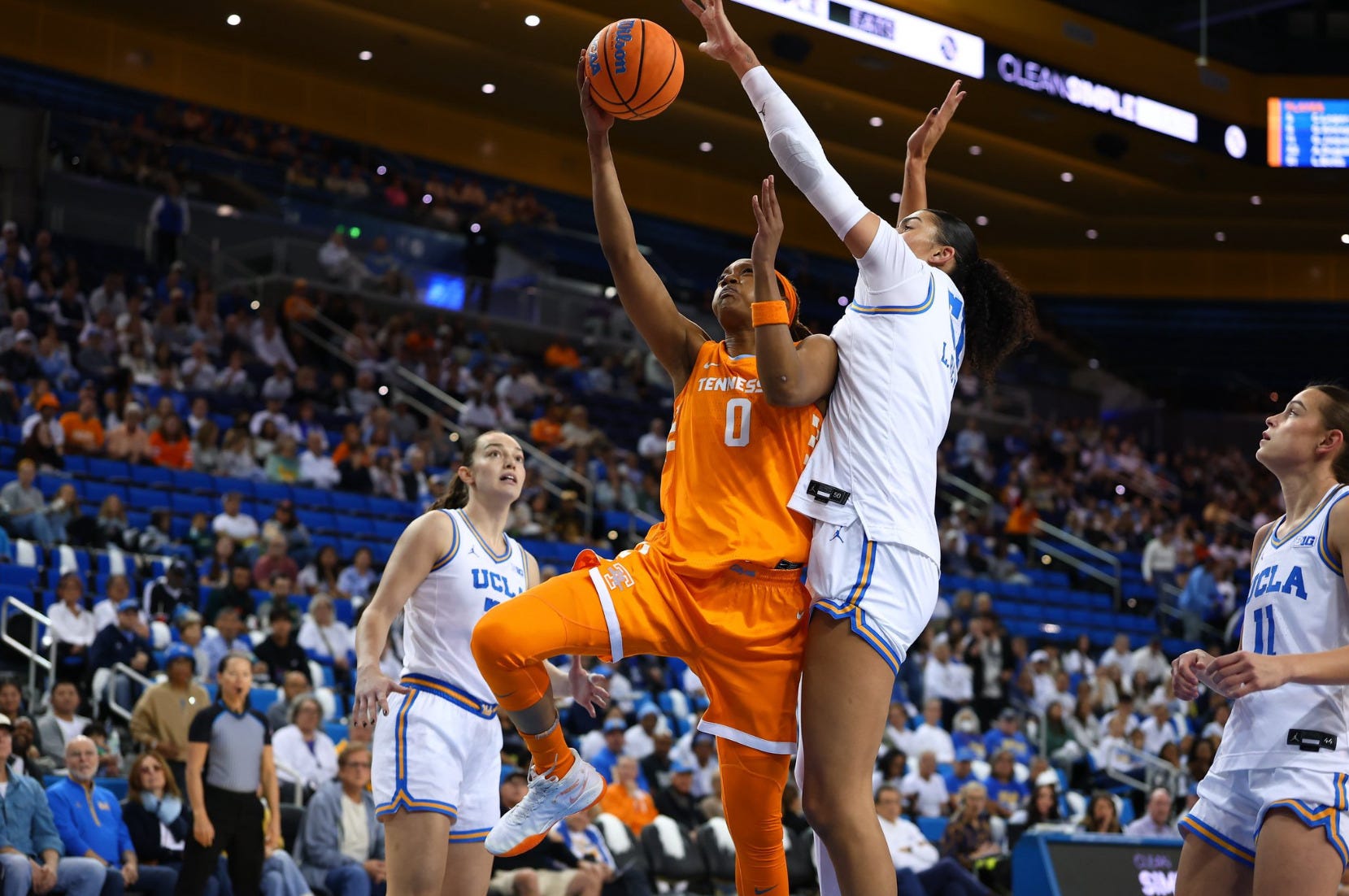 Photo courtesy of the University of Tennessee Athletics
The biggest hurdle for frontcourt players entering the WNBA is competing with the sheer size, strength, and physicality at the next level. Offensive moves that were once effective against collegiate defenders often fall short against the league’s most elite rim protectors. Defensively, the spacing is stretched, which requires defending further from the basket, hedging screens effectively, and switching onto faster guards without getting burned. Further, the pace of the game demands peak conditioning and the ability to tirelessly run the floor. Despite these demands, several incoming prospects possess the talent, toughness, and work ethic that are necessary for carving out a role in the pros.
Ranked the No. 3 recruit in the country by ESPN coming out of high school, Barker is one of the most compelling two-way prospects in this draft class and boasts a versatile interior presence that’s built for the modern game. Throughout her college career, the 6-foot-4 athletic forward has thrived in the open floor, but she also offers a diverse scoring package in the half-court that includes face-up drives, mid-range jumpers, and an improving perimeter shot (35.9 3P% on 4.3 attempts per game). Averaging a career-best 16.2 points per game, she’s scored in double figures in every outing so far this season, two of which were double-doubles. On the defensive end, she has all the tools to be a multi-positional stopper. She’s quick enough to keep up with guards, long enough to bother wings, and strong enough to battle players on the block.
To improve her positioning on WNBA draft boards, Barker needs to continue to level up her defensive intensity, reduce her tendency of settling for tough shots, and hone her ability to finish through contact in the paint. But if she can continue to ramp up her aggressiveness, tighten her decision-making, and fine-tune her execution over the course of the season, Barker’s coveted physical profile, solid foundation of skills, and positional flexibility could solidify her status as a first-round-caliber WNBA prospect.
As one of the most efficient post players in the college game, the 6-foot-4 center has been a double-double threat throughout her career and is currently averaging 18.1 points (62.7 FG%) and 10.8 rebounds per game. She uses her solid frame and exceptional body control to carve out deep post position and generate high-percentage looks. Her motor, strength, and instincts help her monopolize the glass on the defensive end and create valuable second-chance points on offense. She also plays with an incredible amount of toughness that often sets the tone for her team.
Beers’ path into early-round draft conversations hinges on broadening her skill set and proving she can keep up with the pace and spacing of the pro game. Increasing her ability to slide, recover, and defend opponents in open space would make her better equipped to fulfill the defensive responsibilities that professional forwards regularly confront. Offensively, being more confident in taking shots outside the paint would dramatically expand her impact and force defenders to respect her as a floor spacer. Equally important is refining her playmaking. Reading double teams more quickly, delivering sharper kick-outs, and recognizing skip-pass windows would all help augment her efficacy as a hub in the half-court. Already considered a solid rotational pickup, if Beers can layer these elements onto her powerful interior game, her draft stock would likely soar.
At 6-foot-7 with an exceptionally strong frame, Betts has the physicality to be one of the most coveted frontcourt prospects in this draft. Coupling her size with her soft touch around the rim, she’s an efficient interior scorer who doesn’t need a high usage rate to impact the game. Averaging 15.0 points per game this year (58.7 FG%), her footwork has become more polished each season, and she’s shown notable improvement in sealing early, finishing through contact, and using counters when defenders shut down her initial move. Defensively, her length automatically alters shots, and she’s becoming more deliberate in her timing as a rim protector (2.2 bpg). She also rebounds well on both ends (8.0 rpg), especially when she establishes inside position early, and her swift outlet passing has quietly become a unique asset.
Despite those strengths, Betts has at times looked rattled when facing other elite post players early this season, and continuing to elevate her game against top-tier competition will be essential for solidifying herself as a high WNBA draft pick. Maintaining poise when opponents ramp up their physicality is a crucial mental skill, and building more resilience will help translate her game to a league where every matchup is an endless battle. Physically, her next steps revolve around enhancing her agility and extending her offensive range. Sharpening her lateral speed would allow her to defend more space, better survive switches, and recover more quickly on high-ball screens. And developing a more reliable mid-range jumper would make her much harder to game-plan against. But with her size, efficiency around the rim, and growing defensive discipline, Betts could be a nice addition to several teams looking for a long-term impact center.
Only 19 years old, the 6-foot-4 forward is the most highly regarded international prospect in the 2026 draft class, with nearly every major scouting projection placing her firmly in the top five. She offers a rare combination of size, fluid athleticism, and advanced processing speed that allows her to play with a maturity well beyond her years and positions her as a very wise long-term investment. Currently averaging 6.5 points (47.8 FG%) and 1.6 assists off the bench for Valencia in EuroLeague play, Fam runs the floor incredibly well, possesses exceptional court awareness, is a smooth operator in the pick-and-roll, and has a solid repertoire of post moves and counters.
That said, the leap to becoming an impactful frontcourt player in the WNBA is not an easy task, even for a prospect with her upside. To consistently hold her ground against some of the most physical opponents in the league, Fam’s biggest areas for growth