
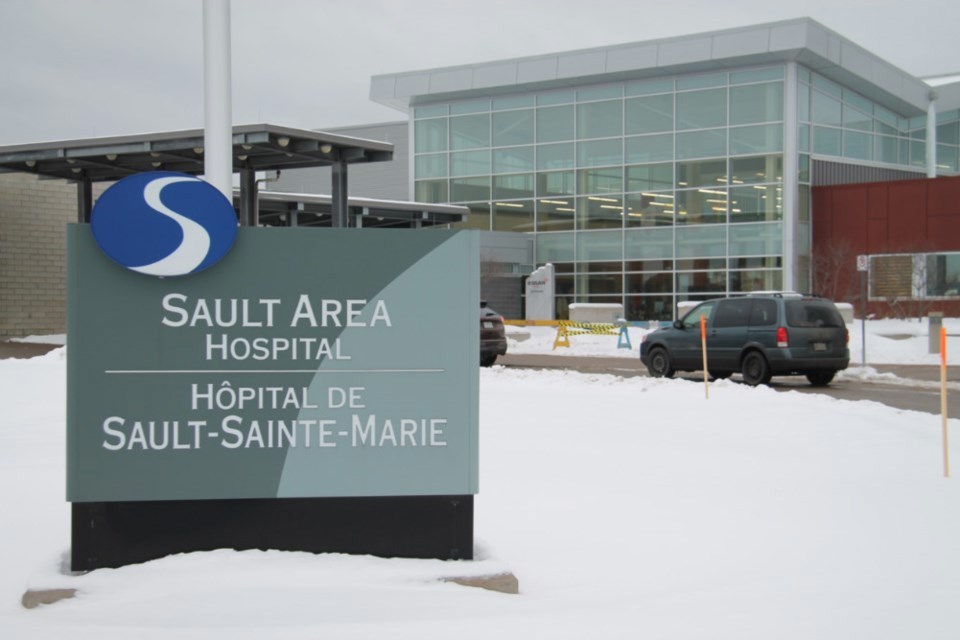
Patient volumes continue to be higher than anticipated at Sault Area Hospital, but staff have made improvements in several areas over the course of the year
Sault Area Hospital continues to experience a high volume of patients, but staff are making efforts to improve care in several areas.
Average hospital occupancy climbed consistently over the past few years, spiking from 262 patients on average in 2023-24 to an average of 303 patients through the 2025-26 year to date.
This summer, occupancy reached as high as 324 patients – well above the 291 patient average estimated in the operating plan for the year.
“We’re expecting these pressures to continue to be a challenge to us,” said Ila Watson, the hospital’s president and CEO, at this week’s board meeting.
“We were already busy prior to the main impacts of the respiratory illness season. It is certainly a cause for concern and something that we really need to pay attention to.”
Increased numbers of acute care patients, as well as those deemed ‘alternate level of care’, have resulted in the hospital operating well above its planned capacity on a regular basis – putting pressure on available space.
Alternate level of care means a patient no longer needs acute hospital treatment, but may be awaiting placement in the appropriate setting – such as long-term care.
Nonetheless, efforts to improve service have shown promising results.
“In good news, we can report some very important improvements in several of the indicators that are around our emergency department,” Watson said.
Ambulance offload times dropped steeply over the course of the fall, as ongoing efforts brought the 90th percentile wait time from 84 minutes down to 14 minutes – just one sixth of the starting figure.
The hospital’s new virtual waiting room – a pilot project introduced this fall – allowed 350 non-urgent patients to wait for treatment from the comfort of their homes.
That program is here to stay and will be expanding in the coming months, staff told SooToday this week.
The hospital is also implementing a surge and capacity plan, meant to improve patient flow and optimize inpatient and critical care capacity during peak respiratory illness season.
“We have a phased plan that includes first optimizing conventional patient rooms, then utilizing non-conventional spaces, such as lounges or ambulatory care spaces, and then potentially using space that would impact non-elective services,” Watson said.
“When we get to that stage, we might actually have some service impacts.”
Despite improvements made and underway, the hospital faces looming financial challenges, with a potential $20-million deficit this year.
“Last year there was an expectation, there were signals in the environment that we would receive increments of funding within the year,” said Watson.
“It does not seem that those same signals are there this year.”