
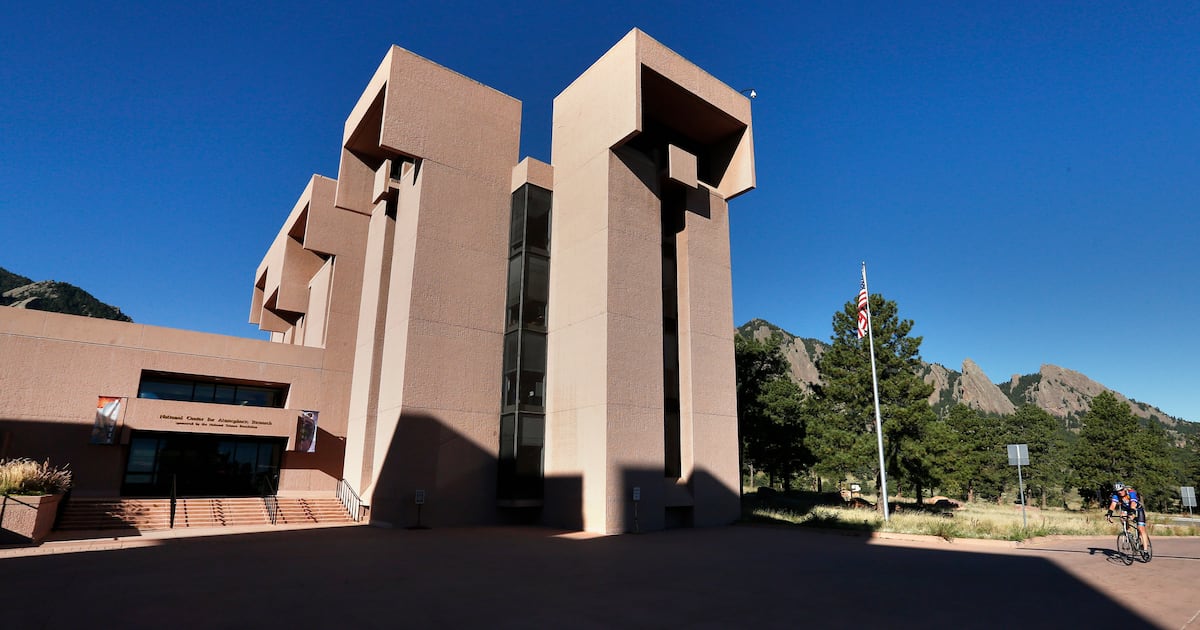
Andrew Johnson reports on the shutdown of a major U.S. research centre by the Trump administration and why experts in Canada suggest scientists might go north.
Canadian climate experts say the dismantling of a major U.S. research centre could drive some of the world’s top climate scientists north of the border, reshaping where critical weather and climate research is done.
The U.S. National Center for Atmospheric Research (NCAR) in Colorado is being shut down by the Trump administration, which has accused the lab of being “one of the largest sources of climate alarmism in the country.”
More than 800 people work at NCAR, which is widely regarded as a cornerstone of climate and weather research. The centre plays a key role in forecasting severe weather and improving responses to natural disasters and is managed by a non-profit consortium of more than 130 colleges and universities.
The move has sparked alarm among Canadian researchers, who say the closure boils down to an attack on climate science.
“We’re being put at a disadvantage,” said John Clague, a professor emeritus with Simon Fraser University’s Department of Earth Sciences. “And this applies not only to Canada, but to really almost every other country in the world. We’re going to be less able to deal with some of the changes we see in climate going down the road and into the future,” Clague said.
Another Canadian expert, Anna Soer, co-president of the Environmental Studies Association of Canada, said the importance of the Colorado lab extends beyond just climate.
“It’s about emergency response as well,” said Soer. “The fact that we lack data in these kinds of times will have repercussions on emergency responses. We need to be prepared in case there is an environmental disaster, we need to be prepared to act, but we also need the data to be able to predict when it will happen.”
But scientists say the NCAR closure could also create an opportunity for Canada.
“My guess is that some of these folks are going to end up in other countries,” said Clague. “Maybe Canada will welcome some of them, and many of them will end up in Europe.”
Soer is hopeful recently announced federal funding to attract top talent to Canada will help lure U.S. climate scientists over the border, adding it is essential Canada commit to a long-term funding to strengthen domestic climate research capacity.
“This is an opportunity for Canada to really establish itself as a leader.”
The Trump administration has said once the climate research centre is dismantled, essential functions performed by NCAR, including weather research, will be transferred “to another entity or location.”