

Dr. William Goodine has been a doctor for more than four decades, and an ophthalmologist for most of that time.
But he’s coming up on a bittersweet retirement next summer, at a turbulent time for the Upper River Valley Hospital in Waterville where he practises.
Goodine said his position will be posted in Fredericton when he retires in June, just one of many changes being made to the Waterville hospital that are hurting patient care.
But he said other more drastic proposals could spell the end of their surgical department, and the hospital’s status as an acute care facility.
“The model that presently is being pushed for surgery in this part of the valley would effectively end our local surgical program,” he said.
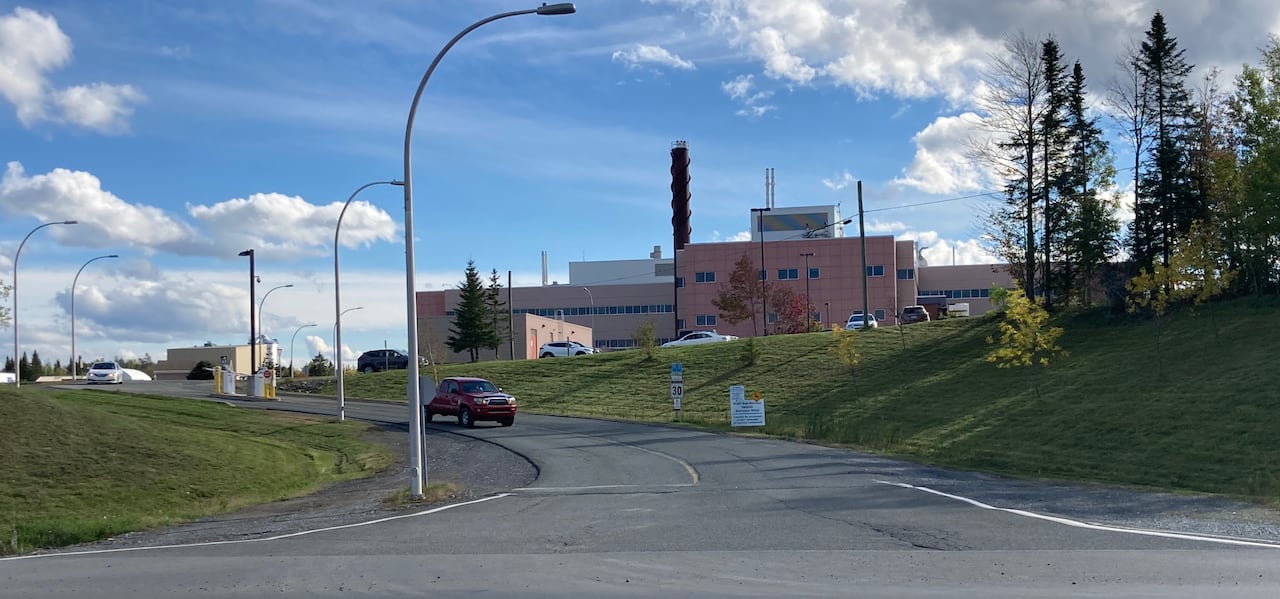 The Upper River Valley Hospital covers the central-western part of New Brunswick, including the towns of Woodstock and Hartland and several villages and surrounding communities.
(Jacques Poitras/CBC)
“If an active department of surgery doesn’t exist in a small hospital, then that hospital will not be able to sustain itself to fulfil its mission of being an acute care facility,” he said.
An acute care hospital has all of the important ancillary programs, such as physiotherapy, local chemotherapy and laboratory, he said.
But it also has an emergency room that’s active 24 hours a day, an intensive care unit, and an active obstetrical unit with the ability to provide cesarean sections when needed.
WATCH | Promised resources haven’t materialized, mayors say: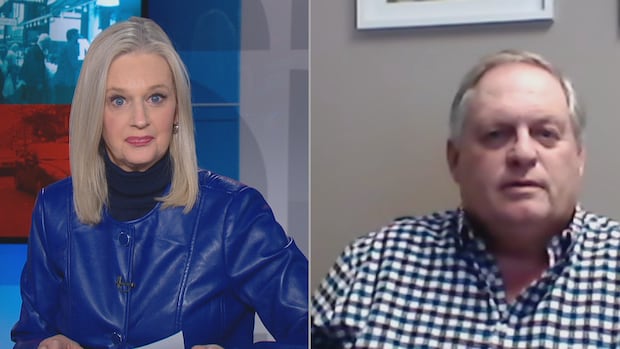
Western N.B. mayors want distinct health care region within Horizon Health
Western New Brunswick mayors concerned about services at the Upper River Valley Hospital in Waterville are calling for a distinct new health-care region within Horizon Health, with local management and medical leadership.
There have been closures of the hospital’s emergency room and labour and birth services in recent years because of staffing shortages. Goodine is concerned that if the surgical department goes, so will other important hospital functions.
“Our emergency room might survive in some fashion,” he said. “Obstetrics totally will be gone, major surgery would be gone, after hours coverage for any major surgery is gone. Intensive care would probably not survive.
“We might well lose our ability to even have any sort of inpatient care and just end up being a place where you send all of these so-called alternative level of care patients.”
But it’s a fear Horizon Health CEO Margaret Melanson said is unwarranted. She said she can assure everyone there will be no downgrading of the Upper River Valley Hospital, and Horizon is actively recruiting for surgeons for it.
“In the meantime, we need to look at what we have available at this time and utilize those resources,” she said. “And so I would say any potential interruption at this time would be considered very temporary.”
 Horizon Health CEO Margaret Melanson said she will be meeting with physicians and politicians in the new year. (Submitted by Horizon Health Network)
Melanson said the hospital’s one remaining surgeon is available to conduct the surgeries he would want to do, including those that require inpatient stay. But she said it’s challenging for other surgeons travelling to the area to not be immediately on site when there are recovering overnight patients.
She said this will not lead to a chain reaction of reduced services across the hospital.
“There has never been any conversation to that extent and there is now an absolute expectation that we will be continuing to offer a sustained service,” she said.
She said that includes the surgical department, as well as the obstetrical service.
“However, looking toward the future, the recruitment that we undertake will absolutely dictate the amount of day surgery versus the amount of overnight surgery that is conducted,” she said.
“It’s an evolution in surgical care to be undertaking surgeries that do require less and less inpatient stay.”
Melanson said she’ll be meeting with the medical leadership at the hospital in the new year, as well as a separate meeting with politicians in the area.
Political leaders demand better staffing
Last week, seven municipal leaders in the region wrote a letter to the province, demanding better staffing and support for their regional hospital.
Andrew Harvey, mayor of the District of Carleton North, part of the Western New Brunswick Service Commission, said the hospital’s coverage area is too large to not be adequately resourced.
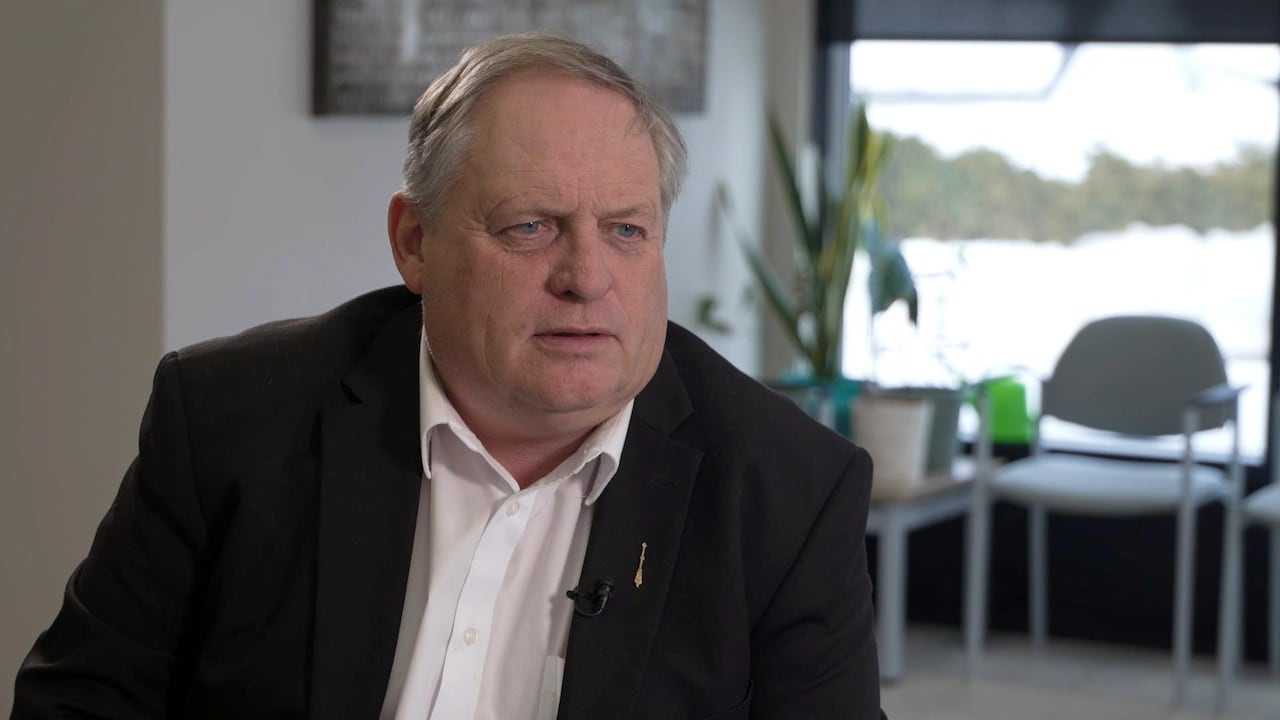 Andrew Harvey, mayor of the District of Carleton North, said the Upper River Valley Hospital’s coverage area is too large to not be adequately resourced. (Mike Heenan/CBC)
“That’s the only ER that’s open 24/7 in the whole upper River Valley, which goes from way above Plaster Rock all the way down to Lakeland Ridges and beyond,” he said. “It’s a big geographical area, so we need that coverage in our area.”
The Upper River Valley Hospital opened in 2007, resulting in the closure of the Northern Carleton Hospital in Bath and the Carleton Memorial Hospital in Woodstock.
It also meant the downgrading of Tobique Valley Hospital, which turned into a health centre, and the Hotel-Dieu of Saint-Joseph in Perth-Andover, which was transformed into a small community hospital.
But Harvey said the promised resources have never been properly dedicated.
“It’s never been fulfilled in what it should really look like,” he said. “And I think the crunch with human resources and the competitiveness of trying to find doctors and trying to find surgeons has really brought this problem to light.”
“We just need to work towards short-term, medium-term and long-term solutions for this hospital and how it works within the region,” he said.