
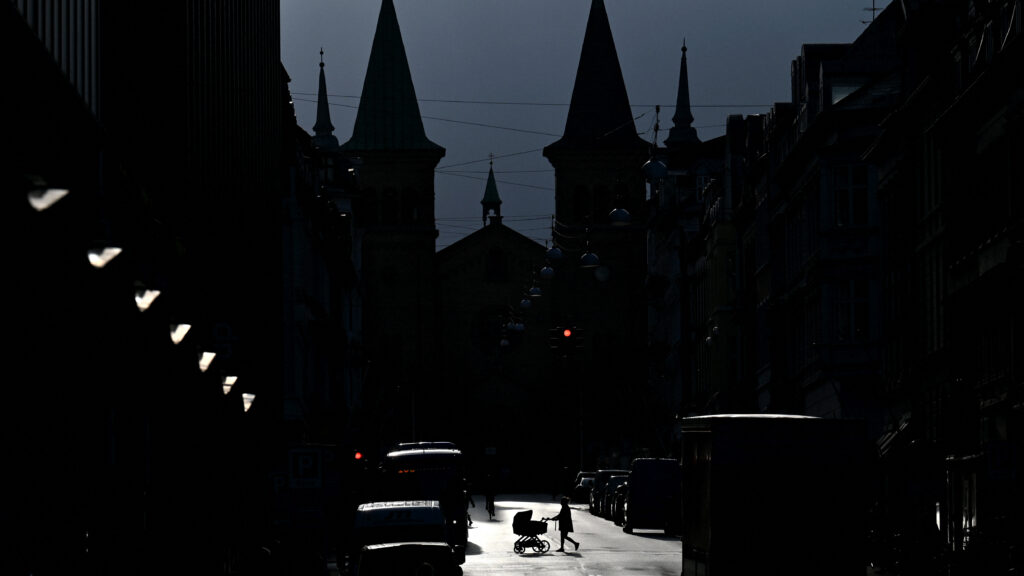
Reports that the Department of Health and Human Services may overhaul the U.S. childhood vaccine schedule to resemble Denmark’s have prompted a reasonable question: Why do American children receive vaccines against diseases that Danish children do not?
The answer is not that one country has better science. It is that the two countries have fundamentally different health care systems, disease burdens, and policy priorities. Denmark’s schedule is calibrated to Danish realities. Adopting it here would leave American children unprotected against diseases we have spent decades bringing under control.
Denmark does not routinely vaccinate healthy children against RSV, rotavirus, varicella, hepatitis B (at birth), hepatitis A, influenza, or meningococcal disease. Here is why the United States does.
RSV
Respiratory syncytial virus is the leading cause of infant hospitalization in the United States. Every winter, pediatric wards fill with babies struggling to breathe.
For decades, we could treat symptoms but not prevent infection. That changed with the approval of nirsevimab (a monoclonal antibody given to infants to prevent infection) and maternal RSV vaccines. In a systematic review my colleagues and I recently published in the New England Journal of Medicine, we found that nirsevimab reduced infant hospitalizations by approximately 80% across multiple study designs, with similar effectiveness against ICU admission. Maternal RSV vaccination during pregnancy reduced infant hospitalizations by 55% to 68%. These findings are consistent with real-world data from implementation programs: Madrid reported approximately 90% fewer pediatric ICU admissions, and Chile saw hospitalizations drop by three-quarters.

CDC awards grant to controversial Danish researchers with ties to top FDA official
Denmark does not recommend RSV prevention for healthy infants. Their infants are hospitalized, too, but Denmark has made a policy decision that these hospitalizations are manageable within their universal health care system. The United States made a different choice: prevent the hospitalizations in the first place, now that we finally can.
Rotavirus
Before the rotavirus vaccine was introduced in 2006, the virus caused approximately 2.7 million episodes of childhood diarrheal illness, 55,000-70,000 hospitalizations, and 20-60 deaths annually in the United States.
Denmark explicitly declined to add rotavirus vaccination. Their health authority concluded that rotavirus infection “hardly ever results in death or long-term harm” in a country with universal health care access. Dehydrated infants can be reliably rehydrated.
That calculation depends on a health care system that guarantees rapid access. In the United States, where access is uneven and many families lack paid sick leave, the burden falls differently. Since introducing the vaccine, U.S. rotavirus hospitalizations have dropped by 85% to 95%.
Varicella (chickenpox)
Many people remember chickenpox as a harmless childhood rite of passage. For far too many children, it was not.
Before the vaccine was introduced in 1995, chickenpox caused approximately 4 million cases, 11,000-13,500 hospitalizations, and 100-150 deaths annually in the United States. Children died from secondary bacterial infections, encephalitis, and pneumonia.
Denmark does not vaccinate against varicella. Neither did the United Kingdom until recently. But after reviewing three decades of U.S. experience, the U.K. announced it will add varicella vaccination in 2026. The theoretical concerns that once gave regulators pause did not materialize as feared. The U.K. cited reassuring American data in making its decision.
Hepatitis B at birth
Denmark screens pregnant women for hepatitis B and vaccinates only infants born to positive mothers. This targeted approach works when the screening system is airtight.
The United States tried this strategy in the 1980s. It failed here. Studies found that risk-based screening missed a substantial proportion of infected mothers: women with no identifiable risk factors, women whose prenatal records were not transferred to delivery hospitals, women who received no prenatal care at all. We switched to universal infant vaccination in 1991 because selective screening could not reliably identify every infant at risk.
Today, 12% to 18% of U.S. pregnancies still go entirely unscreened for hepatitis B. Among women who test positive, follow-up care is inconsistent. The birth dose exists as a safety net for a system with holes.
When infants are infected perinatally, 90% develop chronic hepatitis B infection, and 25% of those will die from the disease. The birth dose prevents that outcome even when screening fails.
Hepatitis A
Before routine childhood vaccination, hepatitis A caused cyclical outbreaks across the United States. In 1995, over 31,000 cases were reported. Following universal childhood vaccination starting in 2006, cases plummeted to an all-time low of 1,398 by 2011, a 95% reduction.
Denmark does not routinely vaccinate against hepatitis A. Their epidemiology is different, and their social safety net reaches vulnerable populations more reliably.
But the U.S. experience shows what happens when coverage gaps emerge. Starting in 2016, hepatitis A surged among unvaccinated adults, particularly people experiencing homelessness and people who use drugs. Childhood vaccination works by eliminating the reservoir. Stopping it would allow that reservoir to rebuild.
Influenza
The United States recommends annual influenza vaccination for all children over 6 months. Denmark does not.
The 2024-25 flu season was the deadliest for American children in 15 years. Two hundred eighty-eight children died. Among those with known vaccination status, 89% were not fully vaccinated. Another 109 children developed influenza-associated encephalopathy, a severe neurological complication.
Why comparing the U.S. vaccine schedule to European countries’ is a red herring
Denmark tried a childhood influenza program. They discontinued it in 2023 because uptake fell to just 16%. Their health authority noted that parents were “less willing to have their children vaccinated for the sake of protecting others.”
That is a values decision. The United States has made a different one: Children are the primary drivers of influenza transmission in communities, so vaccinating them protects not only the children themselves but also their grandparents and immunocompromised contacts.
Meningococcal disease
Meningococcal disease is rare but among the most devastating infections in medicine. It carries a 10% to 15% case fatality rate and can kill a healthy adolescent within 24 hours of the first symptom. Survivors often suffer amputations, hearing loss, and permanent brain damage.
The United States recommends meningococcal vaccination at ages 11-12 and 16. Denmark does not.
But Denmark is the outlier here, not the United States. The United Kingdom, Ireland, Italy, the Netherlands, Portugal, Australia, Canada, Argentina, Brazil, Chile, and Saudi Arabia all have routine meningococcal vaccination programs. The U.K. was the global leader in adopting meningococcal B vaccination for infants in 2015. Germany added routine MenB in 2024.
Denmark’s vaccine schedule is the most minimalist of any developed country. Even other Nordic nations with comparable health care systems cover more diseases. Sweden, Norway, and Finland all have broader schedules. The U.K. is adding varicella in 2026. Germany is adding meningococcal B in 2025. The global trend among wealthy countries is toward more comprehensive protection, not less.
Denmark has made a values choice to accept preventable hospitalizations and illnesses that other countries, including those with universal health care, have chosen to prevent. Danish infants are still hospitalized with RSV. Danish children still get rotavirus gastroenteritis. Danish adolescents can still develop meningococcal sepsis. Their health care system handles these cases well, but the cases still happen.
A better health care system does not eliminate the value of prevention. It simply changes who bears the cost when prevention is declined. In Denmark, that cost is distributed across a robust public system. In the United States, it falls on individual families, many of whom lack the safety net to absorb it.
The question is not whether the United States should improve its health care system. It should. But improving our system would not make Denmark’s schedule appropriate here. Even with universal coverage, why accept tens of thousands of preventable hospitalizations when we have the tools to prevent them? Why watch infants struggle to breathe with RSV when we can prevent it? Why wait for the rare but devastating case of meningococcal purpura fulminans when vaccination can stop it from happening at all?
Denmark’s schedule works for Denmark because Denmark has decided it is acceptable. That is their choice. It should not be ours.
Jake Scott, M.D., is an infectious diseases physician and clinical associate professor of infectious diseases at Stanford University School of Medicine.
Correction: An earlier version of this essay misstated when Germany added the routine MenB vaccine and understated the number of children who died during the 2024-2025 flu season.