

Listen to this article
Estimated 3 minutes
The audio version of this article is generated by AI-based technology. Mispronunciations can occur. We are working with our partners to continually review and improve the results.
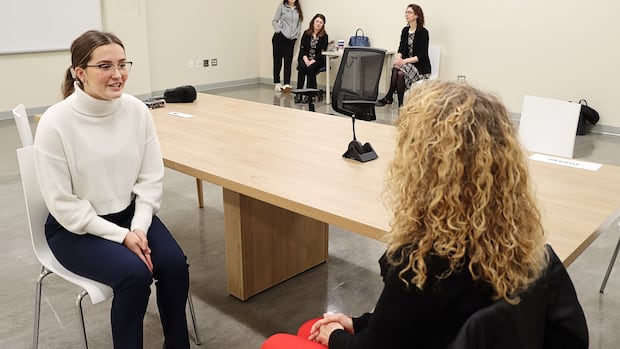
Cape Breton University’s first medical students are getting the chance to develop their bedside manner with some help from “pretend” patients.
It’s the first time such a program has been offered on the island.
“It’s very nice to be able to learn those skills in a low-stakes environment before actually going out and interacting with real patients,” said first-year medical student Grace Pimentel of Glace Bay, N.S.
“Something I’ve learned is that every patient is going to be very different. Some people offer up more information, others are more reserved and you kind of have to dig a little bit more.”
Under the medical school partnership between Cape Breton University and Dalhousie University, students have weekly sessions with community members who are acting as patients.
The actors are given scripts to follow which provide details of their ailment or illness as well as guidance on their demeanour in dealing with the future doctors.
Oliver Schnare, a first-year medical student from New Glasgow, said the sessions feel real and are important to help figure out what questions should be asked.
“What bedside manner really is, is knowing how to act, what words to say, how you use your words in that specific moment,” said Schnare.
“Sometimes that is just listening and not saying anything. Other times it is giving advice when needed. But I think no matter what kind of an overarching thing is, you just want to stay calm, stay supportive and respectful at all times.”
Barbara Beaton is one of the mock patients who acts out scenarios as described in a script. She said that could be anything from having frequent headaches to heart problems.
“We’re told in our training session, you know, not to go too far or too in-depth, kind of stay on script,” Beaton said.
“I didn’t realize how much I would enjoy it. Just to be part of their education, it makes you feel good at the end of the day that you do play a small part in that.”
Dr. Susan MacLeod, a Sydney family physician who leads the skilled clinician program at CBU’s medical campus, said simulated patients help challenge students to improve their communication skills.
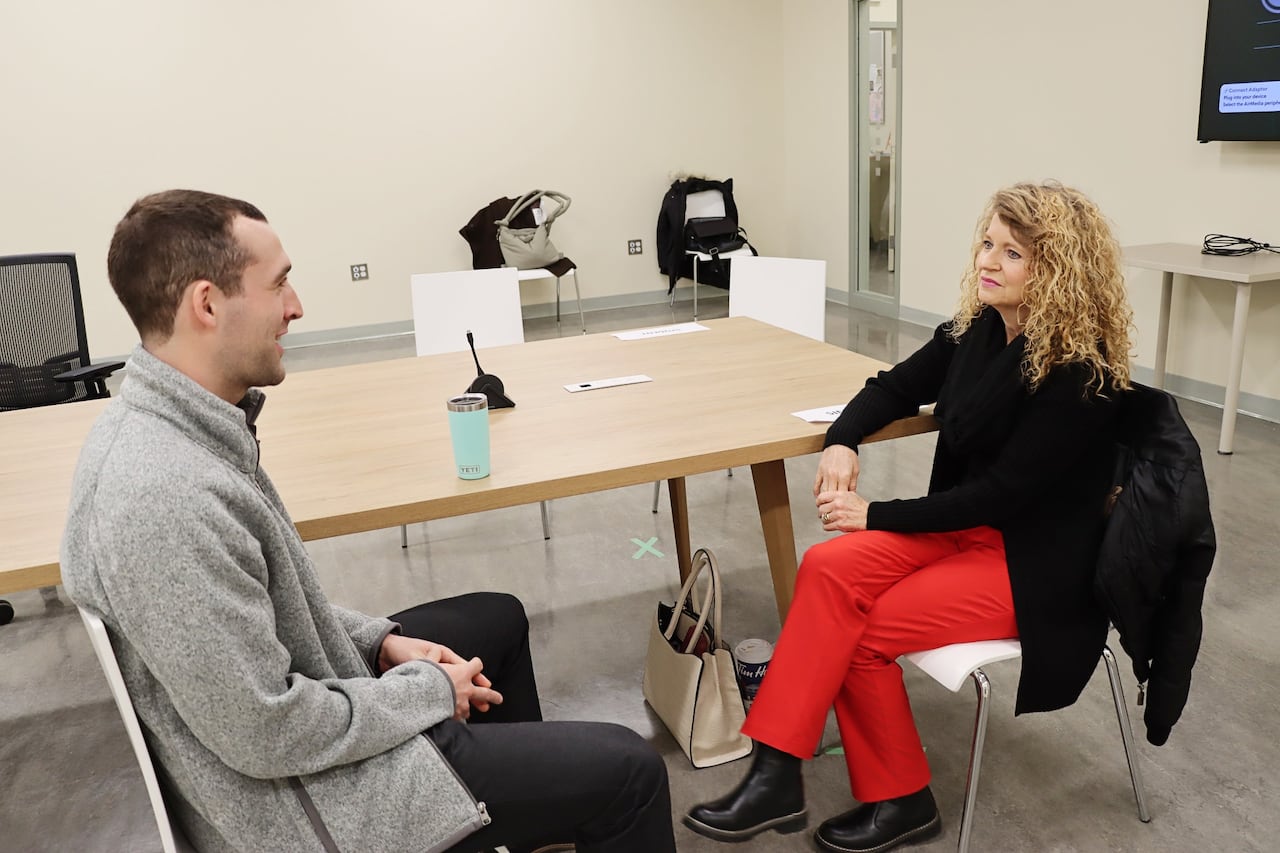 Oliver Schnare of New Glasgow, N.S., says the scripted sessions feel like talking to a real patient. (Erin Pottie/CBC)
The first-year students also shadow doctors and talk to real patients in their first year of the medical program. CBU officials say students are not expected to diagnose anyone at this stage of their learning.
“It’s about getting that history and communication with the patient, establishing a rapport,” said MacLeod. “Those are the key parts for interviewing at this level and it’s an excellent way for them to learn.”
There are 30 students from Nova Scotia studying at CBU’s four-year medical training site.
University officials say the first-year medical students were required to sign return of service agreements to practise family medicine in rural areas of the province after graduating in 2029.
The students are currently studying in classrooms located inside the former NSCC Marconi building. A CBU spokesperson says their new medical building is expected to open sometime in the new year.
MORE TOP STORIES