
Sign up for our newsletter and get our latest content in your inbox.
For the first time in more than half a century, a moon-bound crew is preparing to climb aboard a rocket again.
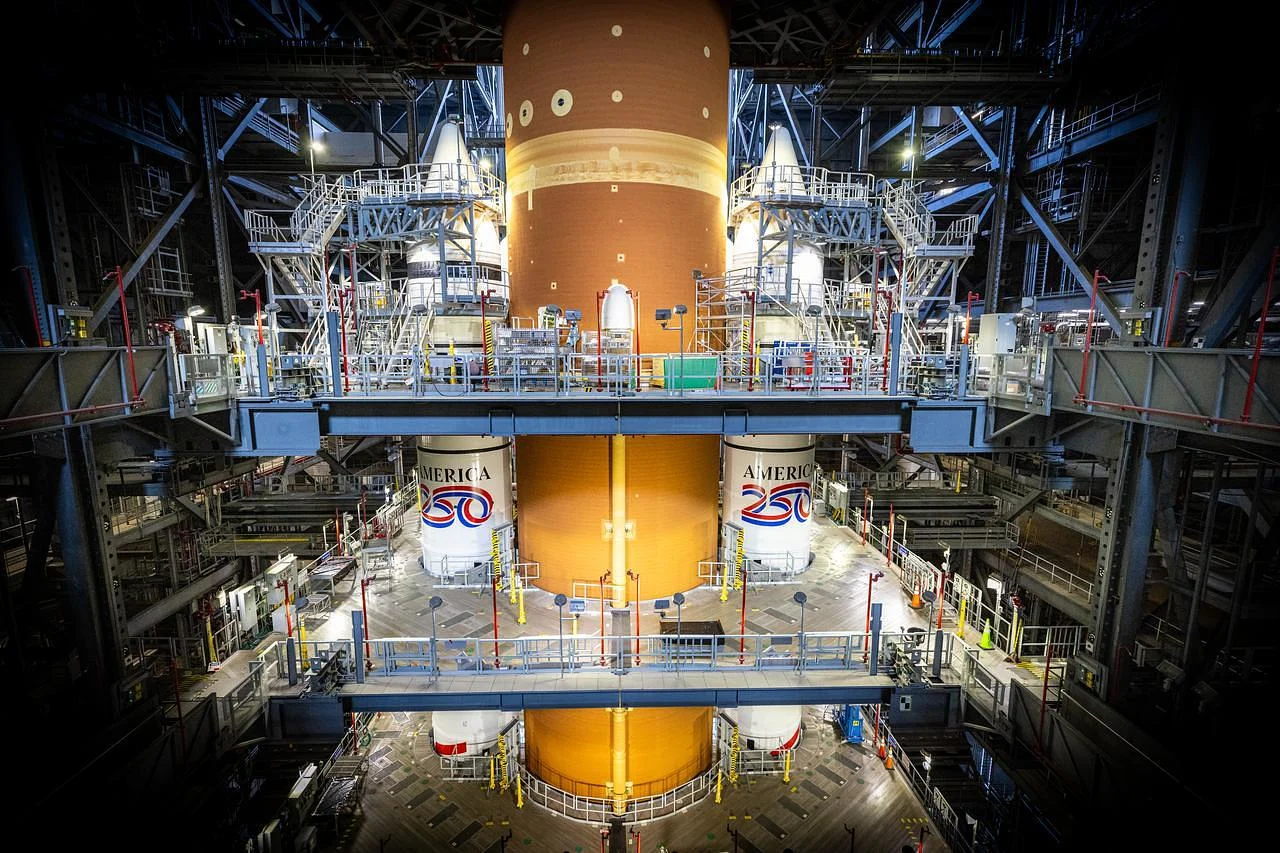
At the Kennedy Space Center, NASA and Boeing engineers are completing the final integration of the Artemis II Space Launch System, the vehicle that will carry four astronauts around the Moon and mark the United States’ return to deep-space human exploration after 54 years.
In a scene reminiscent of the Apollo era yet powered by 21st-century engineering, the towering rocket now stands fully stacked inside the Vehicle Assembly Building (VAB). With the Orion spacecraft sitting firmly atop NASA’s Space Launch System (SLS), teams have begun the closing sequence of inspections, tests and verifications that will lead to rollout and, eventually, the first crewed launch of the Artemis programme.
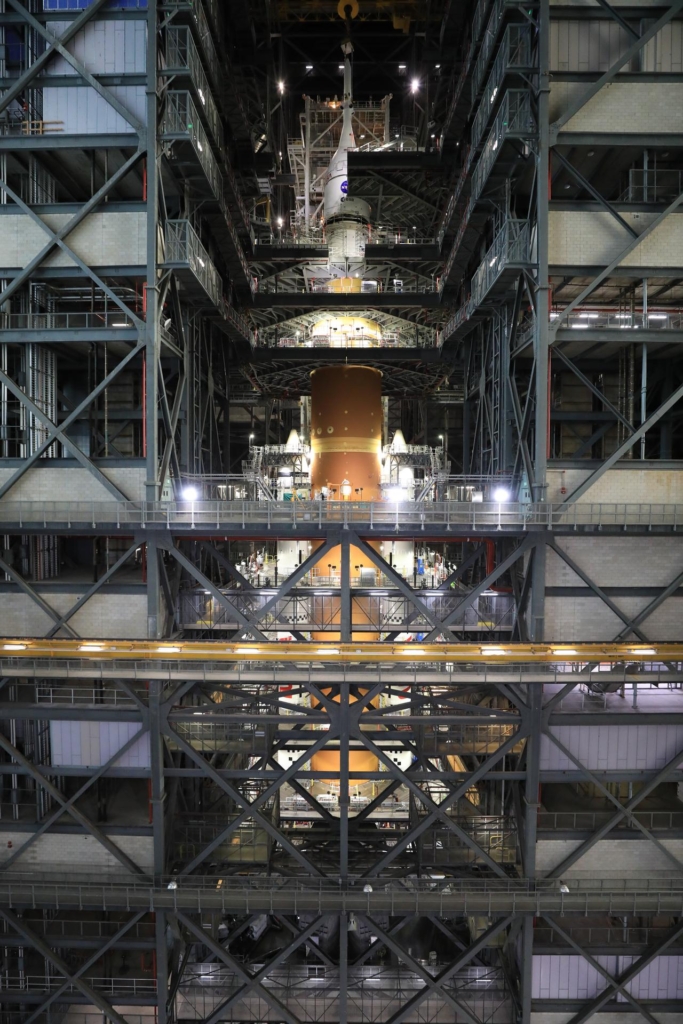 Photo: NASA
Artemis II, scheduled for no earlier than April 2026, will send NASA astronauts Reid Wiseman, Victor Glover, and Christina Koch, along with Canadian astronaut Jeremy Hansen, on a ten-day journey around the Moon. It will be the first human voyage to lunar distance since Apollo 17 in 1972, a symbolic and strategic milestone in the renewed era of deep-space exploration.
Final integration work: bringing the second Artemis Moon rocket to life
With stacking complete, attention has shifted to the detailed and time-critical work that must be finished before the rocket can even leave the VAB. Boeing’s launch engineering teams, responsible for the SLS core stage — the world’s most powerful cryogenic rocket stage — are now moving through a long checklist of close-outs.
One of the most delicate tasks has been completing the engine section, where engineers have installed the engine flight-blanket insulation and removed the ladders and platforms used over the past months. Crews are also making final adjustments to the thermal protection layers, which help the rocket withstand the extreme heat it will face during ascent and re-entry.
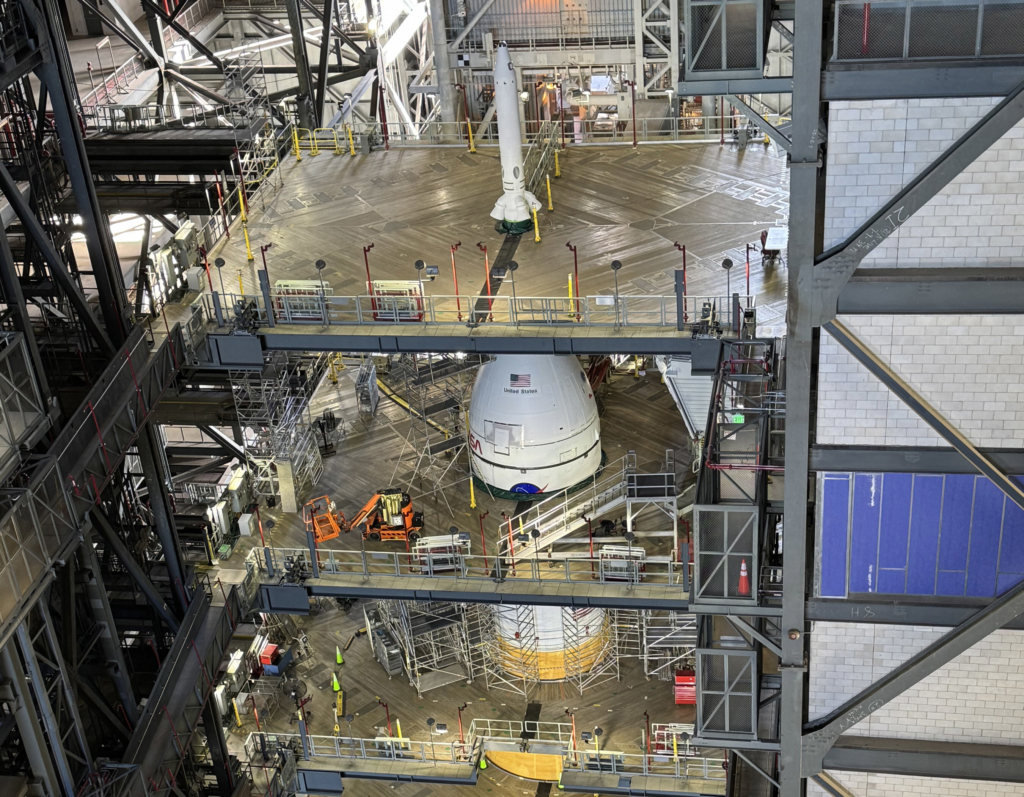 Photo: Boeing News Now
Alongside this, vehicle-stabilisation systems are being secured, and the myriad of access and test ports running along the core stage are being sealed for flight.
A major step forward came with the completion of the Interface Verification Test (IVT). This comprehensive assessment confirms that all internal connections within SLS, such as electrical, mechanical and data, are performing as intended. Crucially, it also validates the interfaces between the rocket and both its ground systems and the Orion spacecraft. Without a successful IVT, the rocket cannot progress to rollout.
Engineers have also conducted full end-to-end communications checks to verify that telemetry signals from the core stage, the Interim Cryogenic Propulsion Stage (ICPS), and Orion are flowing cleanly to teams at Kennedy and NASA’s Johnson Space Center in Houston. These signals will give flight controllers real-time data on everything from engine performance to crew health.
Rehearsals before the real countdown to Artemis II
The next major milestone will be the Countdown Demonstration Test (CDDT). For the first time, the Artemis II crew will rehearse their launch-day activities at the pad, including suit-up, transport, spacecraft ingress and emergency procedures.
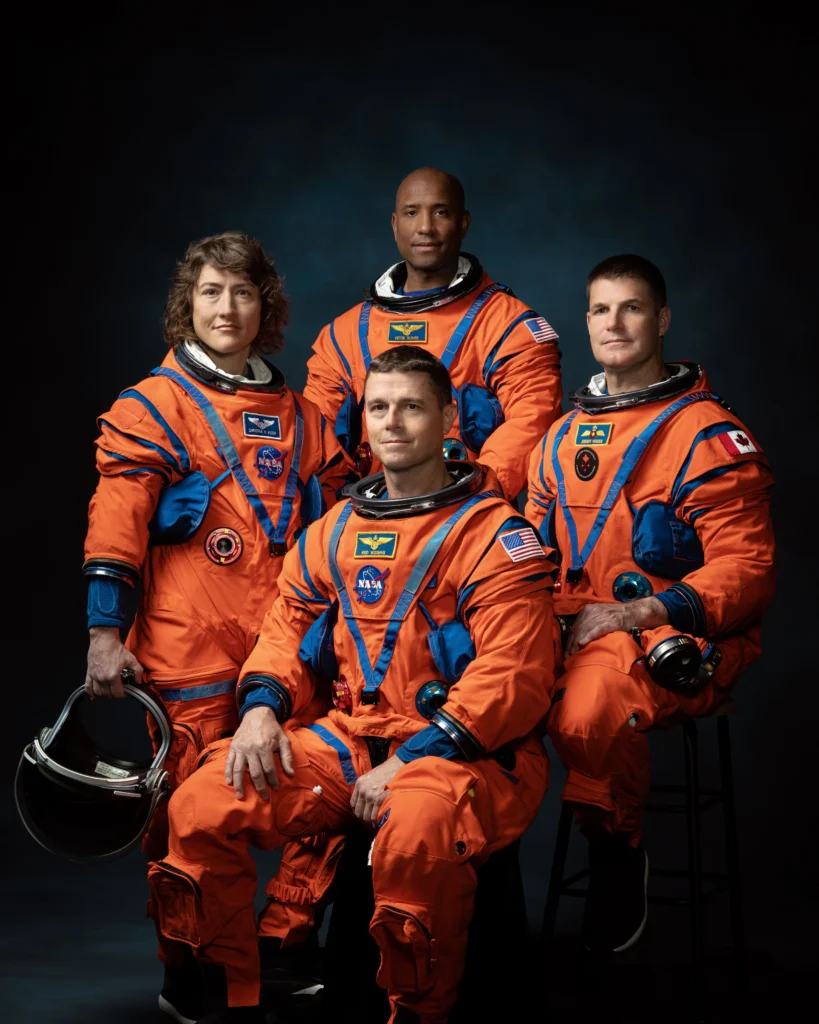 Photo: NASA
Mission Control will use the rehearsal to validate timing, refine procedures, and identify any last-minute corrections needed before the rocket can proceed to the final phase of testing.
Following the CDDT, engineers will install and test the flight-termination system, a mandatory safety feature on all large US launch vehicles. Once complete, the SLS will roll out to the pad for a series of pad-specific tests, the most important being the Wet Dress Rehearsal (WDR). During WDR, NASA loads cryogenic propellants into the vehicle and conducts a full end-to-end countdown, stopping just before engine ignition.
Only after passing WDR will Artemis II be cleared for launch preparation.
Artemis II: the mission that opens the door to deep space
Artemis II is designed to verify the systems required to support astronauts on long-duration spaceflight before the more ambitious Artemis III lunar landing. It builds directly on the success of Artemis I, the uncrewed 2022 test flight that sent Orion around the Moon and back safely.
Although not landing on the lunar surface, Artemis II carries enormous strategic value. It is the mission that will test Orion’s life-support systems, validate deep-space communications and navigation, and prove that the SLS and Orion can support human crews for journeys far beyond Earth orbit.
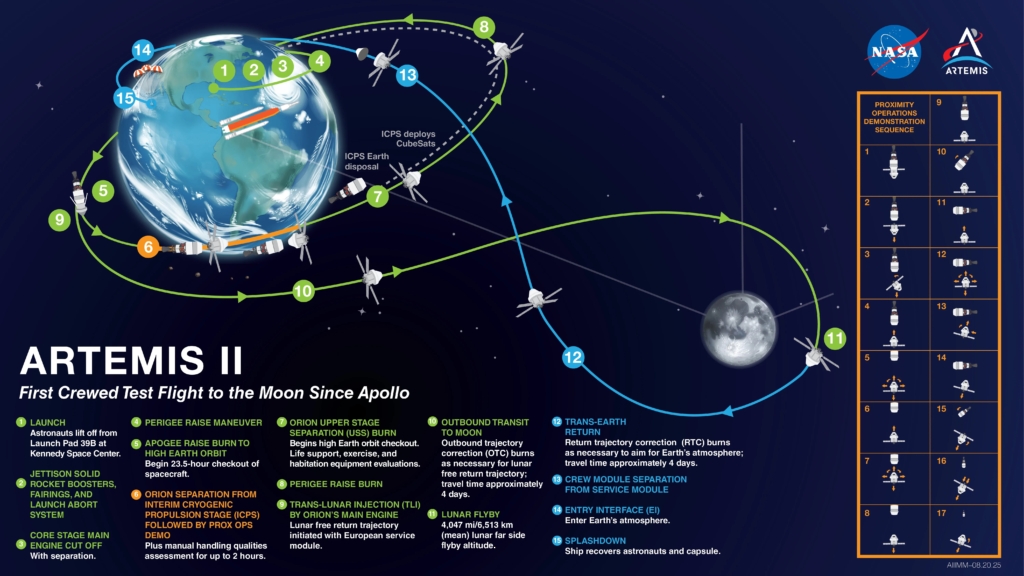 Photo: NASA
Once launched from Kennedy Space Center, the SLS Block 1 rocket will send Orion into Earth orbit before the spacecraft’s European-built service module propels it toward lunar distance. The crew will fly on a “free-return trajectory”, using gravity rather than propulsion to swing around the far side of the Moon and accelerate back toward Earth.
During the mission, they will:
Test life-support systems under real metabolic loads
Conduct manual-handling and proximity-operations exercises
Evaluate emergency procedures
Check navigation systems beyond GPS range
Demonstrate deep-space communications using NASA’s Deep Space Network
The crew will travel more than 4,700 miles beyond the lunar far side, farther from Earth than any human since the Apollo programme.
The rocket behind the return: Boeing’s Space Launch System
The Space Launch System is central to NASA’s deep-space strategy. Designed, developed and produced by Boeing, the 65-metre-tall SLS core stage is powered by four RS-25 engines derived from the Space Shuttle programme. Combined with the twin solid rocket boosters, the SLS generates 8.8 million pounds of thrust at liftoff, more than any rocket currently flying.
Artemis I proved its raw capability. It delivered Orion precisely on its translunar trajectory, validating the rocket’s deeply modernised avionics, structural systems and propulsion components.
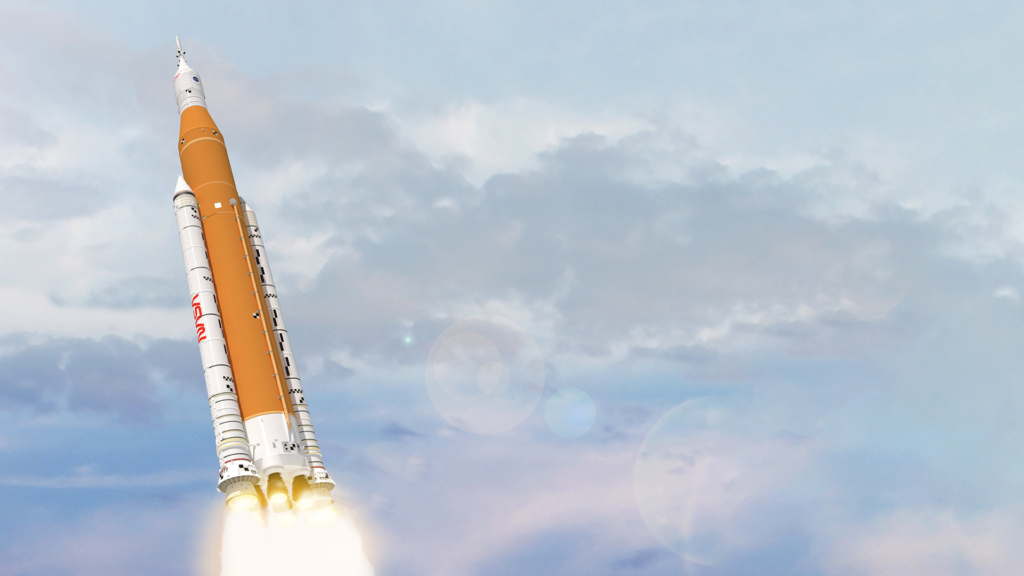 Photo: Boeing
For Artemis II and future missions, Boeing’s work goes beyond the core stage. Production is already underway on:
future core stages
upper stages including the advanced Exploration Upper Stage (EUS)
avionics systems for later SLS configurations
The EUS, which will debut on Artemis IV, will significantly increase SLS payload capacity — a requirement for crewed lunar landings and, ultimately, Mars missions.
Why does NASA want to go back to the Moon?
NASA’s renewed focus on the Moon is not about nostalgia. It is a deliberate strategy designed to build and test the technologies needed for future interplanetary travel.
The Moon’s proximity makes it an ideal proving ground for testing life-support systems, space habitats, mobility systems and resource utilisation technologies. Lessons learned on the lunar surface will inform everything from Mars landing techniques to in-situ resource usage.
The presence of water-ice in permanently shadowed lunar craters opens the possibility of producing oxygen and hydrogen propellants. That capability could drastically reduce the cost and risk of deep-space missions.
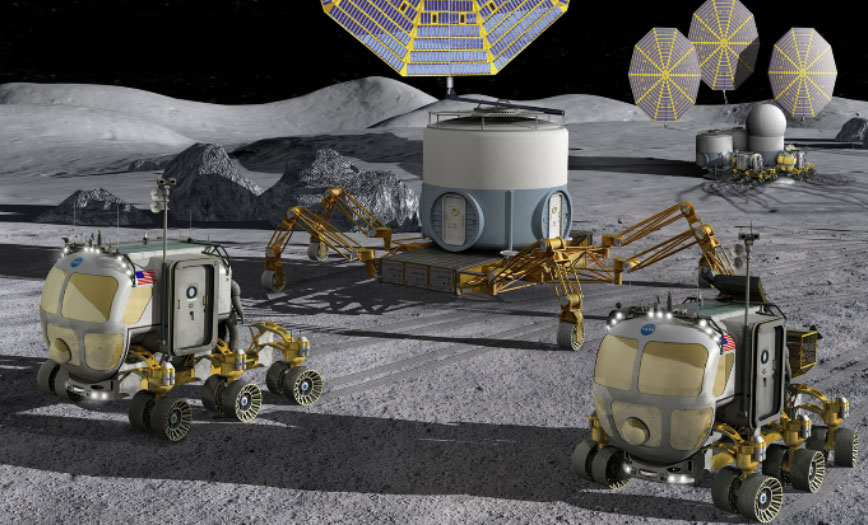 Photo: NASA
Apollo solved many questions but raised others. Artemis aims to conduct deeper geological surveys, sample new regions, and improve understanding of the Moon’s formation and its relationship to Earth.
Looking ahead: Artemis III and the steps toward a lunar base
Artemis III — the first human lunar landing mission of the programme — will follow Artemis II. Supported by the SLS Block 1B configuration and the more powerful EUS, the mission will deliver astronauts to the lunar south pole, where they will begin laying the groundwork for long-term exploration.
NASA plans to establish a sustained presence through the Lunar Gateway, surface habitats and reusable landers, making the Moon an operational outpost for missions deeper into the Solar System.
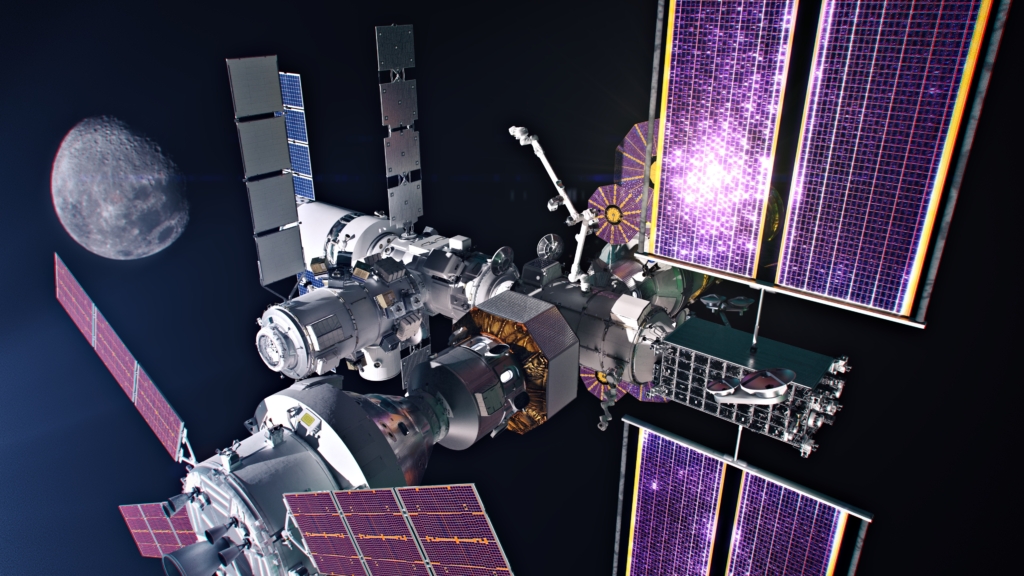 The Lunar Gateway space station. Photo: NASA
As the SLS for Artemis II enters its final sequence of checks, the symbolism is clear: after decades of focusing on low-Earth orbit, human exploration is finally stretching outward again.
The rocket inside the VAB represents more than a machine. It is the culmination of thousands of engineers, technicians and planners, and the first tangible sign that humans are about to journey back to where the story of deep-space exploration began.
When Artemis II lifts off, it will not only send four astronauts around the Moon. It will signal the return of a capability, an ambition and a spirit that defined an earlier era, now reborn for a new generation.
Featured image: Boeing News Now
Sign up for our newsletter and get our latest content in your
inbox.