
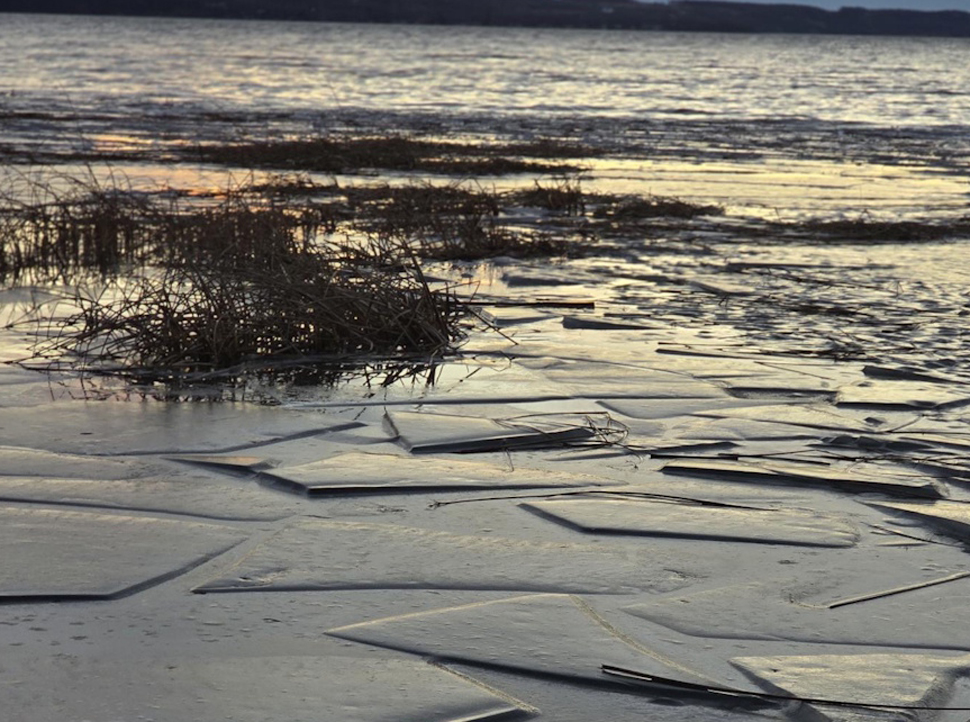
As winter tightens its grip across southern Manitoba, the ponds, forests and wetlands that were alive with movement just months ago appear to fall silent.
The chorus of frogs fades, turtles disappear from sunlit logs and snakes vanish from the grass. But according to a Manitoba Museum zoologist, the animals have not gone anywhere. Instead, they are carrying out remarkable survival strategies beneath the snow and ice.
Dr. Randy Mooi, curator of zoology at the Manitoba Museum, said amphibians, reptiles and fish rely on a range of adaptations to survive the province’s long, cold winters.
“We think things are quiet and dead and that not much is happening, but in the animal world, there are quite a lot of things. Even though they’re slowing down, there’s a lot of things happening in their bodies and in their behaviours that are pretty important for them to survive,” he said.
Frogs that freeze solid
Mooi said animals generally rely on one of two strategies to cope with winter: freeze tolerance or freeze avoidance.
Some frogs use freeze tolerance, meaning they survive by freezing solid.
As cold-blooded animals, frogs cannot regulate their body temperature the way mammals do.
“[During warmer months], they can change their behaviours, like sitting in the sun … to raise their temperature or going into the shade to lower it, but during the winter, they take on the temperature of their environment,” Mooi explained.
Wood frogs, tree frogs, chorus frogs and peepers are among the species that survive winter this way.
“They produce what is sometimes called an antifreeze. It’s sort of a high sugar content in their bloodstreams …. They keep ice crystals from forming in their cells because that would be deadly, and they’re actually able to almost create this sort of bubble of ice in their bodies around their important organs.”
These frogs typically tuck themselves into leaf litter or shallow soil on the forest floor, where they are less likely to be disturbed by predators.
“Then in the spring, when things warm up, they thaw out and go on their merry way,” Mooi said. “It’s a pretty amazing ability.”
Living below the frost line
Other frogs cannot survive freezing and must avoid it entirely by staying below the frost line.
Some dive to the bottom of ponds, slowing their metabolism and absorbing oxygen through their skin. While effective, this strategy comes with risks.
Mooi said frogs overwintering in ponds are vulnerable to winter kill, which occurs when oxygen levels drop too low.
“These frogs, and fishes for that matter, will expire because they don’t have access to oxygen,” he said.
“When the ice melts in the spring, sometimes you’ll see these animals floating along the shoreline or on the top of the water because they’ve run out of oxygen during the winter as they’re trying to avoid the freezing temperatures.”
Winter kill can be caused by a lack of sunlight penetrating ice-covered ponds, which limits photosynthesis.
“In the winter, the plants, for the most part, are not photosynthesizing, and they may be just rotting and using up oxygen,” Mooi said. “And, of course, there’s ice on the top of the pond, so there’s no access to the oxygen that’s in the atmosphere.”
Underground shelter seekers
Toads, salamanders and snakes also need to get beneath the frost line to survive.
“They have to make sure that they don’t freeze at all, so … toads usually burrow into the sand, or they might go into rodent burrows,” Mooi said.
Snakes sometimes use loose soil from ant nests, and young snakes often shelter in underground tunnels and chambers left behind by ants.
Turtles that live without oxygen
Southern Manitoba is home to two turtle species, the western painted turtle and the snapping turtle. Both avoid freezing by settling at the bottom of ponds.
Their method of surviving without oxygen, however, is unusual.
“They can actually use what’s called anaerobic respiration, which is being able to create energy to keep their bodies running through the winter without oxygen, a very unusual ability,” Mooi said.
In humans, anaerobic respiration occurs during intense exercise, causing lactic acid buildup. In turtles, the process happens very slowly.
“When we feel the lactic acid burn, we’re using a lot of energy all at once, but during the winter, turtles have really shut down their metabolism quite substantially, so they’re hardly using any energy at all,” Mooi said.
He added that a turtle’s heart rate in winter may slow to once every five or even 10 minutes.
“So even if they’re using anaerobic respiration and creating lactic acid, they’re creating very, very small amounts of it.”
Turtles also use their shells and bones to neutralize the acid.
“They are able to use their shells and their bones as a buffer, so they can neutralize that acid using the calcium that’s in some of their bones.”
This ability allows turtles to survive even when other animals cannot.
“Sometimes you might have ponds where you’ll see a winter kill with fish and maybe some frogs floating around after the winter, but there’ll be a painted turtle swimming happily around because they’re able to avoid that issue.”
Fish and the winter balance
Fish also adjust their behaviour as temperatures drop.
“The densest water is usually around four degrees Celsius, and so that sinks to the bottom and forces the other water upwards, so colder water is actually near the surface,” Mooi explained.
“That’s why some of these fish go down further, because they’ll have a stable environment in that [temperature].”
Because oxygen levels can be lower near the bottom, fish often stay in the middle of the water column and seek shelter near rocks or logs. Their slower metabolism also affects how they feed.
“That’s why, generally, when you’re ice fishing, you’re not dragging the lure around,” Mooi said.
“[Fishers] are just sitting there with flags, … and the fish will be attracted to those because they still eat, but they need to go after something a little slower.”
Winter as a time of change
For some species, winter is not just something to endure, but a season that drives change.
Mooi said research on species such as lake trout suggests their behaviour and even brain structure may shift during winter as they move into shallower, more complex environments.
“There have been some studies that suggest their brains actually increase in size slightly in the winter. The idea being that their brains are adapting to the kind of environment they’re in.”
He added that cold temperatures are also essential to certain life cycles, including turtles, where incubation temperature affects the sex of hatchlings.
“When eggs are laid, there are certain temperatures that will produce males, and at other temperatures, the eggs will produce females or a mix of males and females,” he said.
A hidden season
While winter landscapes in southern Manitoba may look still, Mooi said the season is anything but lifeless.
Beneath the ice and snow, animals are slowing down, adapting and surviving in ways that often go unseen.
“We think things are quiet and dead and that not much is happening, but in the animal world, there are quite a lot of things,” he said.
-With files from Kylee Bailey.