
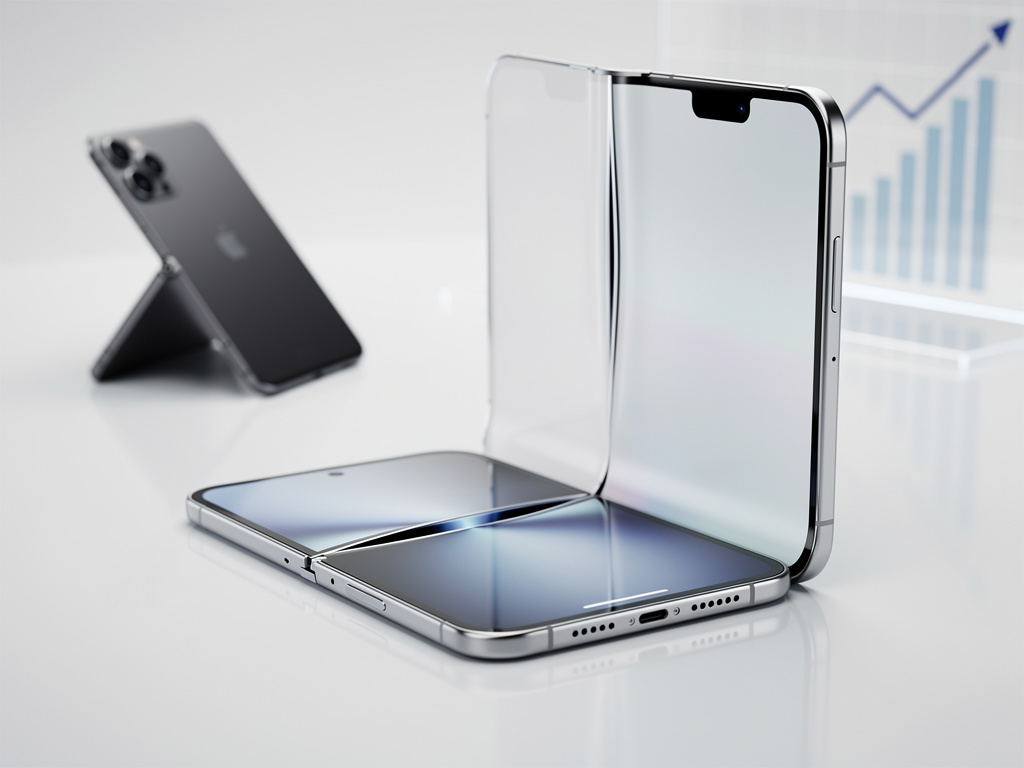
Apple’s Foldable Ambitions: Navigating the Crease Conundrum in iPhone Innovation
Apple Inc. has long been synonymous with sleek, seamless design, but its rumored entry into the foldable smartphone market is testing the limits of that reputation. According to recent reports, the tech giant is grappling with significant hurdles in developing a foldable iPhone that eliminates the unsightly crease common in current foldable devices. This challenge is not just a minor setback but a fundamental engineering puzzle that could delay the product’s launch and reshape Apple’s strategy in the competitive mobile arena.
Insiders and analysts suggest that Apple’s insistence on a crease-free display stems from its commitment to user experience. Unlike competitors such as Samsung, which have released foldables with visible creases, Apple aims for a display that appears perfectly flat when unfolded. This ambition, while admirable, has led to prolonged development cycles. A tipster known as Digital Chat Station, as reported by TechRadar, highlighted ongoing “technical challenges” in achieving this goal, with translations indicating persistent issues in hinge and screen technology.
The foldable iPhone, often dubbed the iPhone Fold, is speculated to debut as early as next year, but skepticism abounds. Leaks point to a device that folds like a clamshell, similar to the Samsung Galaxy Z Flip, but with Apple’s signature polish. However, the crease problem remains a sticking point, as current foldables from other manufacturers still exhibit slight indentations where the screen bends, detracting from the premium feel Apple demands.
Engineering Hurdles in Display Technology
At the heart of Apple’s difficulties is the display technology itself. Foldable screens require flexible materials that can withstand thousands of folds without degrading. Apple has reportedly been collaborating with suppliers like Samsung Display and LG Display to refine ultra-thin glass and polymer substrates. Yet, achieving a crease-free unfold has proven elusive, with prototypes showing durability issues under rigorous testing.
Posts on X (formerly Twitter) from users like Apple Hub reflect a history of pauses in development. One post from early 2024 noted that Apple halted work on a foldable iPhone after Samsung’s display failed internal tests, breaking down after just a few days. This underscores the reliability concerns that have plagued the project since its inception, with rumors dating back over a decade.
Further complicating matters are the mechanical aspects, such as the hinge mechanism. Apple is said to be engineering a hinge that not only minimizes the crease but also ensures the device feels as thin and light as a traditional iPhone. Analyst Ming-Chi Kuo, via Business Standard, warns that production challenges could push meaningful shipments to 2027, even if a 2026 launch is announced.
The Broader Context of Foldable Market Dynamics
The foldable phone segment, while niche, is growing rapidly, with Samsung and Google leading the charge. Apple’s entry could disrupt this space, but delays might allow rivals to solidify their positions. Recent developments, such as Samsung’s Galaxy Z TriFold, highlight the industry’s progress, yet even these devices retain minor creases, validating Apple’s cautious approach.
Industry observers note that Apple’s perfectionism is both a strength and a potential weakness. A report from AppleInsider compiles rumors suggesting a 2026 or 2027 debut, with designs potentially featuring an 8-inch inner display when unfolded. This would position the iPhone Fold as a hybrid between phone and tablet, enhancing multitasking capabilities.
On X, sentiment varies, with some users expressing excitement over leaked specs like a titanium frame and crease-reduction tech, while others criticize potential compromises, such as a thicker profile or simplified camera systems. A post from tech enthusiast Anthony in mid-2025 pointed out concerns about the device’s thickness and aspect ratio, drawing comparisons to past failures from Oppo and Google.
Supply Chain and Production Realities
Apple’s supply chain is under scrutiny as it ramps up for foldable production. Partners in Asia are reportedly struggling to meet Apple’s stringent quality standards. Kuo’s analysis, echoed in PhoneArena, indicates that mass production might not begin until late 2026, leading to shortages that could limit initial availability to far below the targeted 8-10 million units.
This isn’t Apple’s first foray into ambitious hardware; recall the development of the original iPhone or the Apple Watch. However, foldables introduce unique variables, including dust resistance and battery life in a folding form factor. Leaks suggest Apple is testing prototypes with side-mounted Touch ID instead of Face ID to accommodate the fold, as per a post from Marius Fanu on X detailing a 7.58-inch inner screen and a 5.25-inch outer display.
Moreover, the economic implications are significant. Pricing rumors place the iPhone Fold at around $1,500 or higher, positioning it as a premium offering. Delays could impact Apple’s revenue projections, especially as traditional iPhone sales plateau in mature markets.
Innovation Versus Practicality in Design
Apple’s user interface adaptations for a foldable device are another layer of complexity. Reports from TechTimes discuss how the foldable UI could revolutionize app design, enabling seamless multitasking across split screens. This would require iOS updates tailored to the folding mechanism, potentially debuting with iOS 20 or later.
Yet, technical challenges extend beyond the crease. Durability tests have revealed issues with screen longevity, where repeated folding leads to pixel degradation or delamination. Apple’s insistence on a “nearly invisible crease” involves advanced techniques like micro-LED integration or specialized coatings, but these add to costs and complexity.
X posts from sources like Wind Info highlight analyst predictions of delays, with availability slipping into 2027 due to these hurdles. This mirrors earlier setbacks, as noted in a 2021 post from Apple Hub, where Bloomberg’s Mark Gurman reported that a foldable iPhone was years away or might never materialize.
Competitive Pressures and Strategic Implications
As Apple navigates these obstacles, competitors aren’t standing still. Huawei and Honor have made strides in crease-minimizing technology, putting pressure on Apple to deliver. A Mashable article, accessible via Mashable, cites top analyst insights on a likely 2026 reveal but with delivery delays persisting.
Internally, Apple has prototyped multiple designs, including book-style and clamshell variants. A 2024 X post from AppleTrack mentioned two active prototypes, with reliability concerns pushing the timeline to 2026 or beyond. This iterative process reflects Apple’s methodical approach, prioritizing quality over speed.
The potential impact on app developers is profound. With a foldable iPhone, Apple could redefine mobile productivity, but only if the hardware lives up to expectations. Discussions on X, such as those from Shibani Joshi, emphasize the crease as the biggest challenge, with Apple aiming for a durable hinge that maintains the iPhone’s elegance without added bulk.
Market Readiness and Consumer Expectations
Consumer anticipation is high, fueled by years of speculation. A Reddit thread linked in provided context, from r/apple, discusses progress toward a 2026 launch, with community members debating specs and features. This buzz could translate to strong initial demand, but delays risk frustrating loyal fans.
Economically, the foldable market is projected to grow exponentially, with Apple poised to capture a significant share. However, technical snags could cede ground to Android rivals. India Today, in a recent piece at India Today, summarizes rumors of a crease-free titanium design debuting in 2026.
Balancing innovation with feasibility, Apple may need to compromise on some ideals. Yet, history shows that when Apple enters a category, it often sets new standards. The foldable iPhone could do the same, provided it overcomes current impediments.
Future Prospects Amid Ongoing Developments
Looking ahead, Apple’s foldable journey illustrates the high stakes of tech innovation. With patents filed for crease-resistant displays and adaptive interfaces, the company is investing heavily. A MacRumors guide, found at MacRumors, details years of rumors, ramping up to potential 2026 announcements.
On X, recent posts like one from TechPulse Daily reiterate the crease-free challenges, aligning with TechRadar’s report. This collective intelligence suggests that while hurdles remain, progress is evident.
Ultimately, the iPhone Fold represents Apple’s bold step into uncharted territory, where perfection meets practicality. As development continues, the industry watches closely, anticipating how Apple will fold its way into the future of mobile devices. Whether it achieves a truly seamless experience or settles for incremental improvements, the outcome will influence smartphone design for years to come.