

By Stephanie Dalzell, ABC

President of the Australian and New Zealand College of Anaesthetists says the drugs slowed digestion, which could potentially increase the risk of pulmonary aspiration during surgery.
Photo: 123RF
Doctors are being forced to delay surgery for some patients who are on Ozempic-like drugs, which can pose a heightened risk of life-threatening consequences to patients when they are under anaesthesia.
As the use of glucagon-like peptide-1 (GLP-1) agonists such as Ozempic have risen, anaesthetists said some patients were failing to declare they were on the medication before showing up for surgery, or had not arrived properly prepared.
GLP-1 drugs are a breakthrough class of medication that mimic the activity of a natural hormone, helping people feel full for longer.
But David Story, president of the Australian and New Zealand College of Anaesthetists (ANZCA), said they slowed digestion, which could potentially increase the risk of pulmonary aspiration during surgery.
“The major problem we’re trying to prevent is aspiration of gastric contents. That is where someone regurgitates what’s in their stomach, and it’s breathed into their lungs or passes into their trachea,” he said.
“That can lead to either obstruction of the airway, which can be life-threatening … it can lead to chemical or physical injury of the lungs, leading to the situation where a patient may need to go to ICU, and some patients with this condition can die.
“And this is what we’re really concerned about.”
Professor Story said patients were showing up for surgery without telling doctors they were on GLP-1 drugs because they had either forgotten, did not realise it counted as medication, were taking it without a doctor’s oversight, or were embarrassed about using weight loss drugs.
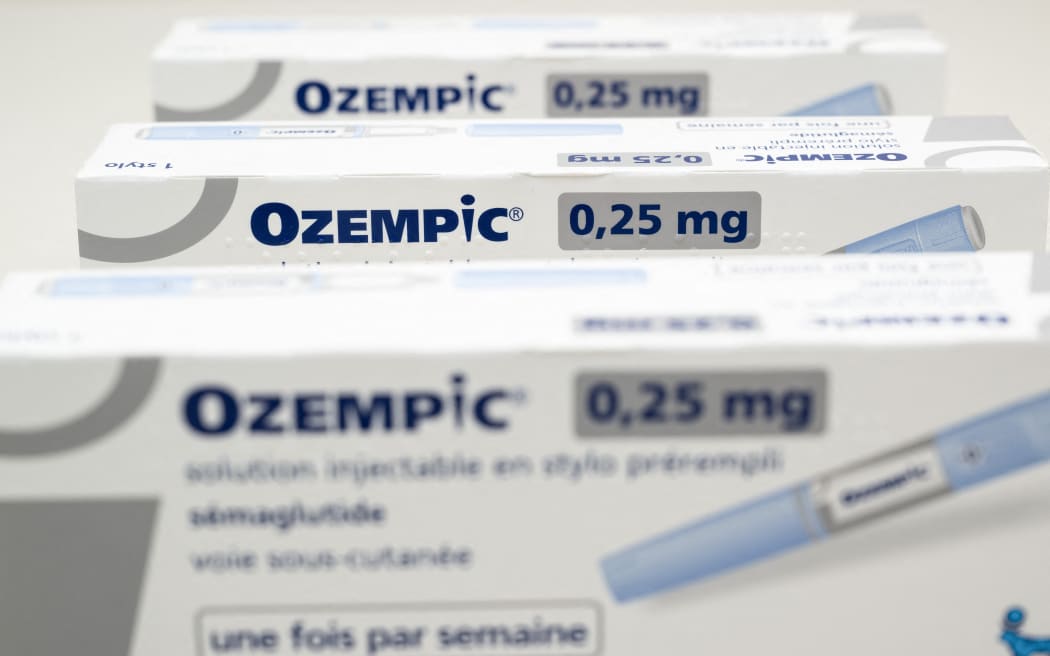
Ozempic has been hailed as a miracle drug.
Photo: AFP / Sebastien Bozon
While he stressed the chances of pulmonary aspiration were still low, he said anaesthetists who were blindsided by patients on GLP-1 medication were working to find different ways to administer anaesthetics to reduce the risk.
In some cases, they were even choosing to delay surgery altogether, so patients could fast on clear fluids for an additional 24 hours.
He said that was important as airway reflexes were relaxed under anaesthetic, and if the stomach was not empty, pressure from its contents could build, causing them to regurgitate into the lungs.
“Usually, the stomach clears itself, and one of the reasons we fast people prior to surgery is to allow the stomach time to clear itself. That is slowed down in patients who take these drugs,” he said.
“The risk is still small, but because it can be such a serious complication, we’re careful.”
President of the Australian Society of Anaesthetists Vida Viliunas said she had encountered patients who had stopped the medication prior to surgery, but did not realise it had a lasting effect.
“I had a patient last week who had taken herself off this medication for two weeks,” she said.
“Unfortunately, these drugs last for a long time, certainly more than two weeks, sometimes more than four weeks. They still have this effect on the transit of food through the gastrointestinal tract.
“She just didn’t tell me that she was on these medications, I found out later … but I used a technique of intubation that protects the airway from soiling from gastric contents.”
Dr Viliunas stressed the benefits of GLP-1s often outweighed the risks and that anaesthetists were used to thinking on their feet to protect patients.
“Surgery can either proceed, be deferred or cancelled,” she said.
“Say somebody has a cancer that needs to be operated on, that is relatively urgent… we will decide to proceed.
“I have techniques that I will use to mitigate the risk.”
New guidelines for anaesthetists
ANZCA has updated its guidelines, recommending anaesthetists specifically ask their patients whether they are on GLP-1 medication.
It also recommends patients on GLP-1 drugs take clear fluids for 24 hours, followed by a standard six-hour fast before surgery.
The college noted the evidence around GLP-1s increasing the risk of pulmonary aspirations was limited, but said its guidelines represented a consensus based on a review of currently available evidence and expert opinion.
“We would hope that as people become more aware that there is a concern… that they’ll think of them and tell us early so we can help them have the safest pathway to their surgery,” Professor Story said.
Ozempic-like medications have become increasingly popular for weight loss and treating type 2 diabetes, with the World Health Organization recently endorsing them as long-term treatments for obesity.
There are an estimated 500,000 people on GLP-1 medications across Australia, according to preliminary research from New South Wales University.
Elif Ekinci, director of the Australian Centre for Accelerating Diabetes Innovations at Melbourne University, said it was important patients on GLP-1 medication continued with their treatment before any procedure unless otherwise advised by a doctor, noting high blood sugar levels could also interfere with surgeries.
“In the long term, these are very good medications. They are very good at managing glucose levels and obesity, and have other long-term benefits as well, like reduction in cardiovascular events in particular in type 2 diabetes,” she said.
“In the short term, I think stopping the GLP-1 medications like Ozempic can be disruptive because it can lead to high glucose levels, and it can also lead to potential delays in the surgery or cancellation of surgery.”
All doctors urged patients to be honest with their health practitioners about what medication they were on.
“We as doctors won’t judge them,” Professor Story said.
“It’s much more important that we know about it for their safety… that’s our role as doctors, to work with them and optimise their care.”
– ABC