
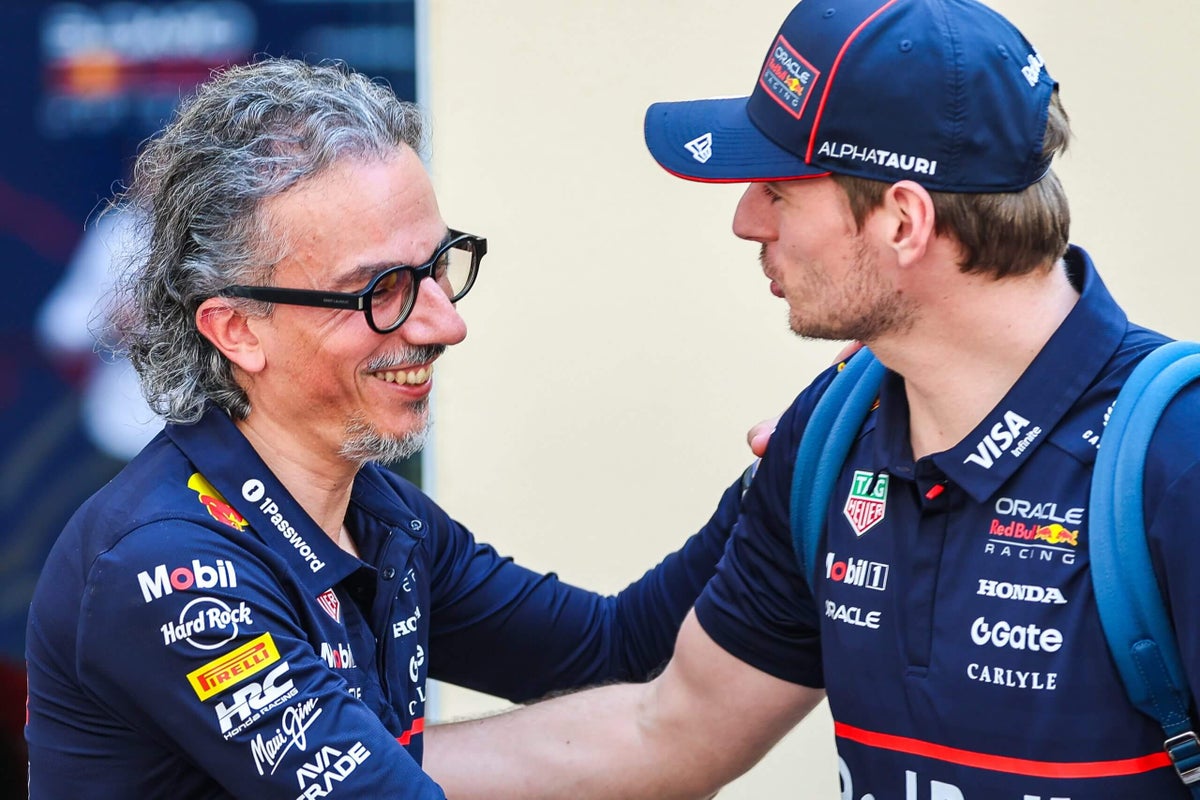
This article is part of our F1 Origin Stories series, an inside look at the backstories of the teams, drivers, and people fueling the sport.
On each Thursday of a Formula One race weekend, Laurent Mekies feels impatient.
As Red Bull’s F1 team principal goes about his regular media day duties, conducting interviews and preparing with the team ahead of opening practice, he can’t shake an itchy, nervous anticipation.
“Every single Thursday, I’m like, ‘I can’t wait for it to be tomorrow morning,’” Mekies told The Athletic in an interview conducted at the 2025 Mexico City Grand Prix.
He’s not wishing time away, nor is he even eager to be in the heat of race competition, where Max Verstappen would surely be in contention at the front. Practice is enough to make Mekies happy.
“I just want to have the car running,” Mekies said. “And then, you go on the pit wall and you say, ‘We really are the luckiest people in the world.’ We have the best seat to watch what we love.”
That spot on the Red Bull pit wall is one of the most high-profile positions in F1. The 48-year-old has only been warming that seat since July, when he was drafted in from Red Bull’s sister team, Racing Bulls, to replace Christian Horner, who was sacked following a 20-year stint in charge.
They were big shoes for Mekies to fill. But a life spent dedicated to motorsport had led the Frenchman to sit atop one of F1’s biggest and most successful teams.
Mekies’ affinity with F1 started as a child, when he’d watch grands prix on TV with his parents. Watching F1 delighted Mekies, but he didn’t yet dare dream of joining the sport’s traveling circus. “It always feels so far and unreachable that you never even think about getting there,” Mekies said. “But maybe I could go into mechanical engineering.”
He found a university in France that specialized in motorsport and studied aeronautical engineering, knowing the course offered possible paths toward motorsport through internships. After finishing his studies, he started work with Signature, one of the top Formula Three teams in France.
But while flicking through an early 2001 issue of Auto Hebdo, France’s biggest motorsport magazine, Mekies spotted an advertisement from Asiatech. The company was taking over Peugeot’s F1 engine program, and needed engineers. “I was in Melbourne (for the opening race) three weeks later.”
Mekies worked as an engine engineer with Arrows, leading to his first interactions with Jos Verstappen, Max’s father. Through the 2001 season, he was assigned to the car belonging to Verstappen’s teammate, Enrique Bernoldi, who was one of the first young drivers that Red Bull had supported to make it to F1.
Unbeknownst to Mekies, the link to the energy drinks giant was there from the very start of his F1 career.
The foreshadowing continued with Mekies’ next move to Minardi, which would later become Toro Rosso. In 2024, he became team principal of what is now known as the Racing Bulls team.
When Mekies joined Minardi as a race engineer, it was wildly underfunded compared to its rivals, which spent hundreds of millions of dollars.
Minardi’s fortunes changed when Red Bull bought the team for 2006 and rebranded it as Toro Rosso. “Red Bull took it to a completely new level,” he said. There was no longer a scramble for resources, and it also afforded the chance to work with future Red Bull stars such as Sebastian Vettel, who scored Toro Rosso’s first win – at Monza in 2008.
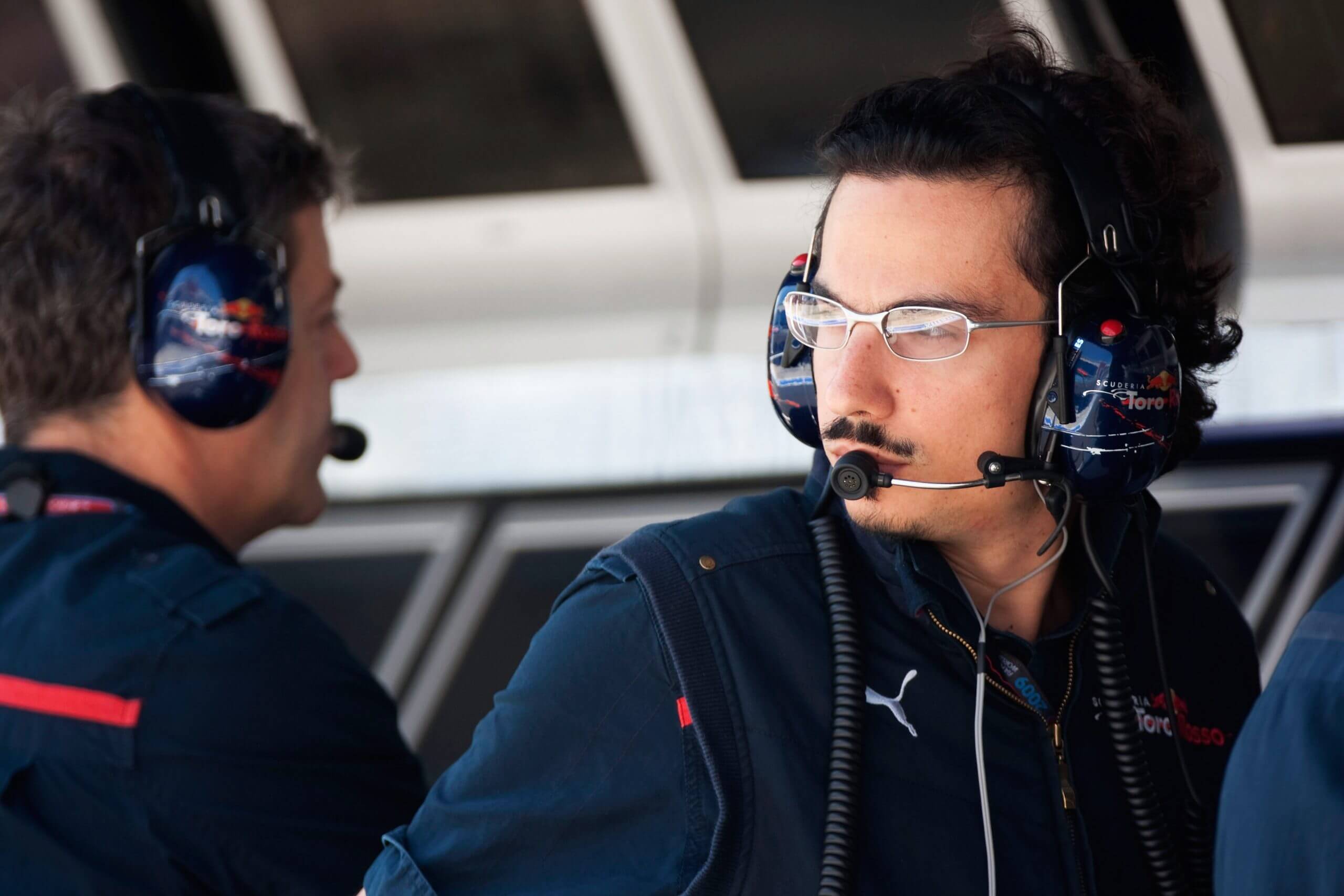
Laurent Mekies on the Toro Rosso pit wall at the 2009 Turkish GP (Peter Fox / Getty Images)
One of Mekies’ key mentors through his time at Toro Rosso was technical director Giorgio Ascanelli. Mekies regarded Ascanelli as “one of the geniuses in the paddock.” Ascanelli’s presence was a key reason for Mekies’ loyalty to Toro Rosso, meaning that when the Italian designer left in 2012, he began to consider roles elsewhere.
But instead of joining a rival team, Mekies hopped the fence and joined the FIA, motorsport’s governing body, in 2014.
It was here that Mekies forged a close friendship and important working relationship with Charlie Whiting – F1’s long-serving race director, who died on the eve of the 2019 season. Mekies rose to become Whiting’s deputy in 2017, essentially his right-hand man.
“Charlie was unbeatable in keeping the sport under control,” Mekies said. “There were very big teams fighting each other. But he had that magic to keep the balance, to keep the fairness.”
Mekies had arrived at the FIA as its new safety director. Its then-president, Jean Todt, who’d led Ferrari through its F1 domination in the early 2000s, placed a heavy emphasis on improving safety standards across motorsport.
“Jean Todt had this vision for zero fatalities, which was so extravagant to say: ‘zero fatalities in motorsport worldwide,’” Mekies said. “But that pushed us to come up with different solutions, and the Halo (cockpit protection device) was one of them.”
The death of Jules Bianchi in July 2015, nine months after sustaining severe head injuries at the 2014 Japanese Grand Prix, had only pressed home the need to improve driver protection. Despite what Mekies described as “a huge amount of hostility” against the Halo’s introduction — which he believes did help the FIA improve the design as it responded with more rigorous research — he was able to lead its implementation for the 2018 season.
“(Now), there’s not a single person in this paddock who would say, ‘You should never have done that,’” Mekies said.
“It created a special bond with some of the drivers that have been very appreciative of the work,” Mekies said. “It was an incredible team effort, and it’s great, as a fan, to have been able to contribute to that small improvement of safety.”
“Small” wildly undersells the Halo’s impact. The device is now commonplace across the FIA’s championships, and the sight of open-cockpit single-seater cars now seems outdated.
It has been credited with saving numerous lives, including Romain Grosjean in his fireball crash at the 2020 Bahrain Grand Prix. One of Mekies’ former FIA colleagues once privately told The Athletic that he was “a rare example of an engineer with a heart.”
Despite his work at the FIA and growing role as Whiting’s understudy, Mekies soon found himself returning to Italy after being approached by Ferrari, F1’s most storied team.
“I would lie if I told you that it was a difficult decision,” Mekies said. “Again, as a fan, if you have the opportunity to join Ferrari, it’s going to be a one-second decision.” Although the FIA offered Mekies everything he wanted professionally, he missed competition.
Mekies joined Ferrari in November 2018 as its sporting director, working under Mattia Binotto, who’d taken charge as team principal at the start of that year.
Mekies liked the idea of joining the team at the start of a new cycle. It also gave him a welcome chance to reunite with Vettel, then Ferrari’s star driver, as well as witness the breakout of Charles Leclerc from 2019. But his time at Ferrari never yielded a world title.
“We did not hit the ultimate goal we had,” Mekies said. “We finished second twice. Of course it still hurts, because we are competitors. But the amount of learning, the amount of support we got from the Tifosi, the amount of passion that was around the project, was unbelievable.”
So when Mekies got another phone call in 2023 about the Racing Bulls team principal job, it was “a much more difficult call.” But he felt the time was right.
Things had changed at Ferrari, with Binotto being sacked as 2022 ended and Fred Vasseur taking charge. “I’d known Fred for 25 years,” Mekies said. “On paper, there was a lot that was very attractive about staying for a new cycle. And as a fan, it’s very difficult to tell yourself that you’re going to leave Ferrari.
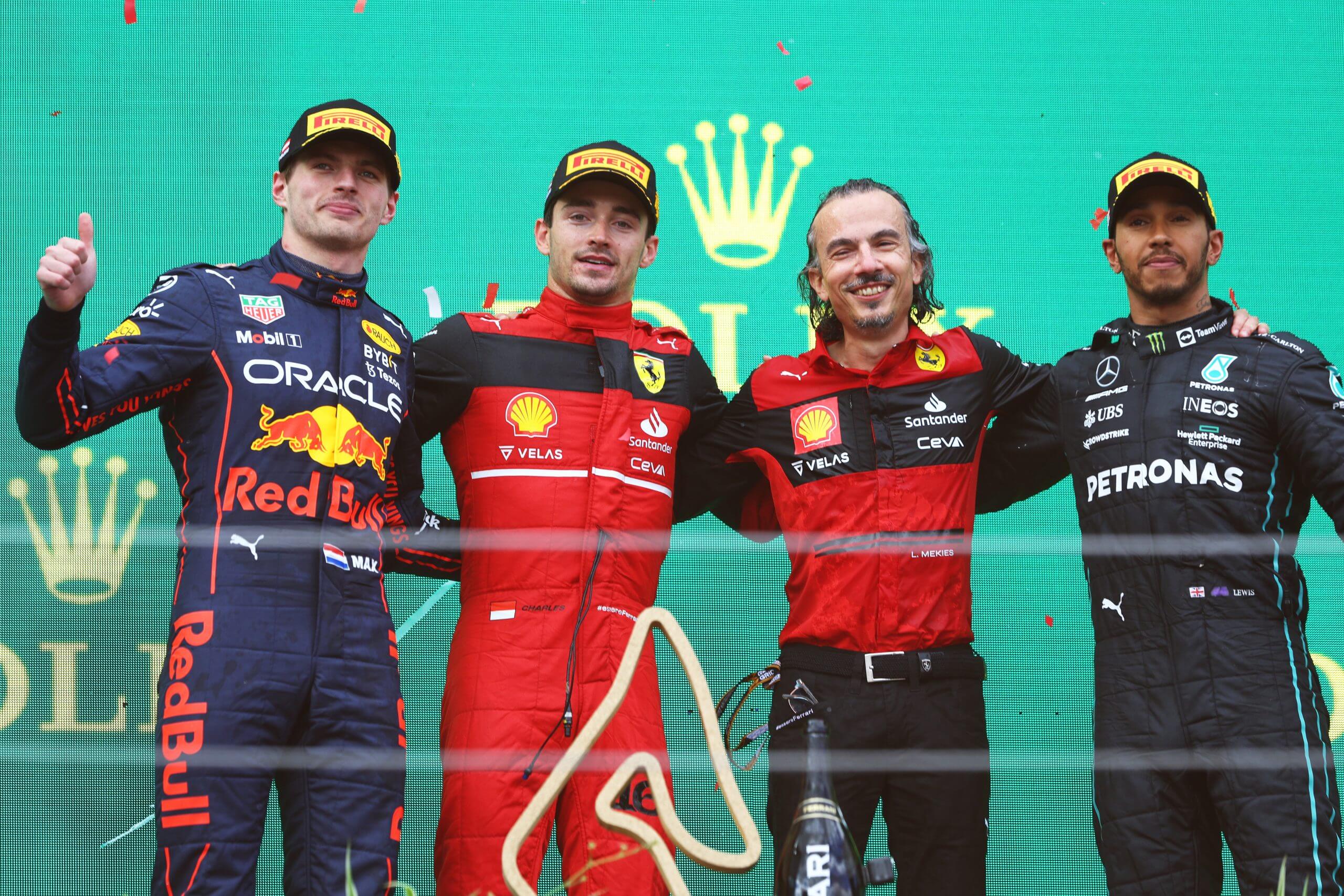
Laurent Mekies with Max Verstappen, Charles Leclerc and Lewis Hamilton after Leclerc’s win in 2022 Austrian GP for Ferrari (Clive Rose / Getty Images)
“But we’re here for the challenge. I felt it was a train that was passing. It’s not often that you can become team principal, and do it in a very special family with Red Bull.”
It was the chance for his time in F1 to come full circle and go back to Faenza – where the team has been based since its founding as Minardi.
Mekies appreciated some gardening leave between finishing at Ferrari and taking the reins at Racing Bulls. He was recharged and ready to start quickly. His task was clear: to build Racing Bulls into a team leading F1’s midfield, acting as more of a sister team to Red Bull than a junior.
But just 18 months into the job, in July 202,5 came yet another career-changing phone call, this time from Red Bull corporate projects chief Oliver Mintzlaff and Helmut Marko, its now former motorsport advisor. Horner had been fired the previous evening, and he was being made Red Bull team principal.
“It came out of the blue for me,” Mekies said. “But then you quickly realize that it’s Red Bull calling you. It’s a chance to be part of an unbelievable team.”
Mekies packed what he called his “three-day suitcase” but wouldn’t return home until F1’s summer shutdown six weeks later. “That was a good washing machine on cycle!”
Red Bull enjoyed an uplift in form upon Mekies’ arrival, but he was always eager to distance himself from credit for that success. The floor and front wing updates that helped give Verstappen greater confidence in the 2025 Red Bull car were already in the pipeline before Mekies arrived. But he instigated a less political approach to life at Red Bull.
When the team was fined after a staff member had been trying to remove some tape next to Lando Norris’ grid slot in Austin, Mekies said it was time to end such “silly games.”
Verstappen’s late 2025 surge to the brink of a fifth title almost gave Mekies the chance to realize that “ultimate goal” he’d rued missing out on at Ferrari.
He was happy for Red Bull to push on with further car development to give Verstappen’s chances a boost and, crucially, give the team a better understanding of its methodologies and processes going into 2026.
Next year, F1’s major car design rule change coincides with Red Bull making its own engines for the first time, in collaboration with Ford. “It’s probably the most crazy Red Bull challenge yet,” Mekies said of the engine project.
For Mekies, even when he spoke in the weeks prior to Verstappen running the McLaren drivers so close for the title, the task at Red Bull has always been very clear. “To fight for the championship,” he said. “The purity of the fight for the top, which again, as a fan, is what you aspire to do.”
He’s said it again: fan. Right through the interview, it’s clear Mekies’ love for motorsport has remained at the very heart of all he has achieved. He felt having that approach was the best advice for anyone wishing to work in F1 someday. “If you are passionate about the sport, there is always a way,” he said.
“I’m simply a fan,” he said. “It’s a huge privilege. It’s important that we remind ourselves how privileged we are.”
The F1 Origin Stories series is part of a partnership with Chanel. The Athletic maintains full editorial independence. Partners have no control over or input into the reporting or editing process and do not review stories before publication.