
Both sides of the miserable war in Gaza are dragging their feet on moving on to the next crucial phase of the ceasefire, leaving Palestinians in the territory to deal with the muck and sometimes deadly cold of winter with few reasons to hope that meaningful progress will come soon.
“Isreal needs to let us live,” said Mohamed Hassouna, 44, who has moved all of his belongings into a tent amid the pulverized concrete of what was once his neighbourhood near Gaza City.
“They can be a country and we can be a country,” he told a videographer working for CBC News.
The ceasefire’s most contentious issue, the one at the heart of Israeli-Palestinian negotiations for decades, is also the issue that gets the least emphasis in the Oct. 10 agreement — that’s the conditions for the creation of a Palestinian state at the end of the three-phase plan.
Moving forward without clarity on that long-term goal has jeopardized progress on the other key planks of the agreement.
“Prime Minister Bibi [Benjamin] Netanyahu doesn’t want to end the war for his own political considerations,” former top Israeli commander Major General Yitzhak Brik told a panel on Israel’s Channel 12 recently.
“And disarming Hamas will not happen because there is no one who can enforce it.”
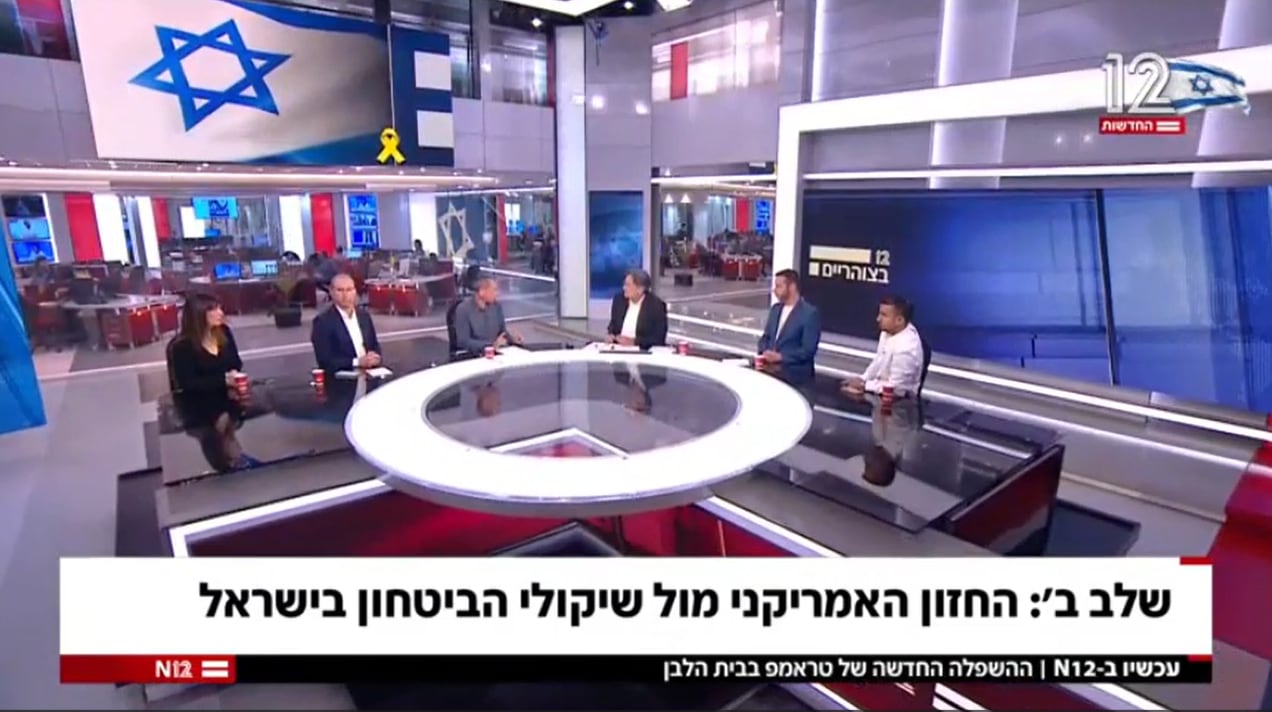 Panellists on Israeli Channel 12 discuss the status of the ceasefire with Hamas, on Dec. 18.
(Channel 12 Israel)
That, in a nutshell, is why the 20-point plan agreed to by Israel and Hamas, brokered by U.S. President Donald Trump, backed by Qatar, Turkey and Egypt and endorsed by the UN Security Council, is now effectively on life support.
Like the donkey carts trudging along Gaza’s windy, rain-soaked dirt roads, it will take an immense effort by someone — likely only Trump — to get things moving again.
Stabilization force, statehood top list of obstacles
At the top of the list of obstacles is the creation of an International Stabilization Force (ISF) for Gaza.
According to the ceasefire agreement, the ISF is to be a multinational military force tasked with doing most of the immediate heavy lifting in the territory — including providing security to the civilian population, monitoring the ceasefire and crucially, ensuring Hamas’s military capabilities and “infrastructure” are dismantled.
WATCH | Challenges of ceasefire were clear even when it was first announced:
Can Trump’s Israel-Hamas peace plan last beyond ‘first phase’?
Chief political correspondent Rosemary Barton speaks with Nathan Brown of the Carnegie Endowment for International Peace about the challenges still ahead in the peace deal between Israel and Hamas. Plus, Roger Carstens, former U.S. special presidential envoy for hostage affairs, speaks about what this means for regional stability.
But thus far, Trump’s mediators have been unable to get a firm “yes” from any country that might want to take on this task, although at his year-end media briefing, U.S. Secretary of State Marco Rubio suggested such commitments will be forthcoming.
“I feel very confident that we have a number of nation-states acceptable to all sides in this,” said Rubio.
Turkey has, arguably, been the most amenable — but Israel has refused to let it play any kind of role in Gaza’s future, arguing its government is both too close to Hamas and too hostile to Israel.
Other Muslim-majority nations, such as Indonesia and Pakistan, have indicated they might also be prepared to get involved, but fear their presence would look a lot like another foreign occupation unless it’s part of a transition to a full Palestinian state — something Netanyahu has categorically refused to consider.
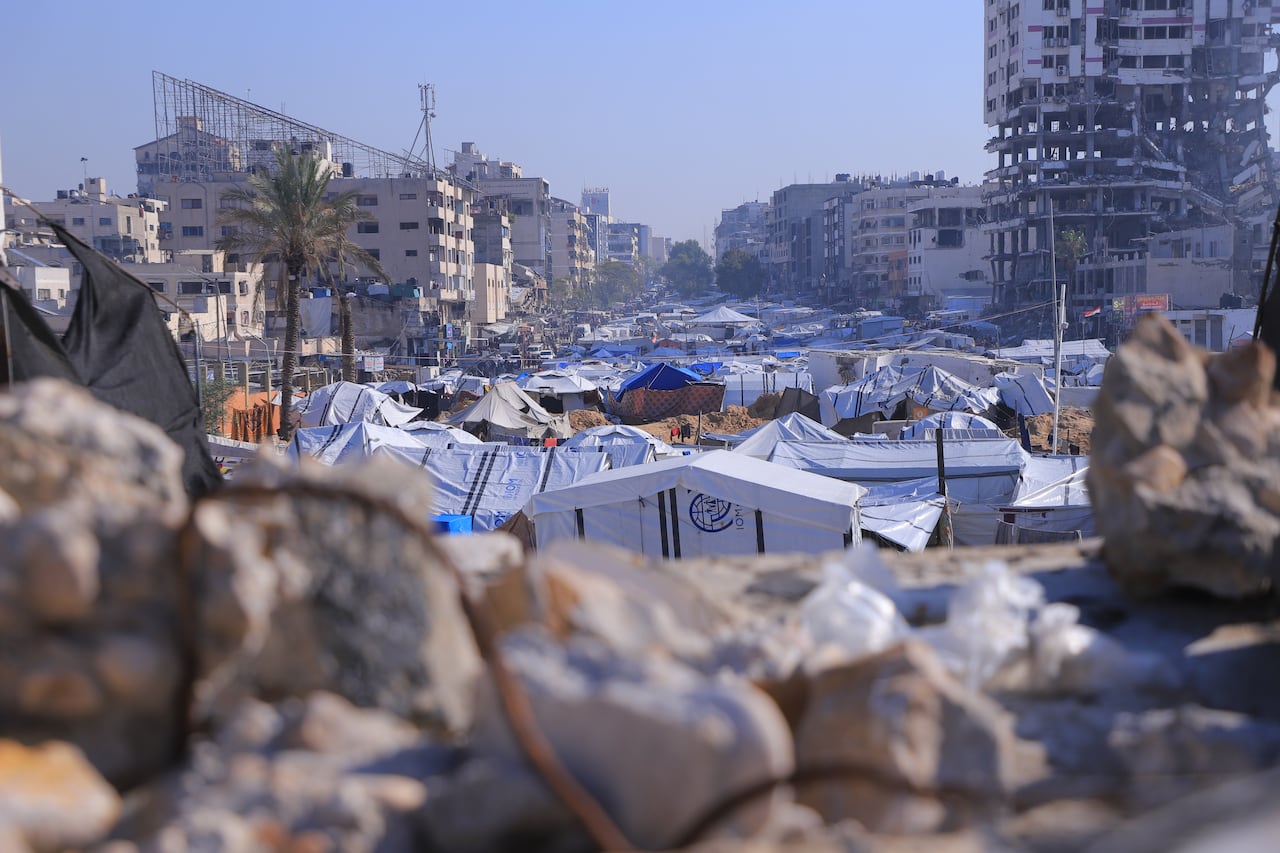 Tents with displaced families line what was once the main street of Al-Rimal, west of Gaza City. (Mohamed El Saife/CBC)
The only discussion of Palestinian statehood in the ceasefire document is in one of the final points where, in vague language, it mentions that after Gaza’s redevelopment has advanced, “conditions may finally be in place for a credible pathway” to self-determination and statehood.
That’s a long way from the definitive “two state” solution that has been repeatedly called for by the United Nations — although notably, not Israel nor the Trump administration.
“I don’t think the Americans are willing to push the Israelis at the present moment to accept a Palestinian state — and I think that’s the crucial question here,” said H.A. Hellyer, a senior associate with the Royal United Services Institute (RUSI), a military think-tank in London.
Disarming Hamas
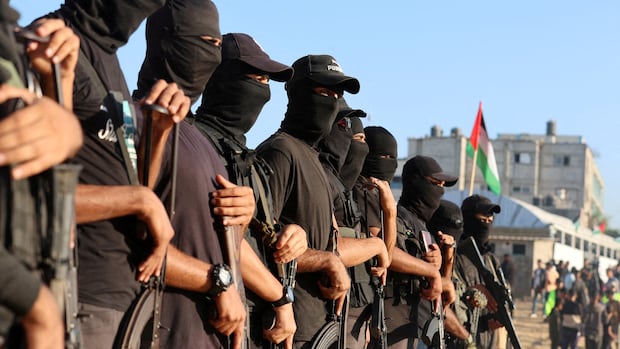
Another major obstacle is Hamas’s refusal to fully disarm — which the militant group says it won’t do unless a “sovereign” Palestinian state is established.
That means potential foreign forces in Gaza would be responsible for implementing Hamas’s disarmament — peace enforcing, rather than peacekeeping.
“If you have a mandate for the International Stabilization Force [that includes] the disarming of Hamas, then nobody is going to join it,” said Hellyer.
A compromise option repeatedly suggested by the U.K., France and many Arab countries is that the Palestinian Authority, which has had limited authority over the occupied West Bank for most of the last three decades, could take temporary control of Gaza.
But again, Netanyahu has refused.
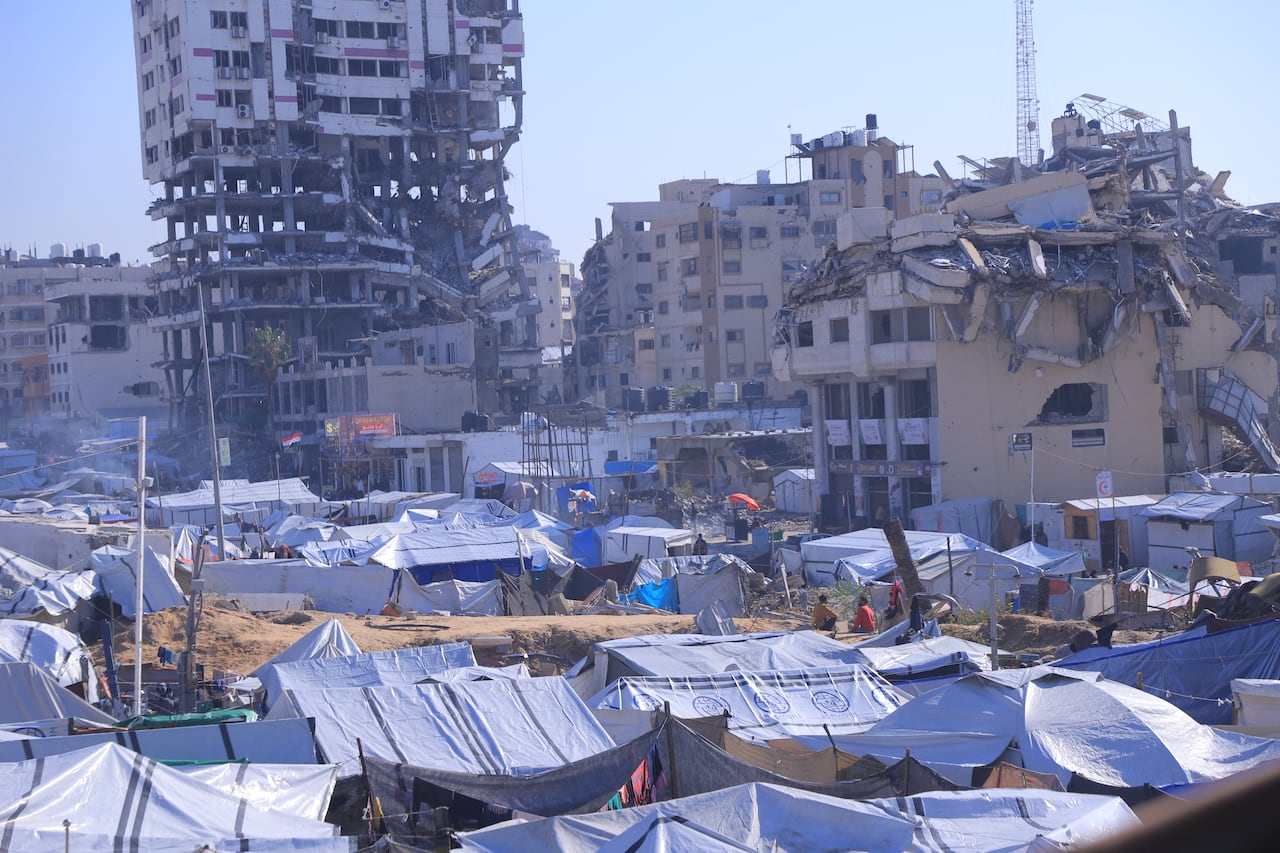 Tents and partially collapsed buildings in the Al-Rimal area, west of Gaza City. (Mohamed El Saife/CBC)
Most analysts believe Israel’s Prime Minister wants to keep Palestinian territories divided, as a united government would increase the pressure on Israel to agree to a Palestinian state.
Hamas, which triggered the war by attacking Israel on Oct. 7, 2023, is believed to want to progress to the second stage of the ceasefire at the same time as it attempts to reassert its authority in the shattered territory.
“I think they are aiming for their survival,” said Manal Zeidan, a former advisor with the Palestinian Authority in Ramallah, between 2007 and 2013.
She was speaking as part of an online discussion this week hosted by the Carnegie Endowment for International Peace on the future of the Gaza peace plan.
“They’re trying to transform into some kind of political entity. They are aiming for a role the day after.”
The militant group has returned all of the remaining living hostages captured during its attacks on southern Israel more than two years ago, and it has also returned the bodies of 27 others. The body of one Israeli soldier remains in Gaza.
“Even though people in Gaza don’t like them, they would prefer to have one group in charge of overall security, as opposed to different gangs or militias duking it out,” said Hellyer of RUSI.
Israel has also been openly arming rival gangs in Gaza, further complicating the security situation and making disarming Hamas even more challenging — which some analysts believe is also part of Israel’s strategy to ensure the territory remains chaotic.
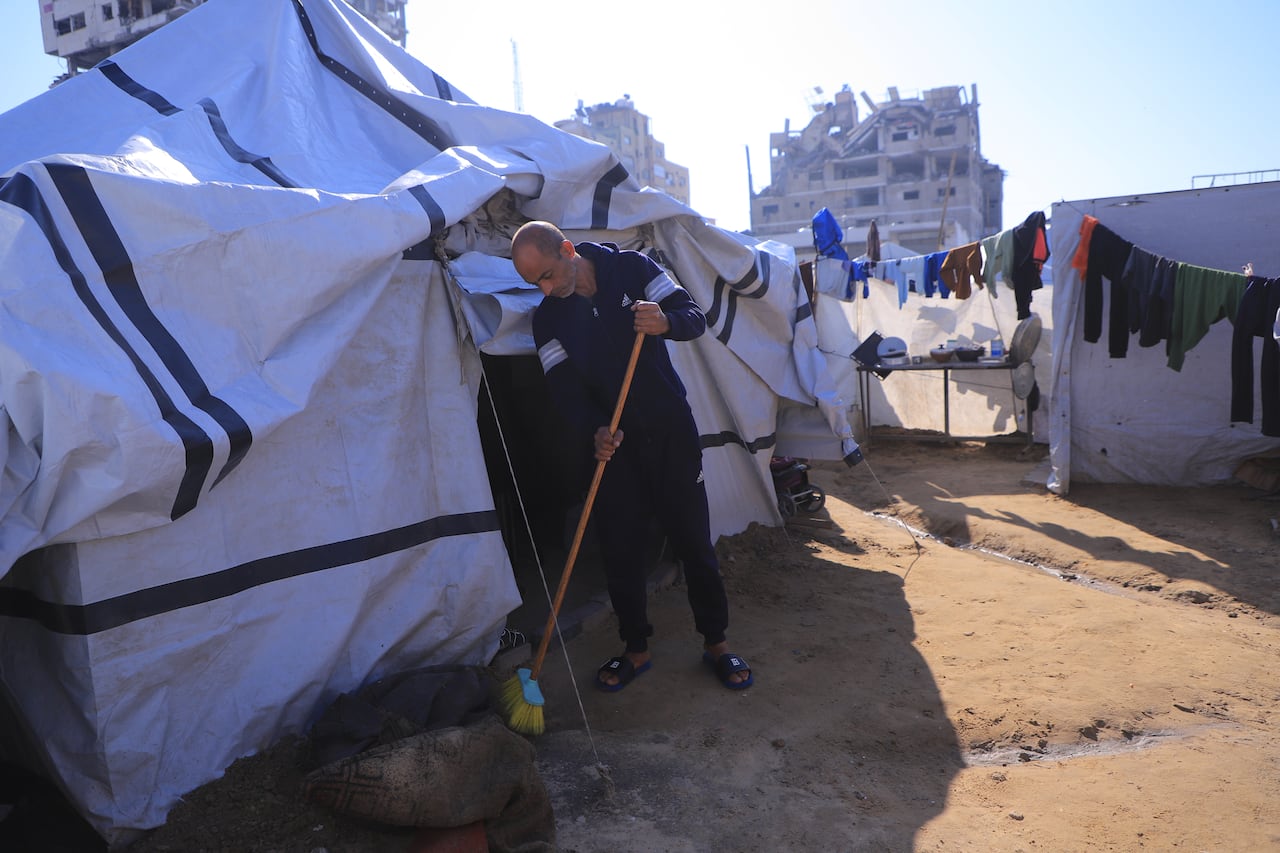 Ahmed Al-Kibriti sweeps up the area near his tent west of Gaza City. (Mohamed El Saife/CBC)Permanent occupation?
Just over half of Gaza is now occupied by Israeli troops and the longer both sides remain stuck, the more permanent those borders could become.
In Gaza, many Palestinians believe Israeli troops never intend to leave the areas they now control.
“This is not a force for stability, it’s a force of occupation,” said Ahmed Al-Kibriti of Gaza City, who also spoke to a freelance journalist working for CBC News.
Like hundreds of thousands of people in Gaza, the 36-year-old lives in a tent and survives off of humanitarian aid.
“Israel is against the agreement [negotiators] made.”
Other Palestinians who spoke to CBC News said while the heaviest Israeli bombardments have stopped with the ceasefire, deadly attacks continue.
“The ceasefire is just talk — there is no real ceasefire,” said Zakaria Shabat, 55.
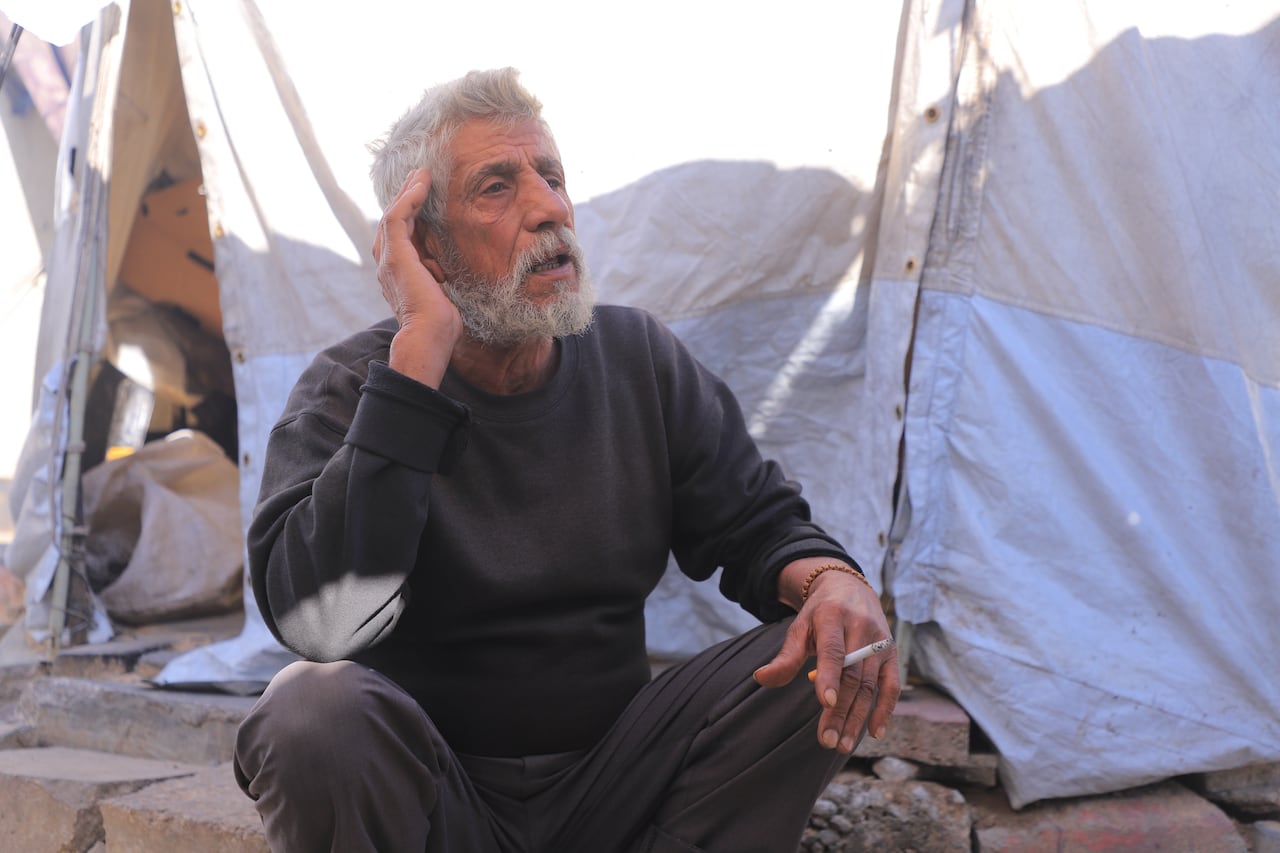 Zakaria Shabat speaks to a CBC News freelance videographer near Gaza City. (Mohamed El Saife/CBC)
In the months leading up to the October ceasefire, aid agencies say Israeli attacks on the territory killed 100 Palestinians on average every day — with Gaza health authorities claiming up to 70 per cent of those deaths are women and children.
Since the ceasefire, 400 Palestinians in Gaza have been killed, including five people in an Israeli strike on a school-turn-shelter Friday night. The IDF says it is investigating the incident.
Aid groups have also said that while there is no longer a full-blown famine in Gaza, food security remains critical — a charge rejected by Israel.
The UN has repeatedly accused Israel of blocking food, shelter and humanitarian supplies for hospitals, including after the Oct. 10 ceasefire kicked in. COGAT, the Israeli agency responsible for aid deliveries into Gaza, denies those charges.
The United Nationals Relief and Works Agency said at least 16 Palestinians have died of cold and hypothermia in December because of the recent cold weather.
Push to break the impasse
In a conference call with international media, CBC News asked a spokesperson for Netanyahu how Israel plans to overcome the obstacles that have been blocking progress.
She suggested Hamas is to blame for the impasse.
“We still don’t have our final hostage home,” said Shosha Bedrosian of the National Public Diplomacy Directorate, referring to the body of 24-year-old Master Sgt. Ron Gvili, an Israeli police officer who was killed on Oct. 7, 2023.
“Hamas committed to a ceasefire and the first part of that ceasefire was releasing all of our hostages. Here we are now, we still have a hostage in captivity,” said Bedrosian.
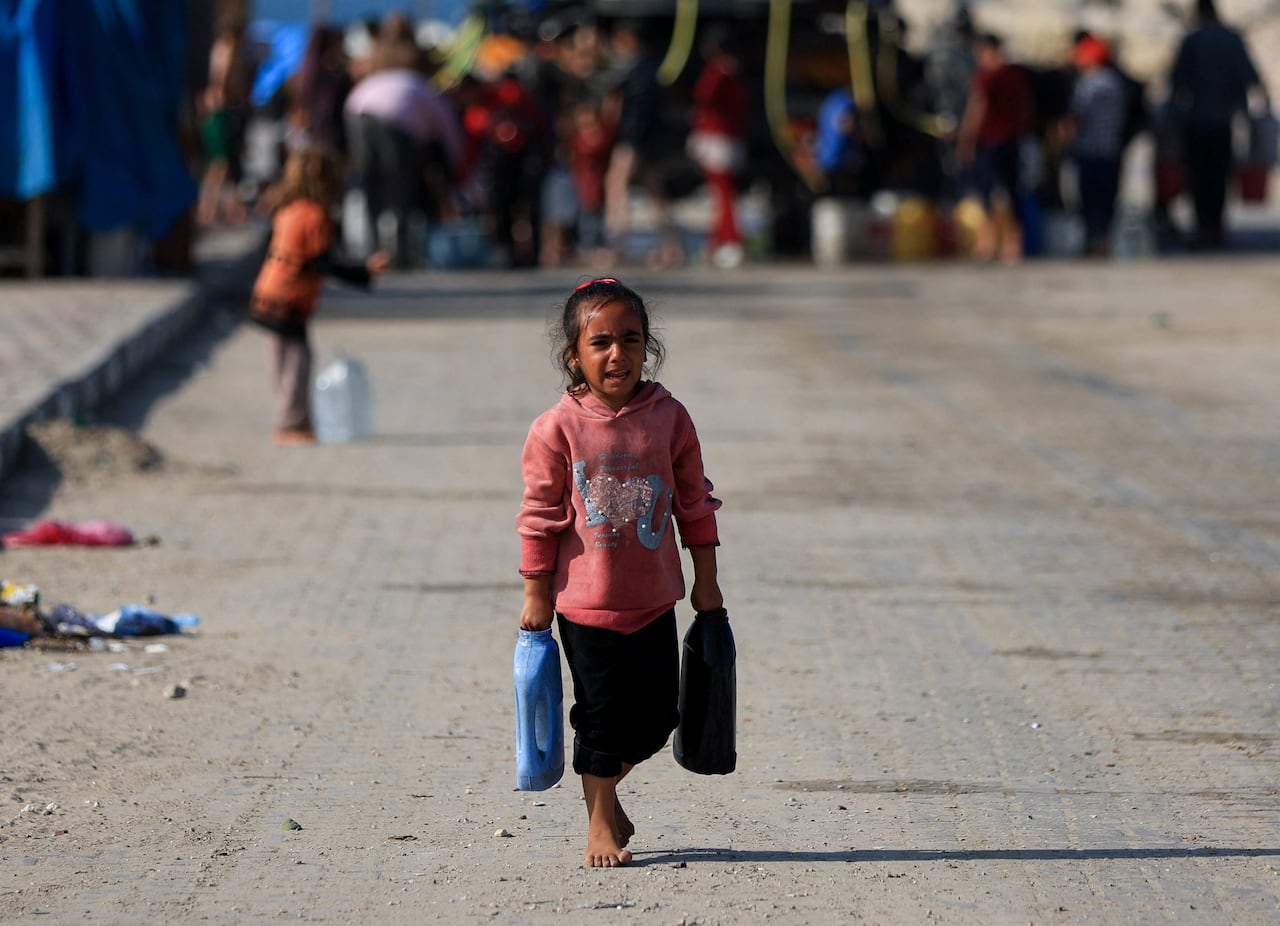 A Palestinian child carries water containers amid a ceasefire between Israel and Hamas in Gaza City on Nov. 19. (Dawoud Abu Alkas/Reuters)
Nonetheless, the White House appears to be gearing up for a Christmas-New Year push to try to get the most difficult parts of the deal moving.
U.S., Qatari, Egyptian and Turkish officials are set to meet in Miami — and a potential meeting in the United States between Trump and Netanyahu after Christmas will likely be crucial to breaking the impasse.
Speaking on the Carnegie Panel, Marwan Muasher, a former Jordanian foreign minister, said Arab states are heavily invested in permanently ending the war and giving Palestinians in Gaza and the occupied West Bank a future.
“The Trump plan is the only game in town,” said Muasher. “Their position is ‘We’d better support it … not because we think it’s a great plan, not because it might go beyond phase one, but because it has resulted in a ceasefire, and so it’s better to engage than not.’ ”