
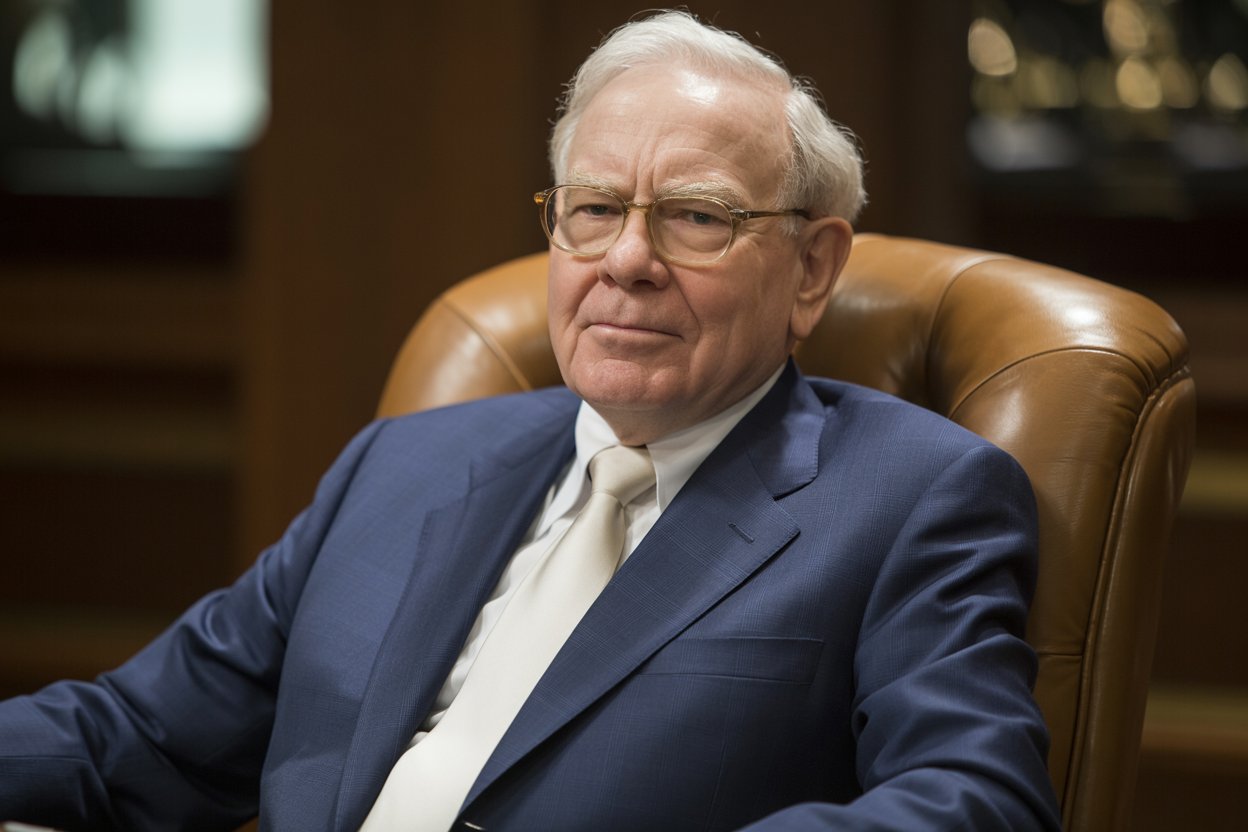
Warren Buffett, one of the world’s wealthiest individuals with a net worth exceeding $147 billion, still lives in the same Omaha house he bought in 1958 for $31,500. He drives his own car, avoids luxury brands, and is famously known to eat breakfast at McDonald’s.
His spending habits reveal a crucial truth: building wealth isn’t about earning more—it’s about avoiding the financial traps that keep the middle class from accumulating capital.
Buffett’s philosophy on money provides a roadmap for identifying wasteful spending patterns. His teachings expose how middle-class consumption habits actively work against wealth accumulation, creating a perpetual cycle of financial mediocrity. Here are the five things Warren Buffett doesn’t think the middle class should waste money on, because he doesn’t.
1. New Cars and Depreciating Assets
Buffett has stated, “The truth is, I only drive about 3,500 miles a year so that I will buy a new car very infrequently.” Many times, his daughter even had to pressure him to buy a new car when his car became outdated. Yet middle-class Americans collectively waste billions on new cars frequently.
The average new car loses 20% of its value the moment it leaves the dealership and depreciates roughly 60% within the first five years. A $40,000 vehicle becomes worth $16,000 while the owner continues making payments with interest.
Buffett drove a 2006 Cadillac DTS for years and only upgraded to a 2014 model when his daughter insisted. His approach illustrates a fundamental wealth-building principle: avoid purchasing depreciating assets at retail prices. A three-year-old vehicle provides the same transportation function at half the cost, allowing the difference to be invested in appreciating assets.
The middle class justifies new car purchases with arguments about warranty coverage and reliability, but the mathematics contradicts this reasoning. The depreciation loss exceeds potential repair costs by substantial margins.
2. Credit Card Interest and Consumer Debt
Buffett’s longtime partner, Charlie Munger, was blunt about the trap of high-interest consumer debt: “Once you get into debt, it’s hell to get out. Don’t let credit card debt carry over. You can’t get ahead paying eighteen percent.”
Buffett shares this view, particularly when it comes to credit card interest and leverage through borrowing: “I’ve seen more people fail because of liquor and leverage—leverage being borrowed money.” He has warned that carrying balances at rates often around 18% (or higher today) is a surefire way to destroy wealth, advising that paying off such debt delivers a better “return” than virtually any investment, as no reliable opportunity consistently beats those punishing rates.
Middle-class households carry an average credit card balance of $6,501, paying roughly 20% annual interest. This translates to $1,300 per year paid to creditors—money that produces zero return and actively destroys wealth.
Buffett advocates for avoiding debt except for home mortgages, stating that paying 18%-20% interest while hoping to earn 8%-10% through investments represents backwards thinking. The mathematics is brutal: a middle-class family paying $1,300 annually in credit card interest for 30 years loses approximately $152,000 in potential wealth accumulation (assuming conservative 7% investment returns).
The wealthy understand that debt should only finance appreciating assets or income-producing investments. Borrowing money to fund consumption represents the antithesis of wealth-building.
3. Brand Names and Status Symbols
Buffett once remarked, “Price is what you pay. Value is what you get.” The middle class frequently confuses these concepts, paying premium prices for brand names that provide no additional functional value.
Designer clothing, luxury handbags, premium electronics—these purchases often cost 200%-500% more than functional alternatives. A $1,500 handbag provides no additional utility over a $150 version, yet middle-class consumers justify the expense as “treating themselves” or “investing in quality.”
Buffett himself wears suits from a Chinese retailer and has stated he would be “just as happy” with cheap clothes. His billionaire status comes from redirecting money away from consumption toward productive investments.
The psychology behind brand-name purchases reveals the core problem: middle-class consumers seek external validation through possessions. Buffett’s advice cuts through this: “You will never truly be successful if you care what other people think of you.”
4. Financial Products They Don’t Understand
Buffett’s famous rule states: “Never invest in a business you cannot understand.” The middle class routinely violates this principle by purchasing complex financial products sold by commissioned salespeople.
Whole life insurance, annuities with hidden fees, actively managed mutual funds with expense ratios exceeding 1.5%—these products extract wealth from middle-class investors through opacity and complexity. A middle-class investor paying 1.5% annual fees on a $100,000 portfolio over 30 years surrenders approximately $200,000 to financial intermediaries.
Buffett consistently recommends low-cost index funds for average investors, stating that a simple S&P 500 index fund will outperform most professional managers over time. His 2007 bet against hedge funds proved this point—the S&P 500 index fund beat a portfolio of hedge funds over ten years.
The middle class wastes money on financial products because complexity creates an illusion of sophistication. Buffett’s approach demonstrates that simplicity, paired with discipline, outperforms complexity, paired with fees.
5. Immediate Gratification Over Delayed Rewards
Buffett’s most powerful teaching addresses time preference: “Someone’s sitting in the shade today because someone planted a tree a long time ago.” The middle class wastes money by consistently choosing immediate consumption over delayed gratification.
Dining out frequently, subscription services, and entertainment expenses—individually small purchases that collectively redirect thousands of dollars annually away from wealth-building. The average American household spends $3,500 annually dining out. Redirected into investments earning 8% annually, this becomes $432,000 over 30 years.
Buffett lived frugally even as he built his fortune, understanding that every dollar spent today represents future dollars not earned. His lifestyle choices—modest home, simple meals, inexpensive hobbies—allowed maximum capital allocation toward investments.
The psychological barrier for the middle class involves the ability to delay gratification. Spending money today provides immediate satisfaction, while investing requires sacrificing present pleasure for future security. Buffett’s billion-dollar insight: wealthy individuals master this trade-off.
The Path Forward
Buffett’s spending philosophy reveals an uncomfortable truth: middle-class financial struggles stem less from insufficient income than from consumption patterns that prevent capital accumulation.
His teachings provide a blueprint: avoid depreciating assets, eliminate high-interest debt, disregard status symbols, keep investments simple, and prioritize long-term wealth over immediate gratification.
The gap between the middle class and the wealthy isn’t bridged solely through higher earnings. It requires fundamentally restructuring spending priorities to align with wealth-building principles Buffett has demonstrated throughout his life.