
(This is the third and final of a three-part exploration of golf course architecture in the 21st century so far. Part 1 | Part 2)
In just 25 years, golf course architecture has been through three distinct waves.
From 2000 until 2008, new course construction enjoyed an all-time pace, with dozens of upscale standalone clubs and communities coming online seemingly weekly. Full-page ads touting signature architect designs lorded over by 50,000-square-foot clubhouses decorated magazines (remember those?).
Then came the Recession, when things ground to a near halt. The architects who didn’t leave the profession cut staff and scraped by with occasional renovation work while pondering new, leaner ways to operate their businesses and build and update courses cheaply. Architects who were awarded the few choice new projects were able to devote enormous amounts of attention to them, resulting in some of the best golf courses since the pre-World War II “Golden Age.” Even so, golf was declining in participation and cultural relevance.
Post-COVID, golf is on another bull run, as millions adopted it as a viable recreation during the pandemic and have stuck with it long after lockdowns eased. These new recruits to the game have granted it an astonishing level of cultural momentum. Kim Kardashian plays golf. LeBron James has become obsessed with it. Is someone currently writing a movie role for Timothée Chalamet as a professional golfer? They should be.
What does this frothy turn for golf mean for the practice of golf course architecture? While the volume of the early 2000s is not likely to return, massive amounts of capital are pouring into the industry in the form of investment from new sources and reinvestment by existing clubs and organizations with the purpose of optimizing what they already have. The architects who stuck out the lean years have been rewarded with more work than they could have anticipated just six years ago.
The upper tier of architects and firms, which really hit their stride in the post-Recession period with dynamic designs on far-flung sandy sites, continue to receive many high-profile new opportunities. Their protégés are carving out their own territory in the space as well, sometimes rivaling their mentors’ work both in new builds and significant redesigns and select historic restorations. And several legacy firms with lineages going back to the late 20th century are adapting to a new landscape as well.
While much of the highest-profile work is being done at private clubs and resorts, municipal golf courses continue to receive considerable attention, as the most successful public-facing projects of the 2000s and 2010s continue to inspire other cities, counties and states to take their courses to a new level.
Post-Pandemic golf course architecture: Bigger than before?
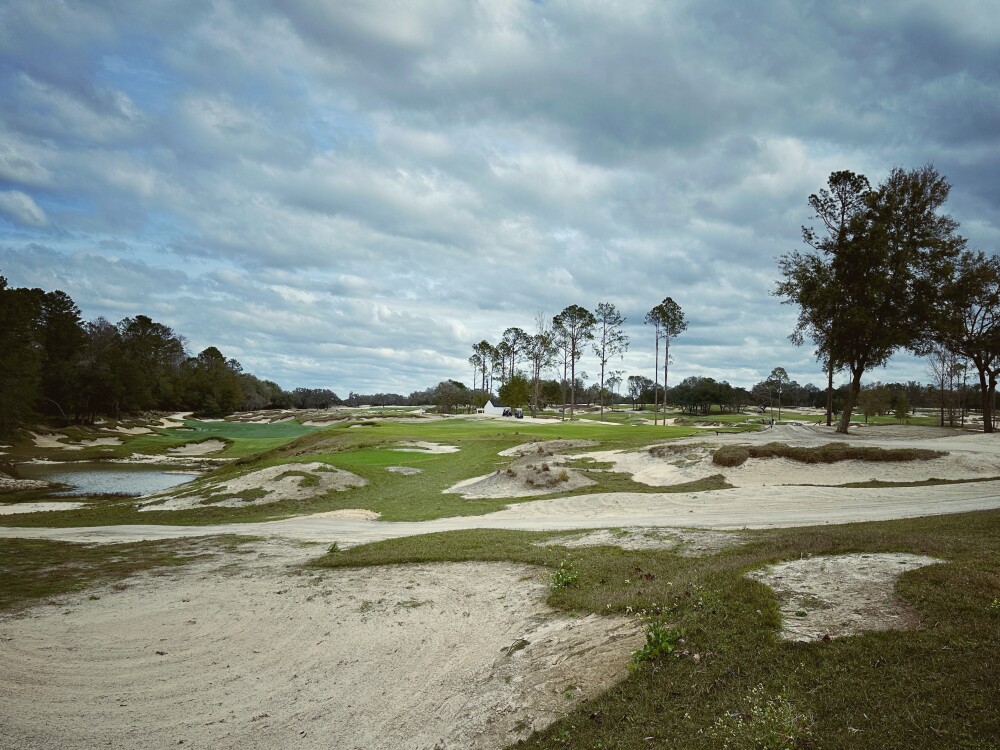
Cabot Citrus Farms’ Karoo golf course is bold and audacious, taking Golden Age principles to a 21st-century level of intensity. Tim Gavrich/GolfPass
Many of the older-school design principles the post-Recession era embraced – wider fairways, naturalistic bunkering and larger and more thoughtful green contours – have continued to be adopted, often with even greater capital backing than before the pandemic. More money means more potential for earth-moving and other accoutrements that some leaner projects had to forgo.
One architect who represents the transition from post-Recession to post-Pandemic golf course architecture is Kyle Franz, who worked for Tom Doak on projects like Pacific Dunes and Barnbougle Dunes and also worked for Bill Coore & Ben Crenshaw on the restoration of Pinehurst No. 2 and helped Gil Hanse & Jim Wagner build the Olympic Course in Rio de Janeiro, Brazil.
More recently, Franz has hung his own shingle and earned some high-profile commissions across the design spectrum. After acclaimed restoration work at Mid Pines and Pine Needles in North Carolina, he took the reins with a third area Donald Ross design, amping up the aesthetics and strategic drama at Southern Pines with greatly expanded corridors and a set of bold greens.
Franz also got the nod from Cabot, a leading owner and manager of golf resort properties, to turn the former World Woods Golf Club’s former Pine Barrens course into Karoo, the first 18-hole course unveiled at Cabot Citrus Farms north of Tampa in early 2024. In practically every way, Karoo presents a more intense interpretation of the ideas that defined the best pre-pandemic courses: width, angles, eye-catching bunkering and entertaining greens. Even when it threatens to go overboard, Franz and other architects’ willingness to push the boundaries of the established naturalistic mode is exciting.
At the same time, the pattern of iteration and expansion around golf’s naturalistic movement creates space for counterargument. As popular as width and elaborate bunkering have become, will some architects respond with quieter-looking, more tree-lined designs that harken back to the likes of Pete Dye’s Harbour Town and some of the more formal parkland-type approaches of the mid-20th century?
Notable golf course architects and firms currently active
This list is not exhaustive; consider it a starting point for names to be aware of as you learn about new golf courses and renovations in the years to come.
Post-Pandemic Golf Architecture: Biggest names
Bill Coore & Ben Crenshaw | Tom Doak | Gil Hanse & Jim Wagner | David McLay Kidd | Beau Welling
Other established figures
Bill Bergin | Nathan Crace | Brian Curley | Tripp Davis | Mike DeVries | Dye Designs (Cynthi Dye McGarey and Matt McGarey) | Todd Eckenrode | Tom Fazio | Tom Fazio II | Ron Forse | John Fought | Dana Fry & Jason Straka | Lester George | Raymond Hearn | Bruce Hepner | Scott Hoffman | Jackson Kahn Design | Rees Jones | Robert Trent Jones, II | Tim Liddy | Davis Love III | Mackenzie & Ebert | Mark Mungeam | Jack Nicklaus | Kevin Norby | Greg Norman | Kyle Phillips | Forrest Richardson | Drew Rogers | Steve Smyers (and Smyers Craig Coyne) | John Sanford | Andy Staples | Jim Urbina | Bobby Weed | Rod Whitman (and Whitman Axland Cutten) | Chris Wilczynski | Chet Williams | Mike Young
Rising post-Pandemic architects
Jay Blasi | Carlton & Marshall | Jim Craig | Matt Dusenberry | Kyle Franz | Jim Furyk & Mike Beebe | Kye Goalby | Andrew Green | Craig Haltom | Brandon Johnson | Trey Kemp | King Collins Dormer | Thad Layton | Mike Nuzzo | Ogilvy Cocking & Mead | Agustin Piza | Tyler Rae | Keith Rhebb & Riley Johns | Brian Ross | Brian Schneider | Jeffrey Stein
What comes next in 21st century golf course design?
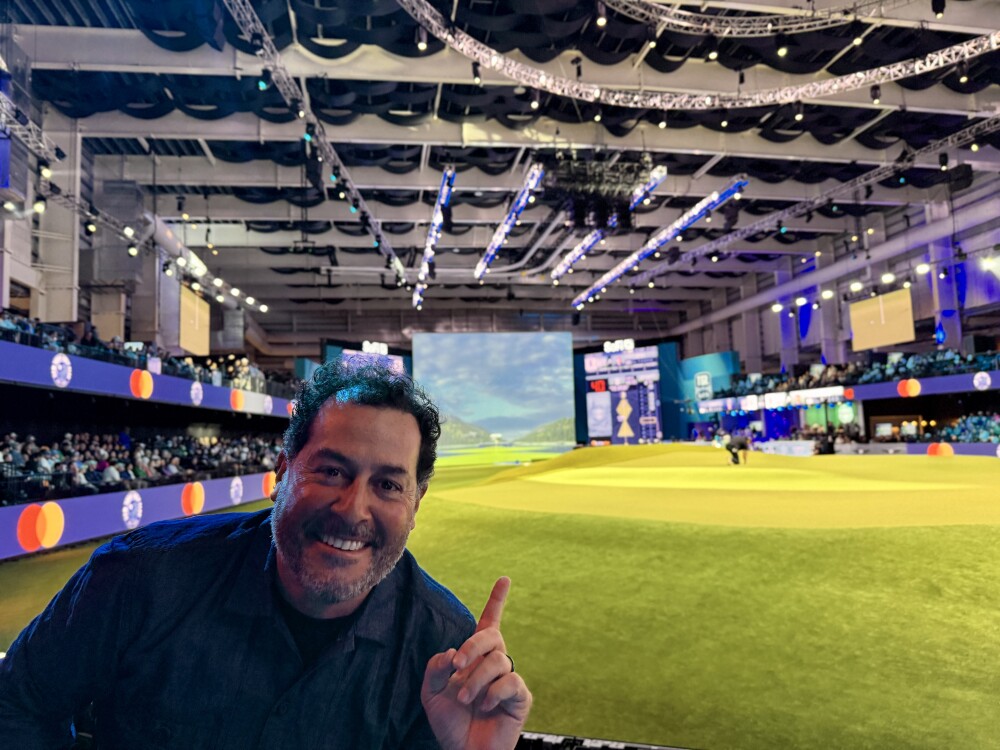
Architect Agustin Piza has brought out-of-the-box thinking to virtual-reality golf, creating several eye-catching golf holes used in the indoor TGL golf league. Tim Gavrich/GolfPass
The post-pandemic era has seen significant disruption and experimentation with the format of golf as well as its architecture. Short courses continue to crop up both alongside larger courses and as their own standalone short-form experiences. Odd-numbered (ie not 9 or 18 holes) courses are more accepted than ever; Destination Kohler’s long-awaited next course, by the firm of King Collins Dormer, is set for 14 holes.
Especially in the U.S., golf has started happening indoors more often than ever before. High-tech simulators were already becoming popular before the advent of of the TGL, which takes screen golf to a new scale with pros competing in fast-paced team events. Bespoke holes designed for TGL range from realistic challenges from Nicklaus Design and others to some daring and mold-breaking concepts by Mexican architect Agustin Piza, who has embraced the opportunity to conceive of fantasy-flavored golf holes and features that seemingly could only exist in virtual reality, which has become significantly better in graphic quality and more portable. Forget billiards rooms and ping pong tables – many contemporary homeowners are making room for golf simulators.
At some point, the current post-pandemic golf course architecture era will give way to something else. Here’s hoping it won’t entail the type of hardship and uncertainty the Recession brought on in 2008. As an art form and a commercial exercise, golf architecture sits in a fascinating place. As always, golfers will be eager to see what the next shot requires.
4 courses that represent the post-pandemic era in golf architecture
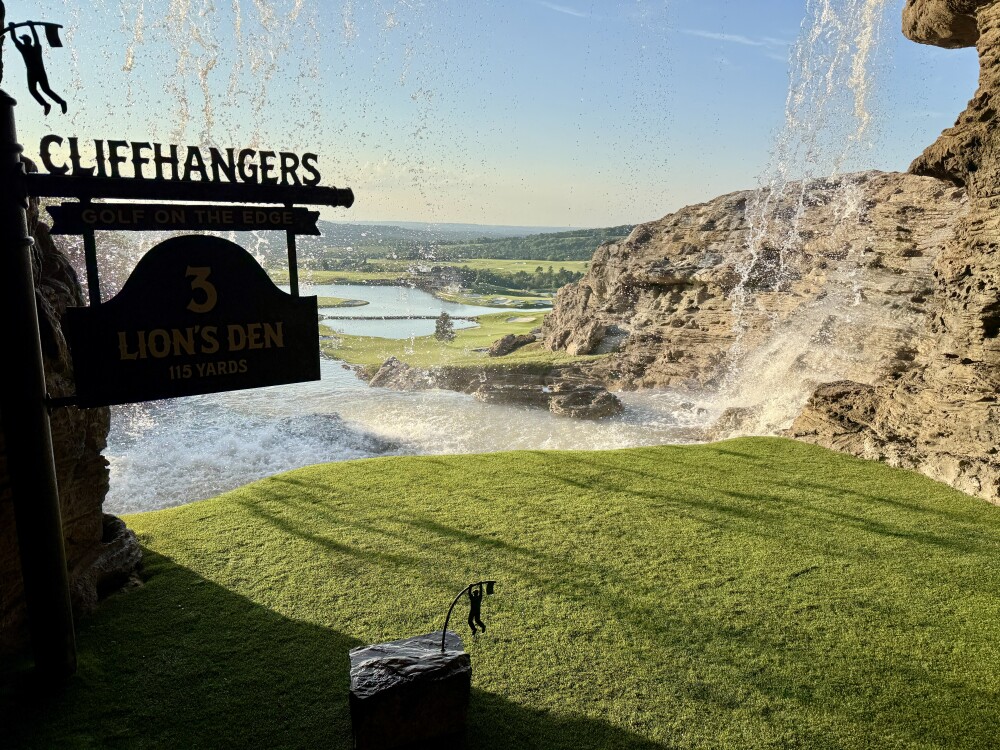
A par 3 through a waterfall? Golf course architecture in the 21st century has taken some dramatic turns. Tim Gavrich/GolfPass
West Palm Beach, Fla.
Gil Hanse & Jim Wagner, 2023
Some 180 miles down the road from the Orlando area, The Park could not possibly be more different in scope, ambition or cost than its cheap-and-cheerful counterpart, the Winter Park 9. Nevertheless, it too is an example of 21st-century municipal golf, only this time both economics and opportunity came together to make a $50-million bet on community golf seem viable. Out-of-towners pay upwards of $300 for a round in peak season, while locals still get a significant bargain at less than $75. Hanse & Wagner’s reinterpretation of an outstanding sandy site where golf has been played since 1947 has garnered rave reviews and high-profile supporters like Tiger Woods and Rory McIlroy, who both helped open the course back up.
The Lido at Sand Valley Golf Resort
Nekoosa, Wisc.
C.B. Macdonald,1917; Tom Doak and Renaissance Golf, 2023
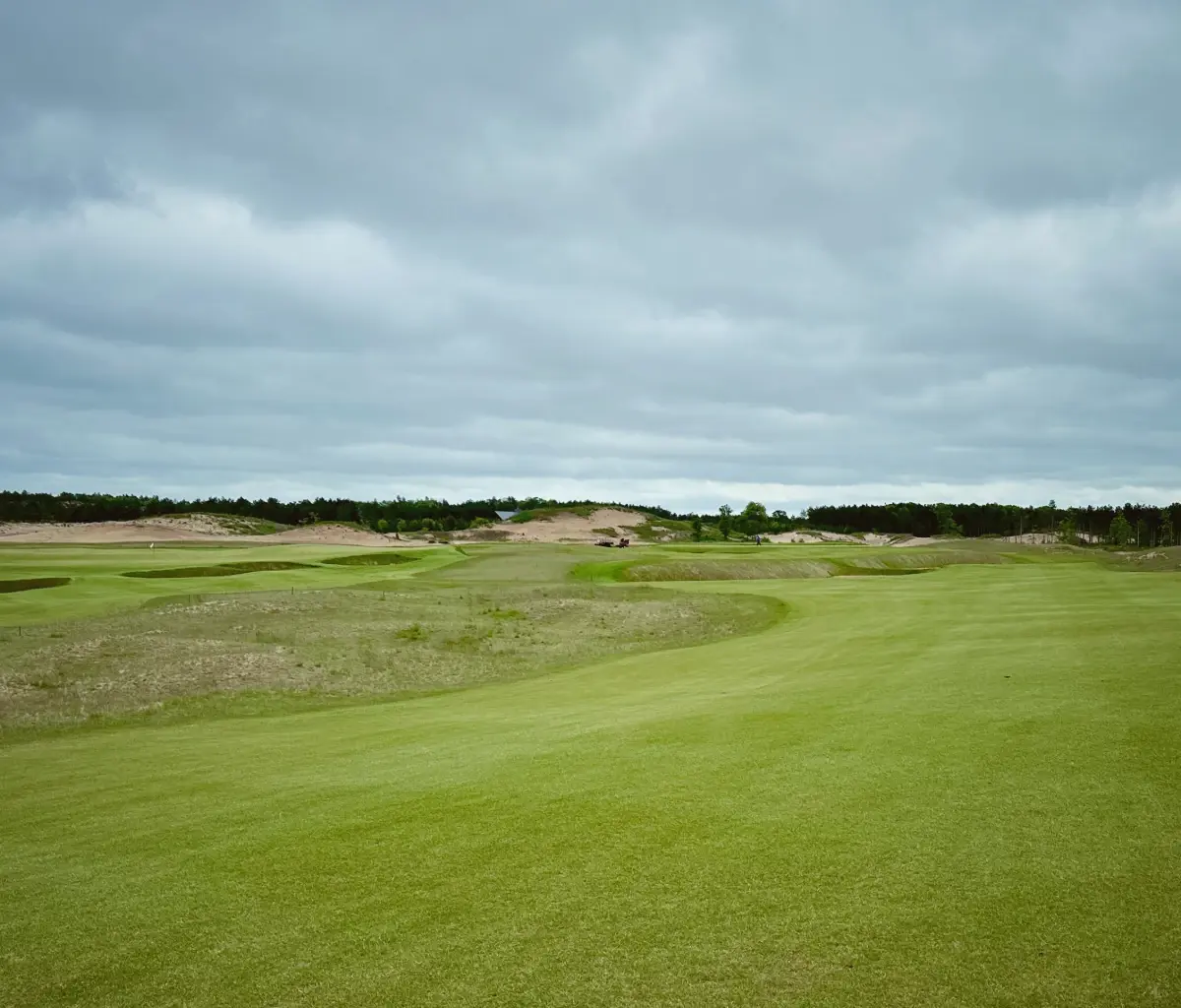
For decades, architecture aficionadoes dreamed of somehow reviving early golf’s Atlantis, a course built on Long Island that eventually became known as one of the best in the world before having to close during World War II. Lido’s resurrection combined all of the major forces of 21st-century architecture: a reverence for the past , a developer working in the new era of build-it-and-they-will-come destination golf and exciting new technology. This third piece, GPS-guided construction equipment calibrated to reproduce the original course’s contours and dimensions with high fidelity, offers a glimpse at future blends of reality and the virtual realm in golf architecture, and is being deployed at other projects.
Cliffhangers at Big Cedar Lodge
Ridgedale, Mo.
Johnny Morris & J.P. Morris, 2025
Massive amounts of capital and unbridled vision can create marvels in a range of art forms, and after welcoming a cavalcade of modern architects to build and rebuild courses for him, resort owner Johnny Morris and his son J.P. tried their hand at something audacious: a bucket-list par-3 course with some of the wildest holes built this century, including one where golfers tee off inside a limestone cave and hit through a waterfall to a green below. Cliffhangers is the polar opposite of minimalism – it is an amusement-ride golf course.
Livermore, Calif.
Jay Blasi, 2025
Blasi, who was instrumental in the design of the sometimes controversial but forward-thinking Chambers Bay in Washington with Robert Trent Jones, II, completely redesigned a course originally built by Rees Jones for the Northern California Golf Association, greatly expanding its sense of scale and drama with a flexible variety of holes and challenges to appeal to all levels of player. In his review from May of 2025, GolfPass managing editor Jason Scott Deegan called it “A bold and beautiful new Poppy Ridge that will quickly shoot up the rankings of the Bay Area’s best public courses.”