
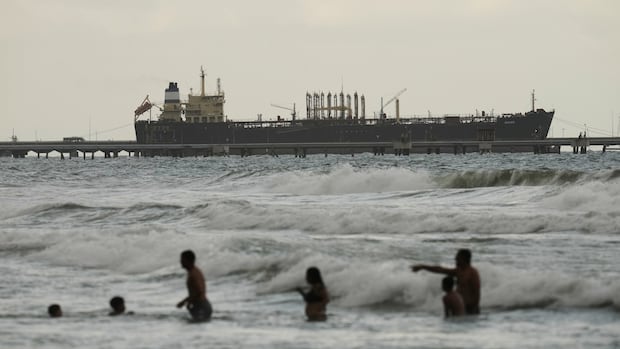
The U.S.’s actions in the Caribbean Sea continued over the weekend with the interception of two oil tankers off the coast of Venezuela, prompting other Latin American countries to take notice and prepare for potential land strikes.
The U.S. Coast Guard approached the two vessels on Saturday, boarding one named Centuries and on Sunday pursuing another, Bella 1, which sailed away and is still on the move.
The U.S. said the Centuries is part of a “dark fleet” of sanctioned cargo that is funding what it described as narcoterrorism. A U.S. official who was not authorized to comment publicly told The Associated Press that Sunday’s pursuit involved “a sanctioned dark fleet vessel that is part of Venezuela’s illegal sanctions evasion.”
The interceptions are part of a wider U.S. military presence in the Caribbean that has included targeting more than two dozen smaller boats said to be carrying drugs, with strikes killing at least 100 people onboard.
On Monday, U.S. President Donald Trump held a gathering of key members of his national security team in Florida, including Secretary of State Marco Rubio, Defence Secretary Pete Hegseth and Navy Secretary John Phelan.
Trump’s four-month pressure campaign on Venezuelan President Nicolas Maduro began with the stated purpose of stemming the flow of illegal drugs from the South American nation but has developed into something more amorphous.
On Dec. 10, the U.S. seized Skipper, a very large oil tanker, which the Coast Guard has since escorted to Galveston, Texas.
According to reporting by the New York Times, Skipper was transporting Venezuelan crude at the time but had previously carried Iranian oil under U.S. sanctions for allegedly funding terrorist operations.
Trump announces ‘blockade’ of sanctioned oil tankers
Trump and his administration have defended its military’s actions but haven’t explained the motivations behind its pressure campaign on Maduro.
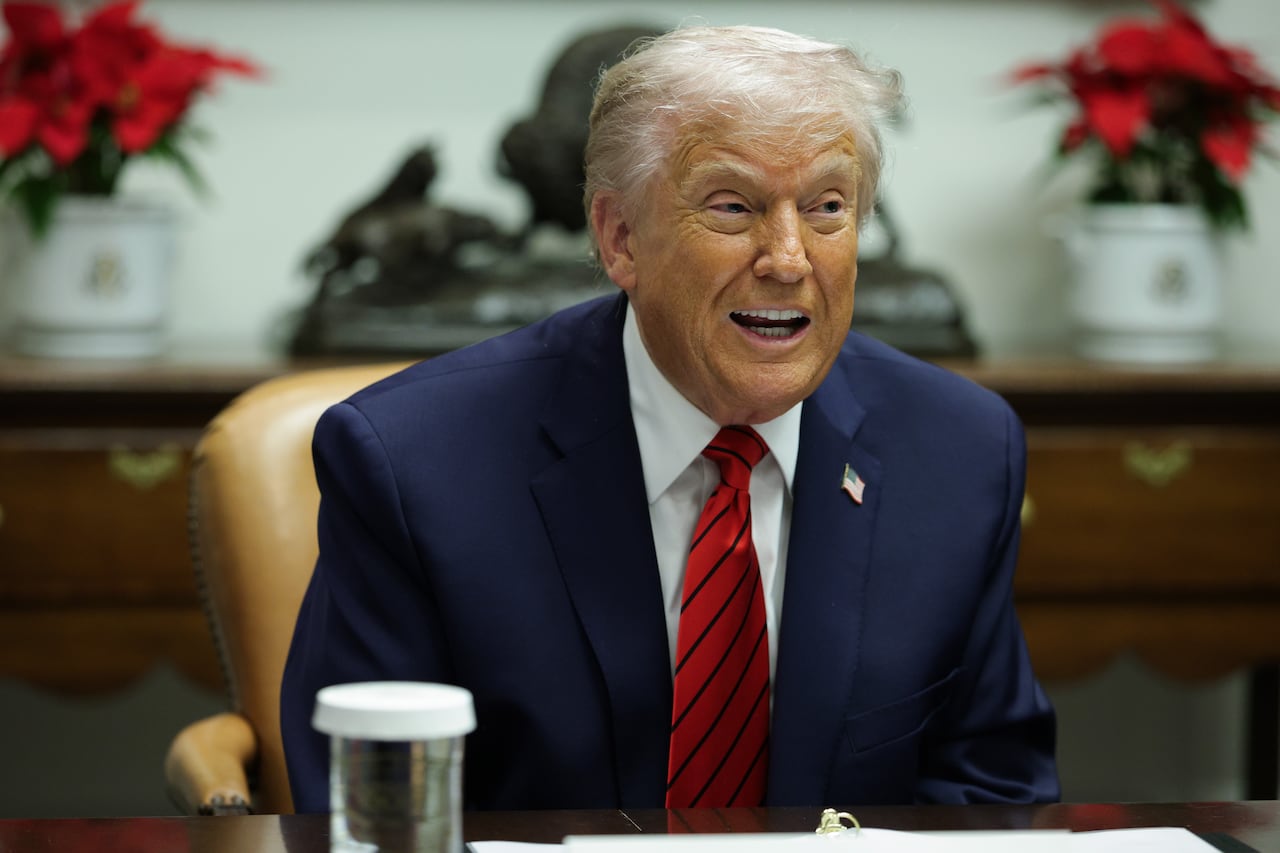 U.S. President Donald Trump speaks during a roundtable discussion with top business leaders at the White House on Dec. 10. (Alex Wong/Getty Images)
Trump said in November that U.S. land strikes on the South American country would start “very soon,” according to Reuters.
Maduro has alleged that the U.S. military buildup is aimed at overthrowing him and gaining control of the OPEC nation’s oil resources, the world’s largest proven crude reserves.
Last week, Trump announced a “blockade” of all oil tankers under sanctions entering and leaving Venezuela.
China is biggest buyer of Venezuelan crude
Since the Coast Guard’s first tanker seizure, Venezuelan crude exports have fallen sharply.
While many vessels picking up oil in the country are under sanctions, others transporting its oil and crude to Iran and Russia have not been sanctioned. Some companies, particularly U.S. oil giant Chevron, transport Venezuelan oil in their own authorized ships.
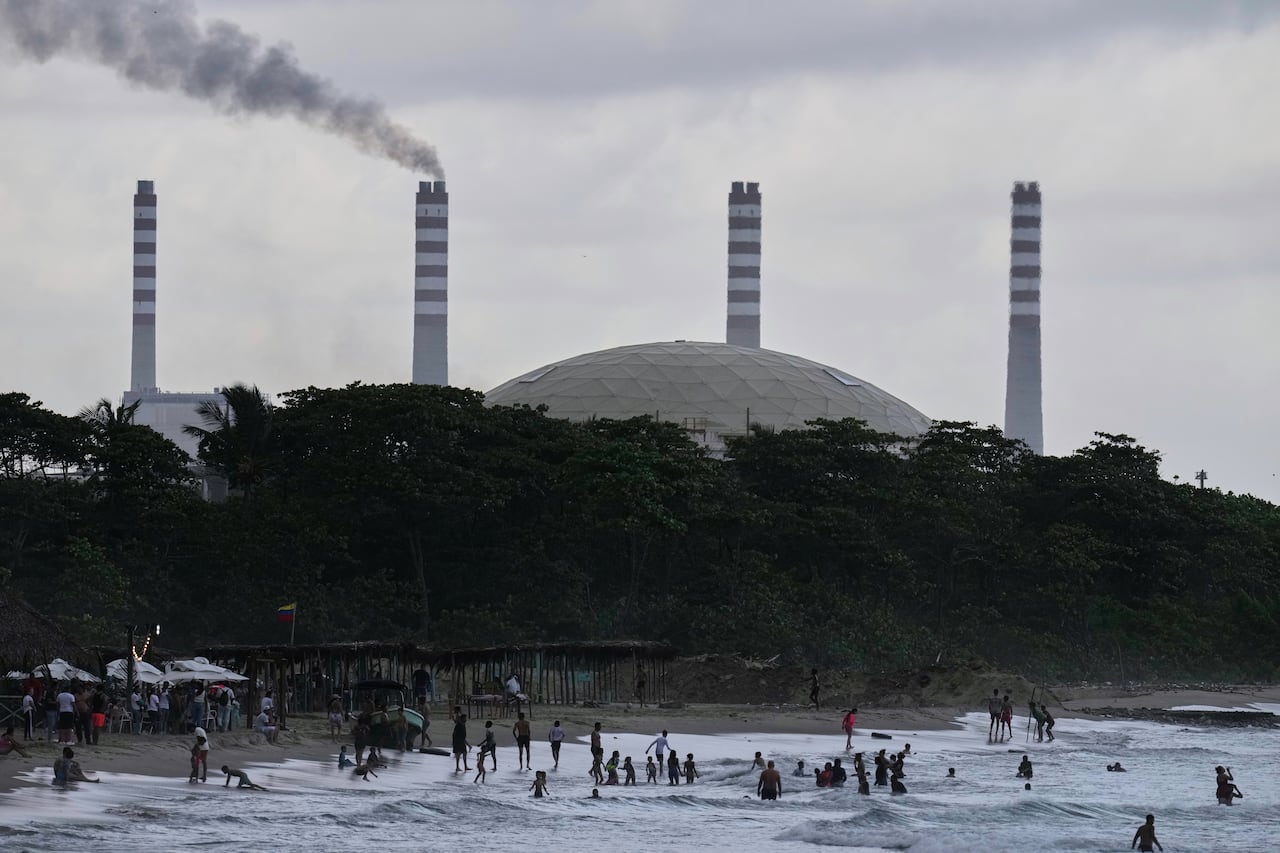 The El Palito refinery rises above a beach in Puerto Cabello, Venezuela, on Dec. 21. (Matias Delacroix/The Associated Press)
China is the biggest buyer of Venezuelan crude, which accounts for roughly four per cent of China’s imports, with shipments in December on track to average more than 600,000 barrels per day, analysts told Reuters.
While the U.S. had a warrant to intercept Centuries, it did not have one for Bella 1, according to the New York Times.
A ‘serious act of international piracy,’ says Venezuela
Centuries loaded in Venezuela under the false name “Crag” and was carrying some 1.8 million barrels of Venezuelan Merey crude oil bound for China, according to documents seen by Reuters.
China’s Foreign Ministry reacted on Monday, calling the U.S.’s seizure of another country’s ships a serious violation of international law.
WATCH | Venezuelan president calls on U.S. to halt Caribbean Sea actions: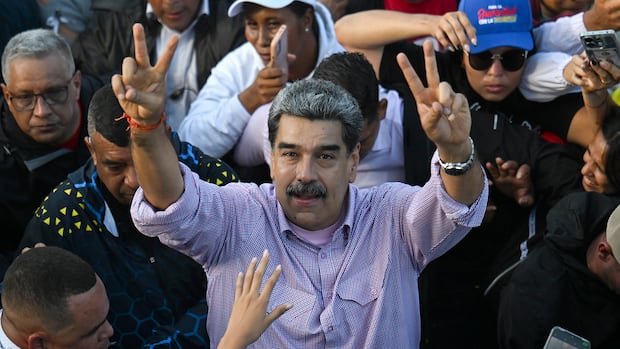
Maduro warns Trump against an ‘endless war’ in Venezuela
Venezuela’s President Nicolás Maduro is calling for the U.S. to make peace after U.S. President Donald Trump dramatically upped the ante with its military presence in the Caribbean.
Venezuela has the right to develop relations with other countries, Chinese Foreign Ministry spokesperson Lin Jian said at a daily press briefing, adding that China opposes all “unilateral and illegal” sanctions.
The crude was bought by Satau Tijana Oil Trading, one of many intermediaries involved in Venezuelan state oil company PDVSA’s sales to Chinese independent refiners, the documents showed.
A White House spokesperson said the “falsely flagged vessel” carried sanctioned oil and was part of Venezuela’s shadow fleet.
The Venezuelan government called the tanker interception a “serious act of international piracy.”
Distress signals
Bella 1, the ship that sailed away from the U.S. Coast Guard’s attempts at making contact with it, is reportedly still on the move.
British maritime risk management group Vanguard, along with a U.S. maritime security source, identified the vessel as a very large crude oil carrier that was added last year to the sanctions list of the U.S. Treasury Department, which said the vessel has links to Iran.
It was empty when it approached Venezuela on Sunday, according to the vessel monitoring service TankerTrackers.com. The vessel had in 2021 provided transportation for Venezuela’s oil to China, according to internal documents from state-run oil company PDVSA. It had also previously carried Iranian crude, according to TankerTrackers.com.
But according to the New York Times, unlike for Centuries, the U.S. didn’t have a warrant to stop the ship.
Maritime Blogger News From Sea posted on X on Sunday that Bella 1 had been transmitting repeated distress alerts as it sailed north toward the Atlantic Ocean.
Other countries react
Russia’s Foreign Ministry has started evacuating the families of diplomats from Venezuela, according to a European intelligence official speaking to The Associated Press on condition of anonymity to discuss sensitive information.
Other world leaders have also reacted to the U.S.’s actions, with Brazilian President Luiz Inácio Lula da Silva saying over the weekend that an “armed intervention in Venezuela would be a humanitarian catastrophe.”
WATCH | What happens if the conflict reaches shore: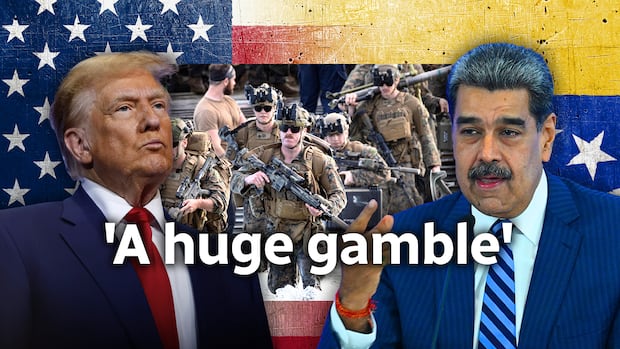
Why a U.S. ground invasion of Venezuela would be a disaster | About That
Tensions between the United States and Venezuela are escalating as the U.S. continues to strike alleged Venezuelan drug-trafficking boats and signals the possibility of a ground invasion. Andrew Chang breaks down the geographical, logistical and political challenges involved in ratcheting up the conflict to this level.
Images provided by The Canadian Press, Reuters and Getty Images
Lula da Silva and Mexican President Claudia Sheinbaum urged restraint in the matter last week, but the Brazilian leader went further days later, comparing the U.S.’s campaign to the Falklands War between Argentina and Great Britain.
“The South American continent is once again haunted by the military presence of an extra-regional power,” Lula da Silva said Saturday during a summit of the South American Mercosur bloc in Foz do Iguaçu, a city in southern Brazil.