
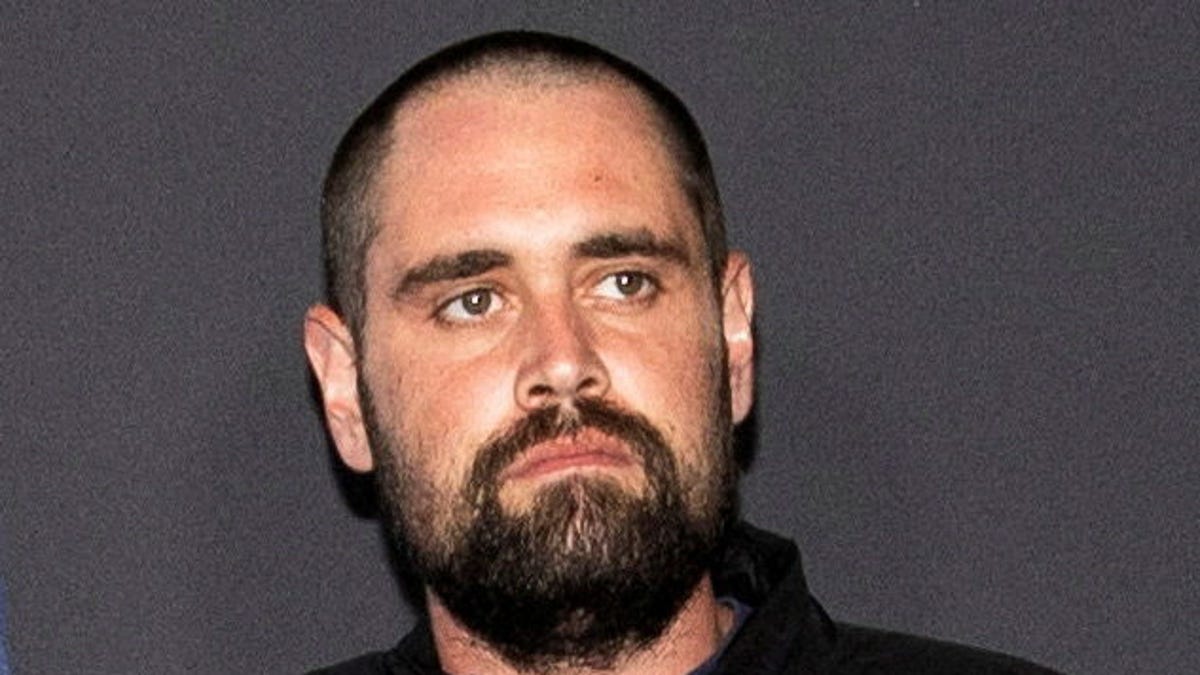


Nick Reiner’s arrest caught on surveillance camera
Nick Reiner, the son of Rob Reiner, was arrested following the death of the acclaimed Hollywood director and his wife, Michele Singer.
Nick Reiner, the son of Rob Reiner and Michele Singer Reiner who is facing murder charges in the deaths of his parents, has been prescribed medication for schizophrenia, according to two sources who spoke to The Los Angeles Times. NBC News, citing three sources, reported that Reiner, the middle child of the acclaimed Hollywood director and his wife, had been diagnosed with the mental health disorder years ago, and was being treated for serious psychiatric disorder at the time of the crime.
While the 32-year-old screenwriter and his family had been open about his previous substance abuse, this mental health update is newly public – and raises plenty of questions heading into a trial.
Reiner’s medication was “changed or adjusted” shortly before the deaths of Rob and Michele Reiner, according to the NBC News report. The name of the drug and the exact timeline of when Reiner was given the prescription or adjustments were made are not known. USA TODAY has reached out to Reiner’s attorney for comment.
For those wondering about schizophrenia and substance abuse, and any possible link to violence, we break down what we know about the conditions (and how to not to further stigmatize mental illness).
What is schizophrenia?
Schizophrenia is a lifelong, psychotic disorder that affects fewer than 1% of the U.S. population, but is one of the most stigmatized mental illnesses. It affects how people think, feel and act and is most commonly characterized by delusions and hallucinations, impaired cognitive thinking and difficulty socializing with others, which can make it difficult for some – but not all – to access treatment or keep a steady job.
If left untreated, schizophrenia can result in outcomes such as substance use, homelessness, social isolation and even suicide. Some research has linked it to violence or mass shootings, however psychologists warn the relationship between schizophrenia and violence is often oversimplified and rarely ever causal.
The exact causes of the disorder – likely a combination of genetic and environmental factors – are unclear. But common symptoms include visual hallucinations and thought delusions, in which those with schizophrenia see or hear things that deviate from reality.
Others may also experience what psychologists call negative symptoms, such as anhedonia (the failure to experience pleasure), flat affect (the lack of emotional expression or reaction) or they may withdraw from relationships and work. These symptoms tend to be more difficult to address.
Certain treatments have been proven to help keep symptoms at bay. Antipsychotic medications can reduce hallucinations and delusions, while therapy and rehabilitation can address specific concerns by teaching cognitive techniques or enhancing social skills to interact with others.
Is schizophrenia associated with violence when combined with substance use disorder?
Multiple studies have linked having schizophrenia with an increased risk of violent crime, specifically those also with substance use disorder. “The association between schizophrenia and violent crime is minimal unless the patient is also diagnosed as having substance abuse comorbidity,” wrote researchers in a 2009 article in JAMA focused on Sweden.
JAMA Psychiatry research published more recently in 2022, which reviewed data from more than 50,000 people in 15 countries, also noted this increased risk, but experts are unsure why this happens.
Some studies show antipsychotics could limit violent outcomes in patients, but more research is needed to determine whether meds can reduce violence to the same level as the general population.
Can schizophrenia drugs be used to treat anything else?
Antipsychotic medications can be used off-label to treat a host of other mental health conditions, including anxiety, ADHD, depression, substance abuse disorders and PTSD.
Contributing: Edward Segarra, Jenna Ryu and more USA TODAY staff