
People attend the funeral mass for Pope Francis at the Vatican in late April. Francis was among many notable figures who passed away in 2025.Yara Nardi/Reuters
They made us laugh, marvel in awe at their fearlessness, led with kindness, moved us with their words and gave us a window into other worlds. As the year comes to a close, The Globe and Mail looks back at some of the notable people who died in 2025.
Below are excerpted obituaries and tributes marking their exceptional lives.
Andrew Pyper, authorOpen this photo in gallery:
Author Andrew Pyper, pictured in 2011, was a prolific novelist, writing a total of 14 thrillers, one roughly every two years.Kevin Van Paassen/The Globe and Mail
He was one of Canada’s most prolific and successful novelists, though his name never turned up on shortlists for the Governor General’s Award or Giller Prize, which certify the country’s literary titans. That was okay with Andrew Pyper; his mission was to excite and disturb his readers with his thrillers featuring murderers, monsters, child molesters, ghosts and demons. All the imaginings normally forced down into the basement of consciousness.
David Lynch, filmmaker Open this photo in gallery:
David Lynch, seen at the Rome Film Festival in November, 2017, created otherworldly settings for his films, daring audiences to step inside.TIZIANA FABI/AFP/Getty Images
Across film and television – as well as in galleries and on the page – David Lynch invited audiences to step with him into the dangerous darkness of the American dreamscape, where there was a good chance you might be swallowed whole, never to emerge. His labyrinthine worlds were filled with countless trap doors, escape hatches and M.C. Escher-esque staircases that doubled and then tripled back onto themselves. These were not just realms to get lost inside but semi-secret spaces that, Lynch seemed to believe, we all possessed skeleton keys to unlock for ourselves. All he asked of us was to open our minds and step inside.
Pope Francis Open this photo in gallery:
Pope Francis waves at the crowd gathered in St. Peter’s Square at the Vatican in June, 2014. Born Jorge Mario Bergoglio, Francis eschewed the gilded trappings of the papacy, preferring a frugal and simple existence.Max Rossi/Reuters
The message was clear from the onset. Pope Francis was a street priest at heart – and by training in the rough streets of Buenos Aires.
He would lead a frugal and simple existence. He would not even live in the opulent Apostolic Palace, choosing instead Vatican City’s modest Casa Santa Marta guesthouse, where he would occupy Suite 201.
He would be chauffeured around in a cheap Fiat, not a luxurious Mercedes-Benz with blacked-out windows. He would not use Castel Gandolfo, the traditional papal summer residence overlooking Lake Albano in the cool, breezy hills just beyond Rome.
Bev Beaver, Mohawk athleteOpen this photo in gallery:
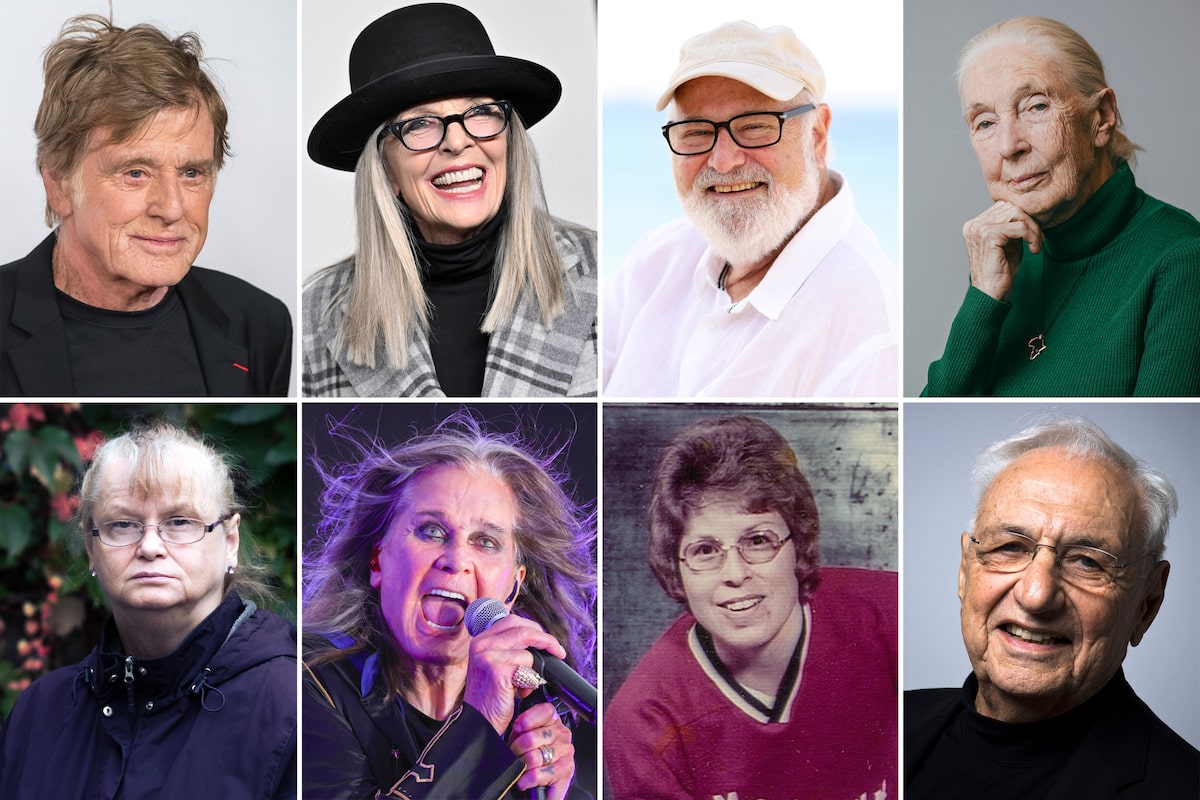
Beverly Beaver with the Oshweken Mohawks in 1976-77. Ms. Beaver earned the moniker ‘Babe Ruth of the Mohawks’ for her pitching ability.Hockey Hall of Fame
Bev Beaver competed at the highest level of women’s hockey and softball for more than three decades. She was also a notable five-pin bowler.
“I was born a sportsperson,” she once said.
Ms. Beaver, a Mohawk from the Six Nations Reserve, won countless awards and championships on the ice and on the diamond. In 1980, she was named winner of the Tom Longboat Award as the best aboriginal athlete in Canada.
She was nicknamed Golden Arm for her pitching ability and was once called the “Babe Ruth of the Mohawks.”
Marie Slark, survivor Open this photo in gallery:
Marie Slark was one of two lead plaintiffs in a class-action lawsuit against Ontario, which ran the Huronia Centre for 133 years until it closed in 2009.Polina Teif/White Pine Pictures
Marie Slark was released from the Huronia Regional Centre in 1970 to live in a foster home managed by the institution. Nine years earlier, as a slight seven-year-old, she had been rejected by her dysfunctional parents and placed by Children’s Aid in the sprawling complex built in Central Ontario to house children with intellectual disabilities.
Life at the Huronia Centre was horrific, say survivors who recount endless days of neglect and abuse. Marie thought the foster home offered her a first chance to live in a place of love and care. Instead, she was beaten with a wire and forced to do all the household chores including caring for younger children.
Brian Wilson, musicianOpen this photo in gallery:
Brian Wilson performs at the Grammy Awards in February, 2012. Mr. Wilson was the eldest and last surviving of three musical brothers.Kevin Winter/Getty Images
The eldest and last surviving of three musical brothers – Brian Wilson played bass, Carl lead guitar and Dennis drums – he and his fellow Beach Boys rose in the 1960s from local California band to national hit makers to international ambassadors of surf and sun. Wilson himself was celebrated for his gifts and pitied for his demons. He was one of rock’s great romantics, a tormented man who in his peak years embarked on an ever-steeper path to aural perfection, the one true sound.
The Beach Boys rank among the most popular groups of the rock era, with more than 30 singles in the Top 40 and worldwide sales of more than 100 million. The 1966 album Pet Sounds was voted No. 2 in a 2003 Rolling Stone list of the best 500 albums, losing out, as Wilson had done before, to the Beatles’ Sgt. Pepper’s Lonely Hearts Club Band. The Beach Boys, who also featured Wilson cousin Mike Love and childhood friend Al Jardine, were voted into the Rock and Roll Hall of Fame in 1988.
Ozzy Osbourne, musician Open this photo in gallery:
Ozzy Osbourne performs with Black Sabbath as part of The End tour in February, 2016, at Madison Square Garden. Mr. Osbourne was the lead singer of the pioneering heavy metal band.CHAD BATKA/The New York Times News Service
Either clad in black or bare-chested, the singer Ozzy Osbourne was often the target of parents’ groups for his imagery and once caused an uproar for biting the head off a bat. Later, he would reveal himself to be a doddering and sweet father on the reality TV show The Osbournes.
Black Sabbath’s 1969 self-titled debut LP has been likened to the Big Bang of heavy metal. It came during the height of the Vietnam War and crashed the hippie party, dripping menace and foreboding. The cover of the record was of a spooky figure against a stark landscape. The music was loud, dense and angry, and marked a shift in rock ’n’ roll.
Michelle Duff, motorcycle racerOpen this photo in gallery:
Michelle Duff’s final grand prix ride to third in the Canadian 500GP at Mosport on an Arter Matchless G50 in 1967.Motorcycle Mojo Magazine/Supplied
Michelle Duff was the first North American and, so far, the only Canadian to win a motorcycle race on the world championship grand prix circuit.
A triumph at the 1964 Belgian grand prix helped make Duff a popular figure among racing fans in Britain and on the Continent – where the sport enjoyed crowds numbering in the hundreds of thousands – but earned her little notice back home.
The pursuit of the checkered flag came with regular risk of serious injury, and even death.
Giorgio Armani, fashion designerOpen this photo in gallery:
Giorgio Armani closes out a show in Paris in January. The Italian designer turned the concept of understated elegance into a multibillion-dollar fashion empire.Lewis Joly/The Associated Press
Starting with an unlined jacket, a simple pair of pants and an urban palette, Giorgio Armani put Italian ready-to-wear style on the international fashion map in the late 1970s, creating an instantly recognizable relaxed silhouette that has propelled the fashion house for half a century.
From the executive office to the Hollywood screen, Armani dressed the rich and famous in classic tailored styles, fashioned in super-soft fabrics and muted tones. His handsome black-tie outfits and glittering evening gowns often stole the show on award season red carpets.
Robert Redford, actor-turned-filmmaker Open this photo in gallery:
Robert Redford, pictured at the Venice Film Festival in September, 2017, was one of independent film’s greatest champions.Vittorio Zunino Celotto/Getty Images
Once dismissed as “just another California blond,” Robert Redford’s charm and craggy good looks made him one of the industry’s most bankable leading men for half a century, and one of the world’s most recognizable and best-loved movie stars.
Redford made hearts beat faster in romantic roles such as Out of Africa, got political in The Candidate and All the President’s Men and skewered his golden-boy image in roles like the alcoholic ex-rodeo champ in The Electric Horseman and middle-aged millionaire who offers to buy sex in Indecent Proposal.
He used the millions he made to launch the Sundance Institute and Festival in the 1970s, promoting independent filmmaking long before small and quirky were fashionable.
Donald Oliver, politician Open this photo in gallery:
Donald Oliver, seen at home in Pleasant River, N.S., in 2013, was the first Black man to sit in Canada’s Senate when he was appointed by then-prime minister Brian Mulroney in 1990.PAUL DARROW/The Globe and Mail
When Donald Oliver was growing up in Wolfville, N.S., as part of the only Black family in town, racism wasn’t just a concept, it was a daily experience. He knew what it meant to walk into classrooms, grocery stores and restaurants and be treated as lesser.
A half-century later, when he swore the oath of office in 1990 as the first Black man appointed to the Senate, it meant more than recognition of his distinguished career and his community leadership. It carried the weight of history, proving that the walls that once shut him out could be broken.
Standing beneath the high ceilings of Parliament Hill’s Red Chamber, he finally had the power to shape the institution from within.
Tim Cook, public historian Open this photo in gallery:
Tim Cook liked to call himself a ‘public historian,’ a title he wore as the Canadian War Museum’s chief historian.Kevin Van Paassen/The Globe and Mail
Tim Cook, the Canadian War Museum’s chief historian, liked to walk when he talked. At work, his co-workers and visitors often found themselves discussing business during a wander through the museum’s exhibits.
Labelling himself “a public historian,” he devoted his career to sharing the story of Canada’s wartime soldiers and civilians on both the printed page and inside the concrete labyrinth of the bunkerlike museum.
Jane Goodall, primatologist Open this photo in gallery:
Jane Goodall visits a chimpanzee rescue centre in June, 2018, in Entebbe, Uganda. Ms. Goodall drew the public into the wild, partnering with the National Geographic Society to bring her beloved chimps into their lives through a variety of mediums.SUMY SADURNI/Getty Images
Jane Goodall, the primatologist-turned-conservationist, spun her love of wildlife into a lifelong campaign that took her from a seaside English village to Africa and then across the globe in a quest to better understand chimpanzees, as well as the role that humans play in safeguarding their habitat and the planet’s health overall.
Ms. Goodall was a pioneer in her field, both as a female scientist in the 1960s and for her work studying the behaviour of primates. She created a path for a string of other women to follow suit, including the late Dian Fossey.
Diane Keaton, actor Open this photo in gallery:
Oscar-winning actor Diane Keaton charmed new generations for decades, long after her star-making turn playing the titular Annie Hall.Jerod Harris/Getty Images
Diane Keaton was the kind of actor who helped make films iconic and timeless, from her “La-dee-da, la-dee-da” phrasing as Annie Hall, bedecked in that necktie, bowler hat, vest and khakis, to her heartbreaking turn as Kay Adams, the woman unfortunate enough to join the Corleone family.
Ms. Keaton was born Diane Hall in January, 1946, in Los Angeles, though her family was not part of the film industry she would find herself in. Her mother was a homemaker and photographer, and her father was in real estate and civil engineering.
Frank Gehry, architect Open this photo in gallery:
Frank Gehry looks out from behind a model of the King Street project in his native Toronto, at his L.A. studio in April, 2021. Mr. Gehry, whose career spanned more than 60 years, is behind some of the world’s most iconic buildings.ERIK CARTER/The New York Times News Service
When Frank Gehry visited the University of Waterloo in 1992, he did all the things expected of a prominent architect: he lectured, exchanged ideas with colleagues and commented on student work. But what he really wanted was to play hockey. “He was wildly enthused about the games,” recalls Larry Wayne Richards, an architect and academic who was Mr. Gehry’s host for the visit. “He’d brought the uniforms with him – his passion for the game was absolutely real. There was this side of him that was very ordinary, very human.”
But this unpretentious and playful man had a steely side. Mr. Gehry was a creative force and a relentless innovator.
Rob Reiner, actor-turned-filmmaker Open this photo in gallery:
Rob Reiner, pictured in May, 2016, became a household name for his role in All in the Family before transitioning to directing. Off camera, he was also a liberal activist.Brian Ach/The Associated Press
Rob Reiner was a fixture on television for the better part of the 1970s on All in the Family, Norman Lear’s groundbreaking comedy series. He was Michael (Meathead) Stivic, the perpetually outraged, always-hungry Polish-American son-in-law whose bleeding heart on his sleeve was as clear as the mustache on his face.
Mr. Reiner in real life was also a liberal activist. His blazing on-screen arguments with the bigoted, blue-collar, raspberry-blowing conservative played by Carroll O’Connor stood in for the partisan, intergenerational conversations of the times.
Yet the landmark role in a landmark series now stands as mere footnote in a distinguished career as a film director that began with an audacious run of success from 1984 to 1992. The first movie in Reiner’s winning streak, the rock ‘n’ roll mockumentary This is Spinal Tap‚ gave no indication of his future mainstream touch and versatility.