
Ferrari is determined not to make any mistakes on its carefully planned path toward the 2026 Formula 1 season. This focus comes after a number of challenging years in which the team often found itself falling short of expectations, frequently watching rival teams claim victories and dominate the headlines.
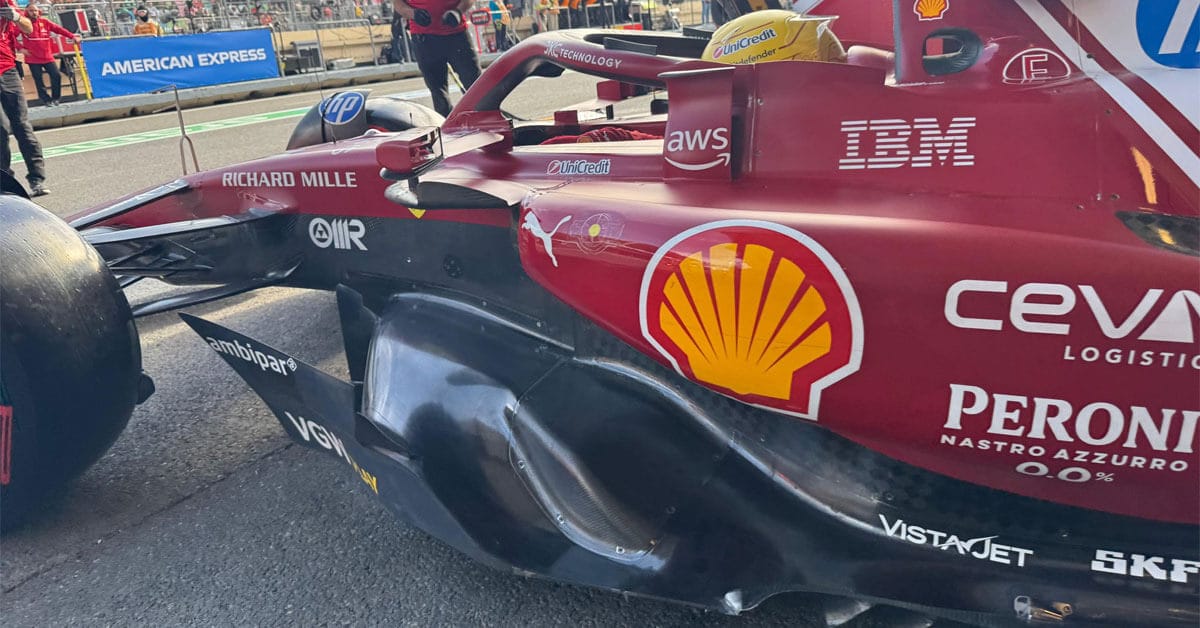
Beyond the topic of tires, which has historically been an area of significant attention and effort for the Scuderia, the sidepod region of the car is also regarded as absolutely crucial for the aerodynamic performance of the new car. Ferrari’s intensive and detailed aerodynamic study of this area has been carried out with meticulous precision, aiming to satisfy all technical requirements and to ensure that the car achieves maximum possible performance on every type of track it will encounter throughout the championship.
F1 2026: the importance of the car’s floor under FIA-imposed limitations
In recent days, there have been several discussions highlighting the critical importance of the car’s floor. When compared with the generation of so-called wing cars that dominated previous seasons, the situation has evolved considerably. The FIA has developed a comprehensive and detailed set of technical regulations for the 2026 Formula 1 season with the specific intention of limiting or suppressing the outwash effect. The outwash effect refers to the airflow that is naturally pushed outward by the rolling and rotating tires, creating vortices and chaotic fluid motion around the car. Under the new rules, all the turbulence and chaotic airflow generated by the car, particularly that coming from the rolling motion of the tires, cannot simply be directed outward by default.
This presents a significant challenge that engineers from all Formula 1 teams have had to address. Their task has been to find ways to partially recreate, or at least approximate, the outwash effect, despite the limitations imposed by the new technical regulations. One of the first challenges is that the floor inlet has become considerably smaller compared to previous car generations. In addition, although the number of aerodynamic fences has been increased from four to five, the reduced height and length of these components make them far less effective in managing and guiding airflow beneath the car.
The production of vortices that help to energize airflow along the full length of the floor is therefore significantly constrained. While the aerodynamic elements still exist, they are simply not capable of reproducing the same levels of aerodynamic suction or overall performance that were achieved by the previous wing cars. In the earlier wing car designs, a series of significant vortices were created at the entrance to the floor, which then combined with those generated along the floor edges to create an overall effect that significantly enhanced aerodynamic efficiency.
All of these aerodynamic interactions generated a very strong and concentrated aerodynamic load directed toward the rear of the car. This effect did more than just improve downforce: it helped mitigate disruptions to the floor, effectively sealing the area and reducing aerodynamic losses from the rear tire’s contact patch. It would be inaccurate, therefore, to suggest that all the aerodynamic principles behind wing cars have been eliminated. The underlying aerodynamic concepts remain largely the same; however, their efficiency in generating downforce and optimizing overall aerodynamic performance will not be as high as it was with the previous generation of wing cars.
Historically, Ferrari has unfortunately not been able to match Red Bull Racing and later McLaren in terms of generating downforce from the floor. This is an area that, much like tires, the team has placed at the center of the design focus for its 2026 car. This approach demonstrates that Ferrari has learned from its previous mistakes and is now applying clarified aerodynamic principles in a refined and strategic manner to the new car, aiming for maximum competitiveness in the 2026 Formula 1 World Championship.

F1 2026, Ferrari: targeted aerodynamic studies in the central section of the new car
Beyond the floor itself, the bodywork of the car as a whole plays a decisive role in managing airflow and optimizing aerodynamic performance. Naturally, the front section of the car, particularly the front wing assembly, is critical for initiating the car’s aerodynamic behavior in the most efficient manner possible. However, after speaking with several senior Formula 1 engineers, it has been confirmed that the sidepod region of the new 2026 cars will play an extremely important role in optimizing the car’s overall vortex structures and aerodynamic efficiency.
In addition to the extensive work on tire management, which Ferrari has prioritized in order to ensure optimal performance and consistent tire behavior across different tracks, the Scuderia has invested substantial effort into the study of the lateral bargeboards. These components are designed to manage turbulence as efficiently as possible, taking into account the numerous limitations imposed by the FIA’s 2026 regulations.
The same level of focused attention applies to the sidepods themselves and the area immediately behind them, often referred to in technical jargon as the upper aerodynamics of the car. To provide some context, in the 2022 season, Ferrari famously introduced its innovative “bathtub” sidepod design in this same region, which represented a significant aerodynamic step forward at the time. For the 2026 car, the Maranello team’s engineers and technicians have conducted extremely detailed and targeted studies across this part of the car, aiming to fully exploit every technical concept and maximize the overall efficiency and performance of the vehicle.
Ferrari focuses on maximizing the outwash effect on the new 2026 car
According to information from industry sources, Ferrari regards this section of the car as being absolutely decisive for the generation of the outwash effect. The outwash effect is a well-known aerodynamic phenomenon that is extremely useful for compensating for some of the aerodynamic losses discussed in previous sections. Even the undercut of the new-generation cars will contribute to creating areas of local high pressure, which naturally produce an outwash effect that directs airflow outward from the front section of the sidepods.
For this reason, the engineers led by Ferrari’s technical director, the Frenchman Loïc Serra, have conducted intensive and exhaustive studies of this area. The goal has been to develop functional aerodynamic concepts that can later be refined and improved through a structured development and update process. This section of the car will be absolutely critical, and its effectiveness could prove to be decisive in recreating the outwash effect, which is otherwise heavily restricted by the FIA’s new technical regulations.
In the weeks leading up to the 2026 season, there will be a considerable amount of analysis and discussion about the design and aerodynamic solutions implemented by all Formula 1 teams, including Ferrari. Ultimately, however, only real-world track performance will reveal which teams have interpreted and implemented the new regulations most effectively. Ferrari has made it clear that it will continue pushing development to the very last moments before the first test sessions, demonstrating a philosophy of precision, excellence, and an uncompromising approach to innovation that is central to the Scuderia’s identity and strategy.
This relentless pursuit of perfection is driven by the team’s commitment to success and the knowledge that mistakes at this stage could compromise the entire season. For Ferrari, getting the interpretation of the new rules and the aerodynamic development of the car correct is not just important—it is critical. It reflects the Scuderia’s recognition that in Formula 1, small margins can have a decisive impact on race outcomes and championship standings, and that every aerodynamic advantage, no matter how subtle, must be exploited to the fullest.
The comprehensive studies conducted by Ferrari into sidepod design, floor aerodynamics, and vortex management demonstrate the team’s commitment to learning from past experiences. By carefully analyzing what rival teams have done effectively, and by applying these lessons to the 2026 car, Ferrari aims to close the gap with teams like Red Bull Racing, who have consistently excelled in generating floor downforce, and McLaren, who have also demonstrated strong aerodynamic capabilities in recent seasons.
Ferrari’s approach to the 2026 car therefore combines lessons from historical successes and failures, rigorous engineering analysis, and a clear focus on exploiting every legal aerodynamic opportunity allowed by the FIA regulations. The combination of advanced floor design, optimized sidepods, carefully managed turbulence, and enhanced tire integration is expected to provide the team with a competitive platform capable of challenging for victories throughout the 2026 Formula 1 World Championship.
Ferrari’s strategy for the 2026 Formula 1 car demonstrates a clear understanding of the evolving technical regulations and a commitment to maximizing aerodynamic performance in all areas of the car. From the front wing and floor to the sidepods and rear aerodynamics, every component is being developed with the goal of extracting maximum efficiency, ensuring that the car performs at the highest possible level under all racing conditions. The Scuderia is leaving no stone unturned, fully aware that in modern Formula 1, success is determined by attention to detail, meticulous engineering, and the ability to adapt quickly to changing regulations and competitive conditions.
In the coming months, as the car’s development progresses and testing begins, the effectiveness of Ferrari’s aerodynamic philosophy will be put to the ultimate test on track. Only then will it become clear whether the extensive studies, targeted design solutions, and strategic focus on outwash and vortex management will translate into tangible performance gains during the 2026 season. What is certain, however, is that Ferrari’s engineering team, under the guidance of technical director Loïc Serra, is leaving nothing to chance and is fully committed to delivering a car capable of competing at the very front of the Formula 1 grid, maximizing every opportunity to achieve success for drivers Charles Leclerc and Lewis Hamilton throughout the championship.
Dec 23, 2025Alex Marino
Let other Scuderia Fans know about us


