
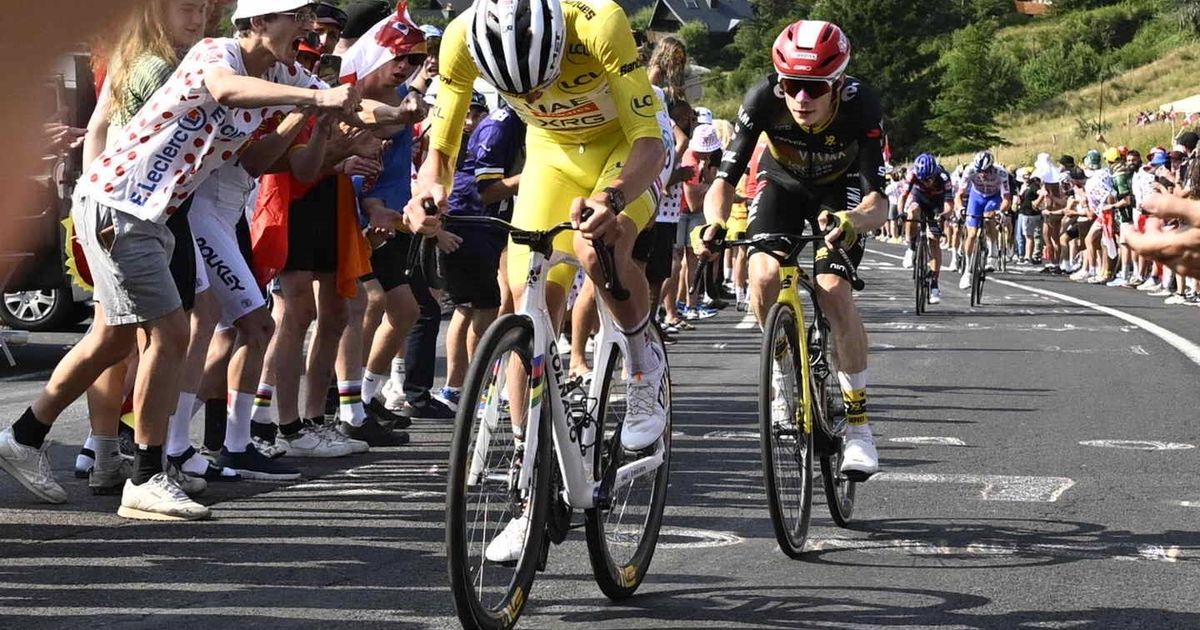
That first Tour, which began on 1 July 1903, had just six
stages but those stages were vast, many running overnight. The 2,428-kilometre
route was shorter in total than modern editions, yet each day averaged around
400 kilometres, which helps explain why only 21 of 60 starters reached the
finish and why the last rider came in nearly 65 hours behind the winner.
Maurice Garin triumphed in 94 hours, 33 minutes, and 14 seconds, nearly 3 hours
ahead of Lucien Pothier in second.
Desgrange wanted the Tour to create legends. He imagined it
producing “supermen” and believed that the perfect Tour would have only one
rider finish, with the others having been defeated by the magnitude of the
challenge. Early editions reflected this vision. Riders repaired punctures and
broken parts themselves, found their own food, and rode through long stretches
of countryside in the dark. In 1904, some riders took trains or received
illicit help during night stages, causing such uproar that Desgrange briefly
published “THE END” as if cancelling his own race.
Instead of abandoning it, organisers restructured the event.
From 1905 onwards, they added more but shorter stages, confined racing to
daylight, and expanded the route to 11 stages. It quickly proved the right
balance: the spectacle grew, cheating became easier to police, and
participation rose.
A turning point arrived in 1910 when the race entered the
Pyrenees for the first time. Riders had minimal gearing and faced steep, rutted
climbs. On one ascent, an exhausted Octave Lapize famously yelled at
organisers: “You’re assassins! All of you!”
The Alps followed in 1911, securing mountain stages as
defining features of the Tour’s character. Apart from wartime interruptions
between 1915–1918 and 1940–1946, the Tour became a mainstay of French sporting
culture. Through the 1920s and 1930s the race ventured into neighbouring
countries and began drawing elite riders from across Europe. What began as a
newspaper stunt evolved into cycling’s premier event and the first of the
calendar’s Grand Tours.
Modern format
While the route changes each year, the modern Tour’s
structure is stable. It is typically 21 stages over 23 days with two rest days,
usually in July. 23 teams of eight riders compete, and each stage is timed,
with cumulative time deciding the overall winner in the yellow jersey. Most
days are mass-start road stages. Flat and rolling stages often lead to
high-speed bunch sprints, while mountain stages in the Alps and Pyrenees shape
the general classification. Time trials, “TT” stages, add further complexity,
asking riders to race alone against the clock over 20–40 kilometres.
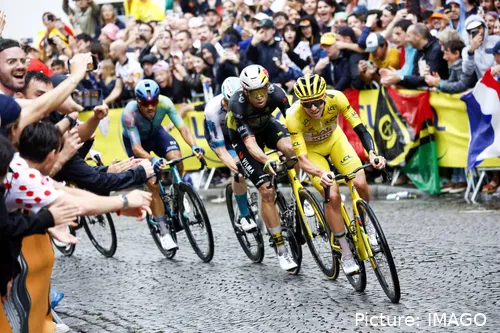
Tadej Pogacar leads Wout van Aert up the final stage of the 3338km long 2025 Tour de France. @Sirotti
Stage length varies dramatically. A typical flat stage runs
180–220 kilometres, while a time trial might be just 30 kilometres. Historically,
the range has been much wider. Early Tours routinely included stages over 300
kilometres, and the longest in history, used in 1919, stretched 482 kilometres
from Les Sables-d’Olonne to Bayonne. At the other extreme, the shortest stage in
modern history came in 2018 on stage 17, at just 65km between Bagneres de
Luchon to Col du Portet.
Another evolution concerns how stages are spread across the
calendar. The all-night marathons of the early years have long gone. Since the
1920s the norm has been one stage per day, though mid-century editions
sometimes packed in split stages, two races in a single day, to add mileage and
drama. That practice faded by the late 1980s, replaced by a simpler rhythm of
one stage per day plus two rest days. This daily structure helps the race
unfold as a continuous narrative and gives riders a fighting chance at
recovery.
Total distance is where the Tour’s evolution becomes most
visible. Recent Tours generally measure 3,300–3,500 kilometres. The 2025 route,
for instance, was 3,338, slightly shorter than the previous year’s 3,492 km.
Spread across 21 stages, that means an average of around 150–170 kilometres per
day. But earlier eras looked very different. The original Tours in 1903 and
1904 were roughly 2,400 kilometres, but that modest total hid their giant
stages.
As the race grew, organisers inflated the distance to
increase difficulty and spectacle. The 1926 edition remains the longest ever at
roughly 5,745 kilometres across just 17 stages, which was won by Lucien Buysse.
Throughout the 1920s and 1930s the Tour regularly exceeded 5,000 kilometres,
and even after World War II many editions were still in the 4,000–4,500
kilometre range.
Reducing the length
From the 1980s onwards, organisers steadily reduced the
course length to improve rider welfare and encourage more dynamic racing. By
the 1980s and 1990s, most Tours fell within 3,500–4,000 kilometres. In the 21st
century the event has tightened further into the mid-3,000s, with the shortest
modern edition coming in 2002 at roughly 3,278 kilometres.
Speed provides another lens on the Tour’s length. Modern
flat stages are raced at 40–45 km/h, so a 200-kilometre day often finishes in
four and a half to five hours. Mountain days are slower, sometimes averaging
close to 30 km/h, but still usually end within a similar window because the
distance is shorter. Today, overall winners typically complete the Tour at an
average near 40 km/h.
The 2022 edition reached about 42 km/h, the fastest at the
time. Contrast that with Maurice Garin’s pace in 1903 or the 1919 winner’s
average of around 24 km/h over 5,560 kilometres. A century of technological,
nutritional, and tactical improvements, along with darker periods influenced by
doping, has dramatically lifted speeds. In fact, in 2025, the average speed was
42.8km/h (26.6mph), which is eye-watering for mere mortals.
On particularly rapid days with supportive winds, the
peloton has exceeded 50 km/h for an entire road stage. The record sits at
around 50.4 km/h in a 1999 sprint stage. On gruelling climbs such as Alpe
d’Huez, however, speeds drop to roughly 23 km/h, half of what riders achieve on
flat terrain.
Despite reductions in overall distance, the Tour remains
exhausting. Most stages last four to six hours. Riders start late morning and
are often racing into late afternoon. Weather can shape the rhythm: tailwinds
accelerate stages dramatically, while heat or climbing can slow them down. The
cumulative effect of these hours, repeated for 21 stages, is what truly defines
the Tour’s severity.
Evolution
Over time, the Tour has transitioned from a near-impossible
ordeal to a refined sporting spectacle. Early editions featured minimal
assistance and even restrictions on drafting and team tactics, with Desgrange
insisting on a contest of individuals. Now the race is a choreographed blend of
teamwork, equipment, sports science, and strategy. Team cars follow with spare
bikes, mechanics, doctors, and soigneurs. Roads are paved and closed to
traffic. In 1913, a rider famously had to solder his broken frame at a village
blacksmith before continuing; today, a mechanic simply hands over a new bike in
seconds.
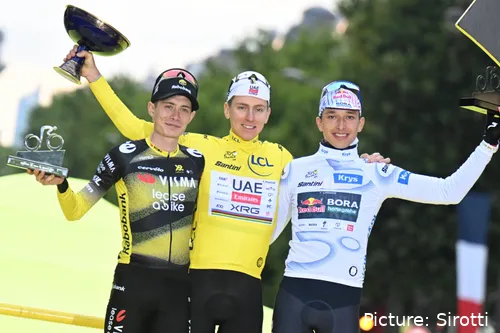
Modern editions of the Tour de France are unrecognisable to the early years. @Sirotti
The number of stages grew from six in 1903 to around 15 by
1910 and stabilised at 20–24 after World War II. Since the 1980s, 21 stages has
been the standard. Rest days are planned, and the variety of stage types has
increased. The move away from ultra-long distances and split stages has allowed
organisers to shape more tactical, spectator-friendly racing, without stripping
away the Tour’s defining difficulty.
Even with these refinements, the Tour remains by a distance the
world’s biggest bike race. Covering roughly 3,500 kilometres across 21 days is
still one of the harshest tests in world sport. Only complete riders, climbers
who can time trial, sprinters who can survive mountains, and all-rounders who
can stay sharp for three weeks, have any chance of winning in July.
Desgrange’s fantasy of a race so hard that the perfect Tour
would have only one rider finish remains an echo from the past rather than a
real target. Today, the focus is on creating drama rather than complete destruction.
Still, the essence of his idea survives: the Tour is designed to push the
world’s best cyclists to their limits. Those who reach Paris have not only
mastered mountains, speed, distance, and tactics, they have endured one of
sport’s most relentless journeys.
Read below for a full recap of all the most important details.
When did the Tour de France start?
The first Tour ran in 1903, created by L’Auto to boost newspaper sales.
How long was the first edition?
It covered 2,428 km across six massive stages.
When were mountains added?
The Pyrenees arrived in 1910, and the Alps followed in 1911.
What’s the modern format?
Usually 21 stages over 23 days, mixing flat, mountain, hilly, and “TT”
time-trial stages.
How long is the Tour today?
Recent editions are 3,300–3,500 km: the 2025 route was 3,338 km, and next year’s route will be 3,333km.
How fast do riders go?
Flat stages often hit 40-45 km/h, with recent overall averages near 40 km/h.
What changed from early Tours?
Distances shrank, support improved, and stages shortened, from 300+ km epics to
130-200 km days, shifting the race from pure survival to controlled intensity.