

Welcome to our weekly newsletter where we highlight environmental trends and solutions that are moving us to a more sustainable world.
This week:
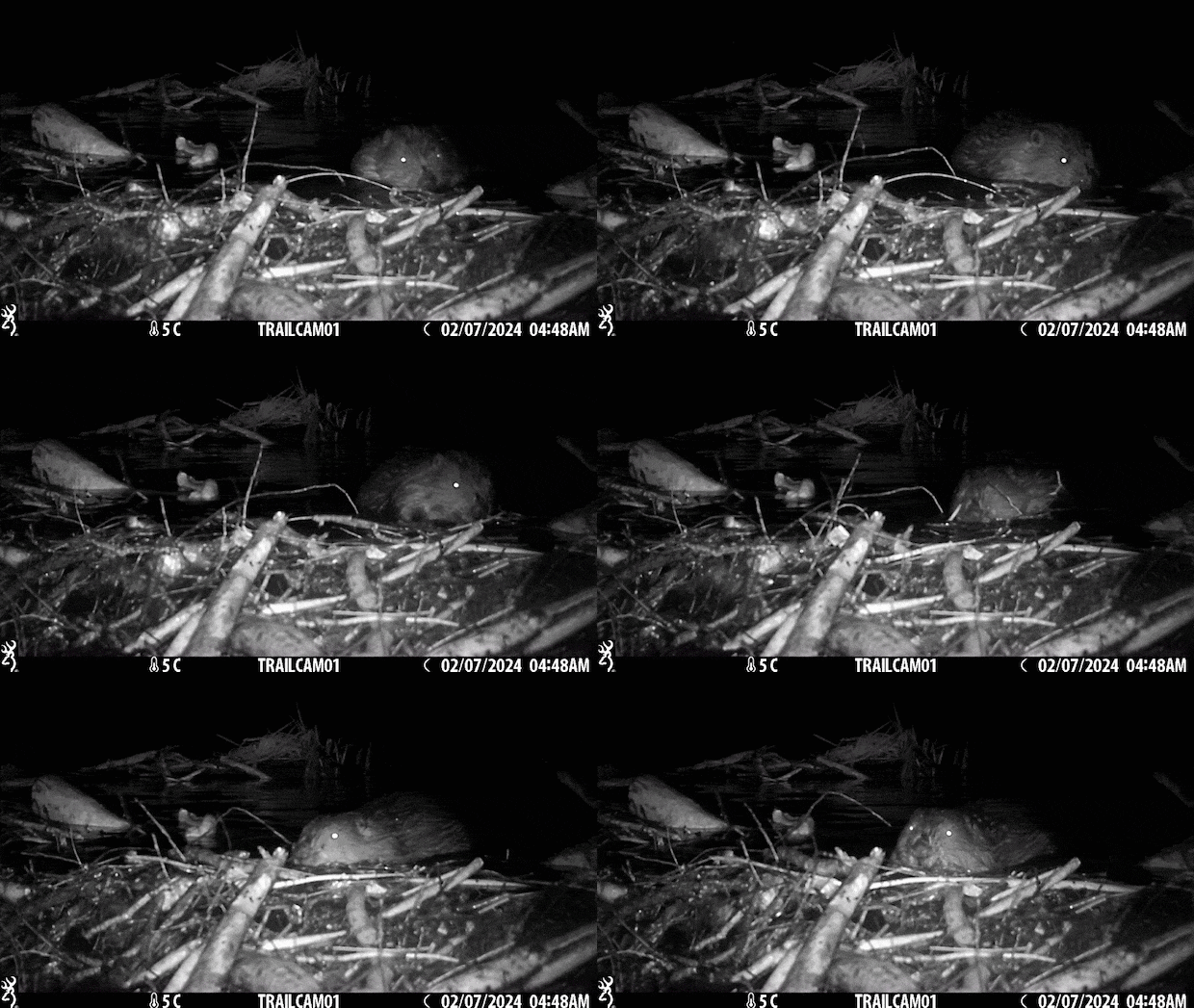
How closely did you follow climate news in 2025? Take our quizThe Big Picture: Delayed by disasterTop secret quiz answers (no peeking until you’ve done the quiz)How closely did you follow climate news in 2025? Take our quiz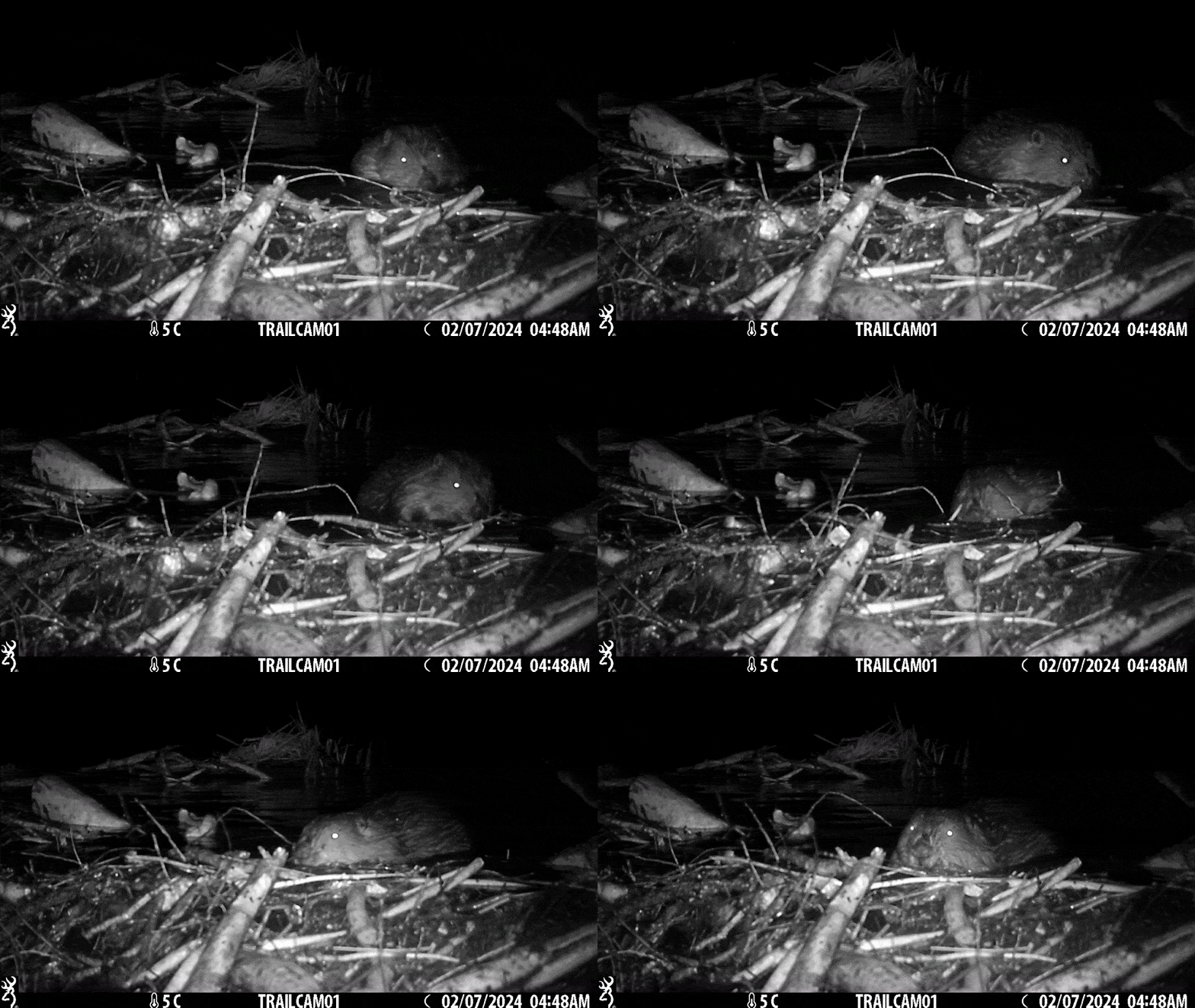 A beaver moves sticks into a dam — but where? Take our quiz to find out. (Ealing Beaver Project)
This year kicked off with the harrowing wildfires that engulfed Los Angeles, a disaster that was spurred on by climate change, scientists said.
Not long after, the world’s reefs, typically a rainbow of colours, went ghostly white, in the “most intense global coral bleaching event ever,” amid record-breaking ocean temperatures.
But there were some bright spots too: Wind, solar and other renewable power sources became the largest source of electricity globally for the first time, outpacing coal. We also saw the High Seas Treaty ratified, a global agreement that will protect biodiversity in international waters and come into effect early next year.
Here’s your chance to test your knowledge of this year’s climate stories. Keep track of your answers — don’t peek! — and check your answers at the bottom of the page.
1. Climate change, driven by the burning of fossil fuels, is lengthening wildfire seasons and making them more intense and widespread. Based on the number of hectares burned, which years hold the record for first-, second- and third-worst wildfire seasons in Canada over the past 25 years?
A. 2021, 2023, 2025
B. 2014, 2023, 2024
C. 2023, 2024, 2025
D. 2020, 2024, 2025
2. Which statement best explains the health risk from wildfire smoke?
A. Fresh smoke is the most dangerous because concentrations are always highest near the fire.
B. Older smoke is always worse because it becomes more toxic as it travels.
C. Smoke can become more toxic as it ages, but high concentrations close to a fire can still be more harmful.
D. One’s distance from a fire determines how dangerous the smoke will be.
3. Despite storing 600 gigatonnes of carbon, there’s not a lot of protection for squishy, water-rich peatlands around the world. How much do researchers estimate are protected?
A. 10 per cent
B. 17 per cent
C. 34 per cent
D. 52 per cent
4. Which ocean holds the most carbon?
A. Atlantic
B. Pacific
C. Indian
D. Southern
5. Which of the following can be induced by fracking for gas?
A. Earthquakes
B. Tornadoes
C. Floods
D. Fires
6. The expansion of the Port of Montreal was one of the major infrastructure projects that Prime Minister Mark Carney announced he was fast-tracking this year. It will include one of the features being added to ports to cut climate emissions from shipping. What is that?
A. Carbon capture and storage
B. A hydrogen filling station
C. A dry dock that can add sails to ships
D. Shore power
7. Scientists say milder winters and hotter, drier summers are allowing disease-carrying ticks to expand their range. A potentially deadly tick-borne disease common in the southern U.S. was confirmed in a Quebec patient this summer. Which disease was it?
A. Rocky Mountain spotted fever
B. Lyme disease
C. Anaplasmosis
D. Babesiosis
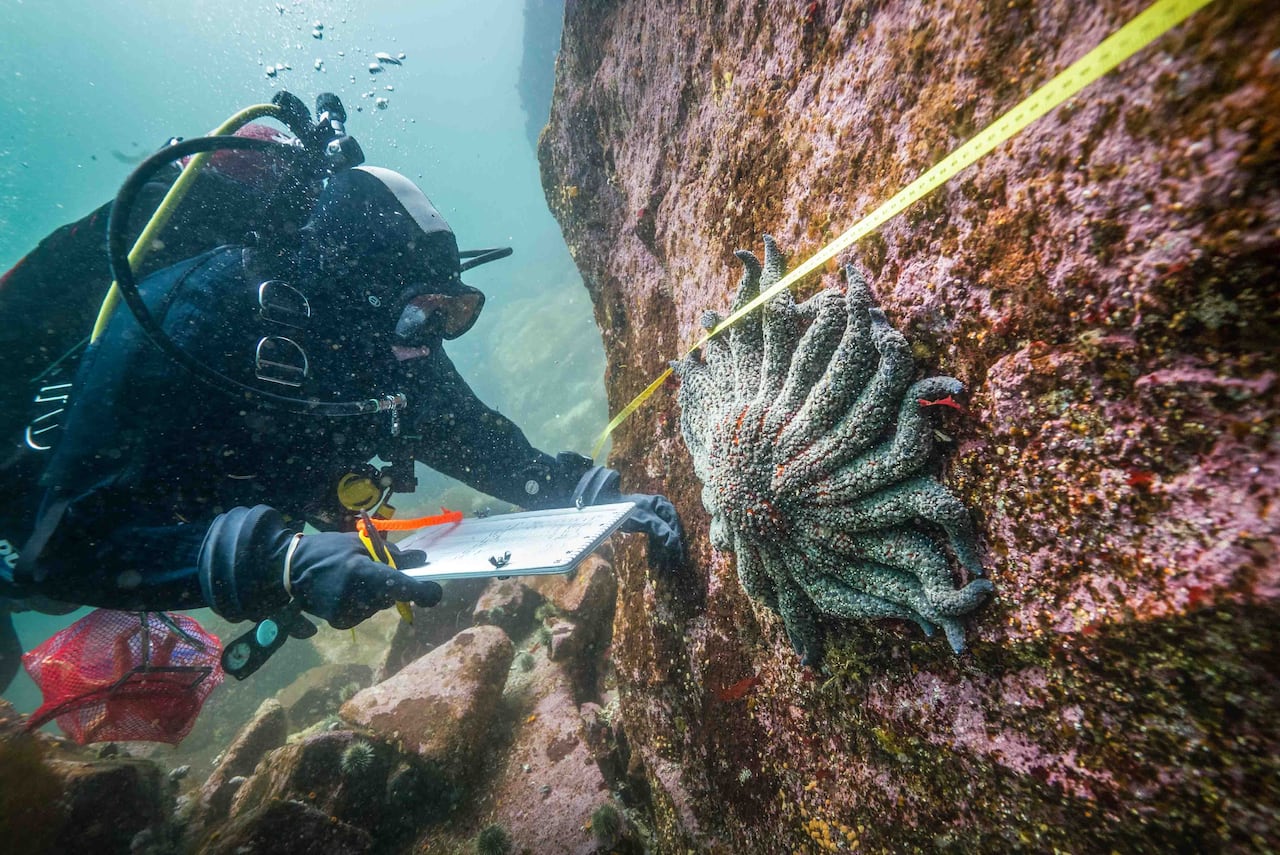 Alyssa Gehman is seen diving in the Burke Channel and making notes on sea stars there. (Bennett Whitnell/Hakai Institute)
8. Earlier this year, scientists reported they now know what’s been melting sea stars for a decade. The bacterium comes from the same family as cholera. What is the name of this gruesome disease?
A. Starmelter Syndrome
B. Leaky Star Fluidosis
C. Sea Star Wasting Disease
D. Starfish Ebola
9. When cities boost their efforts to bring back nature, they sometimes forget about the animals. Wild beavers were hunted to extinction across much of Europe in the 16th century — even earlier in some countries. What European city recently celebrated the arrival of baby beavers for the first time in centuries?
A. Amsterdam
B. London
C. Paris
D. Edinburgh
10. A new international conference was established out of the COP30 negotiations. What part of the climate crisis will it attempt to tackle?
A. Forest fire management
B. Migration
C. Sea level rise
D. The transition away from fossil fuels
Check your work and then check your answers at the bottom of the page.

Old issues of What on Earth? are here. The CBC News climate page is here.
Check out our podcast and radio show. In our newest episode: Ferocious fires, monster storms and epic floods. But there were some climate bright spots in 2025 as well. CBC meteorologists Ryan Snoddon and Johanna Wagstaffe join What on Earth host Laura Lynch to break down how human-caused climate change influenced this year’s weather.
WATCH | What 2025’s weather revealed:
What On Earth drops new podcast episodes every Wednesday and Saturday. You can find them on your favourite podcast app or on demand at CBC Listen. The radio show airs Sundays at 11 a.m., 11:30 a.m. in Newfoundland and Labrador.
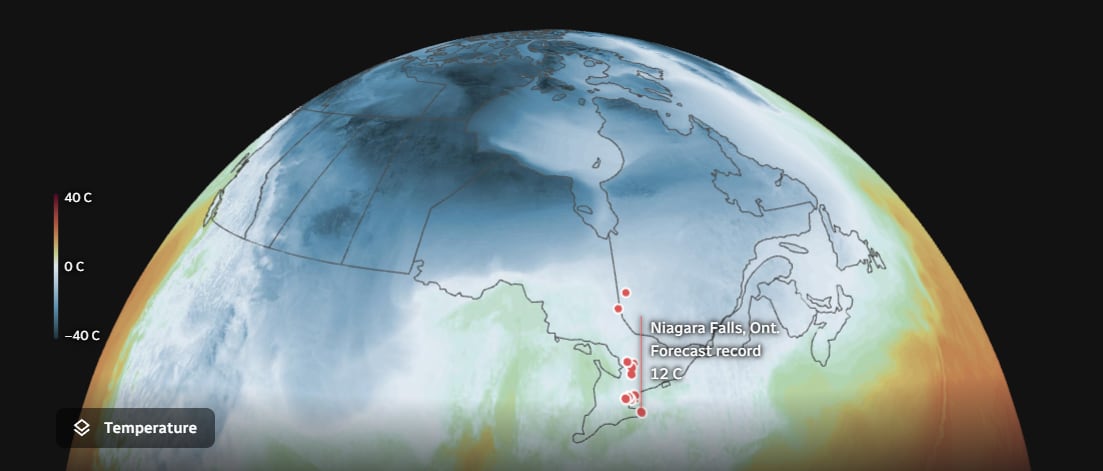
Check the CBC News Climate Dashboard for live updates on temperature, rain and snow records across the country. Set your location for information on air quality and to find out how today’s temperatures compare to historical trends.
 Reader feedback
Last week, we looked at a program that offered homeowners free chargers and paid them for charging, with funds from credits generated by Canada’s Clean Fuel Regulations, and pointed at a Plug N’ Drive’s web page with a list of similar programs across Canada.
Kristin Stroobosscher of ChargeLab in Waterloo, Ont., wrote to flag one more: “ChargeLab launched one over the summer, too!”
Stephen Humphries of Toronto is skeptical that such programs encourage EV adoption, given the small size of the incentive: “These programs will do nothing to drive EV adoption and they contribute nothing to building a public charging network, either. Offsets are being generated for home charging that would be happening anyway. This damages the effectiveness — and the credibility — of the credit market… Clearly the regulations should be tightened to limit credit eligibility to installations of multi-residential or public chargers, and not to enable offering perks to deal hunters.”
Mike Goostrey of Guelph, Ont., had a question about Christmas shopping: What’s greener, shopping in store or online? “My general inclination is to rebel against convenience for convenience sake — I feel it makes us lazy — but I got to thinking that ordering online for home delivery is more environmentally sustainable than hundreds of us going out shopping in multiple stores to get what we’re looking for. In addition, it supports employment in logistics and transportation, and may reduce gridlock. I’d be interested to see if you’ve done a story on this; if not, maybe you could?”
Actually, we’ve done a few stories about this. Yes, online shopping can be greener, but it depends partly on where and how you shop online. Some things you can do to reduce your online shopping footprint are to buy from local stores, choose slower shipping and avoid returns.
Write us at whatonearth@cbc.ca (and send photos there too!)
The Big Picture: Delayed by disaster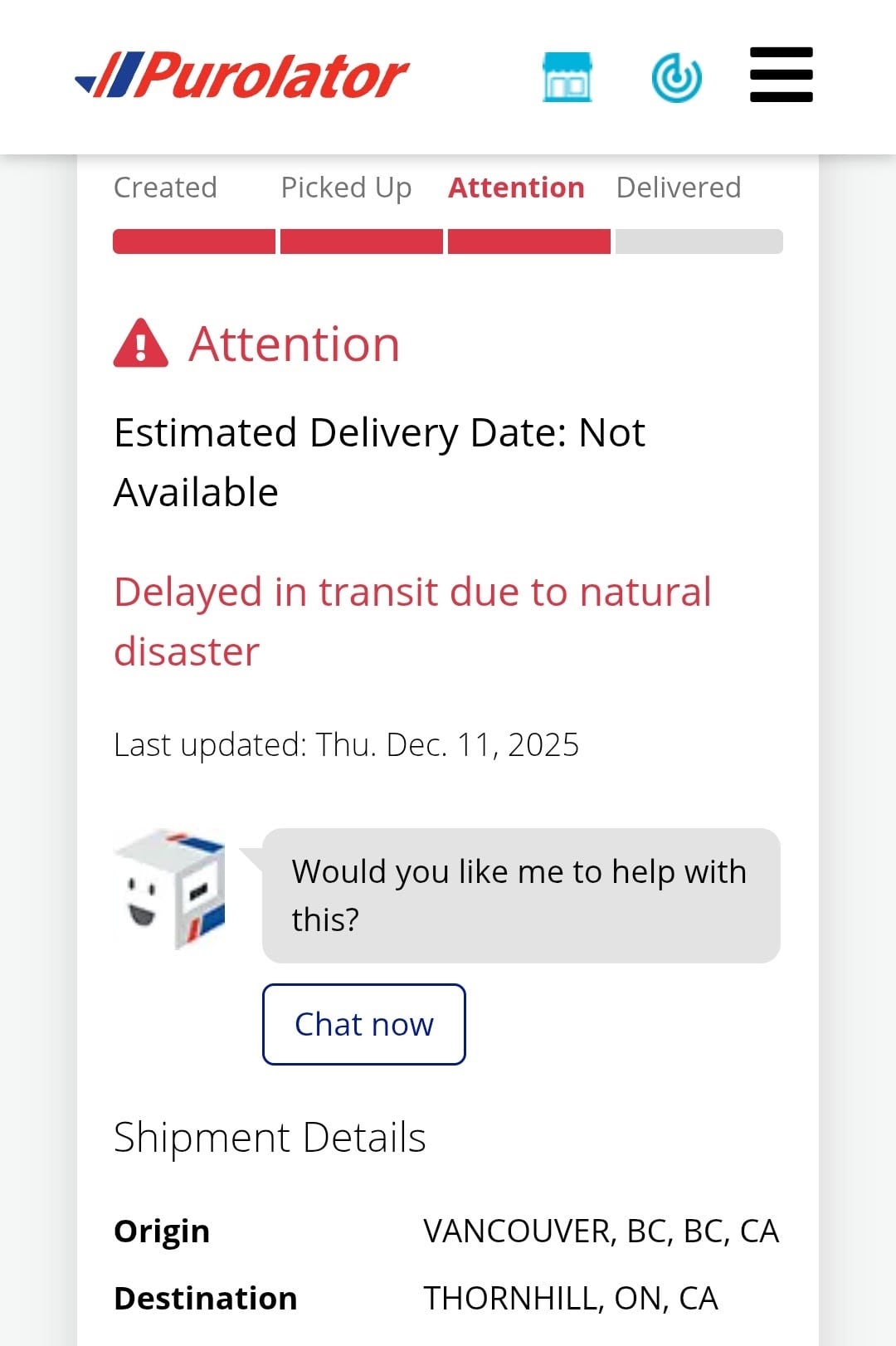 (Screenshot)
This was a kind of shipping update I had never received before, for a Christmas gift I ordered for my niece. Last week, flooding in B.C.’s Fraser Valley led to the closure of major highways, evacuation alerts and orders and a state of emergency. The atmospheric rivers that have caused severe flooding in the region twice in four years are supercharged by a warmer climate — like other kinds of extreme weather that can slow your online shopping packages. Purolator confirmed in an email: “In recent weeks, weather-related events have caused some disruptions in our network, including flooding in Port Kells and the Fraser Valley region in British Columbia, which impacted operations in the area. Over the past few years, we’ve faced regular challenges such as floods, fires and hurricanes that require significant business continuity planning.” It says the measures it has put in place mean “the overall impact has been minimal.” But these days, it doesn’t hurt to take climate change into account when figuring out how early to order your gifts.
— Emily Chung
Hot and bothered: Provocative ideas from around the webTop-secret quiz answers. How’d you do?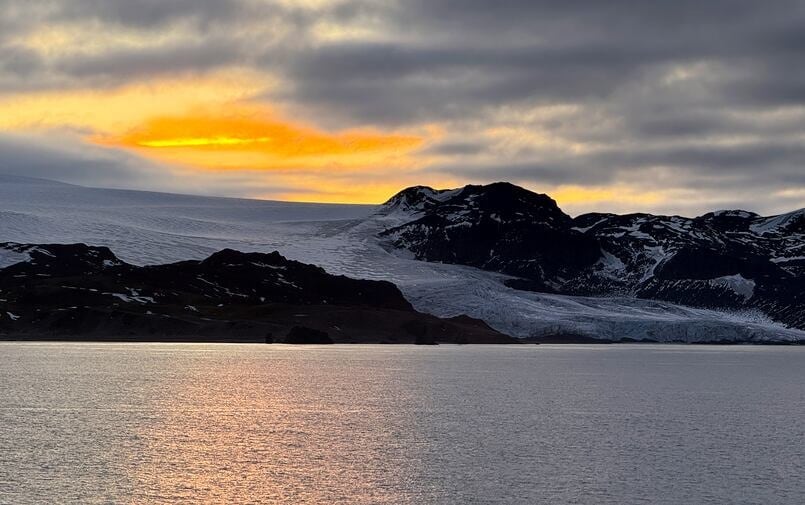 The sun sets over Antarctica and the Southern Ocean (Jill English/CBC)
1. Answer: C. The top three years are 2023, 2024 and 2025. In first place is 2023, when 17.3 million hectares burned across the country. This year, wildfires burned 7.3 million hectares, prompting several provinces to issue fire bans and Nova Scotia to prohibit hiking, camping and other activities in the woods.
2. Answer: C Chemical reactions in the air create unstable compounds called free radicals, increasing toxicity the longer the smoke remains in the air. Scientists are working to incorporate this factor into wildfire smoke models for the public in the near future.
3. Answer: B. Researchers estimate only 17 per cent of peatlands are protected. Canada’s Hudson Bay Lowlands are partially protected, and have been described as a globally important carbon store the size of Germany.
4. Answer: D. Because of its cold temperatures, the Southern Ocean has the ability to sink carbon to significant depths — and keep it out of the atmosphere — for hundreds of years. CBC followed scientists as they retrieved water samples from the Antarctic region to better understand the chemistry at different depths.
5. Answer: A. Fracking is leading to earthquakes, prompting concerns around homes and public infrastructure in regions being fracked for gas. Homeowners in Farmington, B.C., told CBC News their properties have been denied earthquake insurance since fracking activity has ramped up in the gas-rich region, at the mouth of the new Coastal GasLink pipeline.
6. Answer: D. Shore power — the ability to plug ships into the local electricity grid so they don’t have to burn fuel for power while in port. Here’s how it works and how Canada compares to the world when it comes to implementing this technology.
7. Answer: A. The northward spread of Rocky Mountain spotted fever is likely linked to milder winters and hotter, drier summers duelinked to climate change, which allow ticks to expand their range. You can read more about the disease, its symptoms, how it’s transmitted, where it’s found and how to protect yourself.
8. Answer: C. Sea Star Wasting Disease. The starkiller is a bacteria called Vibrio pectenicida and researchers at Canada’s Hakai Institute say figuring it out will help conservation efforts.
9. Answer: B. London. Rewilding specialists brought a family of beavers from Scotland to an urban park called Paradise Fields in October 2023. Two kits were born in 2024. The beavers quickly got to work, digging channels and damming brooks, adding local resilience against flooding and drought, as well as boosting the diversity of aquatic insects and attracting new species of birds, bats and butterflies.
10. Answer: D. After countries failed to agree to a roadmap for the energy transition at COP30 in November, Colombia and the Netherlands announced they would co-host the first International Conference on the Just Transition Away from Fossil Fuels in April 2026.
In the meantime, we’ll be taking a break until early in 2026. Keep an eye out for us then!
Thanks for reading. If you have questions, criticisms or story tips, please send them to whatonearth@cbc.ca.
What on Earth? comes straight to your inbox every Thursday.
Editors: Emily Chung and Hannah Hoag | Logo design: Sködt McNalty