
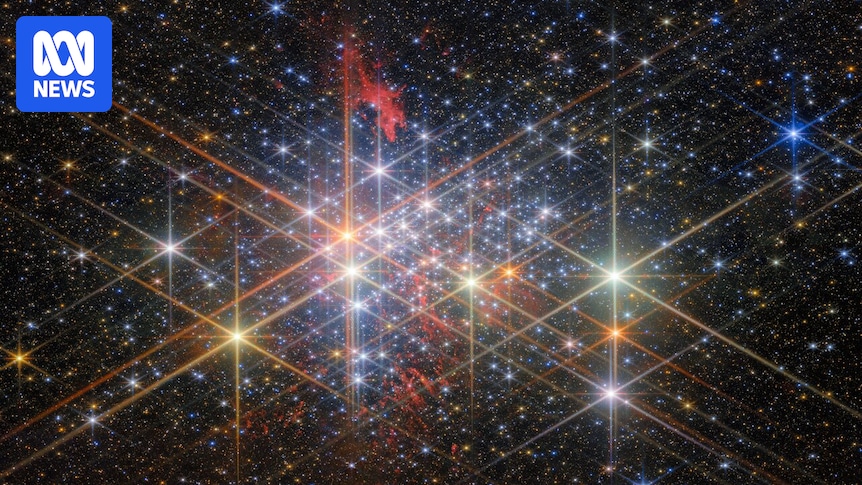
The best kind of Christmas present is one that keeps on giving.
Launched four years ago today, the James Webb Space Telescope (JWST) has done exactly that, according to NASA planetary scientist Stefanie Milam.
On Christmas Day 2021, Milam was at home keeping an ear on mission control at the Goddard Space Flight Center in Maryland, and an eye on her TV screen as the $US10 billion ($15 billion) spacecraft prepared to take off from French Guiana, thousands of kilometres away.
“You could just feel the pressure building and building and building,” she says.
There was a lot at stake. Plans for the most powerful telescope ever built had been in the works for 30 years.
The collaboration between NASA, the European Space Agency and the Canadian Space Agency promised to show the cosmos as it had never been seen before.
However, the telescope’s launch date had slipped over the years and its build was complicated by the COVID-19 pandemic.
But early Christmas morning (late evening Australian time), the telescope launched in a blaze of fire.
Loading…
“Once the launch happened, everything kind of got quiet. At least all the chatter stopped because everyone was just waiting and just waiting and just waiting,” Milam recalls.
When the telescope came back into communication, everything looked perfect.
Then its cameras showed it separating from the rocket and tumbling into space as planned.
“It was just this sigh, everybody was just like, ‘Oh,’ but then tears welled up in your eyes and the emotion started,” Milam says.
“You didn’t know if you were crying, you didn’t know if you’re laughing.”
The telescope’s solar panels unfurled soon after.
“That was my first sense of real relief that things were going to go OK.”
But that was just the beginning of a sequence dubbed the “30 days of terror” in which the telescope would unfold its sun shield and fly out into space to its destination.
Then came the task of focusing its massive golden mirror — made up of 18 hexagonal panels — and a smaller mirror that sits in front and directs light into the main mirror.
Christmas in July
In March 2022, the team released a crisp test image of a star 2,000 light-years away against a surprisingly detailed background of ancient galaxies billions of light-years away, providing the first taste of what the JWST could do.
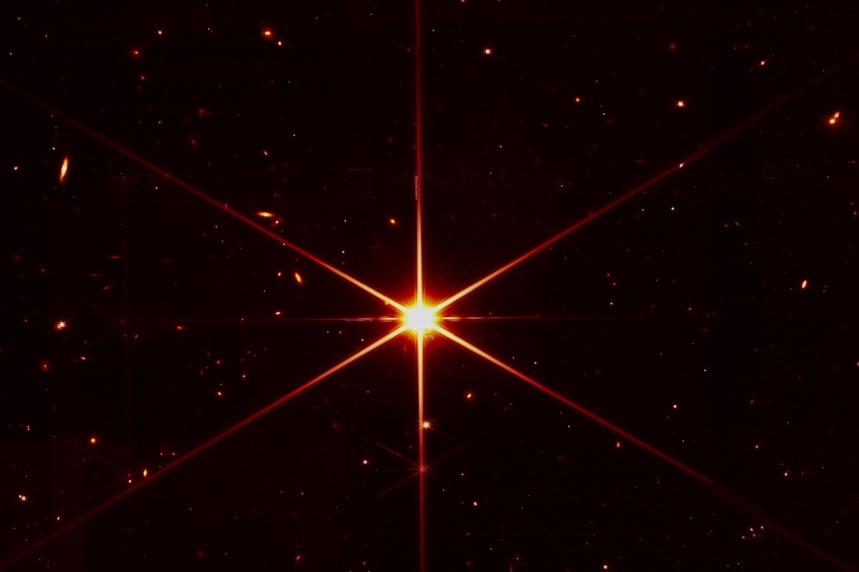
“It was: ‘Oh my gosh, it’s so beautiful’, but also, ‘Oh my gosh, this is so much better than we thought,'” Milam says.
“It was just photobombed with galaxies all over this one star image.”
On July 12, 2022, nearly six months after the telescope was launched, then-US president Joe Biden released its first image — a dark sky dotted with galaxies from close to the dawn of time.
As Australian astronomer Robin Cook from the University of Western Australia said the time, it was the “closest thing astronomers got to Christmas in July”.
Loading…
The next day, the JWST team released a series of breathtaking images.
Milam is the JWST’s project manager for policy and science community, and part of the team that selects the images the public sees.
The first image she saw was the giant bubble of gas surrounding a small star known as a planetary nebula.
“It’s just so beautiful and it’s so much better than anything else I’ve ever seen [as a planetary scientist].
“Then I saw the Carina Nebula and I just broke down.
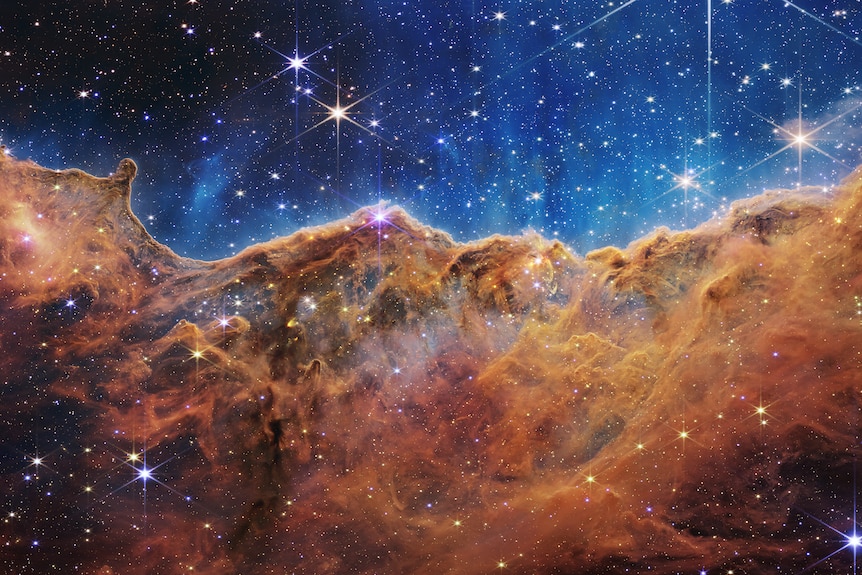
“It was like seeing something of sheer beauty and knowing just how much we’d worked over the past six months.
“It was exciting to see everyone in the world motivated about astronomy all over again.”
Seeing the cosmos in a new light
The JWST uses two cameras to take images in the near- and mid-infrared ranges, beyond what the human eye can see.
This data is transmitted to Earth and processed to create colour images.
It’s also put into a publicly accessible database that anyone can search, analyse and create images from.
One of Milam’s favourites —a stunning image capturing Jupiter’s auroras — was processed by a data scientist as a hobby.
“She did such a fantastic job that the scientist that led that observation reached out and collaborated with her to make that first public image.”
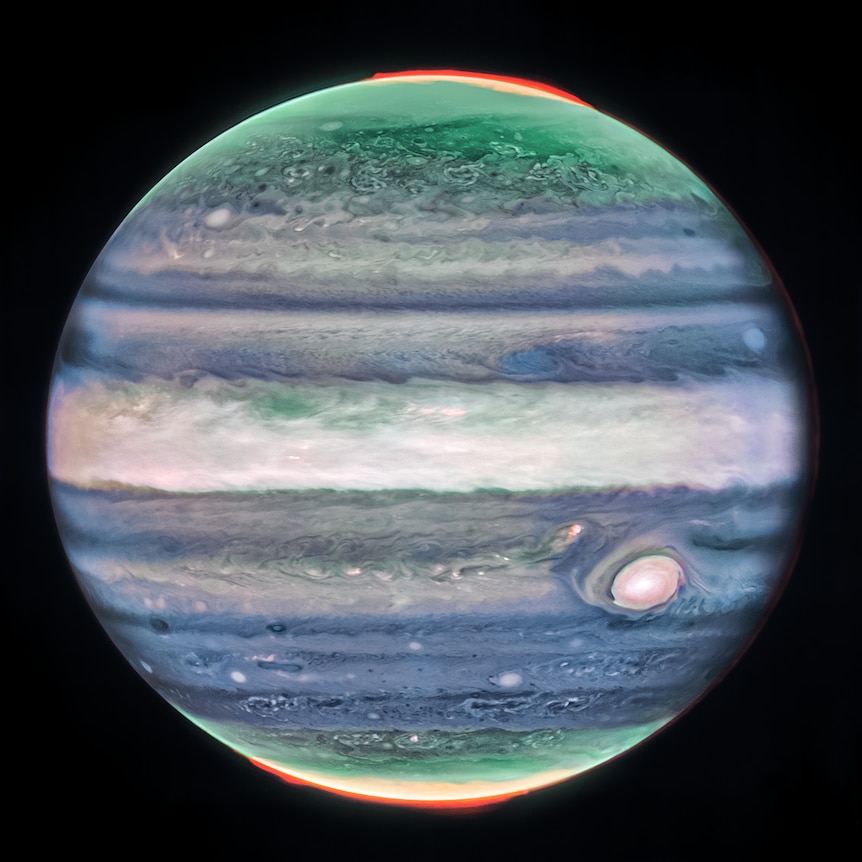
Photo albums on the JWST website are filled with otherworldly images of gas clouds, stars, galaxies and planets.
And each year the team marks the science anniversary in July with a special image, usually with an animal theme, including another of Milam’s favourites: The Penguin and The Egg.
“It looks like a penguin sitting next to an egg, but it is two merging galaxies called ARP 142.”
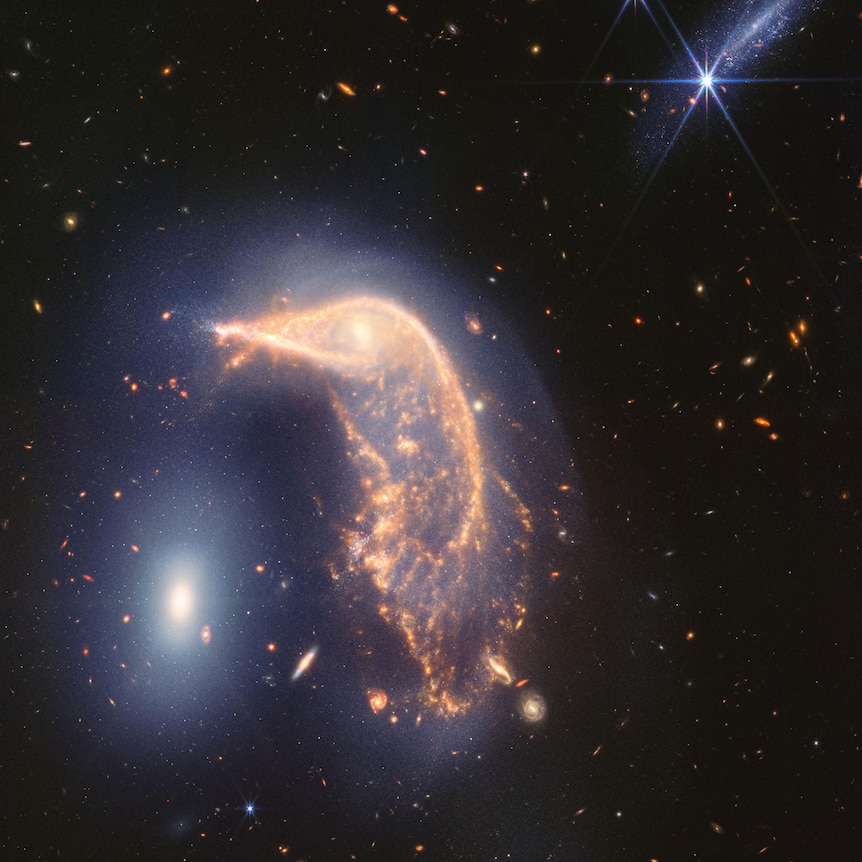
The Penguin and the Egg was released to celebrate JWST’s second science anniversary. (Supplied: NASA, ESA, CSA, STScI 2024)
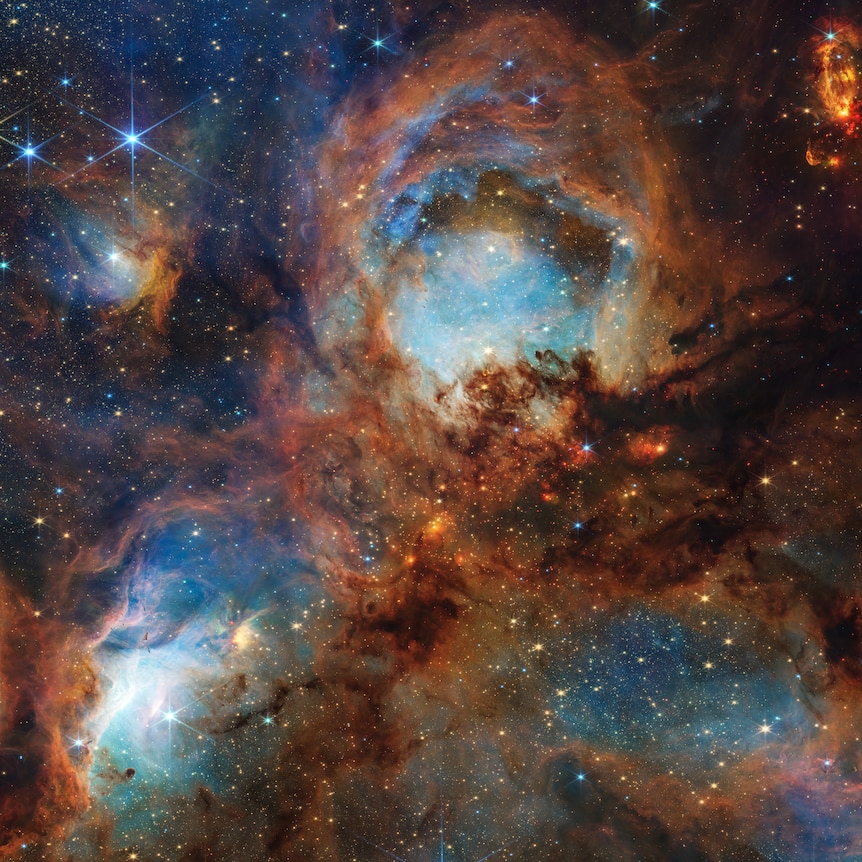
The Cat’s Paw Nebula image was released to celebrate JWST’s third science anniversary. (Supplied: NASA, ESA, CSA, STScI 2025)
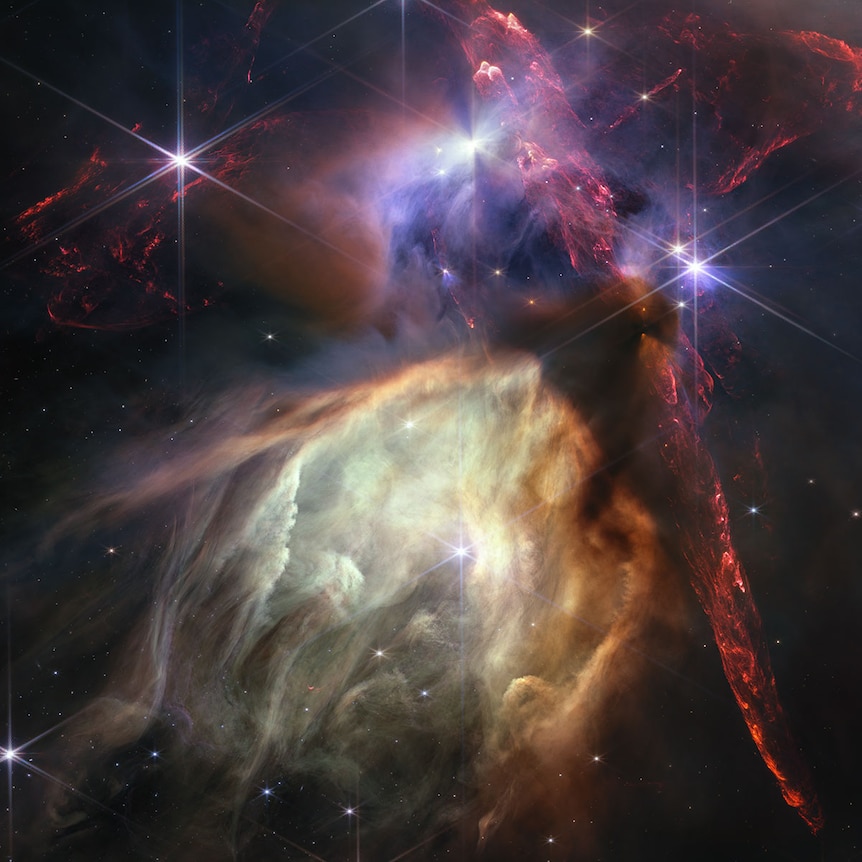
The Rho Ophiuchi image was released to celebrate JWST’s first science anniversary. (Supplied: NASA, ESA, CSA, STScI, Klaus Pontoppidan (STScI); Image Processing: Alyssa Pagan (STScI 2023)
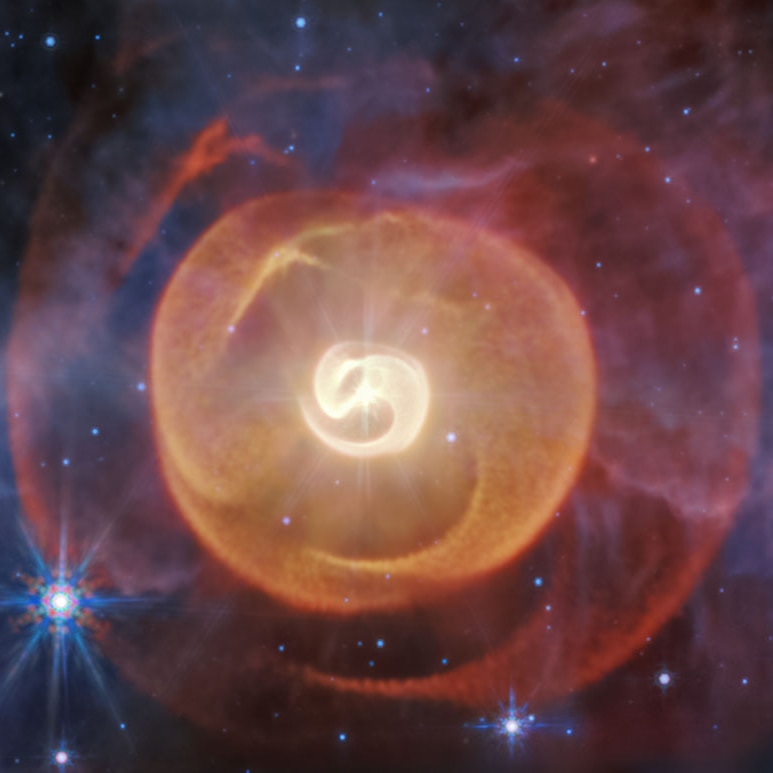
Bubbles of gas around the Apep star system. (Supplied: NASA, ESA, CSA, STScI, Yinuo Han (Caltech), Ryan White (Macquarie University) Image Processing: Alyssa Pagan (STScI 2025)
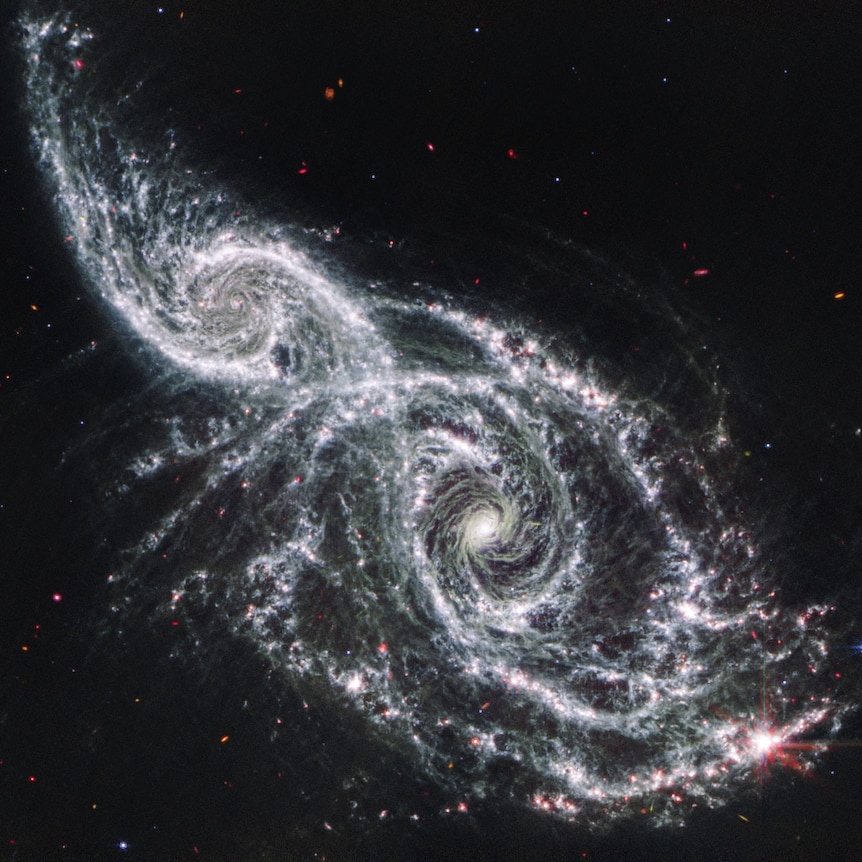
Colliding galaxies IC 2163 and NGC 2207. (Supplied: NASA, ESA, CSA, STScI 2024 )
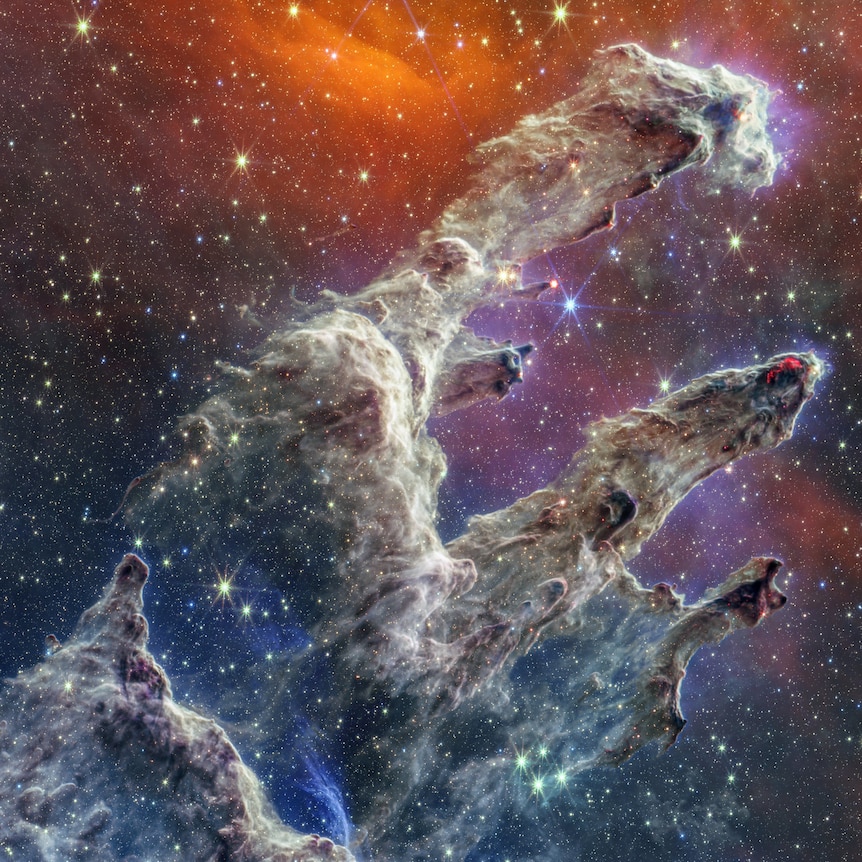
The Pillars of Creation. (Supplied: NASA, ESA, CSA, STScI Joseph DePasquale (STScI), Alyssa Pagan (STScI), Anton M. Koekemoer (STScI) 2022)
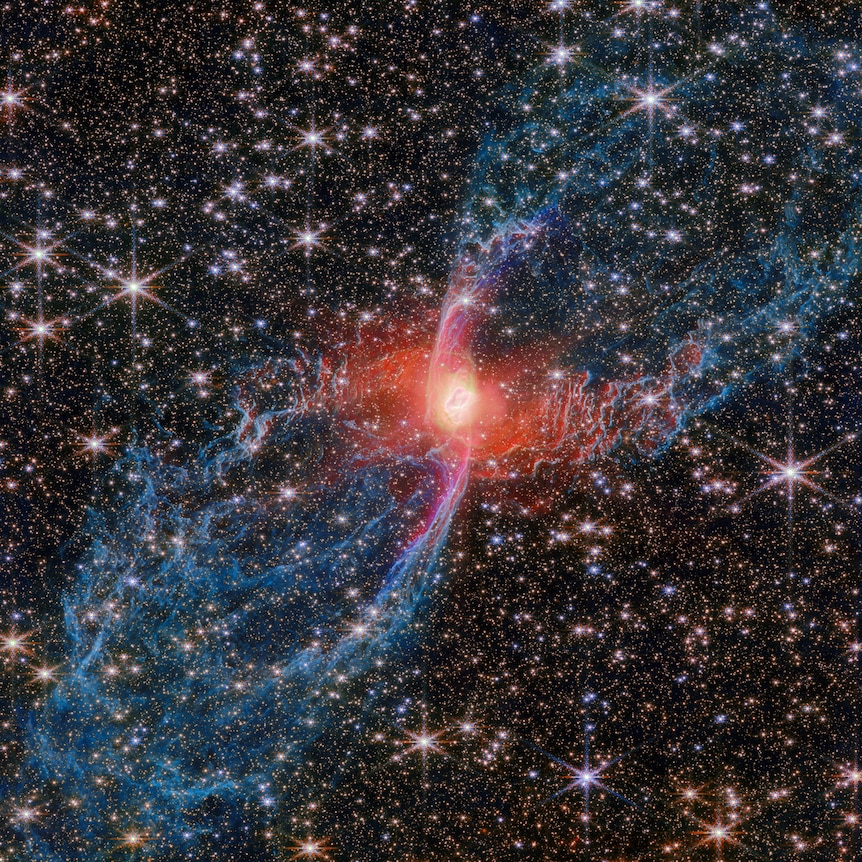
The Red Spider Nebula. (Supplied: ESA/Webb, NASA & CSA, J. H. Kastner (Rochester Institute of Technology) 2025)
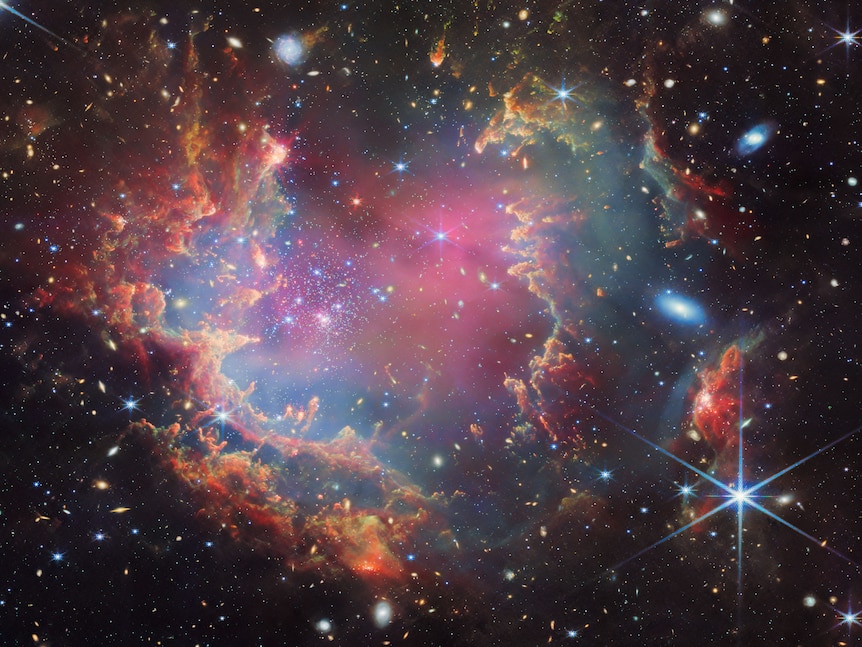
The JWST team celebrated Christmas last year with this image of a cosmic wreath aka star cluster NGC 602. The image uses data from JWST and the Chandra Space Telescope. (Supplied: X-ray: NASA/CXC; Infrared: ESA/Webb, NASA & CSA, P. Zeilder, E.Sabbi, A. Nota, M. Zamani; Image Processing: NASA/CXC/SAO/L. Frattare and K. Arcand 2024)
Science behind the beauty
Behind the beautiful images, the JWST has been kicking science goals, performing much better than anyone anticipated, despite the occasional ding to its golden mirror caused by micro-meteorites and ice.
The telescope has given planetary scientists, like Milam, unprecedented views of auroras on Jupiter, Saturn and Neptune.
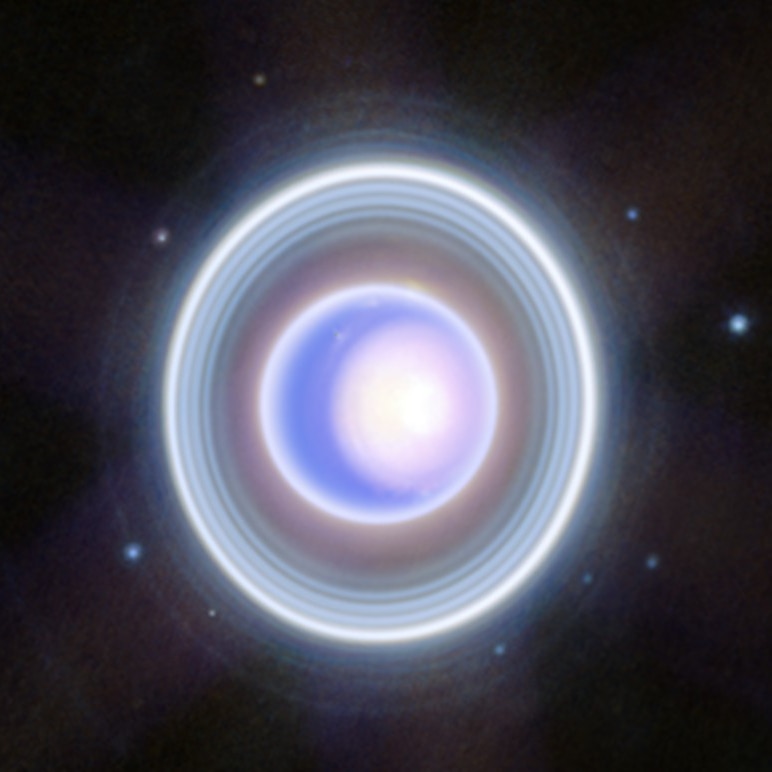
It’s also enabled them to study rings around our outer planets, including Uranus, and interplanetary visitors like comet 31/ATLAS, which is currently zooming through our Solar System.
The telescope is also providing a new view of the atmospheres of planets outside our Solar System.
“There are huge planets that are called super puffs. They have huge atmospheres, but they’re so close to the star, there’s no reason they should have an atmosphere. It should have been annihilated,” Milam says.
Unexpected discoveries and red dots
The JWST has given us a new view of alien worlds, and will continue to dazzle us with mind-blowing images of the cosmos during its mission lifetime.
But it’s what the JWST is revealing about the dawn of time that has cosmologists like Karl Glazebrook of Swinburne University really excited.
When it was launched, it was hoped the telescope might be able to find galaxies that formed in the first 100 million years after the Big Bang.
So far, it has detected galaxies that formed between 200 million and 260 million years after the Big Bang (even earlier if you count unverified reports).
But what’s even more intriguing is that many of these galaxies aren’t what scientists expected, according to Glazebrook, who is part of an international group studying JWST data.
Some are much more luminous than predicted, while others are massive galaxies that have completely evolved and then switched off.
There are also mysterious red dots hidden among the galaxies.
“They’re not galaxies, they just look red,” Glazebrook says.
“We now think these are a weird class of black holes.”
See if you can spot three red dots in the image on the left by pushing the slider across before peeking.
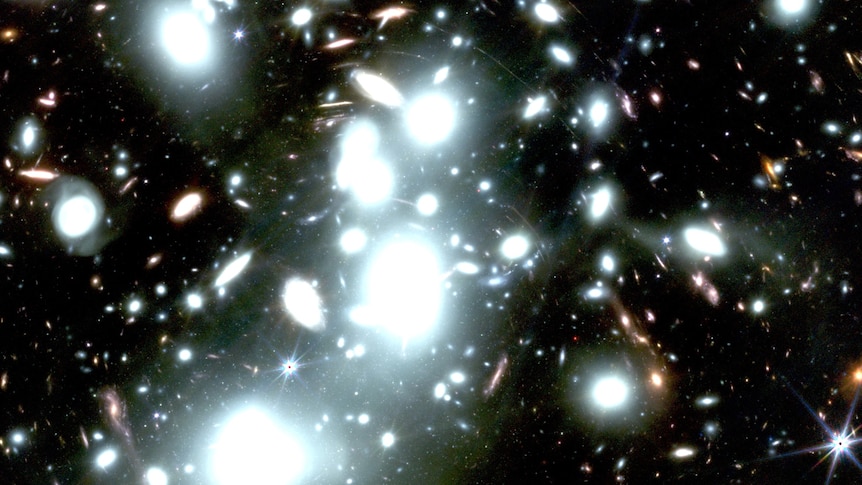
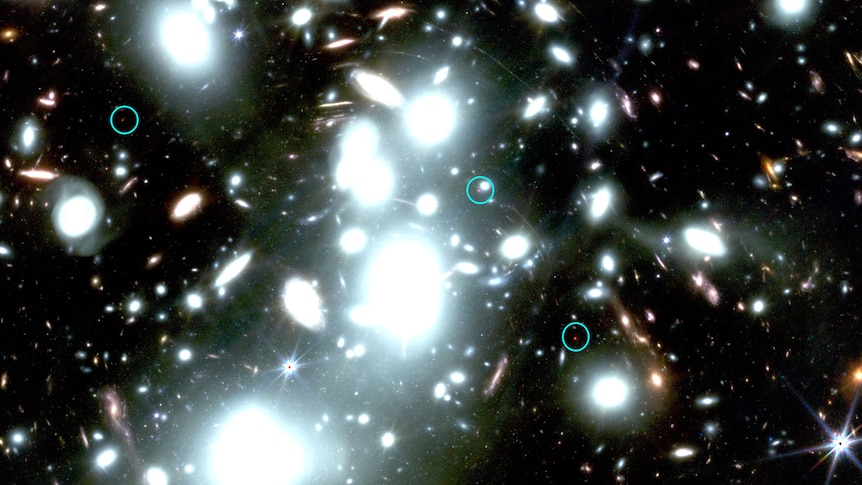
The red dots above are actually the same red dot that is repeated in the image by light bending around galaxies.
Glazebrook says these findings suggest the Universe was “going gangbusters” much earlier than we thought.
It might even point to some new science about black holes or dark matter.
Milam says solving the mystery of the red dots and exploring atmospheres on alien planets looking for an Earth 2.0 were questions likely to be investigated in the next five years.
The telescope itself will continue operating for at least 20 years.
“That’s a long time for a scientist, but it’s fantastic to think of the next generation coming in and owning that science and new research with a telescope that you once got to play a role in,” Milam says.