
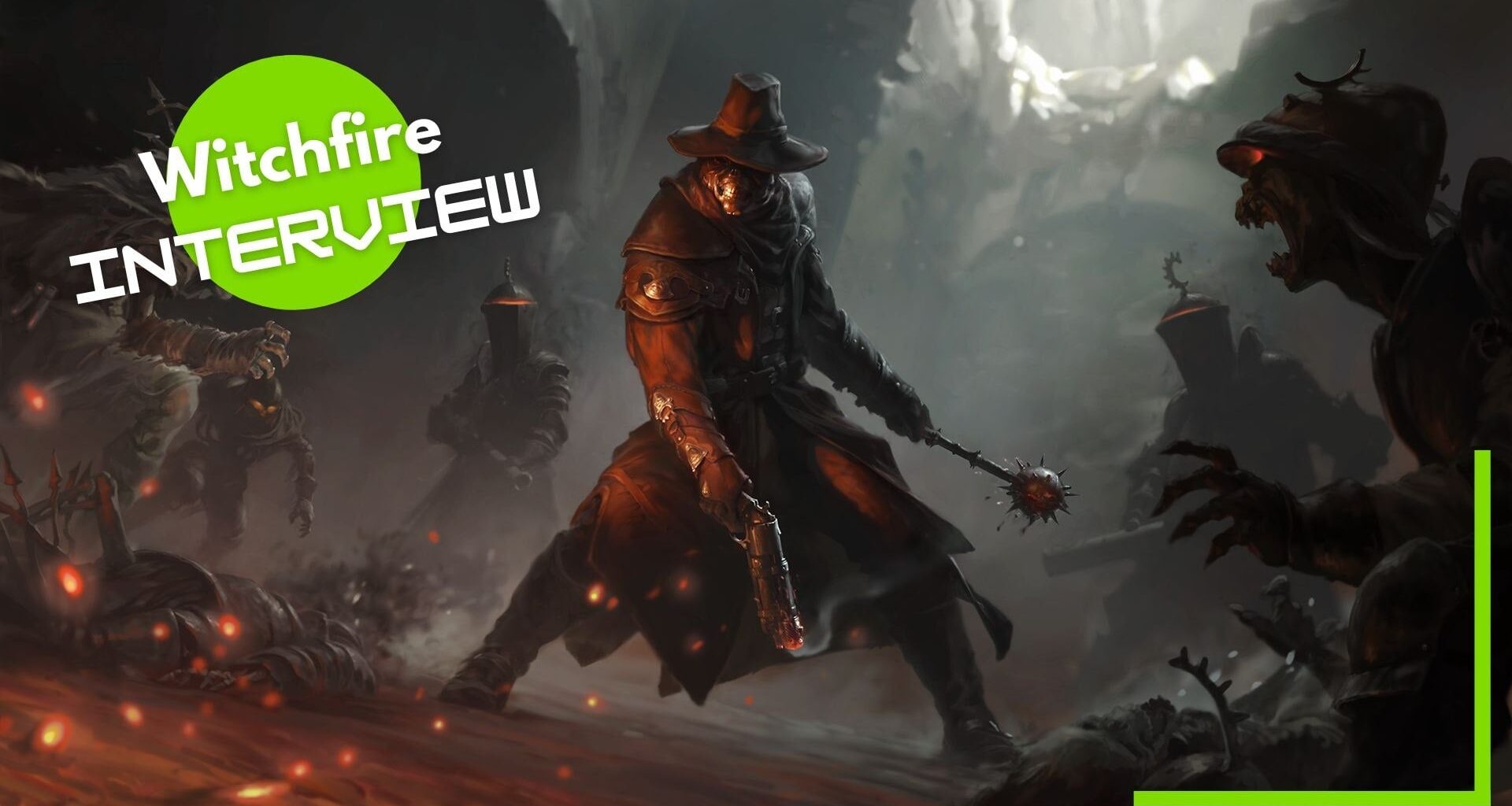
Last week, Larian Studios CEO Swen Vincke faced some fan backlash for speaking about his studio’s use of AI in the making of Divinity. It’s clear that everyone has an opinion on AI use—including The Astronauts CEO Adrian Chmielarz.
You might know his studio from The Vanishing of Ethan Carter, and his pedigree also includes Bulletstorm and Painkiller (no, not the recent one) from his AAA days. His studio’s upcoming game, Witchfire, feels a bit more Bulletstorm than it does Ethan. You can check it out for yourself right now on PC while it’s in early access. Its latest update, The Reckoning, adds melee weapons you can smash the superpowered undead with.
To be clear up front, The Astronauts has a no-AI policy, meaning none of Witchfire’s final assets, audio, text, or anything will be AI generated. However, Chmielarz himself has a more nuanced take on AI—and he said Larian just “got a bit unlucky.”
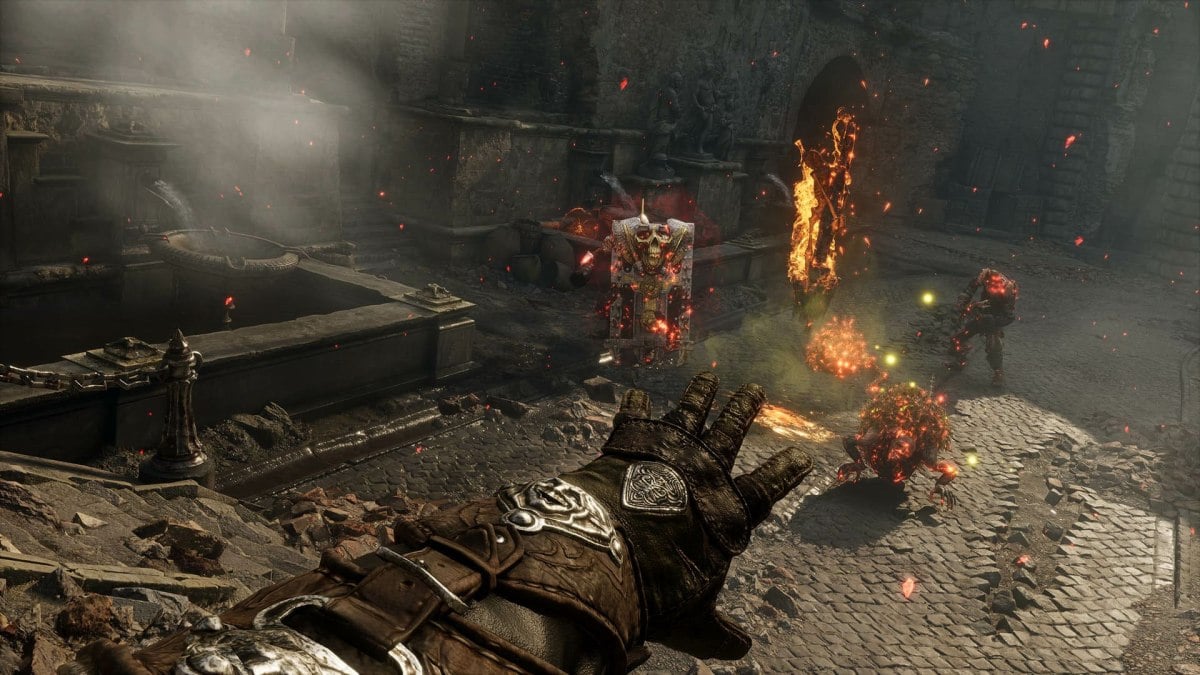
Witchfire is a first-person dark fantasy shooter with roguelike and extraction shooter elements.
The Astronauts’ CEO on Larian Using AI
To add a bit more context, Vincke spoke with Bloomberg’s Jason Schreier about Divinity, which was revealed at The Game Awards, and how his artists use generative AI to explore ideas but not to create final concept art. So far, AI hasn’t made processes more efficient.
Vincke further clarified on X (formerly Twitter) about his stance. “We’re not ‘pushing hard’ for or replacing concept artists with AI,” he wrote. “I answered that we use it to explore things. I didn’t say we use it to develop concept art. The artists do that.”
Vincke followed up, asserting that not exploring new technologies would be “irresponsible.” If it yields bad results or misaligns with their values, they “will make changes.”
Chmielarz doesn’t condemn this exploratory use of AI, but he recognizes that some would dislike it, especially how AI could be “spoiling” the project from the start. Even if the final product is human made, it’s starting from a sort of “rotten seed.”
Of course, this doesn’t account for other major arguments against AI, including its environmental impact and plagiarism accusations, among other things.
“[Larian] got a little bit unlucky. I think that Larian is definitely not evil,” Chmielarz said. “I’m seeing from what they wrote [on Dec 18] that they’re… doing deep soul searching of what exactly is that going to mean for Larian going forward, and so we’ll see what happens.”
In an email follow-up, I asked if humans fully made a game but had some inspiration from AI-generated art, could it be considered free of AI. His answer was yes, particularly because the hypothetical humans are behind the creativity and generation, not AI.
“Today, I don’t think it’s a real problem anyway, as game concept art generated by AI is much worse than people think,” he added. “But assuming that one day it becomes excellent, then it’s up to a studio to decide how much AI they want to invite into their development process. With Witchfire, that door is firmly closed. We started the game before AI was even a thing, and we’ll finish it without a single element being created by AI.”
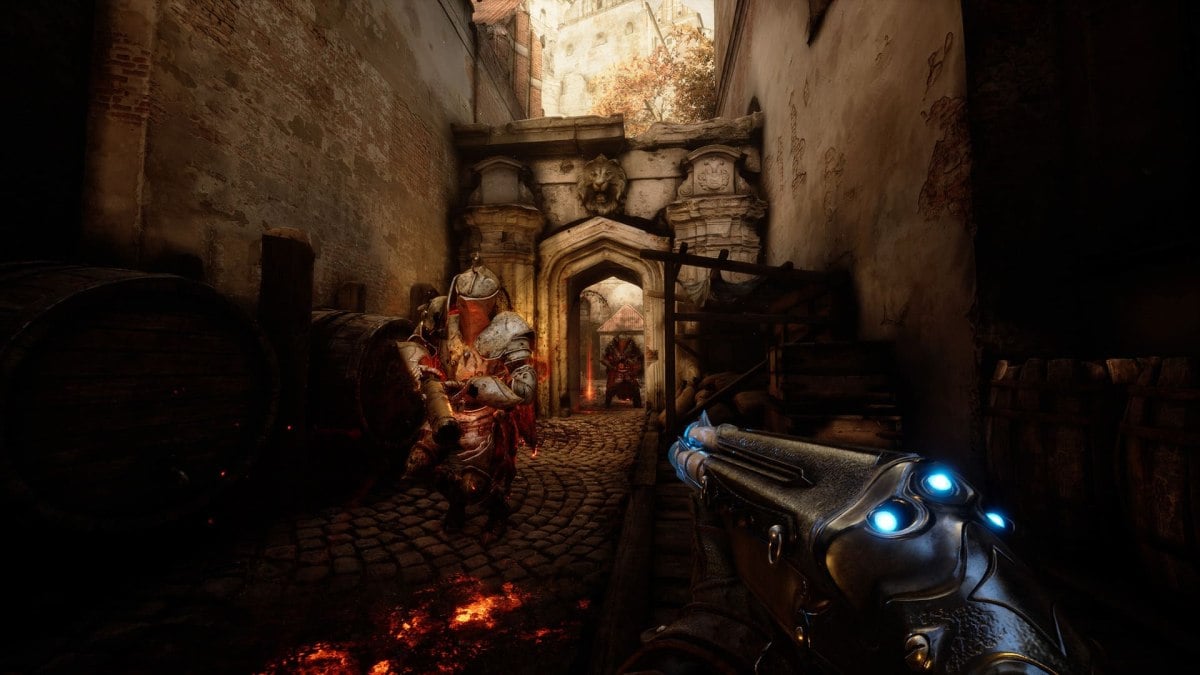
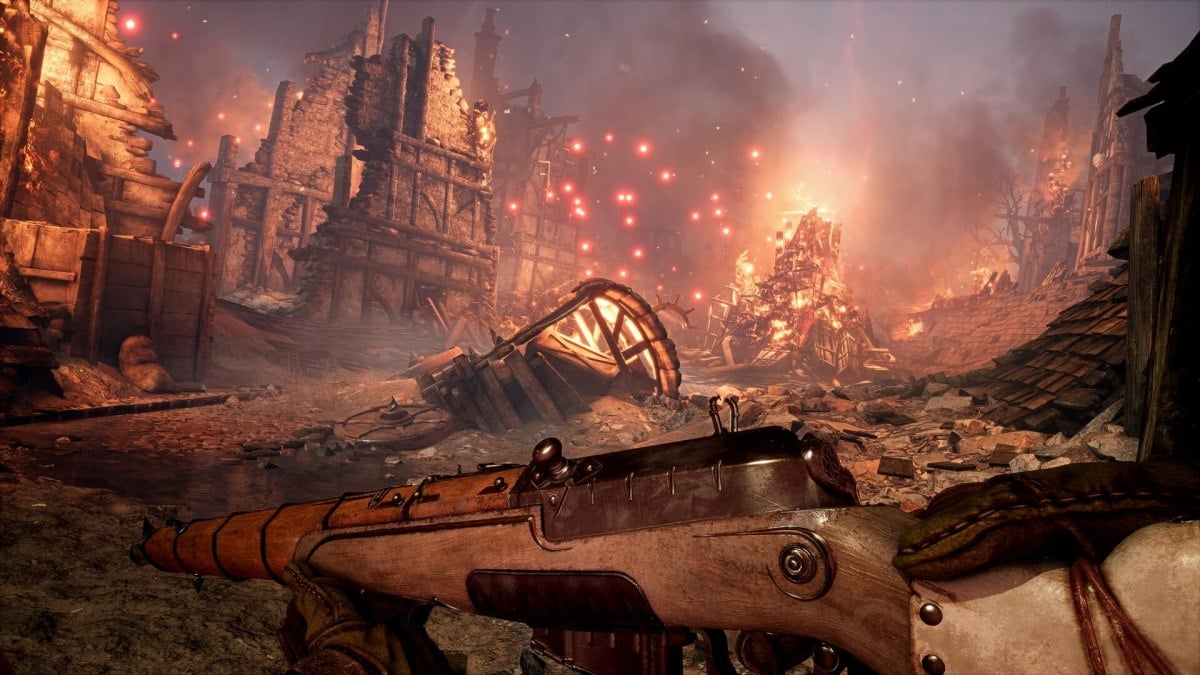
Guns and spells are the key to beating back the enemy hordes in Witchfire.
How the Astronauts Are NOT Using AI in Witchfire
Chmielarz has spent most of the past decade working on Witchfire, a first-person shooter that mashes together elements from soulslikes, roguelikes, extraction shooters, and heist games.
When it was first revealed in 2017, AI was but a twinkle in some Silicon Valley tech bros’ eyes. When it released in early access in 2023, ChatGPT debuted the year before. Now in 2025, AI is pushed to the top of every Google search.
“We said to ourselves, let’s be very simple about this, and we’re just disallowing AI in Witchfire.” —Adrian Chmielarz, CEO of The Astronauts
For Witchfire, the goal is for every final asset to be created by humans. Chmielarz has purposefully denied art made by AI—even if it’s just a small touch—and made multiple artists take longer to create something by hand. This costs the studio more time (and money), all for the sake of ensuring that human touch.
“I’m really emotional about video games, like I’m really invested. This is my life,” he said. “And so I want Witchfire to be this sort of song that one human being sings to another person. I want to keep that connection.”
He likened it to how he’ll go out of his way for a handmade wine glass over a mass-produced one. Even if it has imperfections and nicks, it holds a story, connecting him to the creator’s passion. He values this artisanal philosophy more than he fears potential backlash for publishing a game with AI assets (“which, by the way, would be a disaster,” he added).
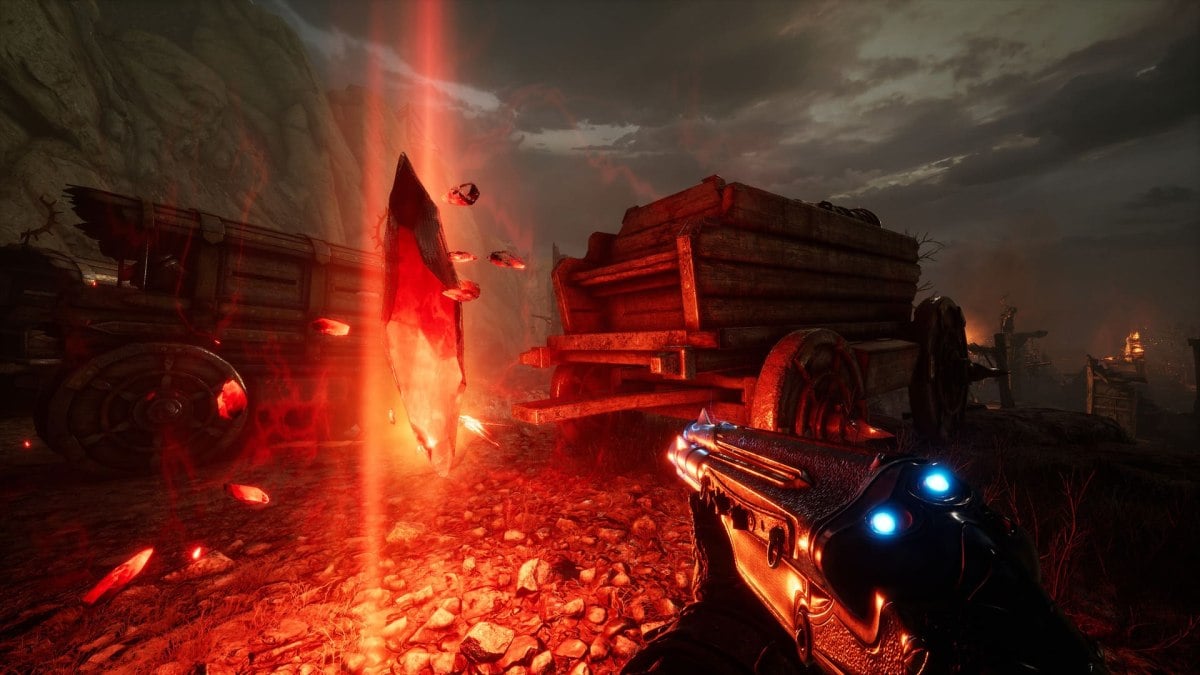
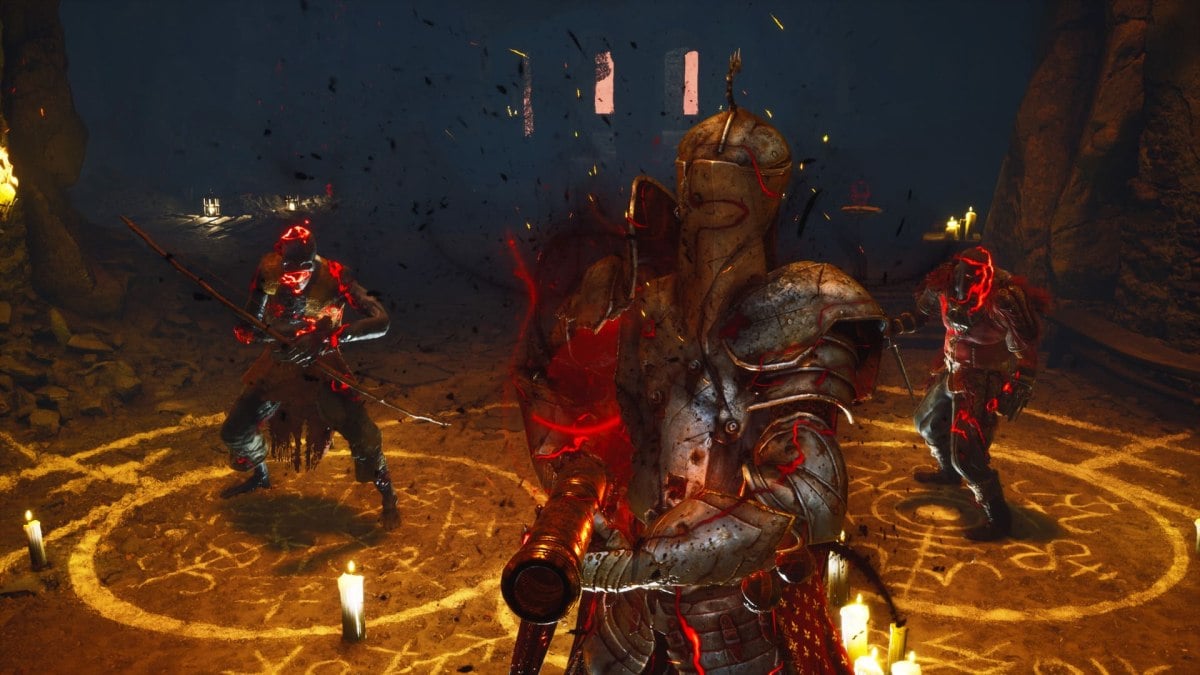
Players collect Witchfire to get stronger in the game.
The Nuances of How AI Can Be Used
During the majority of the early-access period, Chmielarz has been the sole writer for Witchfire. As a non-native English speaker, he has used AI to proofread some of his writing, which would tweak things like “Collect a Witchfire” to “Collect Witchfire.”
To be clear though, none of the ideas were generated by AI; it was just used to make the words flow well to an English-speaking audience. For the final release however, all the text will be rewritten by Nick Adderley, who is currently also working on Judas.
For Chmielarz, he draws a distinct line between AI to generate and AI to proofread. Ultimately, it’s about whether the machine or the person is doing the creative work.
“If you ask AI to create something for you, like concept art for an enemy, and then you have a human just repaint it, that’s not a pure 100% AI-free game,” he said. “To be clear, I’m not here to judge other studios for their choices. Every team has to decide what works for them and their creative process.”
In our interview, it was clear to me this distinction between generating and proofreading is something he wrestled with. He values the human connection between creator and player, which AI-generated assets dilute. At the same time, using AI to proofread his non-native English during early access is something that arguably improves that connection.
“It’s a super difficult situation with AI because… if I used AI to correct my English for Witchfire, is it okay? I think so, but maybe I should have used a human, right, to polish all that text. Maybe I should have given a job to somebody instead of using [AI], so I don’t know, man,” he said.
And indeed, hiring a human is what he did in preparation for the final release of Witchfire. Adderley is “murdering” all his text, he joked, and the human-made writing will be implemented before the game fully releases.
AI’s Uncertain Future in the Industry
It’s clear to me that Chmielarz sees different degrees of “severity,” for lack of better word, when it comes to judging the use of AI. He sees the competing opinions on AI in the community, too.
“Currently there’s a lot of people—really, this is not a minority—a lot of people are really clear about not wanting any AI in their games, and it is controversial, but I kind of like it because it tells me they care, right? They want to have contact with other humans through art,” Chmielarz said.
“Now, I want to add that there are people that don’t mind… that say, ‘If it’s going to make me a great game faster, I’m all for it,’ right? But there is a really large group, I don’t know if it’s half of it, I have no idea, but a really large group that says no.”
He also sees a sort of arms race in the industry, tying back to what Larian head Vincke said about it being “irresponsible” to not explore new technologies. What do you do if a smaller team makes a “better” game in half the time because of AI? What if it gets to the point where AI becomes an industry standard? Suddenly, you aren’t competitive, and in a landscape like video games, that’s a detriment to your bottom line and your employees’ livelihoods.
While he didn’t vilify or idolize AI, Chmielarz is sure of one thing: he’s thankful that Witchfire ships soon instead of in five years.
“I don’t think the tools at the moment are that great. Like you really can’t make a game using just AI,” Chmielarz said. “But in five years’ time, I don’t know. Every single day, I read about something absolutely crazy.
“So fortunately, in a way, we are a small fry. So we are looking at everybody else, and let’s see what happens.”
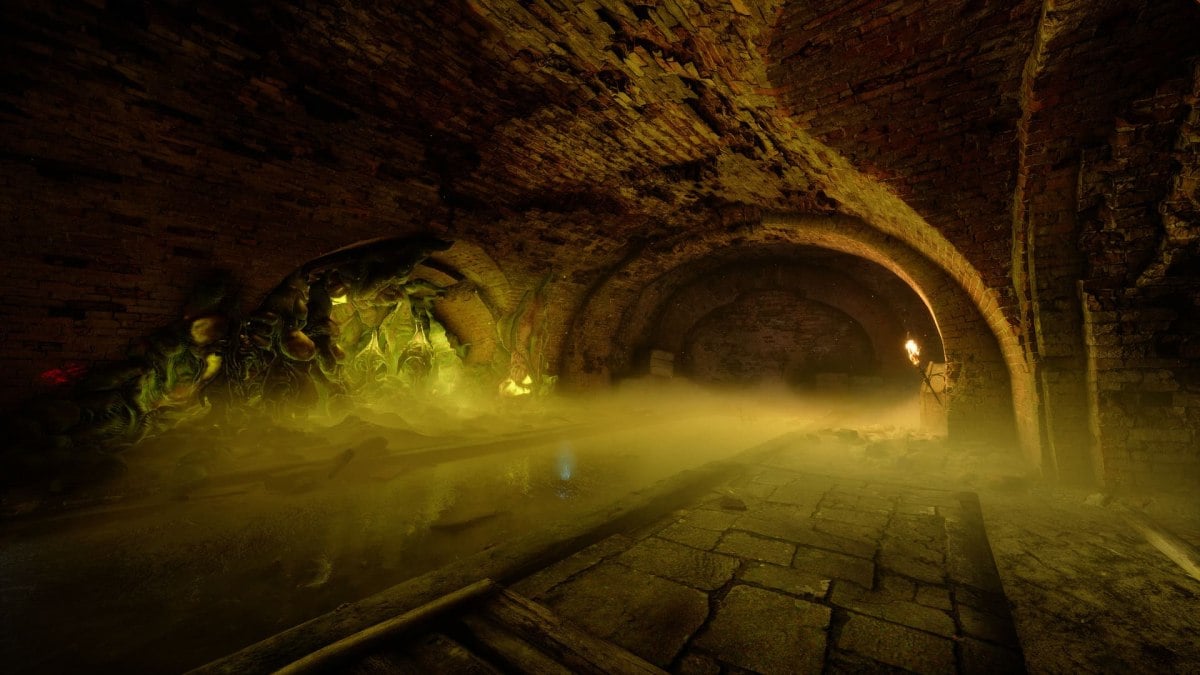
There are vaults in Witchfire, which are like dungeons.
The Importance of Detailed Disclosure
For the current moment, he’s a fan of disclosure of AI use across the board, like what Steam offers. Though he does want disclosure to be very specific so players can decide for themselves where their line is.
“For example, if it’s just like one asset or whatever, then maybe that’s fine. But if half of your game is using AI assets, then people might want to know that,” Chmielarz said. “But again, we will see, because today, it means a lot to see that message. Maybe in five years’ time, it will be meaningless, and we will remove it because everybody will be using AI and so nobody cares anymore because you just can’t escape it.”
There’s some cynicism in his outlook for the future, but he also believes that players have the power to impact where the industry is going with AI. Though of course, this relies on developers being transparent.
“Ultimately, the decision will basically be made by the players. If they refuse to buy games that are clearly done using AI, the message will be clear, and people will be not using AI in their games, [it’s] as simple as that,” he said.
In his personal life, Chmielarz uses ChatGPT and Gemini over Google searches, much to his teenage daughter’s dismay. It understands when he talks, making it faster and convenient. However, he also knows its current limitations and always asks it to provide sources—though even those links can be hallucinations, too.
In his professional life though, AI carries a lot more weight because of the impact it has already had in such a short time. It’s quickly become an instant turn-off for many gamers and a catalyst for some developers, regardless of the moral and environmental costs.
“AI is so many things, right? It’s funny that, you know, five years ago, if you asked any gamer, ‘Do you want better AI in your games?’ They would say yes,” he said with a laugh.
Today, the answer to that question isn’t so straightforward.
“I don’t know what the future holds or how strongly AI will be present in the creative process years from now. No one does. All I know is that today, we want Witchfire to be a product of organic creativity and passion,” he said. “We’d rather spend more money as a studio and give our team the time they need to create something free from AI than compromise that vision.”