
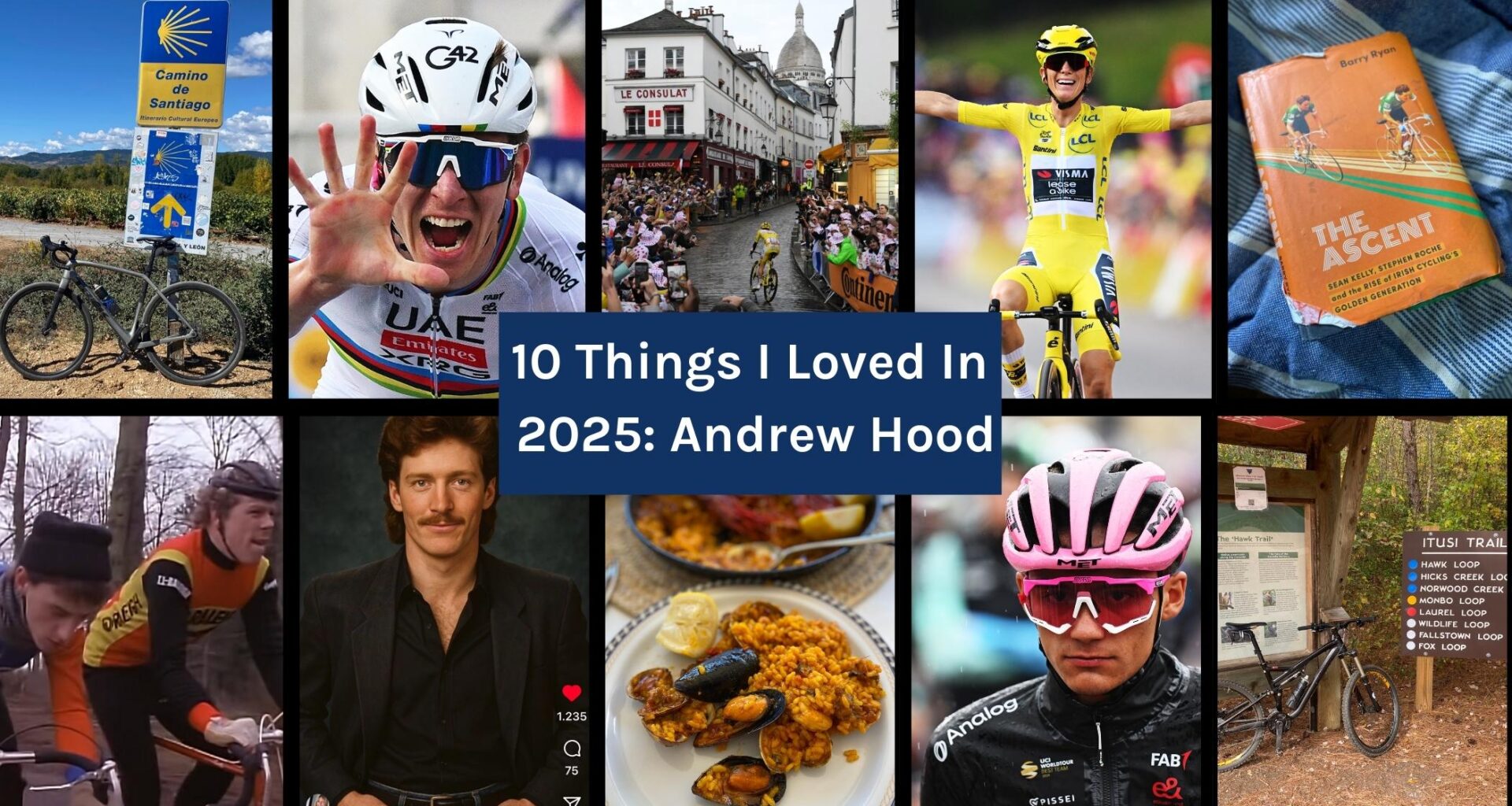
Updated December 24, 2025 10:52AM
The 2025 racing season delivered another turbo-charged year of unexpected highs and never-ending thrills.
From the rise of Isaac del Toro, to Pauline Ferrand-Prevot‘s road comeback and the consolidation of Tadej Pogačar as the 21st-century GOAT, the sport continues to rush into a new golden era.
Halfway through the decade, it’s time to admit that we’re living in the best of times.
Modern racing’s never been this good. From cyclocross to mountain bike to road and gravel, the international racing scene is reaching a level of performance and unmatched star power that we might not ever see again.
Like the stock market that refuses to stop setting new records, bike racing this year just kept accelerating in 2025.
As everything in life gets faster and AI takes over, I also tried to reset a few things into a slower gear.
Be it carving out time with friends and family, less social media, more quality, unplugging was just as important as staying plugged in. Here’s my personal best of 2025:
Camino de Santiago: All roads lead to …
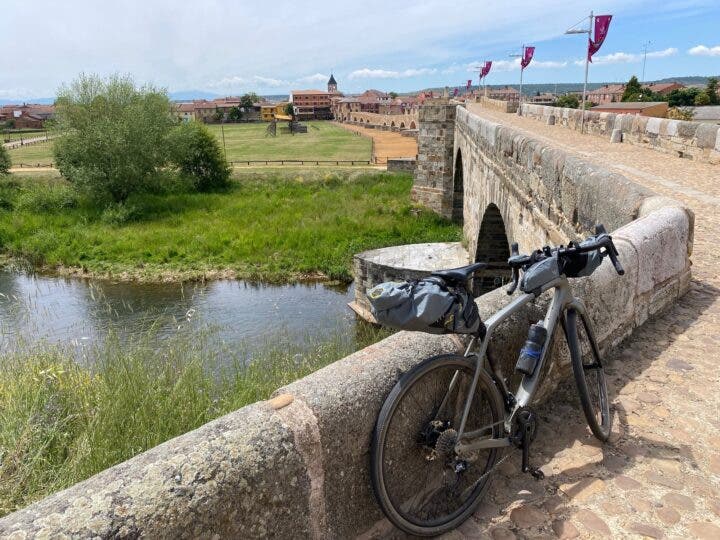 The Camino de Santiago is one of Europe’s top point-to-point routes. (Photo: Andrew Hood/Velo)
For those of us inhabiting the real world, not in an Instagram van-life dreamscape, carving out time for a bikepacking trip feels like a minor miracle.
In 2025, I finally decided to stop making excuses and scheduled out a few days for some proper dusty-road wanderlust.
I’m absurdly lucky to live with one of Europe’s great bikepacking routes literally passing within spitting distance of my front door.
The Camino de Santiago traces from the Pyrénées all the way to Galicia in northwest Spain — with a lot of variables along the way for Camino purists — drawing hundreds of thousands of peregrinos every year. Over the years, I’ve ticked off big sections of it, from crossing the Pyrénées to Logroño, and again over the western mountains into Santiago de Compostela.
My challenge this summer was to finish off the middle chunk.
This wasn’t a full-on, weeks-long bikepacking epic. The tent stayed at home, and I slept in cheap hostels. I jumped on local trains, went one-way on the rails, and then followed the yellow arrows back, with two or three days at a crack.
I was still riding 70-plus kilometers a day, enough to get plugged into the slow, rolling Camino rhythm that makes the trip so unique.
Everyone on the Camino is doing it for different reasons. Some spiritual, some because they love Spanish culture and history, others because it’s a great excuse to spend a month walking or cycling on one of Europe’s great routes.
From Pog to PFP: These are the best of times
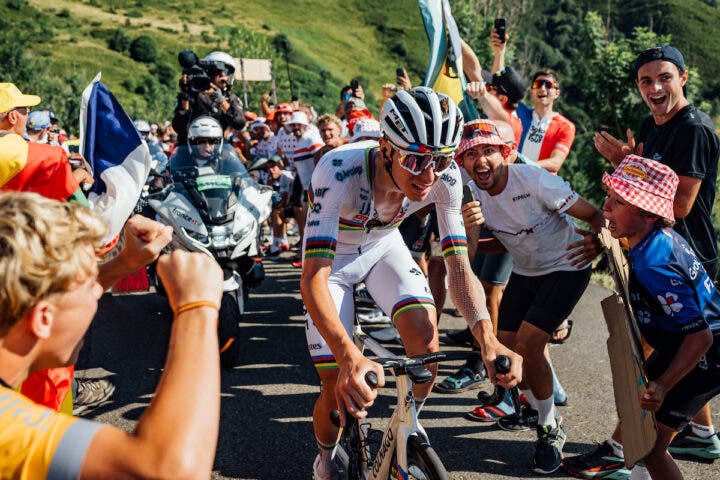 Wherever Pogačar goes, excitement follows. (Photo: Chris Auld/Velo)
I’ve been lucky to cover pro cycling since the 1990s, long enough to have seen the good, the bad, and the truly ugly. I missed the LeMond years but arrived in time for the chaos that followed. From the scandals to the Sky Train, cycling was a rollercoaster that never seemed to end.
That’s why racing these days feels so incredible. Call it the super-team era, the Pogačar era, or just cycling at full throttle, but arguably this is one of the best periods the sport’s ever known.
Every race is competitive, every team is pushing the limits of performance, nutrition, aerodynamics, and science.
From Pogačar to Van der Poel, from Vollering to Kopecky, today’s stars are more credible, faster, fearless, and bloody entertaining.
Just about every date on the calendar, from the lowly early-season races to the year’s peaks at the grand tours and world championships, there are no more preparation races. Every race is contested at full gas.
It’s fun to watch, and it just keeps getting better.
Of course, that’s not to say cycling doesn’t have its problems, but after hanging around nearly three decades, this is the best I’ve ever seen.
I can’t wait for what 2026 has in store.
Final Tour de France stage: Montmartre madness
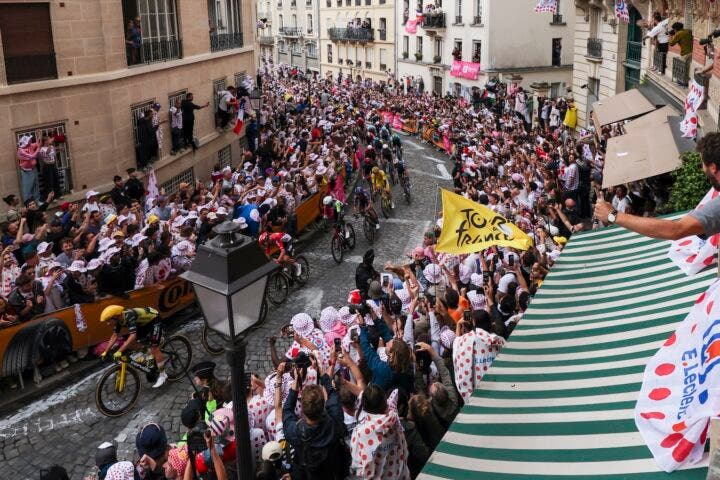 The final stage over Montmartre exceeded expectations. (Photo: Catherine Steenkeste/Getty Images)
I was a bit of a curmudgeon when this idea was floated. Part of me still believes the sprinters deserve their coronation lap on the Champs-Élysées.
And I worried that throwing the Tour de France up and over Montmartre would be too dangerous to be truly contested. I wasn’t entirely wrong, because the organizers took the times before the final circuits, and by the business end, only a handful of riders were truly racing.
Still, Montmartre was something spectacular.
With the tight streets, the absolutely frenetic crowds, and an epic throw-down between Pogačar and Wout van Aert, the stage was arguably the best finish to any Tour since Greg LeMond pipped Laurent Fignon.
I still think the Tour should alternate between Champs tradition and Montmartre madness, but with the climb coming back next year, I’ll happily eat my words.
Pauline Ferrand-Prévot: Lighting up the road
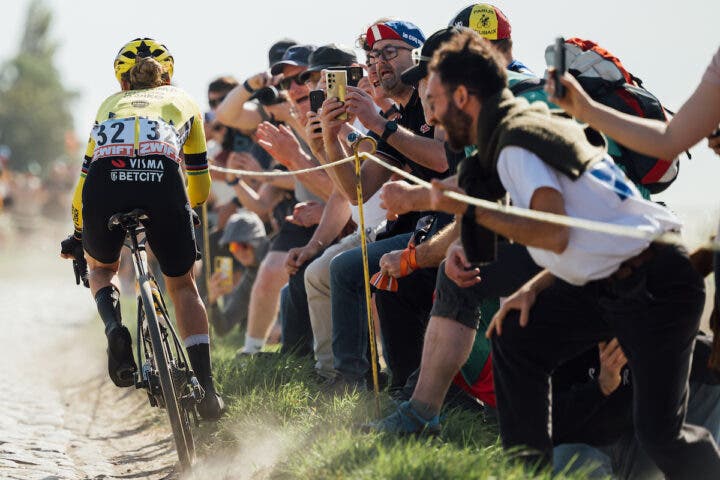 Ferrand-Prévot exceeded expectations all season long. (Photo: Chris Auld/Velo)
What a delight it was this year to watch Pauline Ferrand-Prévot absolutely crush her return to road racing.
Hot off winning Paris gold in mountain biking in 2024, the queen of multi-disciplines wasn’t supposed to blow everyone away in her road return, but she did.
First Paris-Roubaix, then at the Tour de France Femmes, this generational talent reasserted herself onto the pavement in jaw-dropping fashion.
It wasn’t without controversy. In her quest for an ideal racing weight, some questioned whether she put performance ahead of health. That tension has been at the heart of cycling since day one, and everyone knows the dangers of crossing the line.
I’m more inclined to believe Ferrand-Prévot knew exactly what she was doing and worked closely with Visma’s nutritionists and medical staff to manage the risk.
Some suggested she wasn’t a proper role model, but she’s a professional, and especially pro bike racers, they live and thrive beyond the norm. That’s the job.
AI memes: The rise of Super_Bock
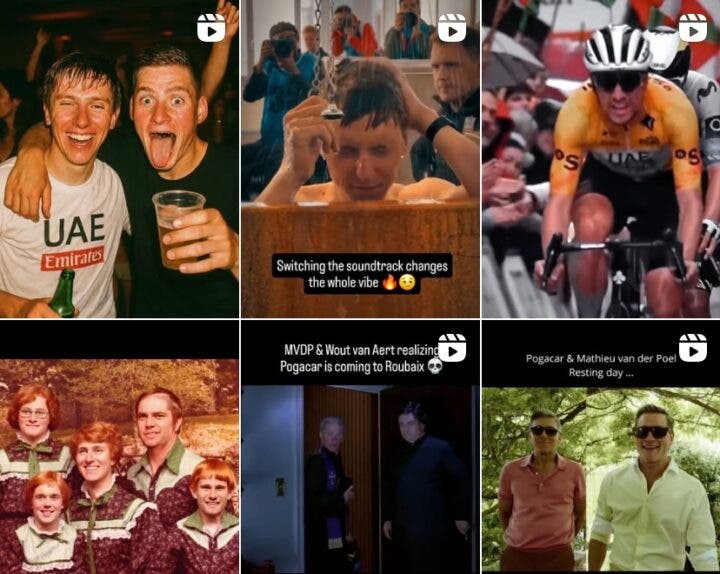 Super_Bock was one of the leading AI influencers breaking out in 2025. (Photo: Instagram screenshot)
AI hit the peloton with head-spinning speed just like it swept across the entire globe in 2025. In cycling, teams used it for training, nutrition, and performance modeling, but with it came the inevitable AI slop and deepfakes. But a few gems stood out.
Perhaps no one within cycling better captured the zeitgeist of the AI moment than the Instagram account Super_Bock.
When the first wave of AI-generated cycling videos started circulating on Instagram earlier this year, I almost fell out of my chair. From Van der Poel superimposed over Jean-Claude Van Damme to Van Aert crooning “Staying Alive,” his AI mashups nailed it.
I reached out to the person behind the account, thinking it would be some insider cycling computer nerd, and it turns out he’s a middle-aged Portuguese super fan tinkering with AI tools in his spare time. His account continues to churn out hilarious content.
In a sport that can sometimes take itself too seriously, Super_Bock was a welcome laugh in 2025.
YouTube takes over my brain
 2025, aka the year YouTube took over my brain. (Photo: Mateusz Slodkowski/SOPA Images/LightRocket via Getty Images)
Like a lot of people, I’m using YouTube more and more in my daily media diet. Between doom-scrolling TikTok-style Shorts and disappearing into rabbit holes about the rise and fall of the Aztec empire, I’m among its roughly 2.8 billion users, more than a quarter of the planet.
Chances are, you are too.
There’s nothing new about YouTube, but 2025 marked the year it completely took over my brain.
I use it for everything. Yesterday, it was a how-to video on changing the front light on my Euro-matrix car. This winter, it will feed my indoor training sessions. When I’m done with replays of the Tour of Flanders, there’s an hours-long series on the Cold War that I have queued up to help fill the bleak winter hours.
I have a video bookmarked on how to remove pedals, just to make sure I don’t botch it. It’s also my go-to now for music, which is how a Style Council video of the band members riding bikes hijacked my algorithm. I had that song stuck in my head for weeks.
YouTube is now moving aggressively into live events. Already featuring such things as the Coachella music festival and select games from the NFL and MLB, the platform will livestream the Oscars for free starting in 2029.
So how long before the Tour de France is live on YouTube?
Getting back to reading
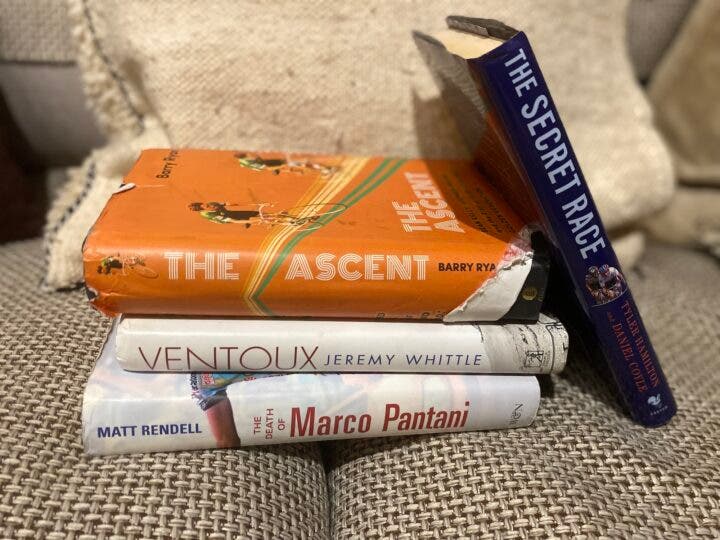 There are plenty of great cycling books. (Photo: Andrew Hood/Velo)
I’m still old-school enough to try to read print. I’ll burn through three or four books in a row, then get sucked back into the vortex of doom-scrolling.
In 2025 was a bit of a turning point. I’ve deleted Facebook and X from my phone, though YouTube and Instagram still lurk. Addictions are hard to break.
There’s no shortage of great cycling books out there. Daniel Friebe’s Merckx bio, Matt Rendell’s The Death of Marco Pantani, Tyler Hamilton’s The Secret Race, and Jeremy Whittle’s chronicle of 1990s blood sport all stand out.
This summer, I finally picked off Barry Ryan’s excellent book The Ascent on the rise of Stephen Roche and Sean Kelly. I popped it into my beach bag and read it on weekend trips to the beaches of northern Spain. It’s a wonderfully written account that recreates the magic of Irish cycling in the Anglo boom in the European peloton.
One of my 2026 resolutions is to scroll less and read more. I’ve started leaving my phone in my office overnight and opening a book before dozing off. How long will it last?
Races get you places: Search for the perfect ‘dame blanche’
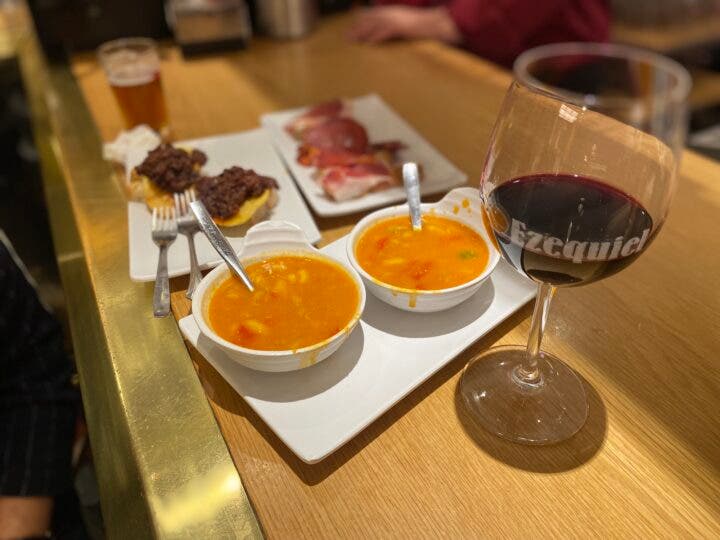 Races get you places, and local cuisine is part of the journey. (Photo: Andrew Hood/Velo)
Where there’s a paved road, somebody will contrive a reason to race a bike on it.
With the racing calendar stretching from January to October, riders and sport directors will tell you it’s an endless grind of transfers and ever-worsening hotels. Most people at the Tour de France cannot tell you what day it is, let alone where they are. The riders do know where the finish line is.
Cycling’s sprawling calendar takes the peloton to the far corners of the globe. And with it, the culinary delights of the world, at least for those of us on the sidelines who are not slurping down post-race ketones.
After a long day of chasing bikes, there’s nothing quite like quaffing a Belgian beer or sampling the local desserts. One longtime favorite is the dames blanche, a French-inspired ice cream sundae. In the Vuelta, it’s that perfect paella, or in Italy, the morning espresso.
Every year, I try to hit a new race in a new location. From the Arctic Circle to Down Under, there’s always a bike race somewhere.
This year, I missed Rwanda this year and felt the FOMO hard. Chasing bike races can be a grind — believe me, no one’s complaining — but it’s that quiet moment before the day starts or after the last story is filed shared with colleagues that counts.
Isaac del Toro: El futuro está aquí
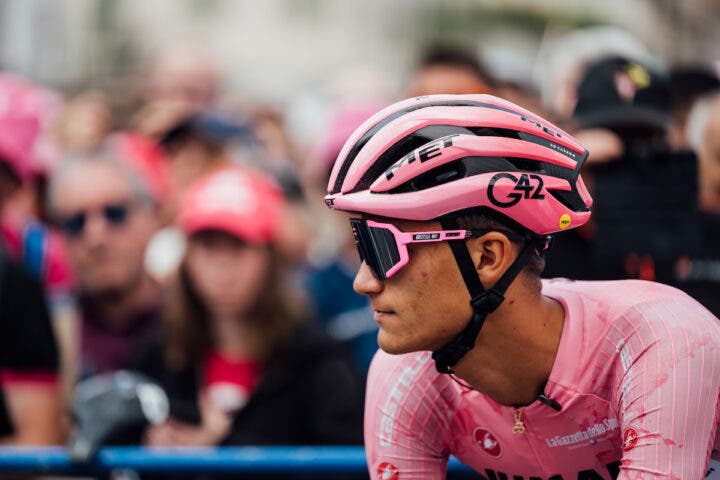 Del Toro confirmed his position at the elite of the men’s WorldTour. (Photo: Chris Auld/Velo)
The emergence of Isaac del Toro this season was nothing short of spectacular.
There are echoes of Tadej Pogačar in the way he races, and the Slovenian’s already tapped his teammate as heir apparent. Like Pogi, he’s explosive and instinctive, yet packs the same humility and respect for his rivals.
Not every rider detonates onto the scene the way Pogačar did, and I actually expected Del Toro to do that in his rookie season in 2024. It didn’t happen, but what we got in 2025 was even better.
He started the Giro d’Italia as a nominal co-leader behind Juan Ayuso and Adam Yates, then quickly emerged as the most explosive rider in the race. A notorious tactical meltdown cost him pink, but the true Del Toro came out in the aftermath.
In a revealing post-season interview on Spanish Eurosport, he accepted responsibility and vowed to take more control. We saw that play out late in 2025 with a torrent of wins, and he even traded blows with Pogačar at worlds.
There are so many new, exciting racers in the men’s and women’s peloton, from Matthew Brennan to Kimberley (Le Court) Pienaar, it really sets up cycling for even more exciting years ahead.
This year, the peloton turned the page on the “Big 4” and evolved into something even bigger.
Mountain biking: Back where it started
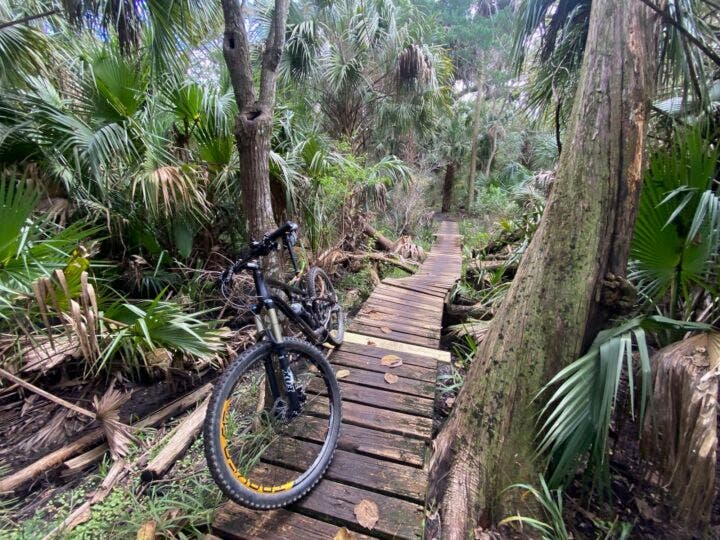 Surprises await just about everywhere once the pavement ends. (Photo: Andrew Hood/Velo)
Near the end of the year, I finally pulled my mountain bike out of the attic. Since buying my first gravel bike back in 2016, it’s been collecting dust, alongside my road bike.
Great gravel starts practically at my doorstep, and I love how gravel blends road-like rhythm with instant access to farm tracks and open country.
Just as important, it gets me off the roads. I feel more vulnerable than ever riding in traffic, and the fewer miles I log with cars whizzing past distracted drivers, the better. I know I could just as easily get hit by a car while walking across the street, but less time on pavement means fewer opportunities for something to go wrong at my expense.
But when I finally dusted off the MTB, I remembered why it hooked me in the first place. A fall trip to North Carolina with its roots and vertical confirmed the thrill and hurt that only mountain biking can deliver.
It’s perfectly timed. The USA won its first elite men’s World Cup title with Christopher Blevins in 30 years, and things will be ramping up for Los Angeles 2028 soon enough.
It’s time for America’s first Olympic gold medalist in the discipline that Americans helped create.