
 Smallest cities in Canada
If there’s one thing Canada isn’t short on, it’s land.
We’re the second-largest country in the world by size, but when it comes to cities, the story flips. Most Canadians live in a few major urban hubs, leaving the rest of the map dotted with small, often overlooked municipalities.
And while big cities like Toronto and Vancouver grab all the headlines, there’s something uniquely charming about Canada’s smallest cities.
These places might have city status, but their populations are tiny. We’re talking hockey-loving towns with a few thousand residents, or even just a few hundred.
For some though, that’s the dream. Quiet streets, tight knit communities and a peaceful pace of life far from the urban rush.
Whether you’re looking to relocate, retire, or just curious how small a Canadian city can really get, this list is for you.
Let’s dive in. Here are the 10 smallest cities in Canada, and the fascinating stories behind them.
EB Adventure Photography | Shutterstock
Population: 730
Greenwood is often considered the smallest city in Canada, with a population of just over 700 residents. It is located about 80 kilometres from the Okanagan and just a few kilometres north of the Canada-US border.
Greenwood was originally incorporated in 1897 and was a major mining and smelting hub.
During World War II, Greenwood served as an internment camp for Japanese Canadians.
The city was used as a major filming location for the Academy Award-nominated movie Snow Falling on Cedars.
Wildnerdpix | Shutterstock
Population: About 5,000
Aside from having one of the coolest city names in Canada, Flin Flon also has a unique feature: It’s located partly in Manitoba and partly in Saskatchewan.
Flin Flon was named after the lead character in the 1905 novel The Sunless City by J.E. Preston Muddock.
As with many small cities in Canada, Flin Flon was founded as a mining town. The city was founded by the Hudson’s Bay Mining and Smelting Company, as it has large copper and zinc deposits.
The majority of the area and population of Flin Flon reside in Manitoba. The city is jointly registered in and governed by both Provinces.
Read more: Here are 5 expenses that Canadians (almost) always overpay for — and very quickly regret. How many are hurting you?
Harold Stiver | Shutterstock
Population: 154,000
Story Continues
Guelph is slightly bigger than the first two cities on our list. It is located about 70 kilometres outside of downtown Toronto and about 20 kilometres east of Kitchener, Ontario.
Guelph was founded by the Scottish writer John Galt and has the nickname of the “Royal City.”
Indigenous First Nations people settled in the area of modern-day Guelph over 11,000 years ago.
Two important sporting products were invented in Guelph: five-pin bowling and the jock strap.
GIBAN | Shutterstock
Population: About 4,500
Melville is the smallest city in Saskatchewan by population and is located about 145 kilometres from Regina.
Melville is believed to be named after Charles Melville Hays, the President of the Grand Trunk Railway at the time of the city’s conception.
Melville is home to the Melville Millionaires and is a hockey hotbed despite its small population.
The city has produced former NHL players like Tim Cheveldae, Jarrett Stoll, Arch Wilder, and Phil Besler. Current players include Damon Severson, Shaun Heshka, and Detroit Red Wings head coach Todd McLellan.
Jeff Whyte | Shutterstock
Population: About 68,000
Medicine Hat is located southeast of Calgary along the South Saskatchewan River. It was founded in 1883 and became incorporated as a city in 1906.
Medicine Hat is considered the sunniest city in Canada, averaging more than 2,500 hours of sunshine annually according to Environment Canada.
This Alberta city got its start as a railway town, but is also known for its large natural gas fields.
The name Medicine Hat comes from the Blackfoot Word that described the eagle tail feather headdress that was worn by medicine men.
Alisa Khliestkova | Shutterstock
Population: About 122,000
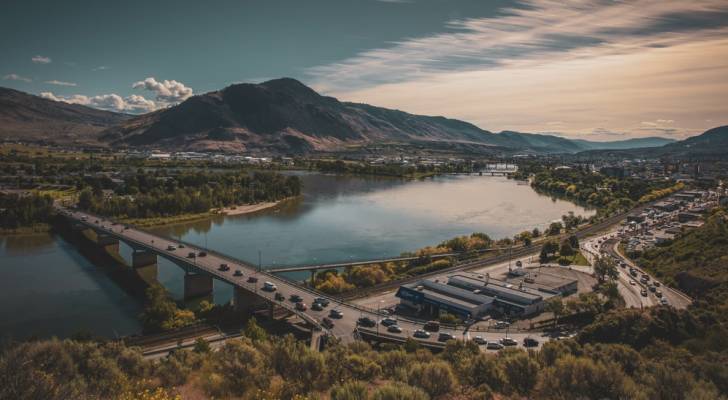
Kamloops is a city in the interior region located in south-central British Columbia. It is located where the North and South Thompson rivers merge into the Thompson River.
The city is believed to have gotten its name from the Secwepemc word for “where the rivers meet.”
Kamloops is known as Canada’s ‘Tournament Capital’ as it hosts over 100 athletic tournaments each year.
Kamloops is a railway hub and is just one of two places in Canada where both the CP Railway and CN Railway have main lines.
Sean Pavone | Shutterstock
Population: 155,000
Waterloo, which was named after Waterloo, Belgium, the site of the Battle of Waterloo, is located about 95 kilometres outside of Toronto.
Waterloo is home to some of Canada’s largest tech employers, including the birthplace of BlackBerry.
This city is home to two well-known Universities: The University of Waterloo and Wilfrid Laurier University.
Waterloo is the place where the blue bin recycling program that is now used across Canada was created.
Alessandro Cancian | Shutterstock
Population: 14,600
Despite being the second-largest city in Prince Edward Island, Summerside is still one of the smallest cities in Canada by population.
Summerside is the only North American city to own its own electrical utility. Nearly 50% of the city’s power is from green wind energy.
This city was a centre for shipbuilding and trade, and was established as a major hub with the building of the PEI Railway between 1871 and 1875.
Summerside’s cultural influences include Celtic and Scottish roots, highlighted by the city’s College of Piping and Celtic Performing Arts of Canada.
Lisa Liidemann | Shutterstock
Population: ~7,500
Dryden is located in the Kenora District on Wabigoon Lake in northwestern Ontario. Although it is the second-largest city in the region, it is the smallest designated city in the Province.
Dryden is the newest city on this list, receiving the official designation from Ontario in 1998.
Visiting Dryden means driving past the town mascot, Maximillion the Moose. Max is an 18-foot-tall metal moose statue located along the Trans-Canada Highway.
Originally, Dryden was a pulp and paper city, but it is transitioning to a renewable energy economy with an emphasis on solar and bioenergy.
PJ VISUALS | Shutterstock
Population: 12,000
Wetaskiwin is a city in central Alberta located about 70 kilometres south of Edmonton. It was named a town in 1902 and officially became a city in Alberta in 1906. This also makes it one of the oldest cities in Alberta.
Wetaskiwin is named after the Cree word, which means “the hills where peace was made.”
This city is located well above sea level, with an official elevation of about 2,500 metres.
Older generations will be familiar with the catchy slogan from the 70’s for used cars: “Cars cost less in Wetaskiwin.”
Historically, the smallest official city in Canada has been Greenwood, British Columbia, with a population of just over 700 residents.
The smallest city in Ontario is Dryden, Ontario, which has a population of about 7,500 as of the most recent census.
This article provides information only and should not be construed as advice. It is provided without warranty of any kind.