

Thousands of First Guardian investors were dealt another devastating blow in December when it was revealed just $1.6 million had been recovered from the almost $450 million invested in the failed fund.
The fund collapsed earlier this year, leaving about 6,000 investors with losses of $446 million.
Since the First Guardian and Shield managed investment schemes were wound up in April, thousands of Australians have faced devastating financial consequences, and now face the possibility they will not recover their retirement savings.
Many investors switched their life savings from APRA-regulated funds into these less regulated managed investment schemes.
The collapses rocked Australia’s superannuation sector in 2025 and the fallout will continue in 2026, with the corporate regulator naming it a key priority for the year, and the government weighing up stronger laws.
Money recovered so far not enough to cover liquidator fees
In an update in December, liquidators of Falcon Capital, the entity that administered the First Guardian scheme, said just $1.6 million had been recovered so far.
Deep flaws in Australia’s $4.3 trillion system exposed
That is not enough to cover the liquidator FTI Consulting’s remuneration, which at the time of its report, stood at almost $2 million.
The liquidators also warned that any potential distribution to investors, if it comes, is at least 18 months off.
Just before Christmas, about 1,000 investors who tipped $100 million of retirement savings into First Guardian through financial services operator Netwealth received welcome news that the company will repay them in full as part of a settlement with the corporate regulator.
This followed a similar agreement with Macquarie Group, which agreed to pay $321 million to about 3,000 people who invested in Shield through its platform.
Loading…
However, First Guardian and Shield victims who invested through platforms run by two other companies, Diversa and Equity Trustees, are yet to recover a cent while ASIC has legal actions underway against both.
Victims of fraud, abuse caught in ATO firing line
First Guardian investor funds allegedly went offshore
Corporate watchdog ASIC blocked investment in Shield in February 2024 and froze the assets of First Guardian in February 2025.
‘Heads on spikes’ to protect super
ASIC, which has come under fire for taking too long to act, has launched multiple investigations into the conduct of both funds’ directors.
The amount so far recovered from the First Guardian collapse included about $336,646 from the sale of a Lamborghini Urus, allegedly bought with investor money.
The liquidators report alleged that most of the investor money invested in First Guardian went offshore.
The report said $94.2 million was allegedly channelled into related-party investments, with a further $166.2 million sent to management-related parties, most of which had no formal agreement with Falcon.
$11.7 million was allegedly moved to directors’ personal investment vehicles, as well as family members of the directors, the report said.
Liquidators warned that several First Guardian investments would require litigation to effect recoveries, while “other potential legal claims identified would primarily be against the directors or related parties”, making the amount and time of recovery uncertain.
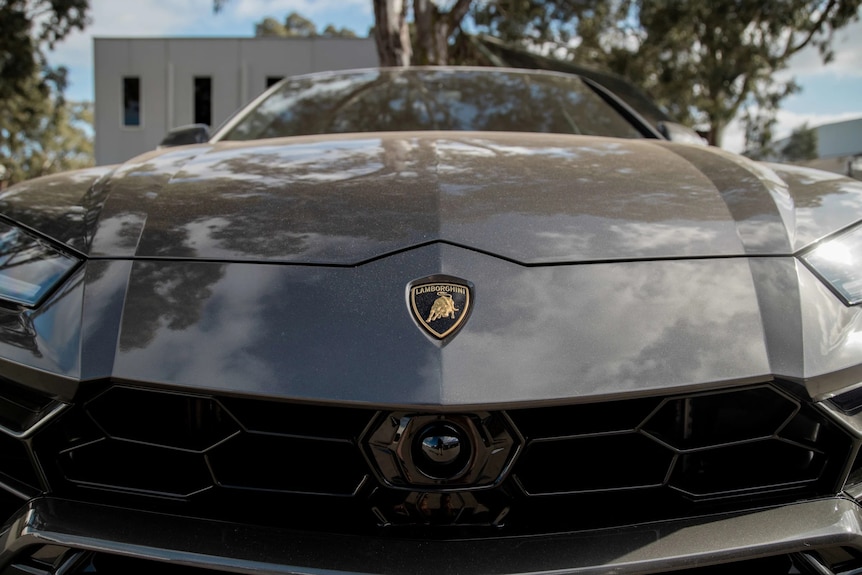
A Lamborghini the company purchased in January 2023 for $548,000. It was sold by liquidators for about $336,646. (Supplied)
Which begs the question, who will end up paying First Guardian investors back their lost retirement savings?
Prosecuting those involved an ASIC ‘priority’
ASIC has said that prosecuting those involved in the Shield and First Guardian collapses is a top enforcement priority for 2026, and that more cases could follow.
In November, the regulator announced legal action against more players involved in the collapse of both schemes.
ASIC has alleged thousands of Australians were exposed to poor financial advice and significant risks from the Shield and First Guardian schemes through critical oversight and compliance failures by Sequoia-owned Interprac.
Interprac has said it will be defending the allegations.
Loading…
The regulator has also sued ratings agency SQM Research, which had published “favourable” ratings for Shield. SQM Research said it will defend the allegations.
Superannuation trustees that ran platforms housing First Guardian and Shield products on their shelves have also been in ASIC’s sights.
After already taking legal action against Macquarie — which has agreed to pay Shield investors back their money — and Equity Trustees, which is defending the legal case against it, in December, the regulator commenced legal proceedings in the Federal Court against superannuation trustee Diversa.
ASIC alleged Diversa failed to conduct sufficient due diligence before allowing its members to invest, and that the super trustee failed to adequately monitor the First Guardian fund. Diversa said it would be “vigorously defending” the allegations.
Meanwhile, Equity Trustees, which ASIC has already sued in the case of Shield investors, could potentially face further proceedings for its involvement with First Guardian.
In October, Netwealth Group announced on the ASX that its subsidiary Netwealth Superannuation Services had submitted an application to Assistant Treasurer Daniel Mulino seeking financial assistance under superannuation law.
The minister could approve applications under the relevant legislation if a fund has suffered a loss from fraudulent conduct or theft. The same legislation was used to remediate clients of the Trio Capital collapse.
According to Netwealth’s statement, 1,088 Netwealth members have a combined exposure to the First Guardian collapse of $101 million.
Netwealth withdrew the application at the same time as settling with ASIC and agreeing to compensate customers from its own funds in December.
Loading…Recovering funds a ‘moral responsibility’
Even with the regulator announcing multiple proceedings against players involved, investors have remained concerned they will be left short.
Players in First Guardian, Shield sued after Australians lose more than $1b
Melinda Kee, a First Guardian investor who lost $360,000 in retirement savings, founded advocacy group SOS SaveOurSuper.
She said it is the federal government’s moral responsibility to recover funds for investors.
“We are assisting members of SOS SaveOurSuper to understand how to file an AFCA complaint and who to complain about,” she told ABC News.
“There seem to be so many bureaucratic setbacks that are causing delays.
“These are real people unable to retire, unable to sleep, and unable to rebuild their lives.”
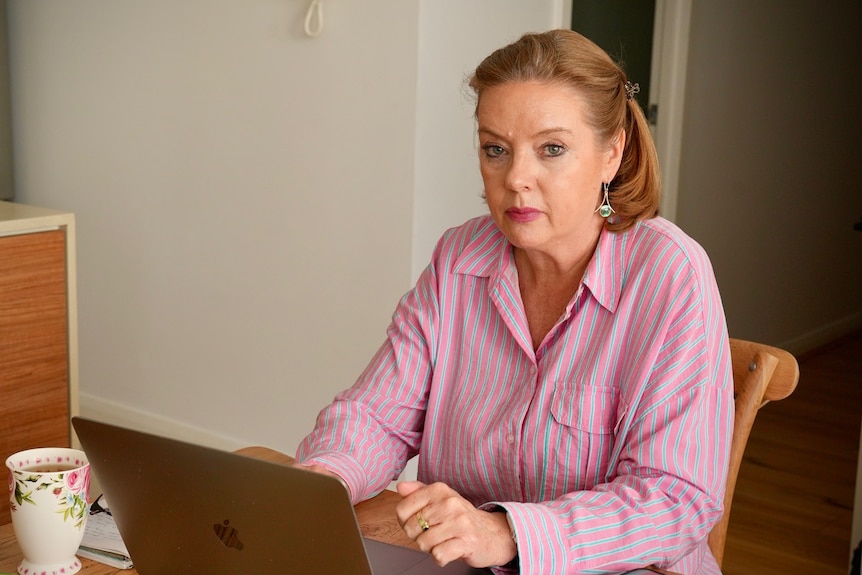
Melinda Kee lost $360,000 in retirement savings when First Guardian went under. (ABC News: Scott Preston)
Ms Kee said reforms to protect consumers were not optional.
“They are essential if we want a fair, fast, and humane outcome for the thousands of Australians who have already lost everything once,” she said.
Ms Kee believed one of the biggest problems is that the financial complaints body consumers can go to, AFCA, is under-resourced.
She also noted that AFCA’s jurisdiction does not allow complaints against super trustees, which “causes staggering delays and prevents mass, efficient resolution”.
She has called for the government to amend AFCA’s legislation to allow streamlined, bulk, or representative determinations in mass harm events, and to allow complaints against trustees relating to due diligence failures.
Loading…More firms required to fund compensation scheme
The other way investors may be able to recover funds is through proposed changes to the bailout scheme known as the Compensation Scheme of Last Resort (CSLR).
Call for greater protections for super savings
The scheme, established after the Hayne royal commission, provides up to $150,000 compensation to consumers who faced financial misconduct.
This scheme is available only if the consumer is unsuccessful in getting a determination through AFCA.
While many of those who invested in First Guardian and Shield have lost well over $150,000 (and that’s not even considering the opportunity lost to grow their savings elsewhere), the government is looking at changes to the way the scheme is funded.
In December, the assistant treasurer, Mr Mulino, announced the special levy for the 2026 financial year is $47.3 million.
APRA-regulated super funds, as well as financial advisers and credit providers such as banks and fund managers, will now be required to contribute.
While unions and the super industry have criticised the fact that super funds must contribute, consumer groups have welcomed the change.
Mr Mulino is also considering further changes to fund future shortfalls in the levy, given the scheme is expected to grow in the wake of the First Guardian and Shield collapses. He will be releasing an options paper on that in February.
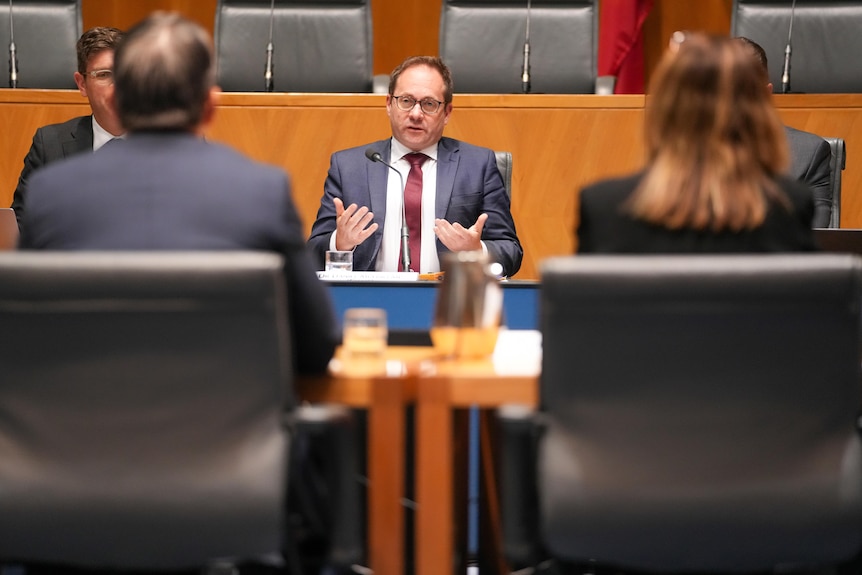
Daniel Mulino wants super funds to chip into a compensation scheme for financial misconduct. (ABC News: Adam Kennedy)
Mr Mulino is also looking at wider regulator changes to better protect consumers before they decide to switch their retirement savings to funds that are not regulated by APRA.
Managed investment schemes like Shield and First Guardian are not regulated by APRA like the major super funds are.
One of the proposed changes, Mr Mulino said, is a cooling-off for consumers switching super funds.
“The alleged practices employed in the cases of the Shield and First Guardian Master Funds have highlighted the need for reform,” Mr Mulino said.
“Those include high pressure lead generation pushing people to switch their retirement savings into higher risk environments and products such as low quality managed investment schemes.”
Many of the investors who lost their retirement savings were first contacted by a lead generator via a phone call, and sometimes hours or days later, were switched onto a financial planner who then channelled them into the funds.