
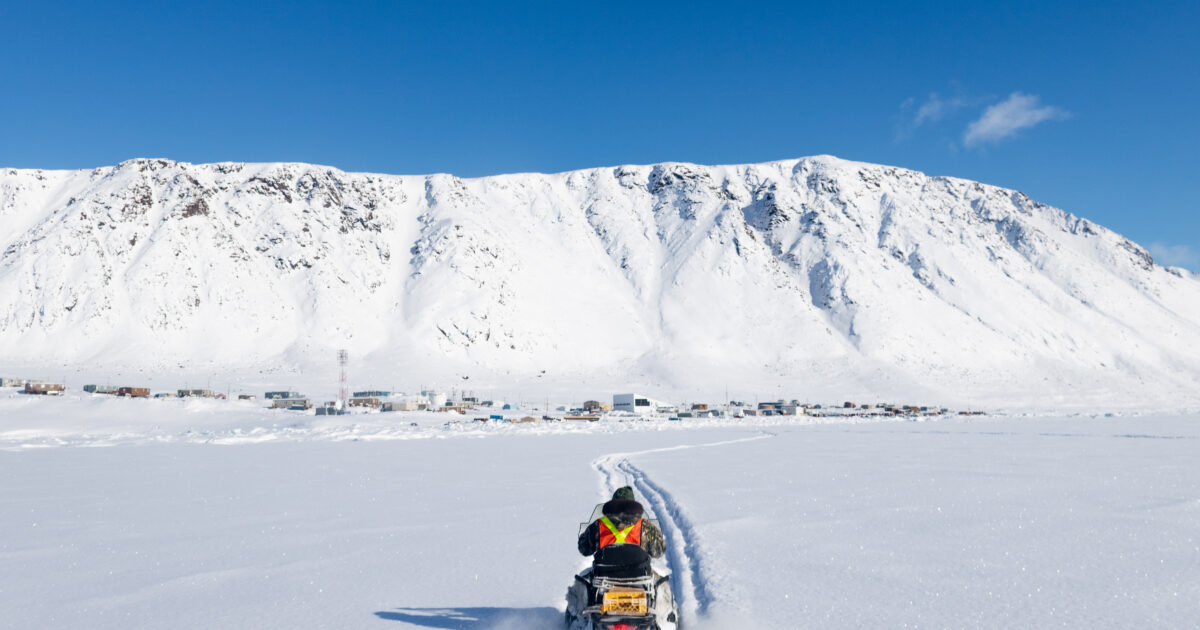
Stories we loved to tell | Grise Fiord leaves lasting impression on visiting reporter
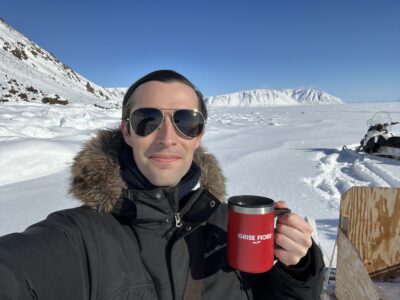
Drinking tea on the land outsdide Grise Fiord. (Photo by Jeff Pelletier)
In this year-end series, Nunatsiaq News reporters look back on their most memorable stories from 2025.
In the North, you can experience some incredible scenery as your plane approaches the runway.
From the blue water of Ungava Bay around Tasiujaq, to the first sight of Apex when landing in Iqaluit, I’m always enamoured by the beautiful landscapes of Nunavut and Nunavik.
None of those top landing in Grise Fiord. On a bright April morning, the tightly packed Kenn Borek Twin Otter I was aboard looked like it was headed straight for the mountains before it tightly banked low above the community and came to smooth landing.
“Welcome to Grise Fiord,” a passenger told me as I was curiously taking pictures of my surroundings.
I’ll never forget travelling to Grise Fiord for a week. It was also something I never expected would happen during my time at Nunatsiaq News.

This newspaper has a travel budget to give reporters the opportunity visit other communities. Attentive readers may have seen stories reporters filed this year from Gjoa Haven, Puvirnituq, Aupaluk, Kugluktuk and Qikiqtarjuaq.
With the high cost of a plane ticket to Grise Fiord – Canada’s northernmost civilian community – I never expected to be able to go.
However, we got some help.
Ahead of the April 28 federal election, the Rideau Hall Foundation announced the Covering Canada: Election 2025 fund, which set aside $500,000 to support local news organizations’ efforts to report on the national vote.
Reporters were told during a story meeting that Nunatsiaq News would apply for a grant to cover the costs of an election-related trip a community other than Iqaluit. Initially, I assumed we might try to catch up with the three Nunavut candidates as they hopped around places like Arviat, Rankin Inlet or Baker Lake.
To my surprise, the granters approved our pitch to fund a trip to Grise Fiord.
On April 16, I was on my way from Iqaluit to the High Arctic.
Grise Fiord is much smaller than the 8,000 people I’m typically used to being around in Iqaluit. At times, it was challenging to find people to interview.
“There’s only 140 people here,” one resident told me outside the Co-op store while I was asking around.
Thankfully, I was able to speak to several residents who shared their thoughts on topics including Arctic security and sovereignty, infrastructure, and the high costs of food and travel.
Larry Audlaluk, who was relocated to the Hight Arctic in 1953, left a lasting impression on me.

After reading his book, What I Remember, What I Know: The Life of a High Arctic Exile, on the plane, it was a pleasure just to sit down and listen to him over a cup of coffee.
On the last day of my trip, he took me out on a tour on the sea ice to show me places that were part of his upbringing. It was also fascinating watching him check his seal nets.
With perfect weather on my flying days, I returned to Iqaluit without any delays or cancellations. (Friends were telling me beforehand that I was definitely going to be grounded in Resolute Bay for a few days.)
I love reminiscing about my experience in Grise Fiord. You may also see me around Iqaluit wearing a Hamlet of Grise Fiord hoodie or sporting the polar bear claw pendant I bought from the local hunters and trappers association.
I continue to be grateful for the opportunity to visit this incredible part of our territory and for the people who shared their thoughts with me.