
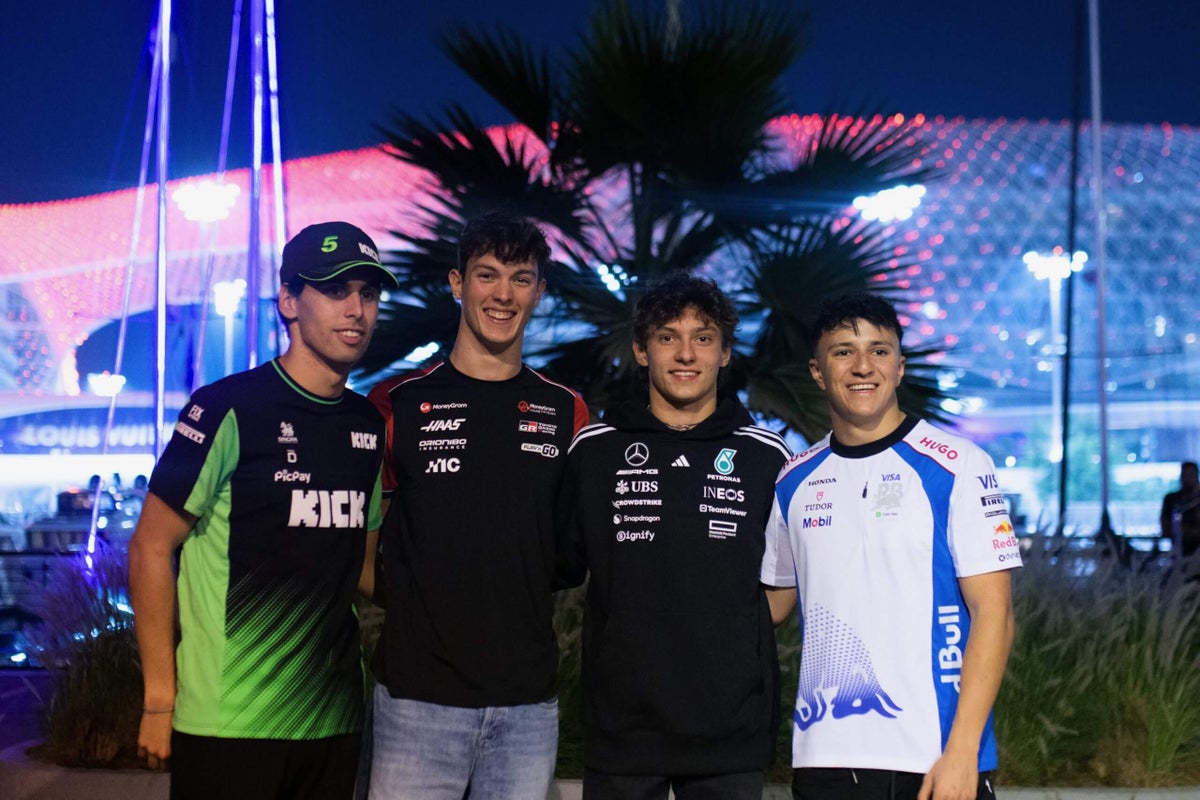
Formula One rookie waves tend to come in cycles. After the 2024 season started with the same 20 drivers that ended the previous championship, 2025 marked a changing of the guard, as six full-season rookies lined up on the grid for the Australian Grand Prix season opener.
Only three — Kimi Antonelli, Isack Hadjar and Gabriel Bortoleto — were making their F1 race debuts. Ollie Bearman had made three starts through 2024 with Haas and Ferrari, Alpine’s Jack Doohan made his debut at the 2024 finale in Abu Dhabi, while Liam Lawson already had 11 grands prix under his belt across 2023 and 2024.
They would be joined by another partial rookie just six races into 2025, when Franco Colapinto, who’d closed out the second half of 2024 with Williams, replaced Doohan at Alpine.
For the sake of our ‘Class of 2025’ rookie rankings and those statistical anomalies, we’re assessing only the five drivers who hadn’t already completed decent portions of previous F1 seasons before 2025. Colapinto and Lawson, therefore, do not feature.
Here’s The Athletic’s rundown, from five to one, of F1’s top newcomers this term.
5. Jack Doohan
Best result: P13 (China)
Points: 0
Championship position: 21st
Doohan’s F1 career was short-lived, as he competed in just six race weekends this year before Alpine replaced him with Colapinto.
He made the move to Alpine’s academy program in 2022, after spending a few years as part of Red Bull’s junior system. It offered a more straightforward path to a potential F1 seat, and Doohan took on a heavy testing program in 2024, rather than competing in another category.
When Esteban Ocon left Alpine for Haas, it opened the door for Doohan to be promoted, and this came early – the 2024 Abu Dhabi GP. But even before he set out for his first full-time season in F1, pressure was already mounting. This stemmed from Alpine signing Colapinto as a reserve driver in January.
Doohan showed flashes of qualifying pace, but he failed to translate it into race results. He crashed during the Australian GP, had a heavy wreck during a Japanese GP practice session, and made contact with Lawson on Lap 1 of the Miami GP, which resulted in a DNF.
That would be Doohan’s final F1 race. News broke a few days later that Colapinto would replace him. Doohan recently participated in Super Formula testing in Japan, but crashed several more times at Suzuka.
4. Gabriel Bortoleto
Best result: P6 (Hungary)
Points: 19
Championship position: 19th
Bortoleto may have ended the season last in the drivers’ standings for those that scored points in 2025 (Colapinto ended the year 20th overall, with zero on the board), but the Sauber rookie showed a clear upward performance trajectory. He even nearly matched highly rated teammate Nico Hülkenberg in head-to-head race and qualifying comparisons over the season.
The Sauber started off slow and didn’t get faster until its major upgrade during the Spanish GP weekend in early June. After this, it wasn’t long until Bortoleto scored his first points, with an impressive eighth-place finish in Austria two races later. He crashed at Silverstone next time out, after he decided to swap for slicks in wet conditions and ultimately spun off into the gravel on a day when Hülkenberg reached the podium.
But Bortoleto went on to score more points in the final two race weekends before summer break, including his season-high P6 in Hungary.
The second half of the year was a quieter stretch, filled with some errors, such as the Turn 1 crash with Lance Stroll in Las Vegas that earned a five-place grid penalty for Qatar. Bortoleto said he misjudged the track’s grip and braked too late.
Overall, it was a good first season that showed promise for his future. Bortoleto held the qualifying edge over his teammate, 12-11, but Hülkenberg was 12-11 in race results.
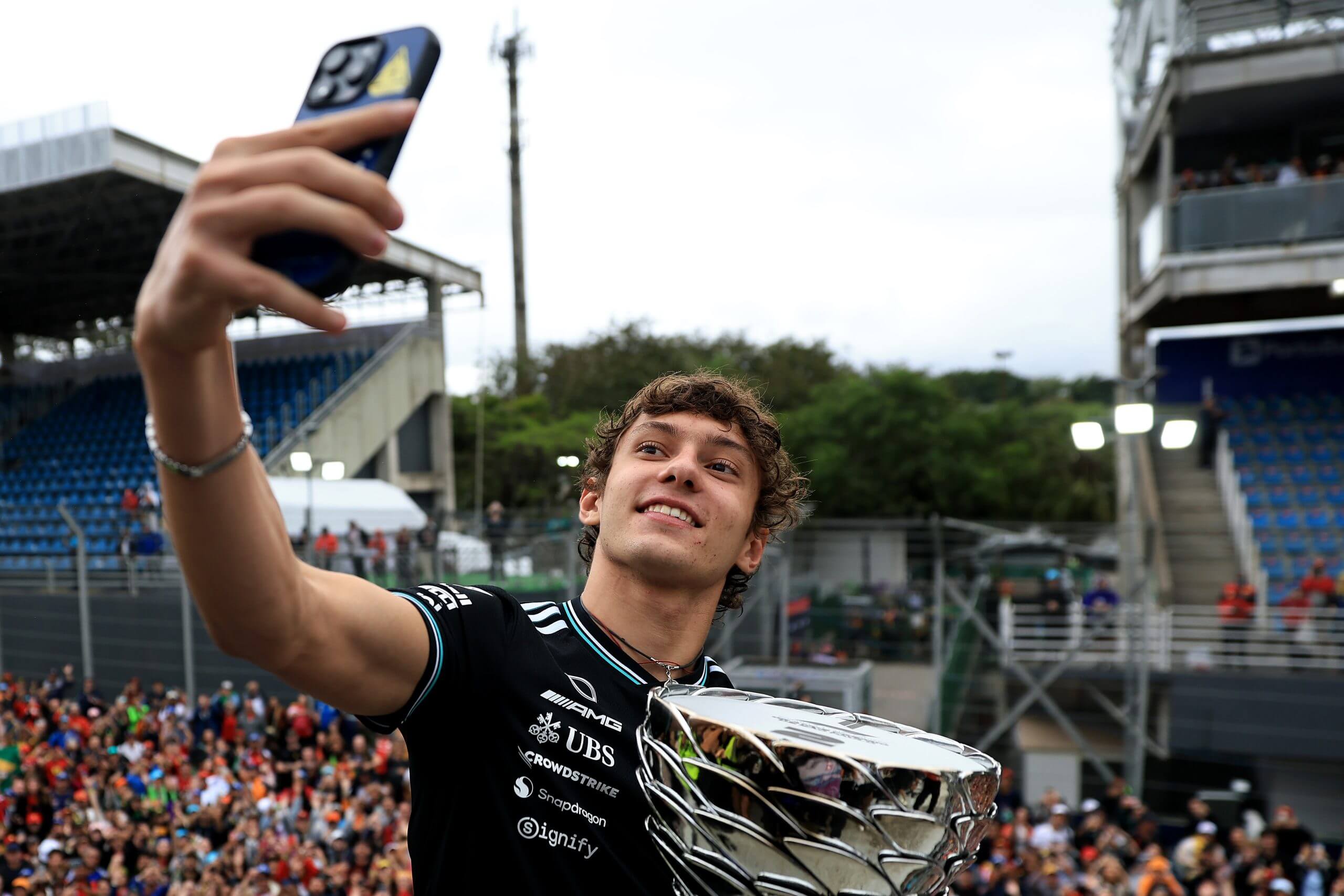
Kimi Antonelli, after he finished second in the 2025 Brazilian Grand Prix. (Buda Mendes / Getty Images)
3. Kimi Antonelli
Best result: P2 (Brazil)
Points: 150
Championship position: 7th
Antonelli’s form over his rookie season fluctuated, with the Mercedes driver experiencing a performance dip during the middle part of the schedule. But by the final stretch of the season, he’d bounced back to end on a high, with consecutive podium results in Brazil and Las Vegas (this only after Lando Norris was disqualified).
The Italian driver starred in his debut, as he rose from a 16th-place start to finish fourth in the messy Australian GP. It wasn’t a perfect performance, but such an impressive rise showed why Mercedes took a bet on him in its post-Lewis Hamilton era.
Antonelli built from there, with consecutive sixth-place finishes in China and Japan, and for the Miami sprint race in May, he topped an F1 qualifying session for the first time.
But the now 19-year-old’s performance stalled. Aside from a point-less Bahrain, Antonelli had steadily scored points at every other race until round seven of 24, at Imola. Then bar scoring his first F1 podium in Canada, where he finished third, and the one point he scored in Hungary, he had four retirements and two additional point-less races. One of those retirements included wiping Max Verstappen out on Lap 1 in Austria.
Antonelli admitted he was struggling with his confidence during this period, which coincided with when Mercedes endured its own downturn in performance. This stemmed from the rear suspension upgrade it introduced at Imola and later abandoned.
Back on form with the earlier suspension specification, Antonelli scored points at home in Monza, but his fourth-place finish in Azerbaijan was when his resurgence really started. The only other times he then finished outside of the top 10 to end the year were in Austin and Abu Dhabi.
But the standout moment of his rookie season came in Brazil, where Antonelli was ahead of his Mercedes teammate George Russell all weekend, and he then finished second and defended hard against Verstappen to score his best GP result to date.
Brazil showed Antonelli’s promise and the potential he has to be a threat to F1’s top drivers.
2. Ollie Bearman
Best result: P4 (Mexico)
Points: 41
Championship position: 13th
There was never any doubt over Bearman’s speed. Finishing seventh in Jeddah in 2024 for Ferrari as a late replacement for Carlos Sainz, who was sidelined by appendicitis, proved the Briton was ready for F1. But Ferrari, which still supports Bearman, wanted to see that speed paired with consistency.
At Haas in 2025, Bearman was always going to be mired in the midfield fight, but he had a good benchmark across the garage in the experienced Esteban Ocon (an F1 race winner). Despite starting the year just behind his teammate, Bearman was only outqualified three times after Monaco in May, finishing on average one-tenth of a second clear in qualifying sessions.
Bearman’s consistency did build through the year. He finished 11th, just outside of the points, at four races in a row midseason, and then took a step as he clicked with the Haas upgrade that arrived in Austin.
Only a smart strategy call by Red Bull denied Bearman a shock podium in Mexico, although fourth still matched the best result in Haas’ 10-year F1 history. He also showed well in battle against Verstappen in that race.
To have the measure of a driver as quick as Ocon in his first season is of real credit to Bearman. But there were some big rookie mistakes, including two red flag infringements that put him close to a race ban.
But overall, it was a very good first year in which he showed the makings of a strong grand prix driver.
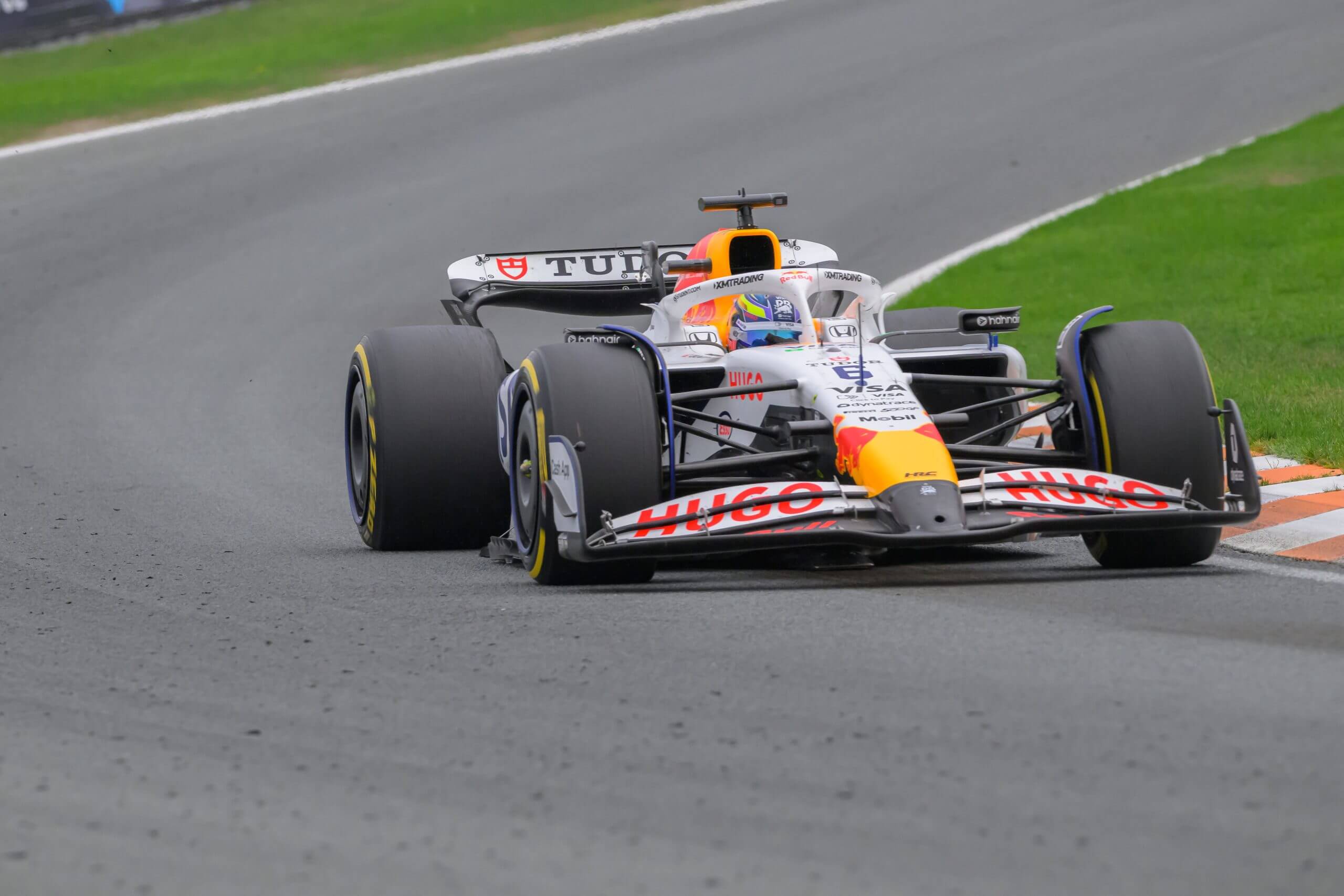
Isack Hadjar in action at the 2025 Dutch Grand Prix at Zandvoort. (Jonathan Raa / NurPhoto / Getty Images)
1. Isack Hadjar
Best result: P3 (Netherlands)
Points: 51
Championship position: 12th
Who would have thought the kid crying his eyes out after crashing on the formation lap in Melbourne, ending his F1 debut before it even started, would close out 2025 as the top rookie?
What a difference the rest of the year made for Hadjar. He was stoic in the face of that embarrassing setback to quickly emerge as a Q3 regular through his rookie season, admitting midseason that even he didn’t expect to be so good so soon over a single lap.
His tally of 16 Q3 appearances matched Antonelli and beat Lewis Hamilton, his racing hero, in the Ferrari.
After Melbourne, Hadjar made very few major errors. He was upset with himself after a suboptimal final Q3 lap in Baku, where teammate Lawson put the Racing Bulls car third on the grid. But when Racing Bulls’ one big opportunity did present itself at Zandvoort, Hadjar took full advantage.
Fourth place was already set to be a great finish before Lando Norris’ engine oil leak and retirement turned it into a podium — only the sixth in the team’s history since it became Toro Rosso in 2006.
It was clear by the middle of the year that Hadjar was bound to be promoted to Red Bull for 2026. He didn’t blow the doors off Lawson in their head-to-head, winning 51-38 on points, but to have led the team as a full rookie was deeply impressive.
Off-track, he won praise internally at Racing Bulls for his switched-on and receptive attitude, something that should serve him well for the move up to Red Bull. History shows that will be a big task, but Hadjar at least earned his shot this season.