
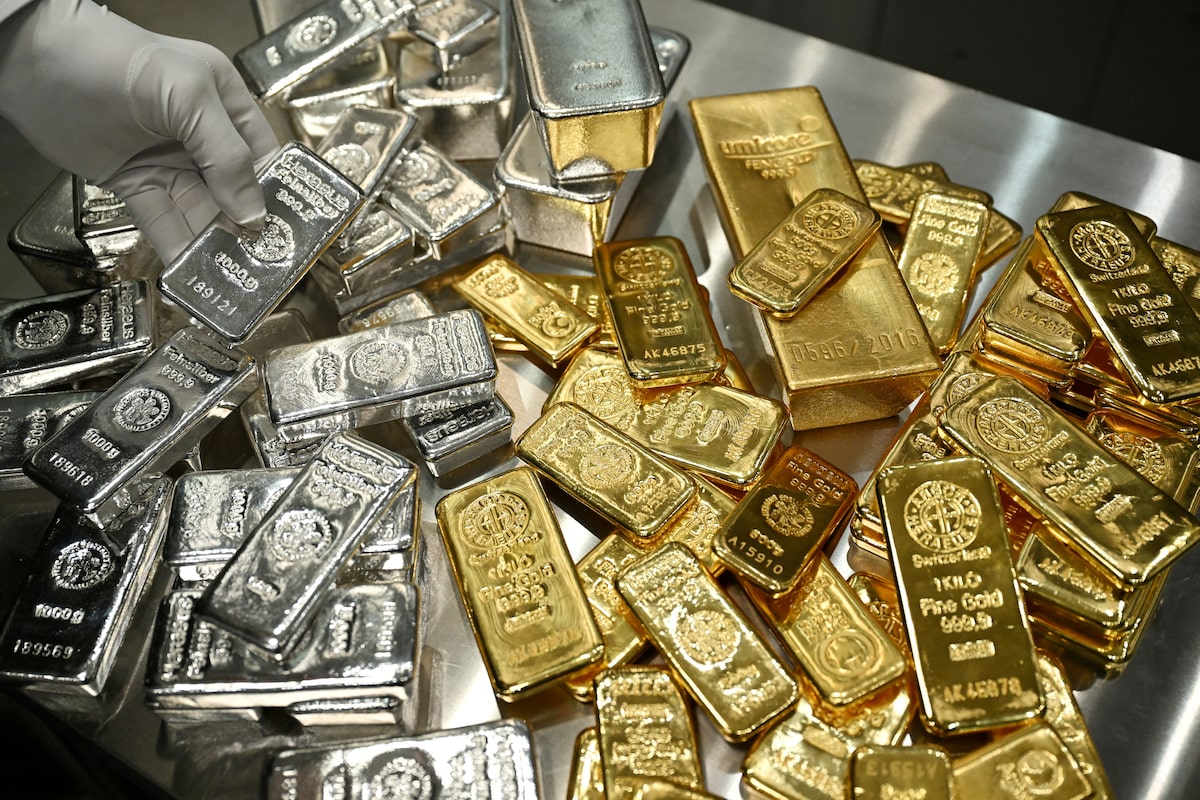
Prices for gold and silver soared in 2025.Angelika Warmuth/Reuters
It was supposed to be the year cryptocurrencies took off.
With Donald Trump, the self-named “crypto President,” back in the White House, speculative fever was back in vogue and bitcoin, ethereum and everything else under the crypto sun was supposed to benefit.
Instead, it was gold and silver that ripped. By late December, the price of gold had jumped 65 per cent in 2025 – after already soaring the year prior – and the price of silver more than doubled, up 124 per cent.
Investors of all stripes benefited. Heading into the holidays, eight of the S&P/TSX Composite Index’s top ten performers in 2025 were gold producers, and their gains pushed the index up 27 per cent for the year.
But the biggest winners might be precious-metals executives, many of whom made oodles of money.
Not only has their stock-based compensation soared in value as the price of gold and silver rose, but many have stock options that flipped from being worthless at the start of the year, because their company’s shares were trading below their option exercise prices, to looking like pots of gold, figuratively speaking.
The S&P/TSX Capped Gold sub-index jumped around 130 per cent in 2025, and the rising tide lifted all boats. But some companies soared much more than this – one was up 1,100 per cent as of the week before Christmas – and the money their leaders made would make the hardcore crypto believers jealous.
Lundin Gold Inc.
2025 return: 275 per cent
During the 2010s, when miners of all stripes struggled as investors adopted environmental, social and governance (ESG) principles, Lundin Gold was a dog. And while the company’s stock staged a bit of a comeback during the height of the COVID-19 pandemic, it was nothing to write home about.
Yet since the start of 2024, Lundin Gold’s return has been jaw-dropping.
In January, 2024, the company’s shares traded around $16 each. Two years later, they’re $115 apiece.
The Lundin family is a major beneficiary, with the family trust holding 63 million shares, according to 2025 filings. This position was worth $7.2-billion in December, a gain of $6-billion since the start of 2024.
As for individual executives, retiring CEO Ron Hochstein is making out handsomely after a decade of leadership. At the end of 2024, his stock options were worth $15-million. A year later, they are worth $70-million. And according to regulatory filings, he currently owns 895,742 shares. Heading into the holidays, they were worth $103-million.
Quite the retirement perk.
Discovery Silver Corp.
2025 gain: 1,122 per cent
Eric Sprott is raking it in again. At least on paper.
For the past few years, Mr. Sprott, one of Canada’s best-known mining investors, has been investing in Discovery, known for its undeveloped Cordero silver project in Mexico. But in January, Discovery transformed itself with its acquisition of the Porcupine Complex from Newmont Corp., adding Canadian gold-mining assets to its portfolio. (Porcupine is near Timmins, Ont.)
To raise money for the Porcupine purchase, Discovery raised $248-million in January – and Mr. Sprott subscribed for 32 million more shares, buying in at 90 cents per share.
By Dec. 18, Discovery’s shares traded for $8.68 apiece.
Mr. Sprott has sold some shares at various points throughout 2025, so it is tough to say exactly how much he has made. But for a rough approximation, he bought the additional shares in January for $29-million. By December, that block of stock was worth $278-million.
And in total, Mr. Sprott owns much more. In a December report, his total stake was disclosed to be 80 million shares, which is worth $694-million.
He isn’t the only one getting rich off Discovery, though. In 2022, the company named Tony Makuch as its interim chief executive – he became permanent CEO shortly after – and by the end of 2024, he had amassed two million stock options.
In January, they had no value, because Discovery’s shares were trading under the option exercise prices. By December, however, these options alone were worth $14-million.
Mr. Makuch also subscribed for 8.3 million shares as part of Discovery’s financing in January. His gain on this investment is $65-million in 10 months. Add in the rest of the common shares and restricted share units he owns, and he’s sitting on $106-million in stock.
Aris Mining Corp.
2025 gain: 328 per cent
Based in Vancouver, Aris is a gold miner focused on South America, with two producing mines in Colombia. The company also has some undeveloped assets in the region.
Founded with seed money from Neil Woodyer and Frank Giustra, and chaired by Ian Telfer, formerly of Goldcorp, Aris has transformed from a junior miner to an established player in 2024. In September the company was added to the S&P/TSX Composite Index. (It is also traded in New York.)
Mr. Woodyer, who is 81 and resides in Monaco, held US$19-million worth of shares and deferred shares as of March 31, the company disclosed in a regulatory filing. That was when Aris’s stock traded for US$4.64. By late-December, Aris shares were US$15.65 each, which means Mr. Woodyer’s stock holdings alone were worth US$65-million, or roughly $90-million Canadian.
Some major institutional investors have also benefited from Aris’s gains. In 2024, the company bought a large stake in the Soto Norte project in Colombia, from Abu-Dhabi based Mubadala Investment Company, and paid Mubadala with 15.75 million shares.
The shares were issued when Aris was trading around $5.75 in Toronto. In August, Mubadala sold when the stock was trading around $10 per share − the exact price wasn’t disclosed – so the sovereign wealth fund gained roughly 75 per cent in one year on the sale.
Can all these gains last? That’s the question that weighs on executives’ minds, because so much of their holdings are paper gains.
For silver, the hope is that the metal’s industrial uses will keep the rally going. Silver is a good conductor of electricity and is used in electric vehicles and computer chips. The latter has tied it to the hype around artificificial intelligence and data centres.
Lately, though, there are fears that the data-centre trade is a classic bubble, and already some companies with heavy exposure to it, such as Oracle, are seeing their shares struggle. If the sell-off broadens, silver could get swept up in it.
As for gold, the Bank of International Settlements, a global body, cautioned in December about “evidence that retail investor exuberance and appetite for seemingly easy capital gains have spilled over to a traditional safe haven such as gold.”
When the price of bullion started rising in 2024, growing demand from central banks and fears of runaway fiscal spending in the U.S. were driving the gains. Those drivers still exist, but lately gold has been talked about like a meme stock, and that makes it susceptible to volatile trading, even if the thematic demand persists.
*Individual stock gains as of Dec. 18.