
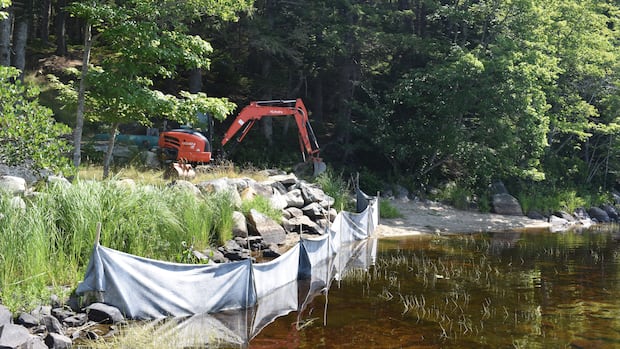
When Pamela Brennan and her wife were redeveloping their property on Molega Lake in Queens County, they thought they were making good choices.
Following provincial regulations and local land-use bylaws, the couple brought in 100 cubic yards of fill and used it to infill a seasonal floodplain behind the natural shoreline. They then planted the area with tall grasses, thinking they’d let it grow wild.
But as time went on, they realized something was amiss; nothing would grow on the infilled area, suggesting it wasn’t filtering properly.
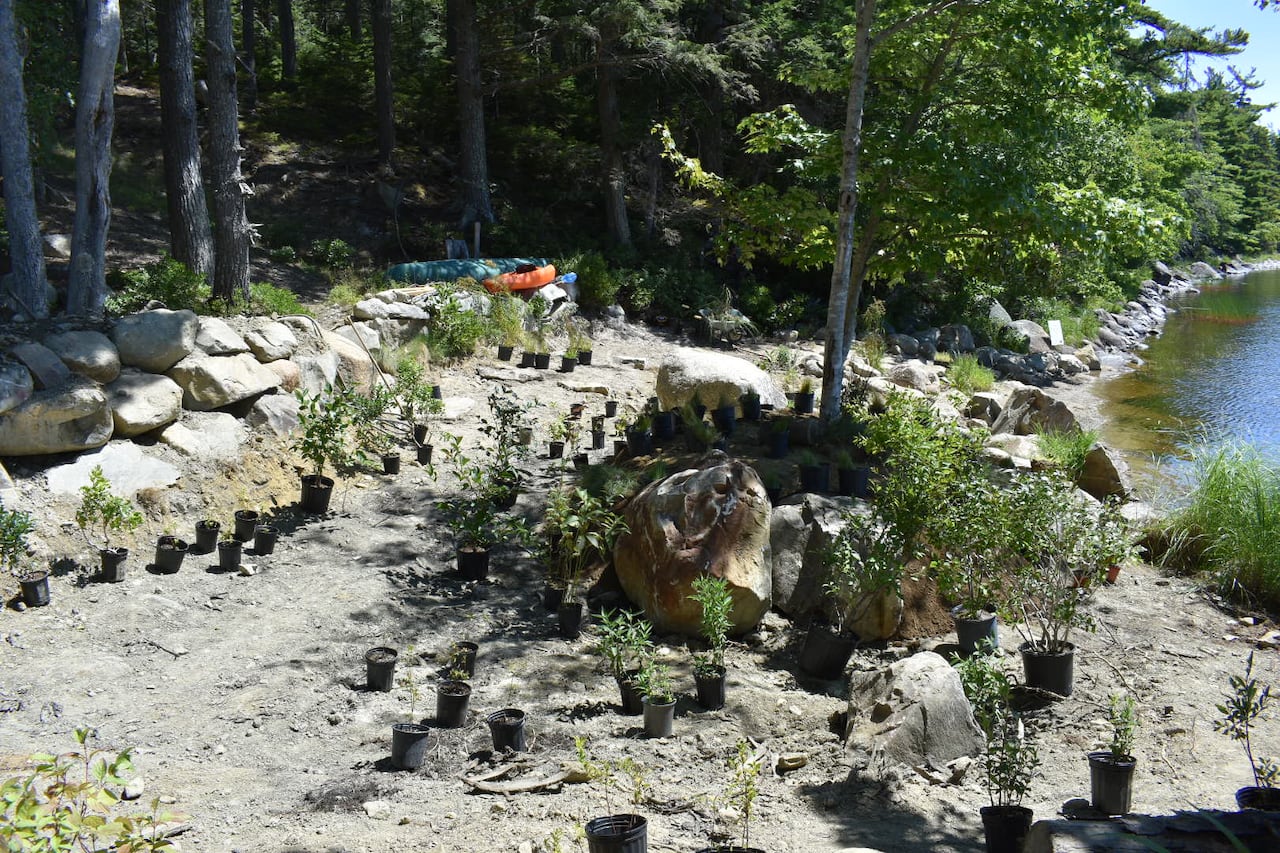 Pamela Brennan’s property on Molega Lake after restoration work started, removing fill and replanting native vegetation. (Submitted/Pamela Brennan)
“I really thought that we … were doing the right thing when it came to the environmental considerations and that’s what’s really frightening,” said Brennan. “We were following [the rules] and yet still we made mistakes out of ignorance. And I see that happening a lot.”
Brennan said her experience shows that stronger regulations are needed to protect lakes, and that current regulations are inadequate in the face of increasing development and climate change.
The problem isn’t unique to Molega Lake; as development pressure increases, property owners, advocates and politicians across the province are raising concerns with the vulnerability of lakes, calling for increased protections for lakeshores — and better enforcement of existing rules.
“Our public policy hasn’t kept pace with the influx of people on our lakeshores and our lakes can’t handle it,” Brennan said.
Climate change, increasing development causing issues
On their property, Brennan and her wife restored the lakefront with the help of a research group called Transcoastal Adaptations, which is based out of Saint Mary’s University.
In July, technicians removed five truckloads of fill and planted the area with bayberry, joe pye weed, and other native plants to “bring back those natural processes to make it look … how it was before we touched it.”
Brennan said they used the project as an opportunity to try to educate other property owners, because as more people move to the area, they’re modifying the lakefront, lining the shore with rock and planting lawns to the waterline.
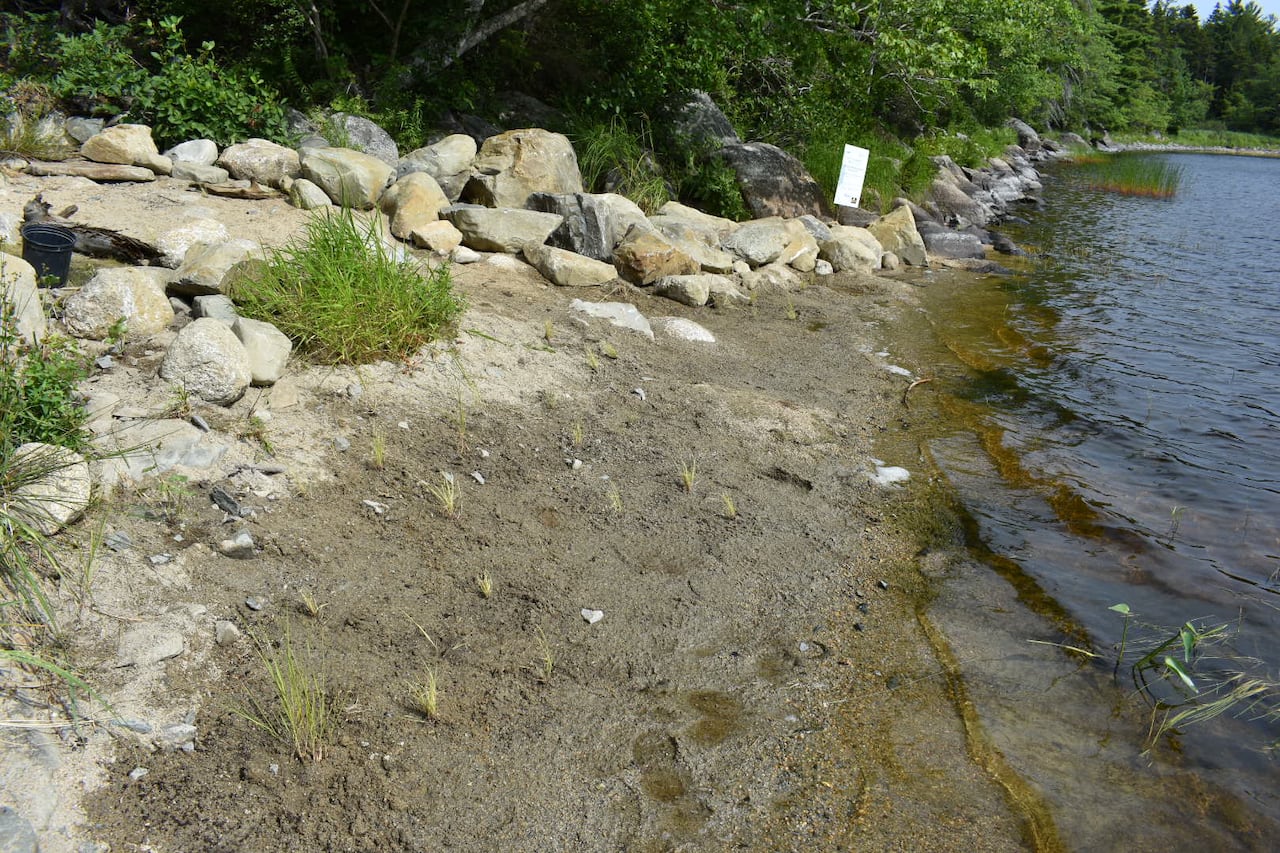 Brennan’s shoreline property, before restoration work was carried out in summer 2025. (Submitted/Pamela Brennan)
This affects the ecosystem, fuelling blue-green algae and other issues.
Climate change is exacerbating this problem, as lakes get warmer.
Given this, Brennan questioned why there aren’t more protections for lakeshores — and why she’s seeing existing regulations, like altering watercourses, not being enforced.
“I’ve had some involvement with the Department of Environment on this and there seems to be a real lack of appetite to take proper enforcement actions to stop this from happening.”
The Department of Environment did not respond to a request for comment before deadline.
‘It feels like a free-for-all’
Inconsistent bylaws and unenforced regulations are a broader problem, said Brad Toms, with the Mersey Tobeatic Research Institute.
The institute has done surveys of watersheds on the South Shore, including the Medway River (containing Molega Lake) and Tusket watersheds, looking for Atlantic coastal plain flora, a group of plants that exist along lakes in southwest Nova Scotia, and are among the most endangered in Canada.
Between an initial study that ended in 2014, and followups in 2024 and 2025, Toms said they’ve seen an increase in cottages, houses and other dwellings of up to 94 per cent, and of shoreline threats of 130 per cent.
“It does feel like we’re approaching those breaking points, where the lakes start to get really high in nutrients and have algal blooms,” said Toms.
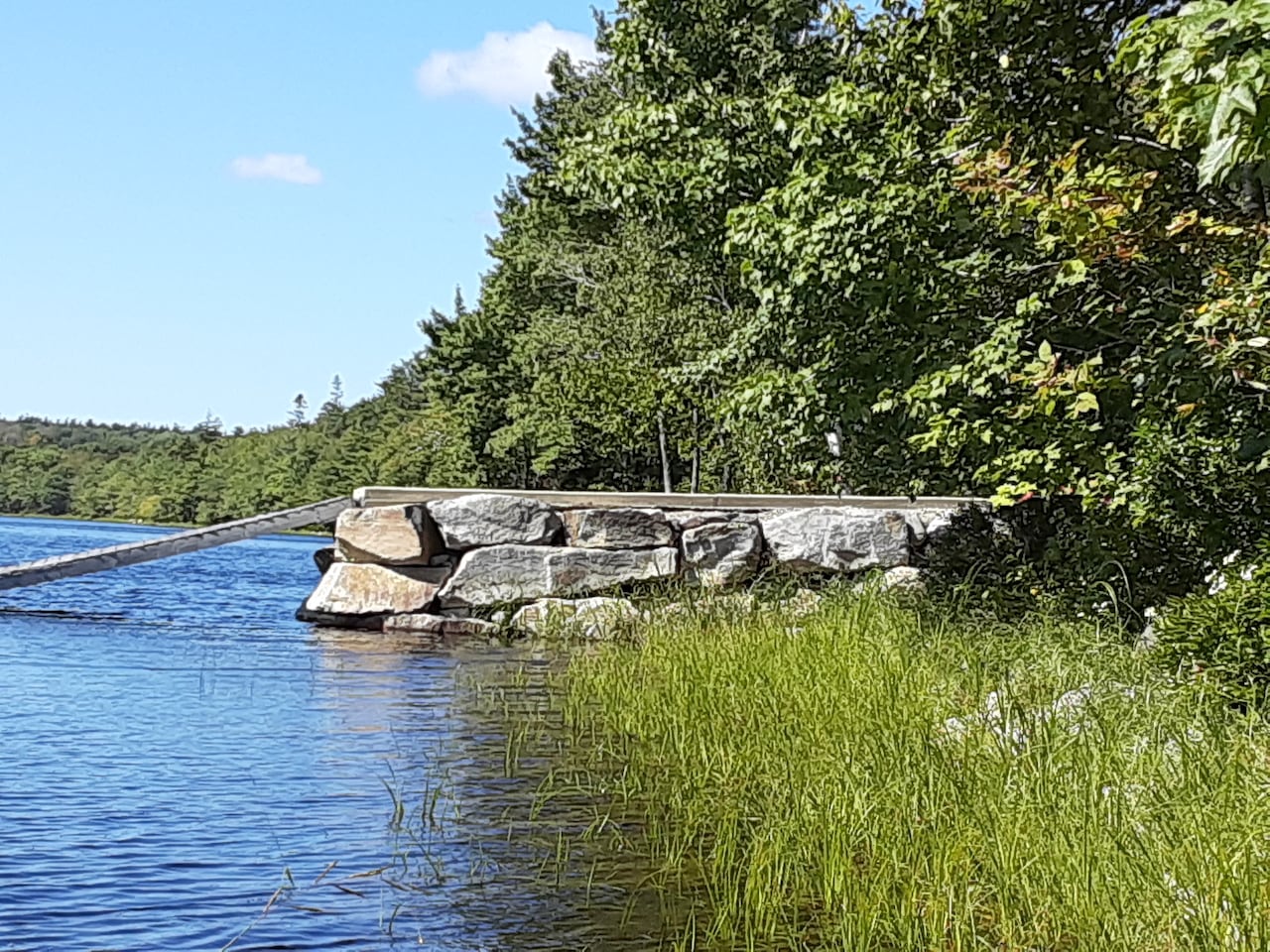 Researcher Brad Toms says infill for structures like this dock can affect lakewater quality and plant habitat. (Submitted/Brad Toms)
Threats include infilling, rock walls and excavations of the shoreline, as well as lawns, driveways and other changes. This reduces habitat for endangered plants and harms water quality.
“It feels like a free-for-all,” he said. “All the development that is happening — the allowance of subdivisions … the letting of building permits and development permits — are happening blind to the needs of the lake, and that’s a problem that’s happening provincewide.”
Toms said better policies will reduce the need for expensive interventions to improve water quality in the future.
“This is one of those things where doing things now is much, much cheaper than doing things later.”
Issues not unique to the South Shore
Yet in Halifax, the province recently overrode attempts by the municipality to institute better protections for lakes.
In its regional plan, the municipality increased setbacks from 20 to 30 metres, aligning with scientific evidence which suggests 30-metre setbacks are needed to provide adequate filtration and protection of lakes. In July, the province rejected the regional plan, saying its environmental rules would stifle housing construction.
Tony Mancini, deputy mayor and councillor for Dartmouth East Burnside, said lakes in the municipality are stressed by development, climate change and road salt. That makes protections important to institute now.
“It’s the right thing to do, to protect our precious lakes,” he said. “We all understand we’re in a housing crisis, but at what cost?”
Mancini said the municipality wants development, but not at the expense of healthy lakes. He said developers should be able to figure out how to work with a 30-metre buffer.
In December, HRM staff submitted a portion of the regional plan, which doesn’t include the setback requirements, to the province. Mancini said the section containing the setbacks will be submitted in the new year, giving residents time to advocate for setbacks if they want them.
 Goldencrest is a species of Atlantic coastal plain flora that is negatively affected by development along lakeshores. (Submitted/Brad Toms)
In the meantime, advocates say lakes are at risk, including Kidston Lake in Spryfield. The lake is currently undeveloped, having been protected as urban reserve land for decades.
But it’s now threatened with development, including a proposal for a new neighbourhood of 4,800 units — with some extending right to the lakeshore.
Mélissa Boucher-Guilbert, a Spryfield resident and volunteer with the Kidston Lake Conservation Society, said the lake is especially vulnerable, as it’s small and slow to flush out.
The reduced setbacks imposed by the province, as well as increased development, could harm water quality, Boucher-Guilbert said.
”It’s not that we don’t want people to have housing, but it’s such a fragile ecosystem in Kidston Lake.”
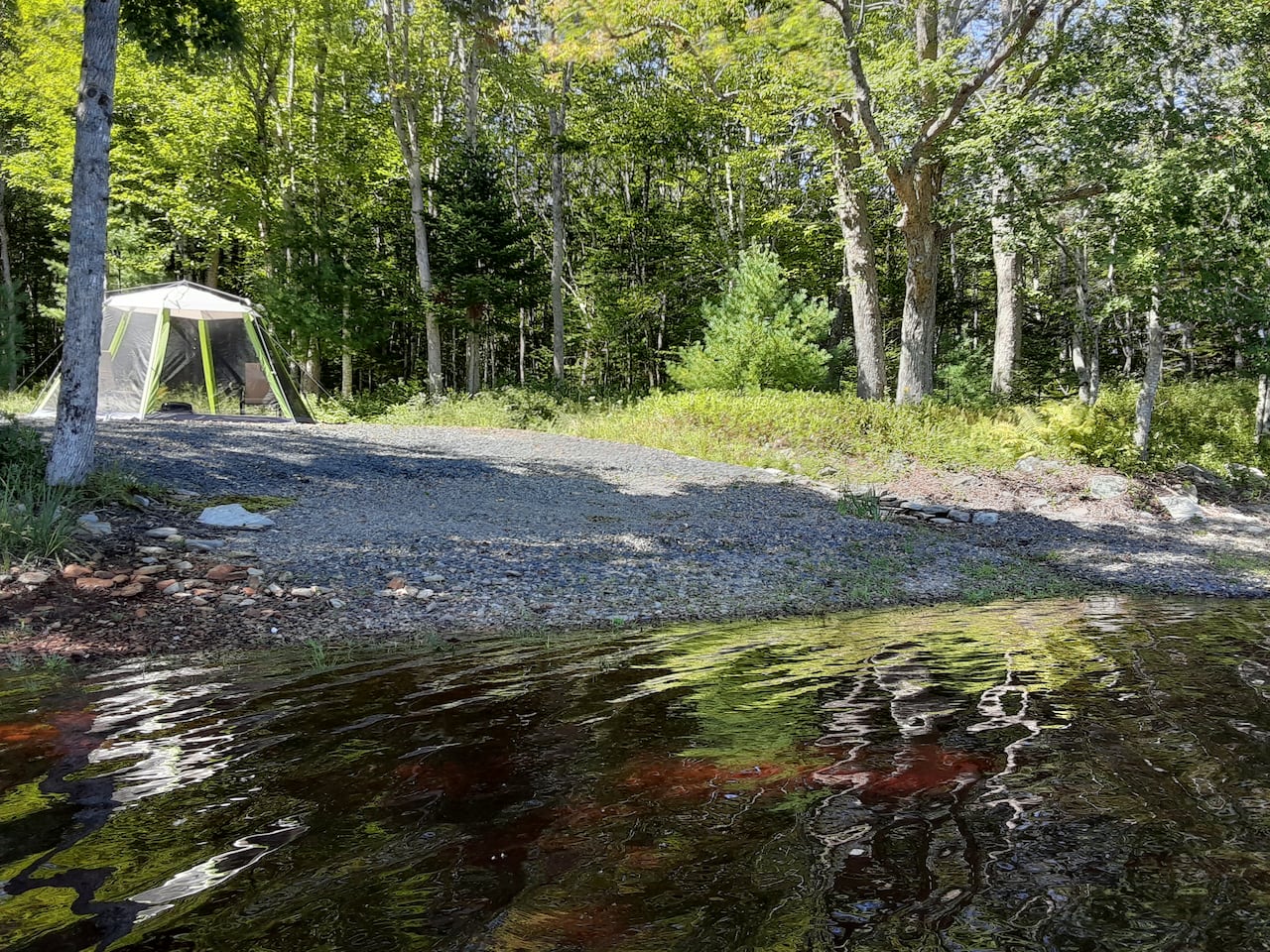 Toms said homemade boat launches are a common form of infilling below the high water mark, affecting water quality and plant habitat. (Submitted/Brad Toms)
Ultimately, Boucher-Guilbert said the conservation society is hoping to see a return of the 30-metre setback around watercourses. Because the lake’s watershed — the land area that drains into the lake — is so small, the group wants it protected from development in its entirety.
Martin Willison with the Kidston Lake Conservation Society said that ultimately, better protections for lakes mean that healthy ecosystems and people can co-exist.
“We can save the lake. We can also at the same time develop a community with a relatively large population, and that community can have access to this wonderful pristine lake. So we can do both.”
MORE TOP STORIES