
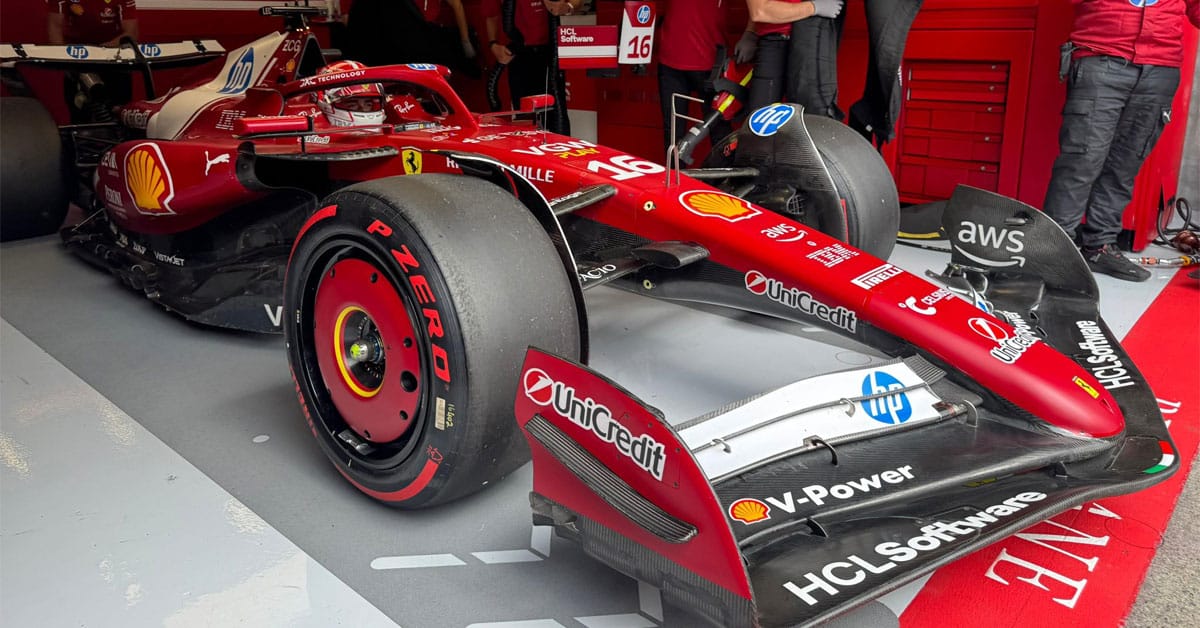
Ferrari confronts critical front-wing challenge as F1 2026 regulations shake up the grid
The 2026 Formula 1 regulations are set to bring some of the most radical changes in recent memory, and Ferrari are already facing a major challenge in adapting their new car to the updated rulebook. As the Scuderia prepare for pre-season testing, engineers across the grid are grappling with multiple technical hurdles, but Ferrari’s concerns have centered on one particularly pivotal area: the front wing.
Alongside the brand-new engine formula being developed by all power unit manufacturers, every team is tasked with creating a completely redesigned chassis that complies with Formula 1’s 2026 specifications. The upcoming cars will be smaller in overall dimensions, feature a reduced minimum weight, and introduce active aerodynamic systems to replace the Drag Reduction System (DRS) that has been a staple of overtaking since 2011. These sweeping changes are forcing technical departments to rethink everything from floor aerodynamics to suspension geometry.
For Ferrari, the sidepods have already been identified as a crucial element in generating optimal downforce under the new regulations, following the examples set by Red Bull and McLaren in recent seasons. The team is aiming to create a sidepod layout that not only maximises airflow to the rear but also complements the other aerodynamic devices, ensuring the car remains competitive across circuits with varying characteristics.
Front-wing development emerges as Ferrari’s most pressing challenge
According to a report by the Italian daily newspaper La Gazzetta dello Sport, Ferrari will be putting the new package through its paces during early pre-season testing in Barcelona before finalising certain elements ahead of the Bahrain Grand Prix. The front wing, however, is emerging as a critical focal point. The introduction of active aerodynamics on the 2026 car has forced every team to reconsider their front-end designs, and Ferrari are no exception.
Unlike the previous DRS system, the new active aerodynamics feature movable flaps on the front wing, which allow for dynamic control of airflow over the floor. This not only changes the way the car generates downforce but also significantly impacts balance and stability through corners. Optimising these systems requires a complete redesign of the front wing, a task Ferrari’s technical department is approaching with caution and precision.
Technical director Loic Serra is leading the development effort, ensuring the team evaluates every aspect of the front wing and other aerodynamic components during the early test sessions. The goal is to enter the first race of the season with confidence in the car’s performance, knowing that adjustments can still be made as data is gathered. Ferrari’s measured approach reflects the importance of maximising efficiency and mechanical grip while staying compliant with FIA regulations.
Engine development controversy adds to Ferrari’s pre-season pressures
While aerodynamic challenges dominate the team’s attention, Ferrari are also actively monitoring developments on the engine front. Reports suggest that Mercedes and Red Bull may be exploiting a technical loophole in their 2026 power units, effectively increasing the engines’ compression ratio to gain an estimated three-tenths of a second per lap. Such an advantage could be decisive in a highly competitive season where every millisecond counts.

Ferrari have reportedly raised their concerns with the FIA, hoping to ensure a level playing field across the grid. Industry expert Gary Anderson, former Jordan F1 technical director, has pointed out that Mercedes are not necessarily breaking the rules, but the Scuderia’s protest highlights how new regulations often create unexpected grey areas that teams must interpret strategically. Gary Anderson also suggested that had Ferrari discovered the loophole first, they may not have even flagged it to the governing body, underscoring the competitive gamesmanship inherent in Formula 1.
With the new regulations introducing both active aerodynamics and heavily revised engine rules, Ferrari’s engineers face the dual challenge of extracting maximum performance from the 2026 car while ensuring compliance and reliability. For drivers Charles Leclerc and Lewis Hamilton, the stakes are high: any shortcomings in the front wing or power unit could compromise race pace and consistency, placing additional pressure on both the team and its technical leadership to resolve these critical issues before the first test sessions conclude.
As Ferrari enter the 2026 season, every design decision—from the sidepods to the front wing and the engine mapping—will be scrutinised. How well the team navigates these challenges will not only define their competitiveness for the year but could also influence the championship battle across the entire Formula 1 grid.
Dec 30, 2025Elena Rossi
Let other Scuderia Fans know about us


