
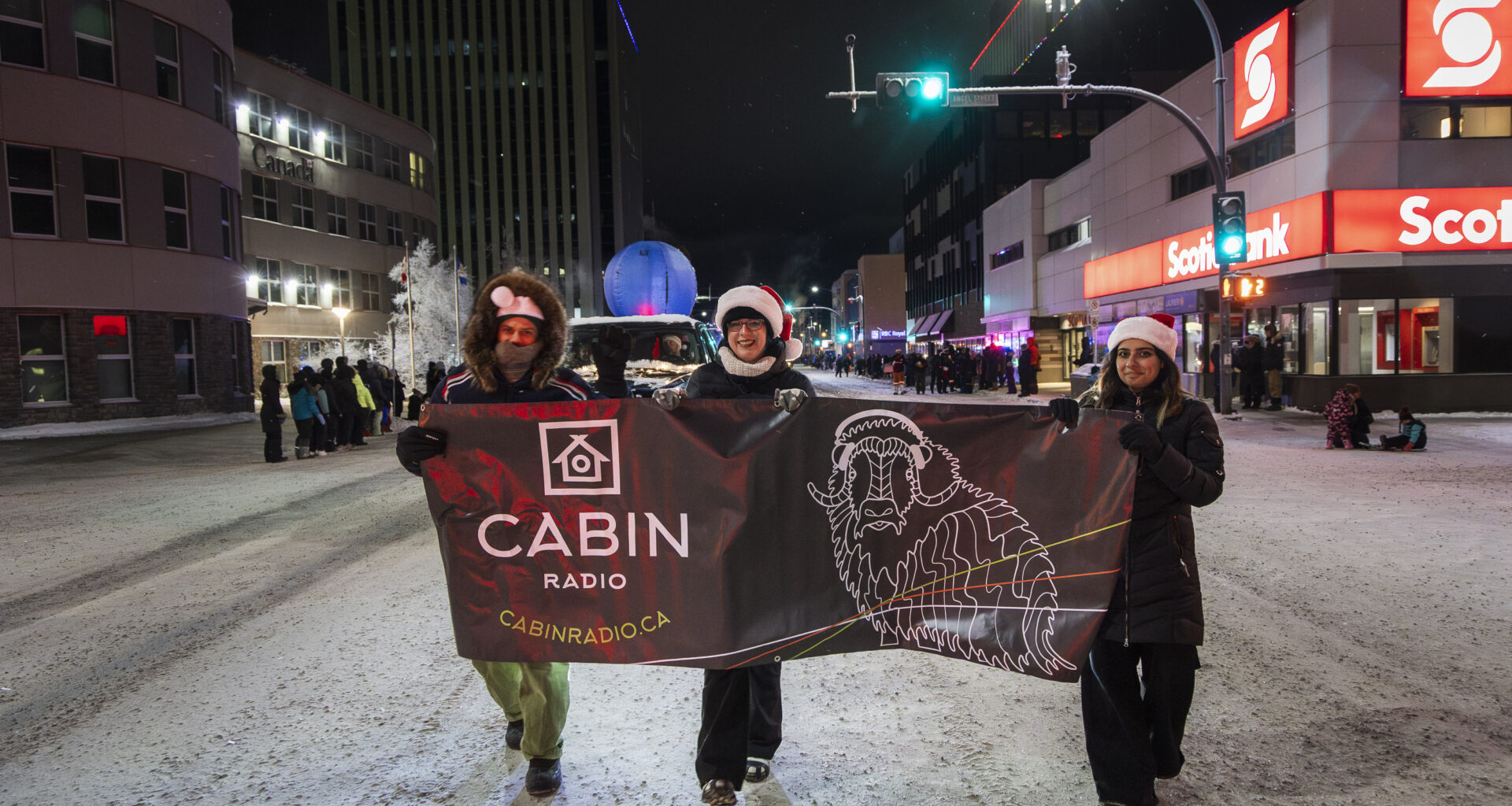
Looking for something to dive into during some new year’s downtime? Here’s a selection of Cabin Radio’s best journalism from 2025.
On this page, we’ve selected 15 examples of our most important work.
They aren’t always the biggest news stories of the year. Sometimes, they reflect the amount of journalism required to get information into the public domain.
Alongside each article, we’ve provided a short summary of why we included it here.
In March, Canada’s then-defence minister pledged a “substantially increased investment” in new northern military hubs, suggesting the figure had increased more than ten-fold. But it wasn’t true.
In 2024, the federal government had said $218 million would be available to build those hubs – but only $18 million in the opening five years, a low sum for infrastructure in the North.
Asked by Cabin Radio about the $218 million and the smaller figure for the next five years, Blair replied: “I’ll be announcing a substantially increased investment in the northern operational support hubs today. It’s about $2.67 billion and it’s our intent to move quickly so that could be done over the next five years.”
Only when pressed by email for an explanation of where the new money was coming from did the Department of National Defence, after several days, respond to say there is actually no new investment at all. Ollie Williams reported in March on DND’s accounting manoeuvres behind the scenes.
In April, Claire McFarlane travelled across the NWT to hear from voters in smaller communities ahead of federal election day.
Claire spent time with each of the major parties’ candidates and interviewed residents to find out how northerners beyond Yellowknife were viewing the election.
That involved reporting from Hay River with the Conservatives, from Inuvik with the NDP, from Norman Wells, from Fort Simpson and the above report with the Liberals in Whatì.
Claire’s two-week reporting trip was funded by the Public Policy Forum, Rideau Hall Foundation and Michener Awards Foundation.
“For the last 30 years, we’ve been trying to find a way to kill the price. But it’s not happening.”
In Joseph Kochon’s words, ensuring no one goes without basic supplies to live in Colville Lake is a constant struggle.
Kochon has been the Behdzi Ahda First Nation’s band manager since 1993. This year, he was part of a discussion initiated by Sahtu MLA Danny McNeely that brought together representatives from Food Banks Canada and Nutrition North.
Aastha Sethi joined that discussion and travelled the Sahtu with the charities to see how they are looking to help food security in the region.
Tessa Nendsa’s brother started all of this. Now, she’s wrestling an Ontario rival three years older than her who reached last year’s national final.
It is fair to say Nendsa’s debut at the 2025 Canada Games did not last long before Ontario’s Myla Blackshaw won. But Nendsa wasn’t put off. By the time the day ended, she had picked up her first victory at this level during a bout against Nunavut.
Members of the NWT wrestling team described forming a bond with their team-mates and other northerners on one of Canada’s biggest sporting stages.
Ollie Williams travelled with Team NT to the Canada Games in St John’s, Newfoundland, to report on this and other stories.
A year ago, a jury in a coroner’s inquest issued 11 recommendations to prevent the in-custody deaths of intoxicated people in the NWT. What have authorities done since?
In October 2024, the jury concluded that Sylvia Panaktalok, 54, had died of alcohol poisoning while in police custody in Tuktoyaktuk in July 2021.
Over three days, the six jurors heard about the lack of emergency medical services in Tuktoyaktuk, as well as the need for safe places other than RCMP cells for people who are intoxicated to spend the night, among other issues.
Emily Blake, who attended the inquest in Inuvik, looked at what had happened to the jury’s recommendations a year later.
The NWT government rejected a major recommendation from a review of how it handled 2023’s wildfires and evacuations but said it accepted the review’s 34 other suggestions.
Transitional Solutions Inc, the company hired to carry out the year-long review, concluded the NWT needs a dedicated territorial emergency management agency.
The GNWT, however, said such an agency “would be costly, duplicative, and difficult to staff.”
Cabin Radio had followed the review from the start. This report from Ollie Williams documents the GNWT asserting an emergency management vision against which it will be assessed in future.
In October, the NWT Rental Office issued an order allowing a Yellowknife couple to remain in their Franklin House apartment despite the landlord asking all tenants to leave.
A month earlier, residents of the building were issued a notice giving them fewer than 30 days to move out of their homes.
Cabin Radio followed two tenants who took their case to the rental office, where they had already clashed with the landlord on prior occasions.
Claire McFarlane reported on this outcome and followed the case as it evolved a month later, tracing how landlords and tenants try to navigate the system.
“Community health nurses are back-footed the moment they arrive and spend their entire contract digging out of a six-foot deep hole that they did not personally create for themselves.”
Meet Carter. Carter is a nurse currently working in a Northwest Territories community. (That’s not their real name.)
We interviewed Carter at length in the final segment of a five-part series about a campaign to oust nurse-in-charge Jennifer Patterson from Fort Resolution – a campaign led by the community’s MLA, according to investigators – and the NWT health authority’s response.
In part one, we looked at existing tensions between some Fort Resolution residents and its health centre. Part two focused on how those tensions made news headlines. Part three explored an investigation into Patterson’s conduct that the health authority launched after MLA Richard Edjericon called for her to be fired.
Part four set out a labour arbitrator’s indictment of that investigation, which cleared Patterson on all counts. The fifth part, above, looked at two key recommendations for change from healthcare workers with whom we spoke.
For the NWT government’s 2024 Forest Health Report, published in September, researchers were only able to survey about one third of the area they would normally study.
Even so, one of the report’s findings is the sheer impact of a drought that has covered much the NWT since June 2022 – and its effect on forests.
Experts say that while the trend over recent years indicates climate change will bring more extreme swings between dry and wet weather, the NWT’s drought has changed forests across the territory in big and small ways.
Claire McFarlane examined the report’s findings in this October article.
Federal finance minister François-Philippe Champagne produced a 2025 budget that included big investment in northern infrastructure, sweeping cuts to the public service and an increase in military spending.
The budget ultimately passed by a razor-thin margin in mid-November.
Earlier that month, for the first time, Cabin Radio sent a reporter to Ottawa to cover the budget’s unveiling – allowing us access to an hours-long briefing with federal staff, from which northern journalists are normally excluded.
Claire McFarlane spent the week in Ottawa, also interviewing leading Liberal and Conservative figures on the budget’s provisions.
On Facebook, variations of the same post appeared in many NWT community groups. The message? Drug dealers beware, new laws are coming.
The posts declared that civil forfeiture laws and legislation known as Scan – safer communities and neighbourhoods – are “incoming.”
Scan and civil forfeiture laws are indeed being brought forward by the NWT government, which has prioritized public safety and finding new ways to address the drug crisis and related crime in the territory. However, that legislation is unlikely to become law any time soon and the territorial government faces some challenges in both passing and then implementing it.
We produced this guide to the legislation in November.
For the first time since the 1970s, the federal government has released a housing design catalogue intended to speed up the process of building dense housing and make it more affordable.
The Canada Mortgage and Housing Corporation catalogue, released in October, includes renderings and floor plans from which anyone interested in building a home can either draw inspiration or acquire technical specifications.
While housing specifically designed for the North is included in the catalogue, some question how encouraging the price tag associated with those designs will be for developers.
Claire McFarlane went to meet the architects who came up with the northern plans in the new catalogue – and heard from others who aren’t convinced by the catalogue’s contents.
A review into a police chase through Hay River that resulted in a bystander’s vehicle being hit has found an officer broke RCMP policy on pursuits.
Nicolinea Minakis was driving her daughter to school at around 8am on January 21 when another vehicle crashed into the side of her pickup truck. That vehicle was fleeing police during a chase.
“A review of the incident determined that the actions of police did not align with the existing pursuit policy,” said RCMP spokesperson Cpl Josh Seaward in a November email to Cabin Radio.
Claire McFarlane spent 10 months following this case to ensure we reported on the outcome of the internal RCMP review. Minakis said she was left with a concussion, open head wounds and neck pain that persisted more than half a year later.
As a commission seeks feedback on changing the NWT’s electoral districts, written submissions provide a glimpse into what some residents think.
The NWT Electoral Boundaries Commission released a report last month exploring four options to potentially change the territory’s electoral boundaries.
The options range from keeping 19 districts to adding either one, two or three more districts and associated MLAs.
Earlier this month, Emily Blake produced a comprehensive guide to the different options – and what people think about them.
Many venues in downtown Yellowknife host live shows, but none so often as The Underground.
On any given night in the 50 Avenue establishment you may find a live band or solo act on the stage, comics telling jokes, or a burlesque or drag show.
The venue, owned by a group of Yellowknifers, recently celebrated its one-year anniversary. Artists say it has become an invaluable part of the city’s performing arts scene.
Emily Blake spent time with performers and event organizers to understand why The Underground stands out.
Related Articles