
Updated December 31, 2025 03:39AM
There’s a thin line between mayhem and majesty in pro cycling.
And let’s be honest, the tactical meltdowns, celebratory miscues, and missed corners add a unique flavor to a sport that’s now dialed in to the nth degree.
The 2025 season was no exception to cycling’s eternal dance with disaster. There were some mega WTFs this year.
Some were so serious that they cost grand tours and rainbow jerseys, while others were so downright stupid they could have been parodies.
So buckle up for chuckles and cringes as Velo editors Jim Cotton and Andrew Hood pick through 10 of the stupidest moments in pro cycling of 2025:
Farse on the Finestre
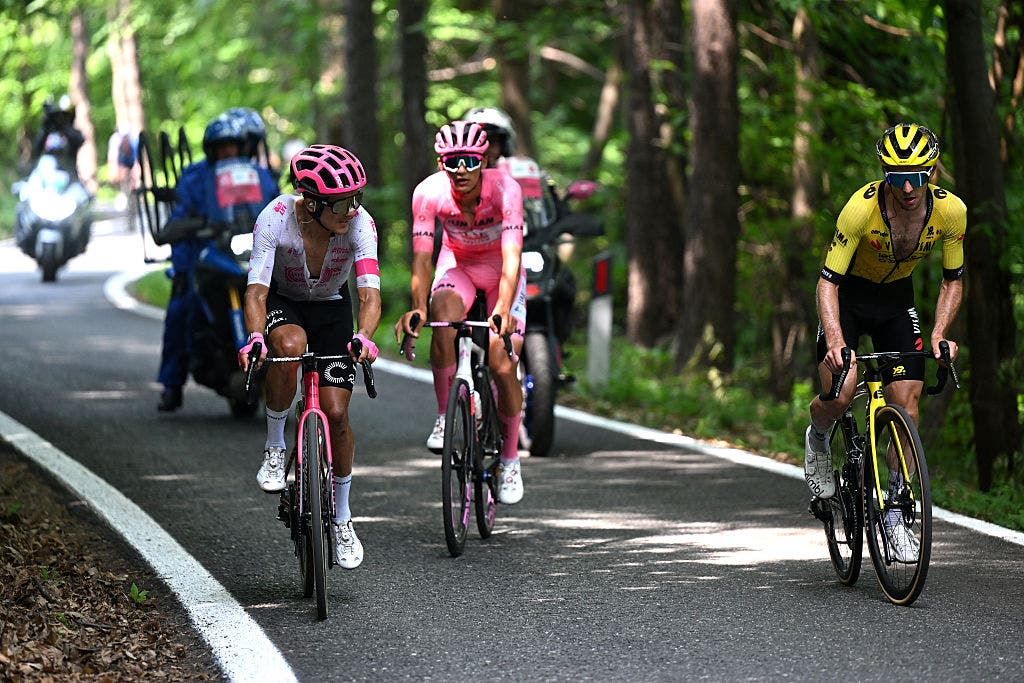 Simon Yates capitalized on a tactical catastrophe on stage 20 of the Giro d’Italia. (Photo: Dario Belingheri/Getty Images)
The worst tactical face-palm of 2025 came on the decisive penultimate stage of the Giro d’Italia.
Isaac del Toro and Richard Carapaz had been crossing swords across Italy’s boot for nearly three weeks, and it all came down to the climactic finale over the legendary Colle delle Finestre.
Everyone expected another slugfest between the two, but Simon Yates and Visma–Lease a Bike clearly did not get the memo.
Yates attacked early on the same climb where he had famously imploded in 2018 to lose the Giro to Chris Froome, then linked up with giant-killer teammate Wout van Aert. The pair rode away with the maglia rosa in the season’s biggest tactical coup while Del Toro and Carapaz all but sat up and dared each other to chase.
Both hemorrhaged time and later blamed each other for the collapse. Carapaz insisted, correctly, that it was not his responsibility to chase. UAE Emirates was left with a bit of pie on its face after stumbling through post-stage explanations on how the pink jersey slipped through their fingers.
Del Toro tried to play it down publicly, but the Giro delivered a brutal lesson that the Mexican prodigy vowed never to repeat again. [AH]
Lou Lou loves finishing third
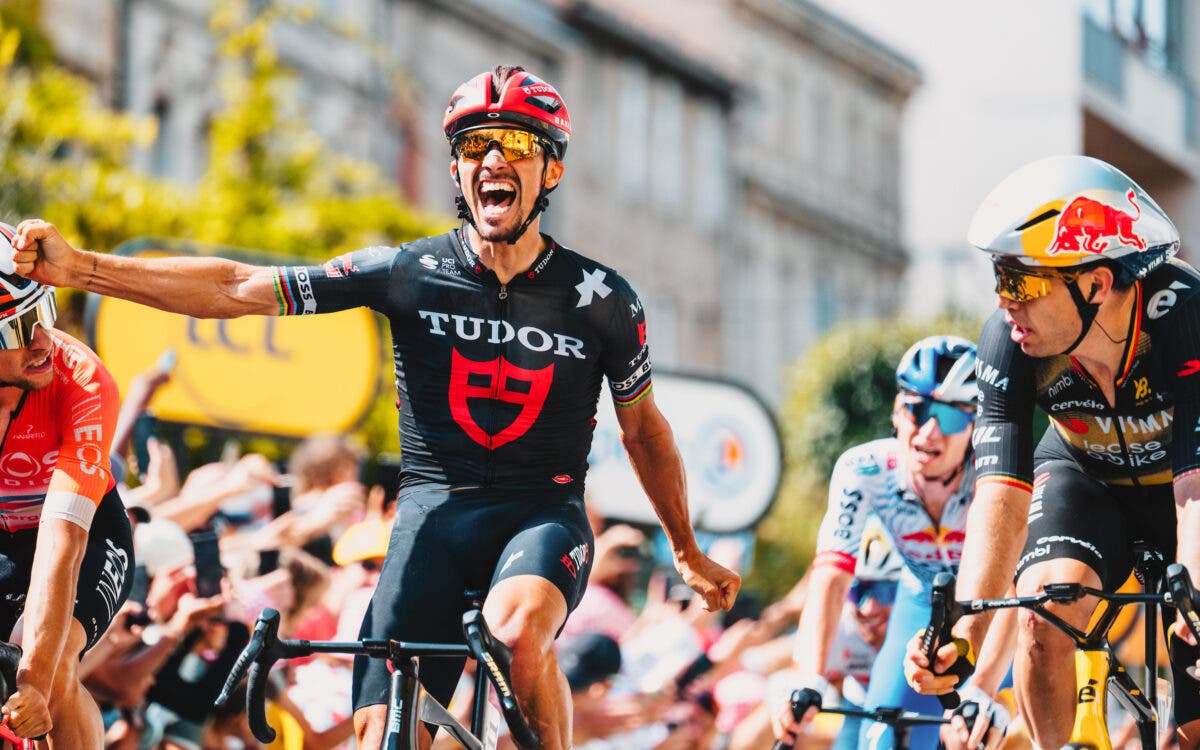 Van Aert likely did a little chuckle when his breakaway rival Alaphilippe posted up early at the Tour de France. (Photo: Gruber Images)
A rider posting up too early occurs with surprising regularity in pro cycling.
And it happened this year in spectacular fashion, courtesy of one of the sport’s ultimate showmen.
Julian Alaphilippe roared in triumphant relief when he crossed the line this summer on stage 15th of the Tour de France. The flamboyant Frenchman was in ecstasy at what he thought was his first Tour victory in four years.
Only it wasn’t.
Sorry Lou Lou, you were third.
It was a sad twist to one of the craziest tales of this year’s Tour. Alaphilippe had crashed earlier in the stage, dislocated his shoulder, and popped it back in himself while he stood at the roadside.
Crucially, the crash also knocked out his race radio.
Fueled by pain, adrenaline, and the roaring crowds of Carcassonne, Alaphilippe made it back to the bunch and handily won the final sprint for the line.
But without a race radio, Lou Lou had no clue–clue that Tim Wellens and Victor Campenaerts had already mopped up first and second places courtesy of their final-hour attack.
Alaphilippe didn’t win the stage, but his brave ride won thousands of hearts. [JC]
Group 2 syndrome sweeps Kigali
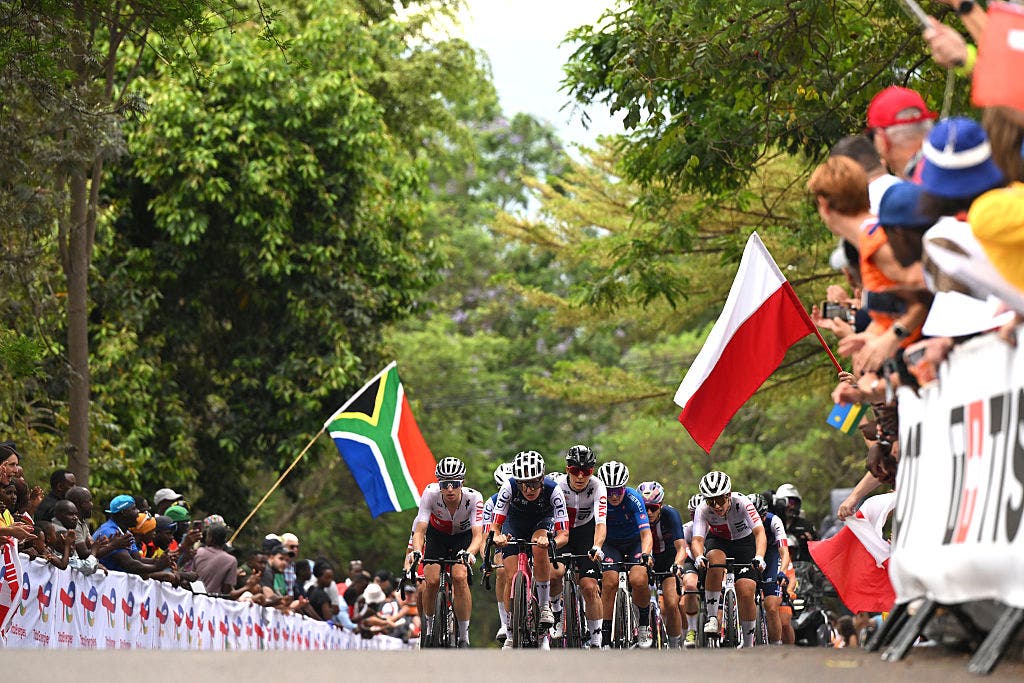 The big nations put on a masterclass of how not to race at the road world championships. (Photo: Dario Belingheri/Getty Images)
Stupid. Weird. Strange. “A big mess.”
That’s how the favorites described the very deadly strain of “Group 2 Syndrome” that went around the women’s world championship road race.
Pauline Ferrand-Prévot, Demi Vollering, Elisa Longo Borghini, and Kasia Niewiadoma were among those licking their wounds after they marked themselves out of a potential rainbow jersey this September.
PFP, Vollering, ELB, and their powerhouse nations couldn’t coordinate a chase when Magdeliene Vallieres and a bunch of attackers went up the road in the final circuits of Kigali.
The French, Italian, Dutch, and Swiss legions underestimated the breakaway, didn’t want to drag their rivals to the line, and were intimidated by the extra-tough, high-altitude course.
It became a masterclass in how to race negatively.
And of course, the lack of race radios meant no team knew exactly how fast the race was accelerating out of reach.
When riders like Marlen Reusser and Kim Le Court finally broke the deadlock and set off in solo pursuit, it was too late.
Vallieres, Niamh Fisher Black, and Mavi García had committed so courageously to their attack that they couldn’t be caught. The three steps of the podium were their reward.
Maybe the leading federations will prescribe mandatory vaccines for “Group 2 Syndrome” before they let riders fly to Montréal 2026. [JC]
Wrong way, José
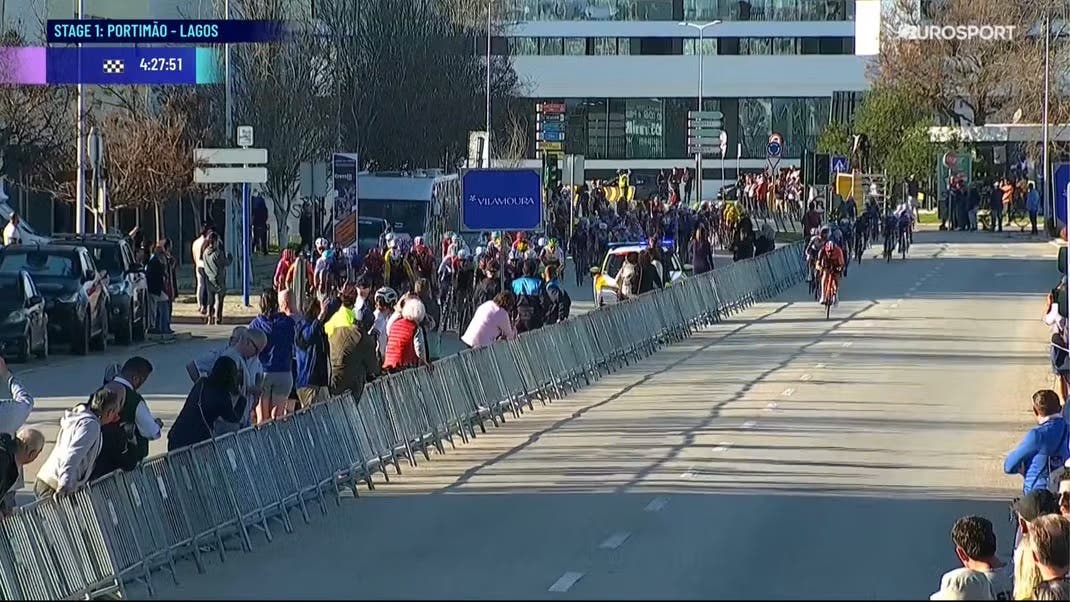 Filippo Ganna got it right, but wasn’t allowed the win in a farcial finale in the Algarve. (Photo: Europsort / Discovery)
The 2025 pro cycling season was plagued with a comedy of errors with wrong-way pelotons, errant cars, and riders looking to take a short cut.
Wrong way, José — that unfortunate theme cropped up early in 2025, most notably across several incidents at the Étoile de Bessèges in early February.
A car made its way onto the race course, sending Red Bull-Bora-Hansgrohe’s new star signing Maxim Van Gils to a local hospital. After another incident involving a vehicle driving onto the course prompted several teams pulled out in protest. Organizers promised better execution in the future,
Just a few weeks later, another high-profile miscue at the Volta ao Algarve underscored how challenging it can be for smaller organizers to keep the peloton heading in the right direction. On the opening stage, riders turned the wrong way coming out of a roundabout and sprinted down the wrong straight.
Filippo Ganna went the right way and won the stage, only for race directors to later cancel it entirely. #Dooh
And finally — in the stupidest misdirection moment of them all — two riders were DQ’d at the Tour de Guadeloupe, trying to sneak back on course after some late-stage chaos in traffic.
Two Dutch racers were caught on video illegally rejoining the peloton after hiding behind cars. Come on, fellas, the racing level isn’t that high in the Caribbean, now is it? [AH]
A very curious KoM crash
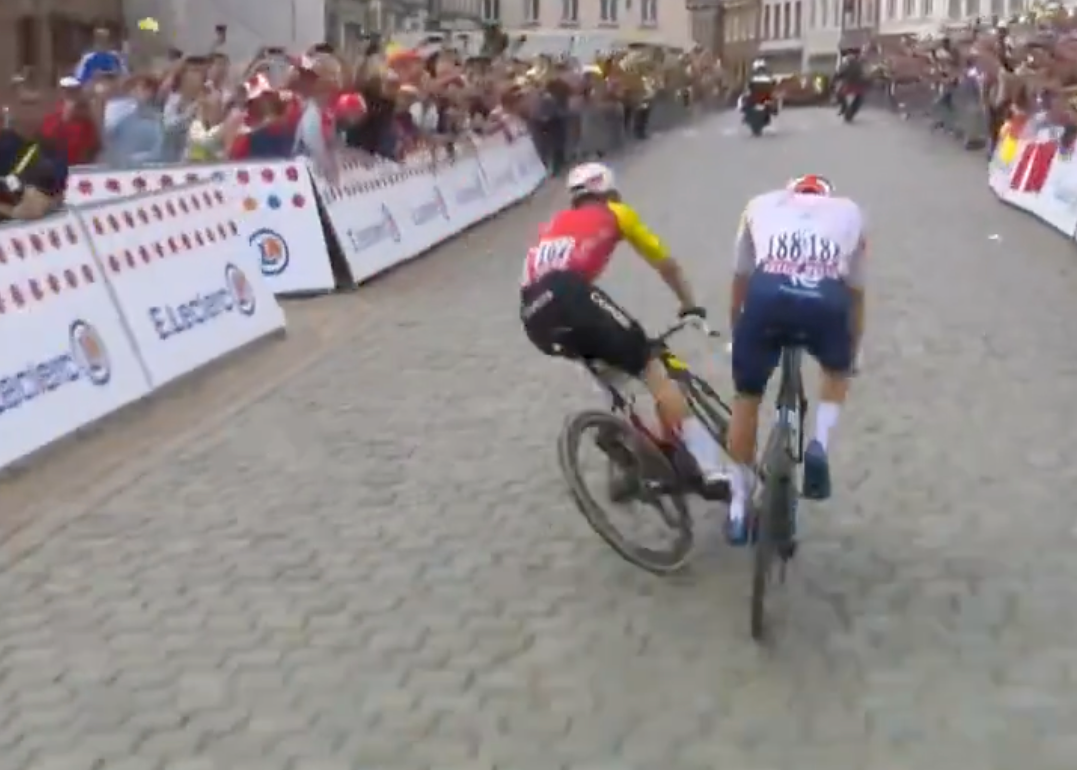 The crash between Thomas (left) and Vercher (right) shouldn’t be funny, but let’s be honest … it was. (Photo: Eurosport / Discovery)
French duo Benjamin Thomas and Mattéo Vercher were in a dream situation.
Out front on the attack on day 1 of the Tour de France. Thousands of home fans cheering them through Lille and the Nord. The chance to claim a career-making polka dot jersey.
That dream got a little deranged when their two-up sprint for a set of KoM points became the first meme of Le Tour.
The warning sirens began to blare when Vercher started to lead out the sprint across the smooth cobblestones of the Mont Cassel. His skipping rear wheel was a sign of what was to come.
But Thomas didn’t pay attention.
When Thomas came around Vercher and lunged for the line, his rear wheel skidded so bad he was sent sprawling to the ground.
And his bike?
It was inevitable. Thomas’ front wheel went right into the path of Vercher, who also took a face-full of cobbles.
The French commentators went wild, and the 5-deep crowds did a collective “WTF?”
For Thomas, the embarrassment was worth it – he spent the stage in polka dots the next day. And for both him and Vercher, their crash was probably the most exposure these two journeymen got for the full three weeks.
Don’t remember the Tour’s curious crash? Don’t worry, we’ve got your back. [JC]
Brilliance vs. blundering at Paris-Roubaix Femmes
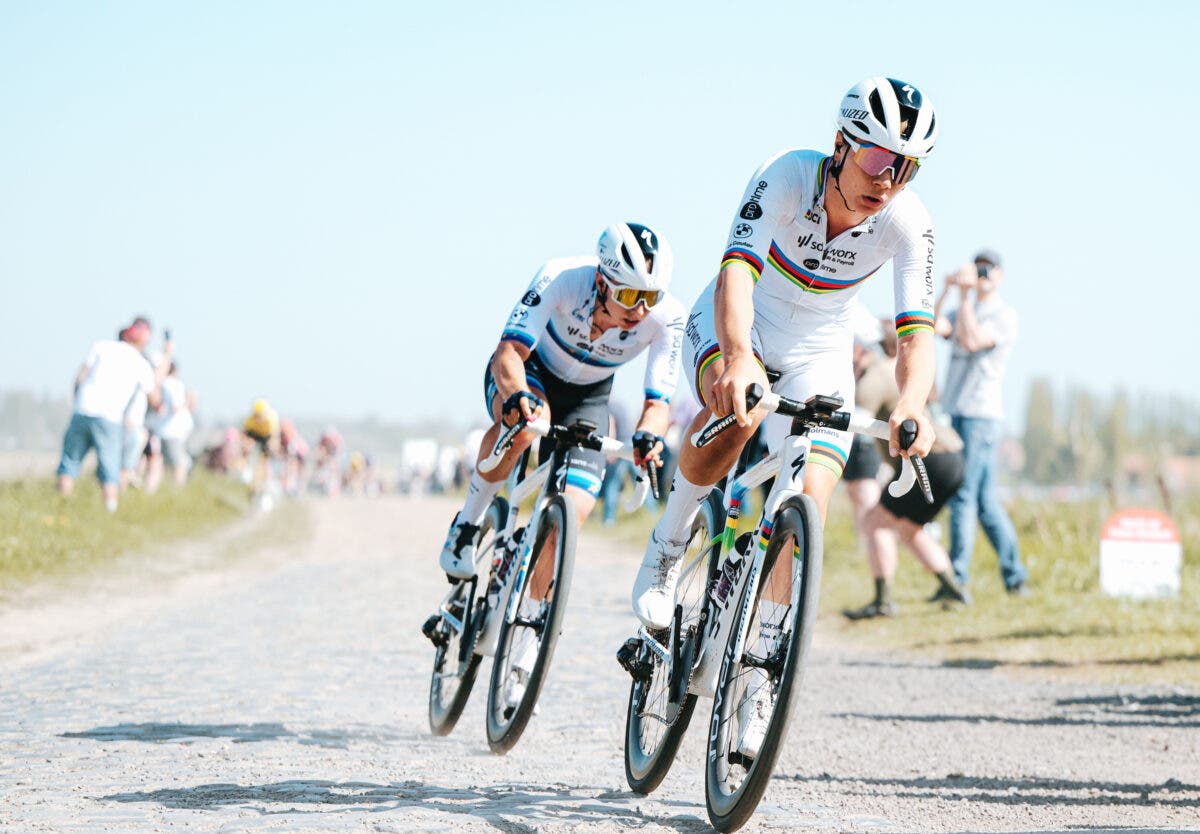 SD Worx teammates Lotte Kopecky and Lorena Wiebes were caught between a rock and a hard place when PFP attacked at Paris-Roubaix. (Photo: Gruber Images)
We’re not sure whether to categorize this one as a tactical blunder or tactical genius.
Paris-Roubaix Femmes saw Visma-Lease a Bike uncork near-perfect tactics that, at first glance, looked like stupid racing by their rivals.
In a bit of foreshadowing of what would unfold later at the Tour de France Femmes, Pauline Ferrand-Prévot rode clear from a hesitant bunch with about 25km to go. While everyone looked at each other, PFP lowered her head and drove the pedals.
Pre-race favorites SD Worx-Protime and Lidl-Trek were caught flat-footed, and rather commit to the chase, they started playing games. Dutch speedster Lorena Wiebes and SD Workx Protime teammate Lotte Kopecky meant the others weren’t going to work, and Visma’s Marianne Vos slotted into the chase group to tighten the tactical vise.
This kind of thing happens in plenty of races, but on a stage as big as the “Hell of the North,” the trap was amplified.
While the chase group played a high-stakes game of dare, Ferrand-Prévot powered to a solo win. Stupid? Maybe. But also textbook. [AH]
Mr. Martinez and the stickiest bottles in pro cycling
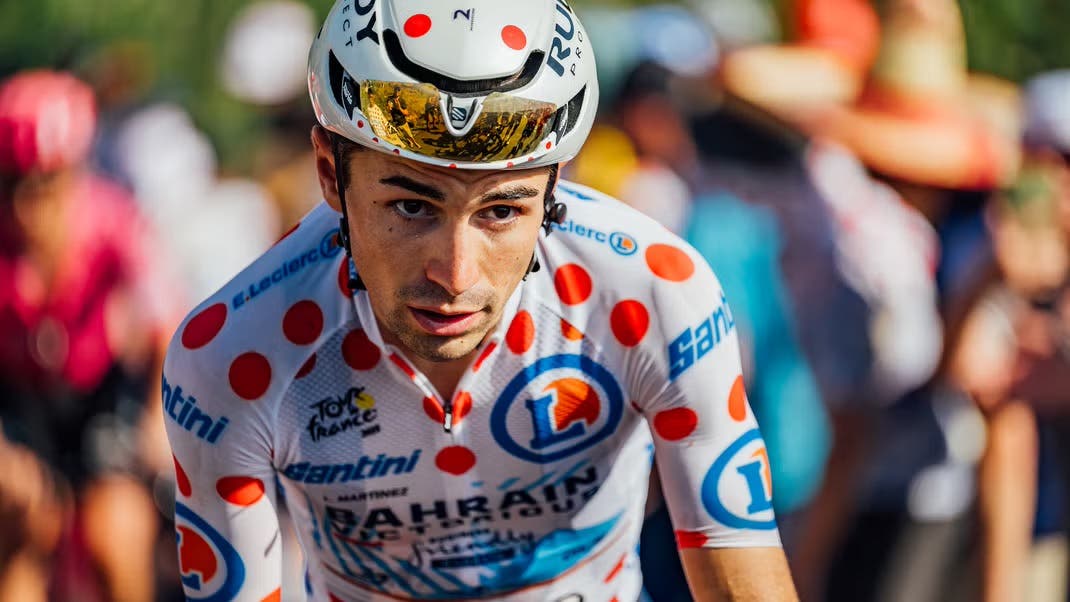 Lenny Martinez took three outrageously sticky bottles in quick succession on stage 18 of the Tour. (Photo: Chris Auld)
It’s hard to say which was more stupid. The outrageous stickiness of Lenny Martinez’s bottles at the Tour de France, or his subsequent excuse for one of the most blatant infractions of the season.
“I didn’t intend to cheat,” Martinez told RMC Sport after he was caught in full HD taking a trio of tows from his team car, deep in the high-Alpine finale of the Tour.
Martinez had seen his polka dot jersey come under threat when he was dropped out of the breakaway of the Tour’s monstrous 18th stage.
Fortunately for him, a sport director with some very sticky gels and bidons came to save the day.
Three way-too-long tows from the Bahrain Victorious team car dragged Martinez back to his rivals, right in time to bag 20 mountain points and remain “virtually” at the top of the mountain classification.
Not even the UCI jury could get this decision wrong.
Commissaires slapped Martinez with a fine and docked him points in both the KOM classification and the UCI ranking. It marked an unceremonious and very viral end to his time as top climber of the Tour.
“When I watch the video, I think there are things that aren’t right. But it’s also complicated when you’re on a mountain pass,” Martinez told RMC as he recounted the incident.
“You’re lacking in clear thinking when you’re making a big effort.”
It’s a suitably cringe-worthy excuse for a very cringe-worthy case of cheating.
Maybe Bahrain Victorious should leave the superglue at home when it packs for the 2026 TDF. [JC]
Yellow cards for the UCI?
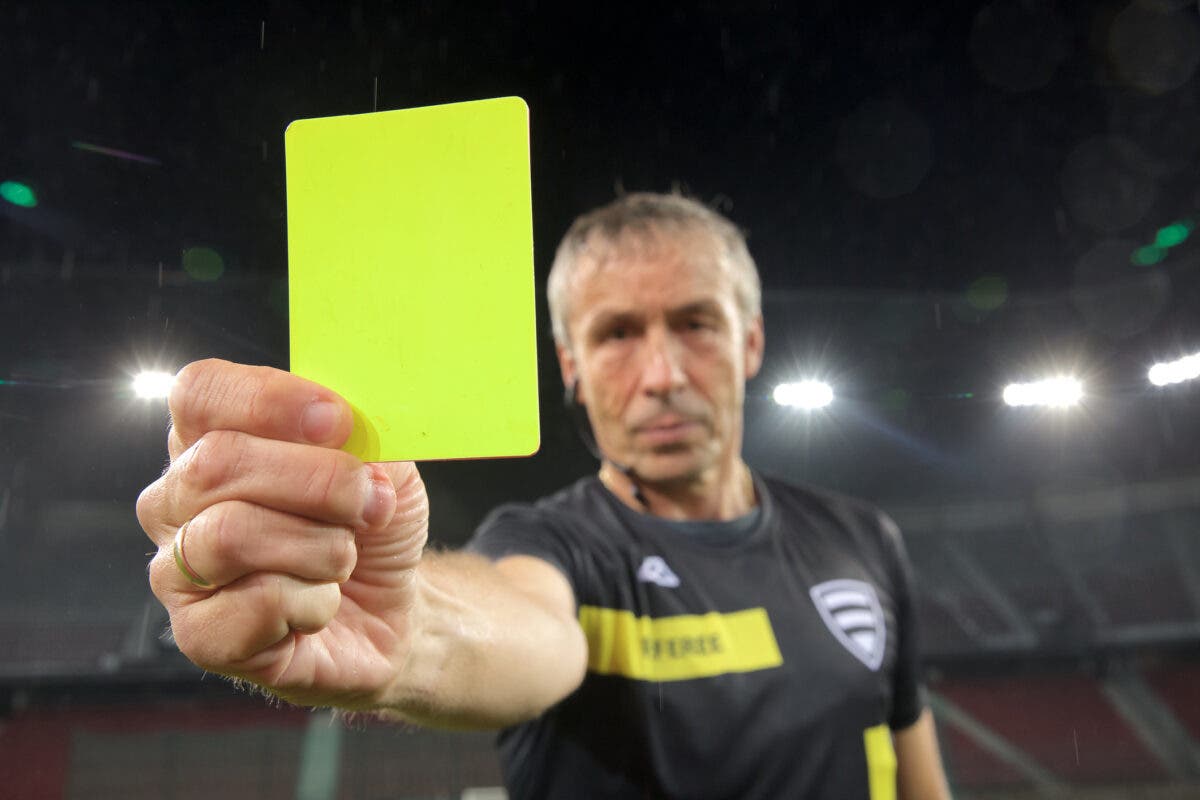 The UCI’s new yellow card system served up some pro cycling controversies in 2025. (Photo: Getty Images)
The pro cycling version of yellow cards became fully operational in 2025, and it didn’t take long for them to fly.
A series of controversial calls made many question the merits of the yellow card system.
Early incidents of “yellow card fever “came when riders like Jordi Meeus and Danny van Poppel, both from Red Bull-Bora-Hansgrohe, were slapped with warnings for irregular sprints and riding along footpaths.
The race jury was busy all season long, dishing out warnings to the likes of American rider Lily Williams for illegal littering. Oscar Riesebeek became the first rider to be ejected from a race after seeing two infractions at the Baloise Belgium Tour in June after jumping on and off sidewalks and cycle paths not part of the official race route.
But the UCI might deserve a few yellow cards of its own.
In August, five women’s teams were disqualified from the Tour de Romandie Féminin for failing to use GPS tracking devices as part of a safety test. Teams cried foul, saying they were not given enough time to properly implement the technology. After a very public back-and-forth, the teams filed an appeal with the Court of Arbitration for Sport.
And in another episode, the UCI triggered chaos at the start of the 2025 La Vuelta Femenina when a lone official took so long inspecting bikes that several riders missed their team time trial starts or were forced to roll off alone. Riders from Movistar, Uno-X, and Visma–Lease a Bike were among those caught out.
Who’s judging the judges? [AH]
Stupid fans doing stupid things
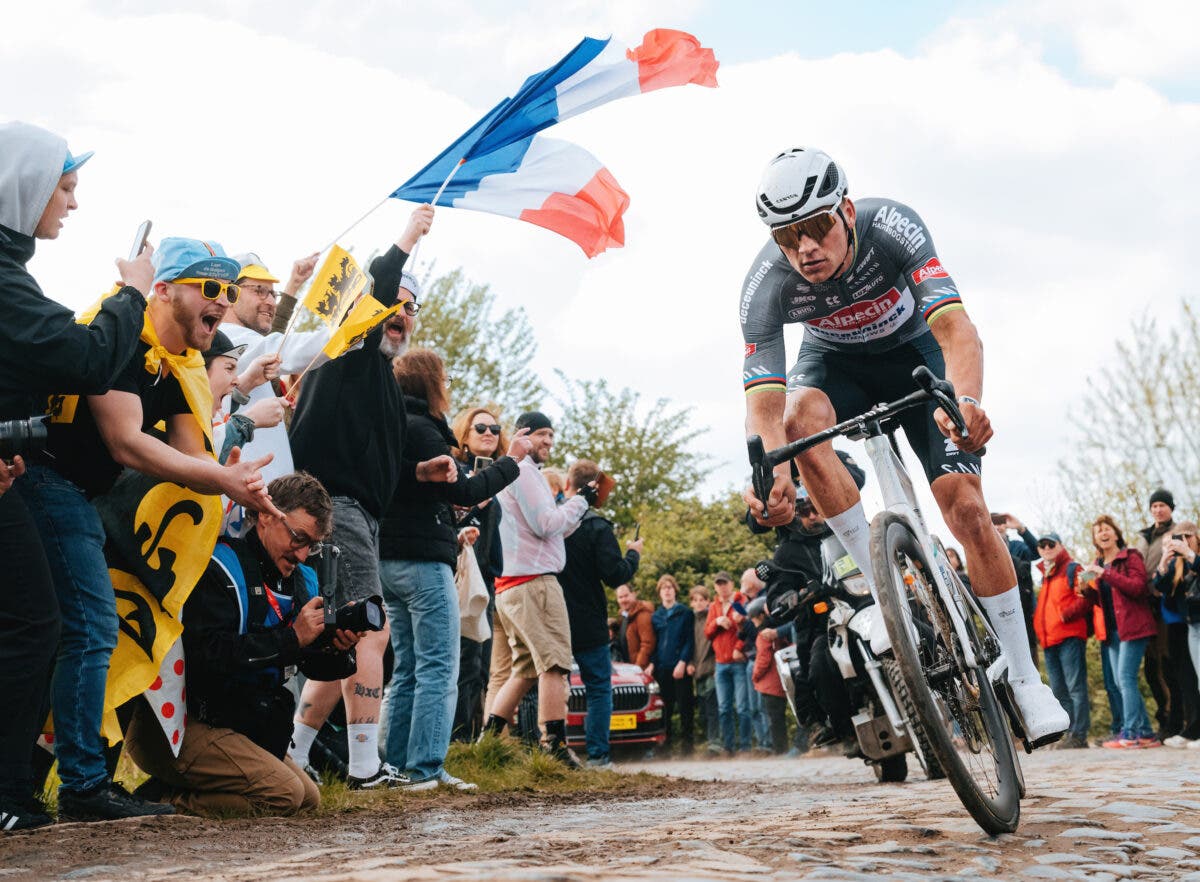 Mathieu van der Poel was targeted by a bottle-tossing spectator as he soloed to the win at Paris-Roubaix. (Photo: Gruber Images)
Of the millions of fans that line and cheer the roads every year, 99.9 percent know how to act. It’s the narrow sliver of fools that cause the problems.
There was no repeat of the infamous “Opi-Omi” moment — the 50-rider pile-up that caused carnage on stage 1 of the 2021 Tour de France — but 2025 still delivered more than its share of stupid fans doing stupid things.
Early “honors” went to the bloke who hurled a water bottle into the face of a hard-charging Mathieu van der Poel as he powered toward victory at Paris–Roubaix. After a wave of condemnation and the threat of police action, the fan turned himself in and tearfully begged for mercy.
Van der Poel was not impressed.
Another knucklehead jumped onto the racecourse in Valence just ahead of the finale of stage 17 at the Tour de France. French police swiftly tackled the man after he vaulted the barriers, mounted his bike, and rode through the finish line in a moment of peak idiocy.
In October, a pair of fans managed to slap flyers onto the back of Tadej Pogačar as he attacked en route to victory at the UEC Road European Championships. It was unclear what the stickers said, but nothing sticks to Pogačar. He crossed the line unbothered, rainbow jersey intact, adding yet another major win to an already overflowing trophy case.
Then there was the growing anti-Israel/pro-Palestine protest movement that would reach a crescendo at the Vuelta a España.
What began as sporadic disruptions escalated into something far more serious during the Spanish grand tour, with multiple stages affected by ever-more aggressive protests. Demonstrators blocked roads, knocked riders off their bikes, shouted and spat at the peloton, and forced the cancelation of the final stage.
That protest movement divided fans — some supported their efforts to draw attention to the atrocities in Gaza and others questioned their violent actions — and the violent unrest exposed an existential vulnerability that continues to ripple through the peloton.
The first warning sign surfaced at the Tour de France, when a protester vaulted the race barriers and ran onto the course during stage 11. Officials duly subdued the intruder and Jonas Abrahamsen’s victory was unaffected. The person was later fined €300 in a French court, but no one was calling them a fan of cycling. [AH]
UCI safety ideas see scathing responses
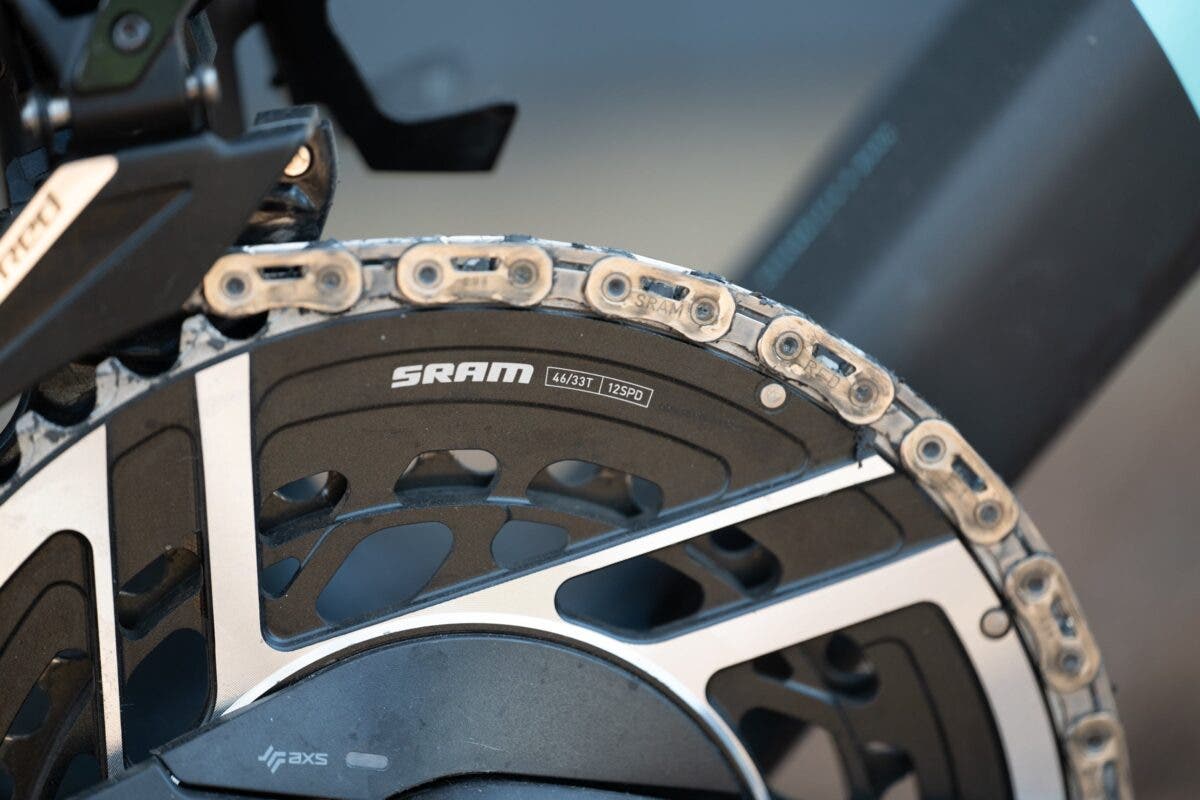 SRAM was among the many stakeholders who were unimpressed by the UCI’s tech proposals. (Photo: Josh Ross/Velo)
The UCI managed to annoy almost everyone this year with its tech-based solutions to an increasingly dangerous sport.
Components behemoth SRAM was so miffed about a proposed gear restriction trial that would disadvantage its athletes that it filed a legal claim.
The entire female peloton, smaller male riders, and pro bike fitters revolted against a new set of minimum handlebar widths.
And those without skin in the game either saw these safety solutions as a damaging back-step for the sport or laughed them off as missing the point.
SRAM’s fight against the push to clamp down on huge gear ratios saw such success that a trial roll-out was scrapped.
The chorus of complaints about “wide” handlebars that would screw narrow shoulders embarrassed the governing body into adjusting its initial proposals to appease the peloton’s most svelte.
It seems the UCI got as much, if not more, bad press this year from its proposals to reduce racing speeds as it did when it rolled out sock height rules and the “super tuck” ban.
Of course, the ideas were very well intentioned – any idea that might mitigate danger should be welcomed. There have been too many racing tragedies in recent years.
But maybe the governing body should do a little more research before it piles in with restrictions that could be so consequential. [JC]