
Unlock the Editor’s Digest for free
Roula Khalaf, Editor of the FT, selects her favourite stories in this weekly newsletter.
A nimble parent may be able to change a nappy in moments, but the end-product can languish in a landfill for centuries. Now fungi, nature’s decomposers, are being enlisted to speed up the job. Their enzymatic prowess is attracting entrepreneurs who think mushrooms can do what modern recycling can’t, both for the planet and their portfolios.
Start-ups promoting “mycoremediation” say fungi can break down materials that defeat traditional recycling, from plastics to petrochemical residue. Mycelium — the threadlike root structure of fungi — secretes enzymes capable of dismantling complex carbon-based molecules. In the wild, that means rotting logs. In throwaway societies, the hope is that the same chemistry can be weaponised against some of humanity’s refuse.
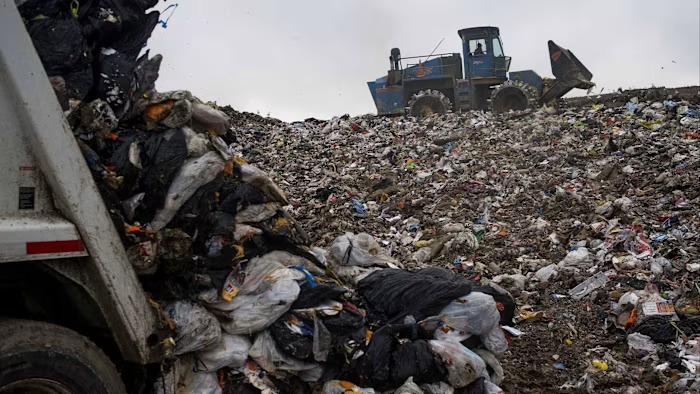
Nappies make good candidates because of their number and their persistence. Globally, about 157bn end up in landfills every year, resulting in millions of tonnes of waste. Hiro, a Texas-based start-up, offers a “MycoDigestible” nappy into which the changer inserts a pouch of fungi before throwing the soiled item away. After a week or two, the fungi are activated by moisture and begin digesting the plastic components of the nappy. Hiro claims decomposition times fall from centuries to under a year.

Hiro is not alone in betting on the future of fungi. US-based Mycocycle, Swedish group MycoMine and Belgium’s Novobiom are experimenting with ways to turn polluted soils, plastics and industrial refuse into usable materials. Michroma and Mycolever — which, along with Hiro, were winners of this year’s The Future is Fungi Award — use fungi to make alternatives to petrochemical-derived additives, including natural food colourings and emulsifiers used in cosmetics and toiletries. Ecovative, meanwhile, is developing fungal replacements for styrofoam packaging.
The hurdles, however, remain high when it comes to mycoremediation. It is site-specific and hard to develop on a large scale. No single fungus can tackle every contaminant, and identifying the right species and growing conditions often requires months of trial and error. Producing enough mycelium to treat large waste streams is another constraint, as is proving cost competitiveness against established disposal and recycling methods.
Still, the investment case is gaining attention. Rising landfill costs, tighter regulation and pressure on companies to reduce their environmental footprint are creating a niche for unconventional waste technologies. If even a fraction of disposable diaper waste or industrial refuse can be economically digested, the fungi economy could swiftly mushroom.